
Today’s Current Affairs: 8th May 2026 for UPSC IAS exams, State PSC exams, SSC CGL, State SSC, RRB, Railways, Banking Exam & IBPS, etc
Table of Contents
Cordyceps:
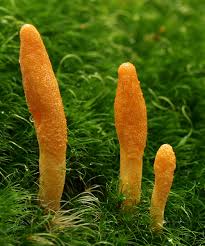
A rare and highly valued species of mushroom, Cordyceps, has been recently discovered in Arunachal Pradesh’s East Siang district, drawing significant scientific attention.
- It is a genus of parasitic fungi that grows on insect larvae.
- When these fungi attack their host, they replace its tissue and sprout long, slender stems that grow outside the host’s body.
- The fungi have a cosmopolitan distribution and are found on every continent except Antarctica.
- Some of the rarest kinds are at higher altitudes in the Himalayan regions of China, Nepal, and India.
- It is one of the most prized medicinal fungi.
- It is often referred to as “Himalayan gold” because of their exceptionally high commercial value and extensive use in traditional medicine, nutraceuticals, and pharmaceutical research.
- It produces a wide range of bioactive compounds, including cordycepin, adenosine, and polysaccharides.
- These compounds are associated with immunomodulatory, antioxidant, anti-inflammatory, antimicrobial, antiviral, and antitumor properties.
Suru River:
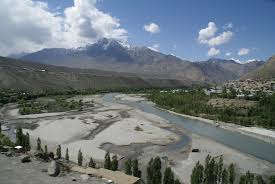
Over a month after a six-year-old boy from Ladakh drowned in the Suru River in Hunderman, his mortal remains returned home recently after being retrieved from the river in Pakistan Occupied Kashmir (PoK).
- Suru River is an important river in the Kargil district of Ladakh, India.
- It is a tributary of the Indus River.
- It starts from the Panzella Glacier, which lies at Pensi La Pass near the Drang Drung Glacier.
- The Suru River forms the western and northern boundary of the Zanskar mountain range.
- The river flows westwards, along with the Kargil-Zanaskar Road, from its source and forms the Suru valley. This valley is surrounded by the towering peaks of the Nun Kun mountain.
- The river flows into Pakistan-occupied Kashmir (PoK).
- It eventually joins the mighty Indus River at a place called Nurla.
- It passes through several towns like Tongul, Suru, Grantung, Goma, and Kharul. Kargil town is the biggest city located right on the banks of the Suru River.
- A branch of the ancient Silk Road ran alongside the Suru River, connecting Kargil and Skardu.
Lutjanus arakan:
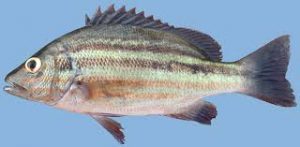
Researchers recently recorded a new snapper species ‘Lutjanus arakan’ in Indian waters for the first time at Gopalpur in Ganjam district, in a significant contribution to Indian marine fish taxonomy.
- Lutjanus arakan is a species of snapper.
- Snappers, belonging to the family Lutjanidae, are marine fishes typically found in tropical and subtropical regions.
- They are known for their ecological importance as mid-level predators and are often associated with reef and coastal ecosystems.
- Lutjanus arakan was identified at Gopalpur-on-Sea in the Ganjam district, Odisha.
- The species had previously been recorded off the coast of Bangladesh but had not been documented in Indian waters until now.
- It is distinguished from other snappers by its unique body colouration, featuring a reddish-silver hue with a series of four dark-reddish-brown horizontal stripes extending from the head to the posterior.
- While the upper body of the snapper is mostly dark brown to blackish, its median fins are dark reddish brown, and its paired fins appear translucent pinkish.
Sambhar Lake:
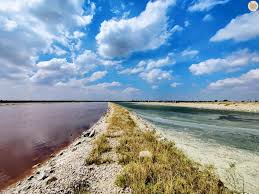
Environmentalists have criticised the proposed 100 MW solar power project near Sambhar Lake, warning that even a relatively small installation could disturb the fragile wetland ecosystem.
- It is located in the districts of Nagaur and Jaipur in Rajasthan.
- It is the largest inland saltwater lake in India.
- This saline wetland is elliptical in shape.
- It is surrounded on all sides by the Aravalli hills.
- The waters of five streams feed the lake: Rupangarh and Mendha are the main ones, and the lesser ones are Samoad, Khari, and Khandela.
- It was designated as a Ramsar site in the year 1990.
- It is known for the production of brine/salt and also houses one of the largest salt manufacturing units in the country. It accounts for nearly 9% of the country’s total salt production.
- The specialized algae and bacteria growing in the lake provide striking water colours – colours that also impart their distinctive hues to the salt that is harvested – and support the lake’s ecology.
- It is the most important wintering area for flamingoes (both Phoniconaias minor and Phoenicopterus roseus) in India outside the Rann of Kachchh.
- Other migratory species like pelicans, common shelduck, redshank, and common sandpiper, black-winged stilt, Kentish plover, and Ringed plover, Ruff, and Sociable lapwing are also found here.
Gulf of Aden: In News
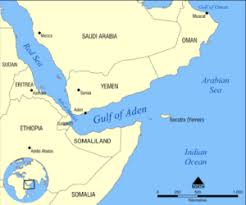
Yemen’s coast guard recently reported that unidentified armed men hijacked an oil tanker off the coast of Shabwa province and diverted it towards the Gulf of Aden near Somali waters.
- Gulf of Aden is an extension of the Indian Ocean, located between the Arabian Peninsula (north) and the Horn of Africa (south).
- It connects to the Red Sea in the West and the Arabian Sea in the East via the Strait of Bab el Mandeb.
- The gulf is named after “Aden,” a port city on Yemen’s coast.
- It is one of the largest natural harbors in the world.
- It is bounded to the south by Somalia and the Socotra Islands (part of Yemen), north by Yemen, east by the Arabian Sea, and west by Djibouti.
- The gulf is connected to the Somali Sea to the south by the Guardafui Channel.
- In the west, it narrows into the Gulf of Tadjoura, near Djibouti.
- The dominant relief feature is the Sheba Ridge, an extension of the Indian Ocean ridge system, which extends along the middle of the gulf.
- The Gulf of Aden is strongly influenced by the upwelling of cool, nutrient-rich waters during the southwest and northeast monsoons and is characterized by a prevailing high-energy climate.
- Compared to the neighbouring Red Sea, the Gulf of Aden has a lower saline content.
- The Gulf is filled with numerous islands belonging to Yemen and Somalia.
- Some of the major cities near the gulf include Aden, Mukalla, Ahnwar, Balhaf, Berbera, Bosaso, and Djibouti City.
- Major Ports: Aden in Yemen, and Berbera and Bosaso in Somalia.
- It is also a critical part of the Suez Canal shipping route, which connects the Red Sea and the Mediterranean Sea.
- An estimated 11% of seaborne petroleum passes through the Gulf of Aden en route to the Mediterranean or Arabian Seas.
Suriname:
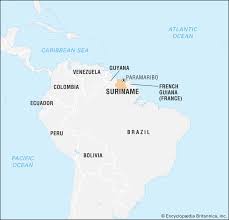
External Affairs Minister reviewed the full spectrum of India-Suriname relations during the 9th Joint Commission Meeting (JCM) held in Paramarib.
- It is a small country located on the northern edge of South America.
- It is bordered by Brazil to the south, French Guiana to the east; Guyana to the west.
- It is North Atlantic Ocean to the north.
- Capital City: Paramaribo
- It is a member country of CARICOM organization.
- Geographical Features of Suriname
- It has an equatorial climate almost everywhere, hot and humid throughout the year, with abundant rainfall.
- Mountain Ranges: Bakhuys Mountains and Van Asch Van Wijck Mountains.
- Highest Point: Its highest point is Juliana Top, in the Wilhelmina Mountains.
- Major rivers:It is drained by Suriname River, Maroni River, Courantyne River
- Natural Resource: It consists of natural resources, namely bauxite, gold, petroleum, and agricultural products.
Rusty Spotted Cat:
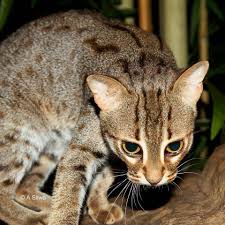
For the first time in Delhi-National Capital Region (NCR) and Haryana, a rusty-spotted cat has been photographed.
- Rusty Spotted Cat is the world’s smallest and lightest known cat
- Its large eyes may be an adaptation to its nocturnal behaviour.
- It prefers moist and dry deciduous forests, scrublands, grasslands, and rocky areas.
- It is found in India, Nepal, and Sri Lanka. In India, its range extends from Tamil Nadu to Jammu and Kashmir, including Madhya Pradesh, Gujarat, and Odisha.
- Characteristics:
- It is an excellent climber, which allows it to catch birds.
- It also preys on rodents, lizards, frogs and insects.
- Habitat loss, farm expansion, and industrial growth threaten nearly 75% of its range.
- Conservation Status:
- IUCN: Near Threatened
- CITES: Appendix I
- Wildlife Protection Act, 1972: Schedule I
Galapagos Archipelago:
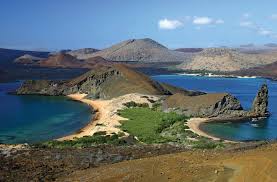
A newly installed monitoring system called smart island monitoring model promises to scale ecosystem conservation in Ecuador’s Galapagos archipelago.
- Galapagos Archipelago is situated in the Pacific Ocean, off the coast of Ecuador.
- It is distributed on either side of the Equator.
- The Archipelago is a group of islands
- Repeated volcanic eruptions helped to form the rugged mountain landscape of the Galápagos Islands.
- It is very young with the largest, and youngest islands, Isabela and Fernandina, with less than one million years of existence, and the oldest islands, Española and San Cristóbal, somewhere between three to five million years.
- Highest Point: Mount Azul
- It is characterized by low rainfall, low humidity, and relatively low air and water temperatures.
- It is designated as a UNESCO World Heritage site in 1978.
- It include the giant Galápagos tortoise (Chelonoidis nigra), the marine iguana (Amblyrhynchus cristatus), the flightless cormorant (Phalacrocoraz harrisi), and the Galápagos penguin.
- The Galápagos penguin (Spheniscus mendiculus) is the only penguin species to live in the Northern Hemisphere.
International Big Cat Alliance:

The Union Minister for Environment, Forest and Climate Change launched the website and logo for the 1st International Big Cat Alliance (IBCA) Summit 2026 which is to be hosted by India in New Delhi.
- International Big Cat Alliance is an inter-governmental international organisation launched in 2023 during the 50th anniversary of Project Tiger.
- It focuses on the conservation of seven big cats – Lion, Tiger, Leopard, Snow Leopard, Cheetah, Jaguar and Puma.
- Objective: To facilitate collaboration and synergy among stakeholders, consolidating successful conservation practices and expertise to achieve the conservation of big cats at a global level.
- It brings together 95 range and non-range countries, conservation partners, scientific organisations, and corporates to promote collaboration and share conservation practices.
- Implementation agency: The IBCA is implemented through the National Tiger Conservation Authority (NTCA) under the Ministry of Environment, Forest and Climate Change (MoEFCC).
- Founding Members: India, Armenia, Bangladesh, Bhutan, Cambodia, Egypt, Ethiopia, Ecuador, Kenya, Malaysia, Mongolia, Nepal, Nigeria, Peru, Suriname, & Uganda.
- Membership: Membership is open to all UN Member States, including:
- Range countries, where big cats naturally occur.
- Non-range countries that are interested in supporting global conservation of big cats.
- Institutional Support and Funding: India has committed ₹150 crore (for the period 2023–2028) as budgetary support for: Creating a corpus fund, Building infrastructure, and Covering recurring expenses of the IBCA.
- It is a main decision making body which is comprised of representatives of all member countries.
- It is established by the Assembly shall assist in effective and efficient functioning of the IBCA.
- Secretariat: It is based in New Delhi.
Swasth Bharat Portal:
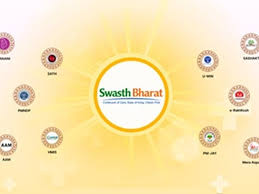
The Government of India has launched the Swasth Bharat Portal.
- It is a unified platform designed to integrate fragmented health programme systems across the country.
- It acts as a one-stop aggregator platform to integrate programme systems via APIs, enabling interoperability and reducing administrative burden It is a single platform:
- To eliminate duplicate data entry, streamline reporting, and support faster decision-making across health programmes.
- To provide easy access, along with data visualisation tools and the use of data at the local level for monitoring and evidence-based planning.
- It is designed to evolve into a comprehensive and interoperable digital health ecosystem, further integrating with national registries such as the Healthcare Professionals Registry (HPR) and Health Facility Registry (HFR).
- It is ABDM-compliant and supports integration with ABHA (Ayushman Bharat Health Account), enabling seamless and secure exchange of patient health records.
- It envisages the following:
- Reduce Infrastructure Duplication: Independent hosting, storage, and compute resources are maintained across programs, which will reduce when they will be aggregated through Swasth Bharat
- Reduce Repetitive Data Entry: Similar beneficiary data which was entered across multiple systems will be entered on a single platform thus reducing repetitive tasks
- Unified HR Deployment: Separate development and maintenance teams are required in all programs, a unified system will reduce the HR burden
- Increased Interoperability: As the system is designed on federated architecture via APIs, the interoperability will be higher
1 Year of Operation Sindoor:
Marking the one-year anniversary of Operation Sindoor, the Indian armed forces have significantly transitioned toward a high-tech, resilient defense posture characterized by hardened underground infrastructure and an integrated, multi-layered air defense shield. Operation Sindoor was a multi-dimensional military and strategic offensive launched by India on the night of 7–8th May, 2025. It was conducted in response to a major terror attack in Pahalgam, Jammu & Kashmir, on 22nd April, 2025, where 26 tourists were killed by the Pakistan-backed group The Resistance Front (TRF).
- A primary focus has shifted to constructing large-scale underground command and control centers at the Command and Corps levels to ensure operational continuity during active conflict.
- These facilities are being equipped with C4I2SR (Command, Control, Communications, Computers, Intelligence, Information, Surveillance, and Reconnaissance) systems to provide real-time situational awareness across all military branches.
- The military is utilizing 3D-printed bunkers for rapid deployment and resilience, alongside hardened bunkers for fuel, ammunition, and medical facilities along the Western borders.
- Following lessons from drone swarms during Operation Sindoor, India is establishing a comprehensive shield under Mission Sudarshan Chakra and enhancing the Akashteer (Army), Integrated Air Command and Control System (IACCS) (Air Force), and TRIGUN (Navy) integrated networks.
- Procurement has prioritized counter-UAS (Unmanned Aircraft Systems) to neutralize low-cost drone threats, integrating new sensors with legacy systems like L/70 anti-aircraft guns.
- Expansion includes emergency landing fields (ELFs) on national highways (e.g., Purvanchal Expressway) and the conversion of border airfields for civil-military dual use.
- Capabilities have expanded to “deny the enemy their own airspace” using long-range systems like the S-400 Triumf and the indigenous Project Kusha (Long-range Surface-to-Air Missile system).
- During Operation Sindoor, the IAF recorded the largest-ever surface-to-air kill, neutralizing a Pakistani airborne platform from a distance of approximately 300 km.
SC Expands Definition of Acid Attack Victims Under RPwD Act, 2016:

The Supreme Court of India has broadened the scope of the Rights of Persons with Disabilities (RPwD) Act, 2016, ruling that survivors of forcible acid ingestion must be legally recognised as ‘acid attack victims’. The Supreme Court expanded the RPwD Act, 2016, to recognise survivors of forcible acid ingestion as acid attack victims, extending disability rights, compensation, and legal protection through a deemed amendment under Article 142.
- Despite legal safeguards, acid attack survivors continue to face weak investigations, judicial delays, poor regulation of acid sales, social stigma, and delayed rehabilitation, highlighting the need for stricter enforcement, fast-track justice, and comprehensive survivor support.
- Expansion of the Term ‘Acid Attack Victim’: The Court has formally included survivors who were forcibly administered or forced to ingest acid.
Previously, the RPwD Act, 2016, only covered individuals disfigured by the throwing of acid. - The ruling clarified that victims suffering from severe internal organ damage due to acid exposure are fully entitled to protection and disability benefits, even if they do not exhibit any visible external disfigurement.
- Retrospective Applicability: To ensure complete justice, the Court directed that this expanded definition will operate retrospectively from 2016 (when the RPwD Act, 2016, was enacted).
- This critical move allows past victims of forced acid ingestion to retroactively claim disability benefits, financial aid, and official disability identity cards that they were previously denied.
- Interim “Deemed Amendment” via Article 142: Recognising the urgency of the situation, the Supreme Court did not wait for Parliament to officially amend the law.
- Instead, it invoked its extraordinary plenary powers under Article 142 of the Constitution to pass this as a “deemed amendment,” effectively acting as the law until the Union Government formally amends the Schedule of the RPwD Act, 2016.
Insulting Vande Mataram is a Punishable Offence:
The Union Cabinet has recently cleared a proposal to amend the Prevention of Insults to National Honour Act, 1971, making any intentional insult or obstruction to the singing of the National Song, Vande Mataram, a legally punishable offence.The Prevention of Insults to National Honour Act, 1971 strictly penalizes insults or disrespect towards the National Anthem (Jana Gana Mana), the National Flag, and the Constitution of India.Under the existing Section 3 of the 1971 Act, intentionally preventing the singing of the National Anthem or causing a disturbance carries a punishment of imprisonment extending up to three years, a fine, or both.The amendment will extend this exact statutory protection to the National Song.In February 2026, the Ministry of Home Affairs (MHA) issued instructions mandating that all six stanzas of Vande Mataram (lasting over three minutes) must be sung or played at official events.The MHA directed that the National Song should be given precedence over the National Anthem (written by Rabindranath Tagore) when both are featured at the same official event.The Supreme Court held that the MHA guidelines on Vande Mataram are purely advisory and carry no penal consequences for non-compliance.



