
Today’s Current Affairs: 9th May 2026 for UPSC IAS exams, State PSC exams, SSC CGL, State SSC, RRB, Railways, Banking Exam & IBPS, etc
Table of Contents
Tristan da Cunha:
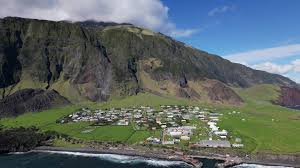
British military medics recently carried out a rare parachute mission to the remote South Atlantic island of Tristan da Cunha to assist a UK national suspected of contracting hantavirus after leaving the virus-hit cruise ship MV Hondius.
- It is both a group of islands in the South Atlantic Ocean and the largest island of that group.
- The archipelago is volcanic in origin.
- It is about midway between southern Africa and South America.
- It is considered the most remote inhabited chain of islands in the world.
- The islands were discovered in 1506 by Portuguese explorer Tristão da Cunha, after whom they are named.
- The island group is a constituent part of the British overseas territory.
- The main island, Tristan da Cunha, has a small settlement named Edinburgh of the Seven Seas. It has an estimated population of 250 permanent residents.
- Other islands in the Tristan Archipelago are uninhabited: two (Gough Island and Inaccessible Island) form a UNESCO World Heritage Site; Nightingale Island, Stoltenhoff and Alex (or Middle) Island also have globally significant biodiversity.
- The archipelago contains no airstrip and is accessible only by boat or helicopter.
- Tristan da Cunha has a unique economic and social structure in which land is communally owned and all families engage in farming.
Outsiders cannot settle or buy land on the islands. - In addition to agriculture, the other sectors of the economy are government and commercial fishing.
Indian Vulture:
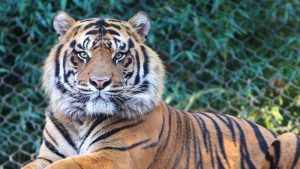
Two Indian vultures released in the Melghat Tiger Reserve (MTR) in Maharashtra’s Amravati district have been recently spotted near Bhopal in Madhya Pradesh after covering a flight distance of over 1,000 km.
- The Indian vulture, also called the long-billed vulture, is a bird of prey native to Asia.
- Scientific Name: Gyps indicus
- It is part of a group called ‘’Old World vultures’’.
- They belong to the Accipitridae family, which includes eagles and hawks.
- These are native to India, Pakistan, and Nepal.
- They are usually found in savannas and other open habitats around villages, cities, and near cultivated areas.
- It has suffered a 97-99% population decrease due to poisoning caused by the veterinary drug diclofenac.
- It was given to working animals, as it reduced joint pain and so kept them working for longer.
- Vultures got poisoned when they ate the meat of dead cattle that had been treated with diclofenac. This caused kidney failure in the vultures.
- Features:
- It is a bulky medium-sized Females of this species are smaller than males.
- They have a small, mostly bald head with few feathers.
- It has a long, featherless neck, dark eyes, and a long, yellowish beak.
- Its body and covert feathers are light brown.
- Its wings are broad, and its tail feathers are short.
- Its large wingspan allows it to fly long distances while using minimal energy.
- Conservation Status:
- IUCN Red List: Critically Endangered.
Melghat Tiger Reserve:
- It is located in Maharashtra’s Amravati district.
- Perched on the southern offshoot of the Satpura Hill Range, also known as the Gavilgarh Hills, the very name Melghat translates to “meeting of the ghats.”
- It was the first tiger reserve in Maharashtra.
- The Tapti River flows gracefully along the reserve’s northeastern boundary, while five tributaries—Khandu, Khapra, Sipna, Gadga, and Dolar—crisscross the sanctuary.
- Tribes: The Korkus are the largest tribal community in Melghat.
- It is dominated by tropical dry deciduous
- Towering teak trees (Tectona grandis) dominate, interspersed with other valuable species such as Ain (Terminalia tomentosa), Haldu (Adina cordifolia), and Bamboo.
- Sloth Bear, Indian Gaur, Sambar deer, Leopard, Nilgais, dhole, hyena, jungle cat, langur, etc.
- It is considered a stronghold of the critically endangered forest owlet.
National Panchayat Awards 2025:
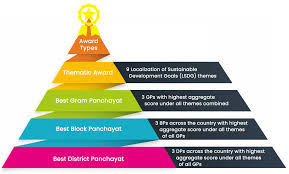
The winners of the National Panchayat Awards 2025 (NPA-2025) have been announced by the Ministry of Panchayati Raj (MoPR).
- National Panchayat Awards is awarded by the Ministry of Panchayati Raj annually to recognize and incentivize best-performing Panchayats.
- These awards have been revamped and launched during the year 2022 aligning them with 9 Localization of Sustainable Development Goals (LSDGs) themes aggregating 17 SDGs.
- Objective: To assess the performance of Panchayats in attainment of SDGs, promote competitive spirit among them and catalyze the process of LSDGs through Panchayati Raj Institutions for attaining LSDGs by 2030.
- The awards are given under the Incentivization of Panchayats (IoP) scheme, a central component of the Centrally Sponsored Scheme of Rashtriya Gram Swaraj Abhiyan (RGSA).
- All the Panchayats are ranked based on their performance under each of the following 9 LSGD themes :
- Poverty free and enhanced livelihoods Panchayat
- Healthy Panchayat
- Child Friendly Panchayat
- Water Sufficient Panchayat
- Clean and Green Panchayat
- Self-sufficient infrastructure in Panchayat
- Socially Just and Socially secured Panchayat
- Panchayat with Good Governance
- Women-Friendly Panchayat
- The awards are conferred under two distinct categories.
- Deen Dayal Upadhyay Panchayat Satat Vikas Puraskar (DDUPSVP): Recognises outstanding Gram Panchayats for their performance across 9 LSDGs themes.
- Nanaji Deshmukh Sarvottam Panchayat Satat Vikas Puraskar (NDSPSVP): It is conferred to the best-performing Panchayats at the District, Block, and Gram Panchayat levels on an overall basis.
Cyrtodactylus varadgiri:
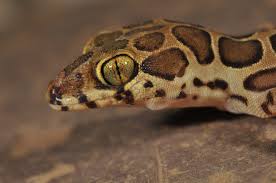
A relatively uncommon gecko species, Cyrtodactylus varadgirii, named after noted scientist Varad Giri, was recently spotted in Aarey forest by wildlife enthusiasts and a researcher.
- Cyrtodactylus varadgirii (Giri’s Geckoella) is a species of gecko in the gekkonidae family.
- It is nocturnal, insectivorous, and terrestrial, living in dense leaf litter on the forest floor.
- It is endemic to India and found in parts of western and Central India, Maharashtra, Gujarat, and Madhya Pradesh.
- The gecko was first discovered in 2016.
- It is one of the widely distributed but poorly known ground-dwelling geckos from India.
- It is also unusual among its close relatives in being associated not only with natural habitats but also with open and human-modified landscapes, including urban green spaces.
- Except for the record of the occurrence of this species from various locations, mostly during the monsoon, information on other aspects of its natural history is highly understudied.
Lupus Disease:
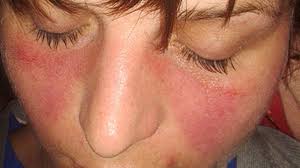
Every year, World Lupus Day is observed globally on May 10.
- It is a chronic autoimmune disease where the immune system mistakenly attacks healthy tissues and organs.
- It causes widespread inflammation and damage to joints, skin, kidneys, blood cells, brain, heart, and lungs.
- The causes of lupus are not known. But they may be linked to a person’s environment, family history (genetics), or hormonal factors.
- Lupus is much more common among women than men.
- It mostly affects people between 20 to 40 years old but can also occur in newborns, children, and older adults.
- There are several kinds of lupus:
- Systemic lupus erythematosus (SLE) is the most common It can be mild or severe and can affect many parts of the body. SLE accounts for 70% of lupus cases.
- Discoid lupus causes a red rash that doesn’t go away.
- Subacute cutaneous lupus causes sores after being out in the sun.
- Drug-induced lupus is caused by certain medicines. It usually goes away when you stop taking the medicine.
- Neonatal lupus, which is rare, affects newborns. It is probably caused by certain antibodies from the mother.
- Symptoms:
- Lupus causes symptoms throughout your body, depending on which organs or systems it affects.
- Everyone experiences a different combination and severity of symptoms.
- The symptoms of lupus occur in times of flare-ups. Between flare-ups, people usually experience times of remission, when there are few or no symptoms.
- The wide range of symptoms in the body includes joint pain, headache, rashes, fever, fatigue, mouth sores, confusion, swollen glands, and blood clots, among others.
- Left untreated, it can progress to damage the kidneys, lungs, heart, and even the brain.
- Treatment: There is no cure for lupus, but medicines and lifestyle changes can help control it.
United Nations Human Settlements Programme (UN-Habitat):
UN-Habitat launched the Catalogue of Solutions 2026-2029
- It is also commonly known as UN-Habitat, is the UN agency responsible for promoting sustainable urban development and adequate shelter for all.
- It was established in 1977 after the Habitat I Conference (1976).
- Its mandate is derived from several UN General Assembly resolutions and from the Habitat Agenda adopted during Habitat II (1996).
- Its central mission is to promote socially and environmentally sustainable towns and cities.
- Headquarters: Nairobi, Kenya.
- Governance of United Nations Human Settlements Programme
- UN-Habitat Assembly
- It is composed of all 193 UN member states.
- It convenes once every four years in Nairobi.
- It sets global priorities and approves the strategic plan.
- Executive Board
- It consists of 36 member states elected by the Assembly.
- It meets three times a year to oversee implementation of policies.
- Committee of Permanent Representatives (CPR)
- It includes all permanent representatives accredited to the UN Office in Nairobi.
- It acts as a continuous oversight and advisory body.
- UN-Habitat Assembly
Psyche Spacecraft:

NASA’s Psyche spacecraft captured a stunning crescent image of Mars from nearly 5 million kilometres away.
- Psyche Spacecraft was launched in 2023 by NASA.
- It is on a mission to reach the metal-rich asteroid also named Psyche.
- The body of the Psyche spacecraft is about the size of a small van.
- It uses a solar-electric propulsion system powered by xenon gas, slowly gaining speed over time as it travels through space.
- Scientific Instruments of Psyche Spacecraft
- Magnetometer: It will look for evidence of an ancient magnetic field at the asteroid Psyche.
- Gamma-ray and neutron spectrometer: It will help scientists determine the chemical elements that make up the asteroid’s surface material.
- Multispectral Imager: It consists of a pair of identical cameras equipped with filters and telescopic lenses to photograph the surface of the asteroid in different wavelengths of light.
MERCOSUR Group:
European Union (EU)-Mercosur trade agreement enforced amid farmers’ fears of unfair competition.
- The Southern Common Market (MERCOSUR for its Spanish initials) is a South American regional economic organization.
- It was created in 1991 by signing the Treaty of Asunción.
- Objective: Free movement of goods, services, capital and people and it became a customs union in 1995.
- Member countries:
- It originally comprised Argentina, Brazil, Paraguay, and Uruguay as its members.
- Bolivia and Venezuela joined it later. (Venezuela has been suspended since 2016).
- Headquarters: Montevideo, Uruguay.
- Its official working languages are Spanish and Portuguese.
- Governance of MERCOSUR Group:
- Common Market Council: It is the bloc’s highest decision-making body, and provides a high-level forum for coordinating foreign and economic policy.
- The group consists of the foreign and economic ministers of each member state, or their equivalent, and decisions are made by consensus.
- The group’s presidency rotates every six months among its full members.
- India and MERCOSUR: India and MERCOSUR signed a Preferential Trade Agreement (PTA) in 2004.
Trinidad and Tobago:
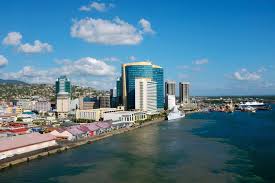
External Affairs recently held comprehensive talks with the Trinidad and Tobago Prime Minister to explore new ideas and initiatives for expanding bilateral cooperation between India and the dual-island nation.
- Trinidad and Tobago is an island country of the southeastern West Indies.
- It is the 5th largest island country in the West Indies and the most industrialised and prosperous nation in the Caribbean.
- Forming the two southernmost links in the Caribbean chain, it lies close to the continent of South America, northeast of Venezuela and northwest of Guyana.
- It consists of two main islands—Trinidad and Tobago—and several smaller islands
- Trinidad – the larger of the two islands, is crisscrossed by mountain ranges; the most dominant of these is the Northern Range, which is a continuation of the Andes
- It comprises beautiful waterfalls such as the famous 91-metre-high Blue Basin and Maracas Falls.
- The country is home to the Pitch Lake, one of the world’s largest natural asphalt deposits.
- It achieved independence from the United Kingdom in 1962 and obtained membership in the Commonwealth and the United Nations that same year.
- It became a republic in 1976.
- The capital is Port of Spain, located on the northwestern coast of Trinidad.
- Although English is the official language, most people speak Trinidad English, a creole language.
- A few people, mostly in rural areas, speak a French-derived creole, Spanish, or Caribbean Hindustani (a dialect of Hindi).
PM MITRA Park:

The Prime Minister of India inaugurated the PM MITRA Park at Warangal, Telangana.
- Pradhan Mantri Mega Integrated Textile Region and Apparel (PM MITRA) is a mega textile hub that brings every step of textile production, like spinning, weaving, dyeing, printing, and garment-making, into one single place.
- MITRA parks can be either Greenfield or Brownfield.
- The seven approved PM Mitra Parks are being set up in: Tamil Nadu (Virudhunagar), Telangana, Gujarat, Karnataka, Madhya Pradesh, Uttar Pradesh (Lucknow district) and Maharashtra.
- Nodal Ministry: Ministry of Textiles.
- PM MITRA Park Features:
- Integrated Value Chain: Each park brings spinning, garmenting, dyeing, and processing into a single zone, cutting transport time and costs.
- World-Class Infrastructure: PM MITRA will develop 50% area for pure Manufacturing Activity, 20% area for utilities, and 10% of area for commercial development.
- Public–Private Partnership: PM MITRA park will be developed by a Special Purpose Vehicle (SPV) which will be owned by the State Government and the Government of India in a Public-Private Partnership (PPP) Mode.
- The Ministry of Textiles will provide financial assistance up to Rs 800 crores per park for Greenfield projects and up to Rs 500 crores per park for Brownfield projects.
- The State Governments will provide land and augmented utility infrastructure for the proposed mega textile parks.
Rainbow Clouds:

Indonesia recently witnessed a breathtaking ‘rainbow cloud’ phenomenon, captivating residents and going viral online.
- A rainbow cloud can occur because of something called cloud iridescence.
- Cloud iridescence occurs when sunlight is diffracted by extremely small water droplets or tiny ice crystals suspended in clouds.
- Diffraction happens when light bends and spreads after encountering particles similar in size to the wavelength of visible light.
- This process separates sunlight into multiple colours, creating the striking pastel shades and rainbow-like patterns seen across the clouds.
- They form most clearly when cloud particles are unusually small and relatively uniform in size.
- Cloud iridescence does not appear frequently because several atmospheric conditions must align at the same time.
- The clouds need to be thin enough for sunlight to pass through while also containing droplets or ice crystals that are nearly identical in size.
- Even small differences between particles can weaken the colours or prevent the phenomenon from appearing altogether.
- The position of the Sun and the observer’s viewing angle are extremely important.
- Newly forming clouds and semi-transparent clouds are more likely to produce vivid iridescence because their particles tend to be more uniform.
- It is commonly seen in altocumulus, cirrocumulus, cirrus, and lenticular clouds.
- Lenticular clouds are especially known for dramatic iridescent displays because their smooth shape and stable airflow often allow highly uniform droplets to form.
- These clouds typically develop at high altitudes where atmospheric conditions remain relatively stable, making it easier for sunlight to interact consistently with suspended particles.
- Despite the popular nickname, rainbow clouds are not technically rainbows.
- Traditional rainbows form when sunlight is refracted, reflected, and dispersed inside raindrops after rainfall.
- Cloud iridescence, on the other hand, is mainly caused by diffraction and interference involving microscopic droplets or ice crystals.
- Iridescent clouds usually appear much closer to the Sun and often produce softer, less structured colour patterns than ordinary rainbows.
- Instead of forming a large arc across the sky, the colours spread unevenly across sections of cloud.



