
Today’s Current Affairs: 7th November 2025 for UPSC IAS exams, State PSC exams, SSC CGL, State SSC, RRB, Railways, Banking Exam & IBPS, etc
Table of Contents
India-Peru Trade Agreement:

The 9th round of India-Peru trade agreement was successfully concluded in Peru.
- Peru is situated just to the south of the Equator in South America.
- It is the third largest country in South America, after Brazil and Argentina.
- Bordering Countries: Ecuador (North), Brazil (East), Bolivia (Southeast) and Chile (South)
- Bordering Ocean: Its western border lies along the Pacific Ocean.
- It is characterized by three major regions: the Costa, Sierra, and Amazonia.
- The Costa is an arid coastal strip along the Pacific Ocean.
- The Sierra consists of the Andes Mountains, which run through the center of the country.
- The Andes are divided into three main ranges: the Cordilleras Occidental, Central, and Oriental.
- Highest Peak: Mount Huascarán (6,768 m)
- Rivers: Amazon, Ucayali, Madre de Dio
- It varies from tropical in east to dry desert in west; temperate to frigid in Andes.
- Natural Resources: Copper, silver, Gold, Petroleum, timber, Iron ore, coal, Phosphate, potash, natural gas.
- Capital City: Lima.
Karni Mata Temple:

A recent viral video has once again brought global attention to one of India’s most unusual temples – the Karni Mata Temple, also known as the ‘Rat Temple’ of Rajasthan.
- Karni Mata Temple, also known as the Madh Deshnoke, is a prominent Hindu shrine located in the town of Deshnoke, 30 km south of Bikaner, in Rajasthan.
- The temple is dedicated to Karni Mata, who the locals believe is an incarnation of Goddess Durga.
- Karni Mata was a Hindu warrior sage from the Charan caste who lived in the fourteenth century.
- Living the life of an ascetic, Karni Mata was highly revered by the locals and earned many followers too.
- Having received requests from the Maharajas of Jodhpur and Bikaner, she even laid the foundation stones of the Mehrangarh and Bikaner Forts.
- Although there are many temples dedicated to her, this temple in the town of Deshnoke is the most widely recognized.
- It is also known as the Temple of Rats.
- It is home to over 20,000 revered rats, called kaba, making it one of the most unique spiritual landmarks in India.
- Out of all the rats, white rats are held specifically sacred as they are believed to be the incarnations of Karni Mata and her sons.
- The present structure of the Karni Mata Temple was completed in the early 20th century under Maharaja Ganga Singh of Bikaner.
- Built entirely of marble, the temple’s design bears Mughal architectural influences.
- Its silver doors are intricately carved with scenes from the goddess’s legends, while the sanctum houses a 75-centimetre idol of Karni Mata holding a trident and adorned with a silver crown and garlands.
Khangchendzonga National Park:

The International Union for Conservation of Nature (IUCN) recently rated Khangchendzonga National Park as “good” in its latest global review of natural World Heritage sites.
- Khangchendzonga National Park is located in the north of Sikkim.
- It is a part of the Khangchendzonga Biosphere Reserve (KBR).
- KBR is India’s first “mixed” UNESCO World Heritage Site, recognised in 2016 for its combination of natural beauty and cultural importance.
- It is home to Khangchendzonga, the third highest peak in the world.
- It lies entirely along the Sikkim-Nepal border.
- It is a part of the Himalaya global biodiversity hotspot.
- It encompasses an area covering 1784 sq.km.
- It exhibits one of the widest altitudinal ranges of any protected area worldwide. The park has an extraordinary vertical sweep of over 7 kilometres (1,220 m to 8,586 m).
- It has a unique diversity of plains, valleys, lakes, glaciers, and spectacular, snow-capped mountains covered with ancient forests.
- It has, in total, 18 glaciers, the largest one being Zemu Glacier, one of the largest glaciers in Asia.
- It is one of the very few places where you will find the Lepcha tribal settlements.
- It is home to important flagship species such as the snow leopard, Tibetan wolf, red panda, blue sheep, Himalayan Tahr, and mainland serow, among many.
- It is home to nearly half of India’s bird diversity.
Minuteman III Missile: In News

The US Air Force successfully launched an unarmed Minuteman III ICBM, a test scheduled months in advance.
- The LGM-30G Minuteman III is an American-made Intercontinental Ballistic Missile (ICBM).
- “L” in LGM is the US Department of Defense designation for silo-launched; “G” means surface attack; and “M” stands for guided missile.
- Introduced in the early 1970s, the Minuteman III was the first missile in the US arsenal to feature multiple independently targetable reentry vehicles (MIRVs).
- It is the sole land-based component of the U.S. nuclear triad.
- It was developed for the United States by Douglas Aircraft Company, which later became part of McDonnell Douglas and then Boeing.
- Originally, it was only supposed to be kept in service for about ten years, but instead, it has been modernized as its replacement, the Ground-Based Strategic Deterrent (GBSD), is due to become available for use in 2029.
- The United States currently has an estimated 440 Minuteman III missiles in its arsenal.
- It weighs more than 30 tons and measures 18 meters long.
- Three-stage solid fuel rocket motors; post-boost stage for positioning re-entry vehicle is liquid-fueled.
- Approximately 15,000 mph (Mach 23 or 24,000 kph) at burnout (Hypersonic).
- It has a maximum range of approximately 13,000 kilometres.
- It is capable of carrying a payload of three re-entry vehicles.
- Originally capable of carrying three nuclear warheads, current configurations carry a single warhead, in compliance with arms control agreements between the United States and Russia.
- Each missile is housed in a hardened underground silo, connected to a launch control center via reinforced cables.
- It has a fast launch time, nearly 100 percent testing reliability, and backup airborne launch controllers to preserve retaliatory capabilities.
Black-headed Ibis:
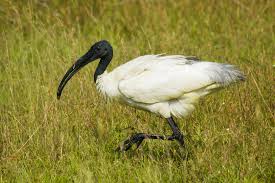
A flock of rare White Ibis, commonly known as Black-headed Ibis, was recently sighted in the salt pan regions of Thoothukudi district, Tamil Nadu.
- The black-headed ibis, also known as the Oriental white ibis, Indian white ibis, and black-necked ibis, is a species of wading bird of the ibis family Threskiornithidae.
- Scientific Name: Threskiornis melanocephalus
- These are called wader birds due to their adaptability to a wide variety of aquatic environments.
- It is found in South- and Southeast Asia from India to the west and as far east as Japan.
- Found primarily around wetlands including agricultural fields and occasionally around coastal areas, but also seen foraging in dry fields and human-modified landscapes.
- It is a large wader bird, with adults measuring 65–76 cm in length\
- It is the only native ibis species in its range that has an overall white plumage with a black neck and head.
- Males and females look similar and both have greyish tail feathers.
- Tails of adults bear light grey ornamental feathers that turn jet black during the breeding season.
- Conservation Status:
- IUCN Red List: Least Concern.
National Technical Textiles Mission : In News

The National Technical Textiles Mission supported the development of Indigenous Thermal Testing Instruments for Protective Textiles in association with Northern India Textile Research Association (NITRA).
- It was launched in 2020 by the Ministry of Textiles to boost technical textiles in India.
- It was launched for a period from 2020-21 to 2025-26 with an outlay of Rs.1,480 crores.
- Components of the National Technical Textiles Mission:
- Research, Innovation and Development: It supports R&D in technical textiles, inviting proposals to develop new materials and processes.
- Promotion and Market Development: It aims to increase technical textile adoption in India through market promotion and international collaborations.
- Export Promotion: Focuses on boosting exports of technical textiles with a dedicated export council.
- Education, Training, and Skill Development: Promotes technical textiles education, skill training, and internships in top institutes and industries.
Technical textiles:
- Technical textiles are defined as textile materials and products used primarily for their technical performance and functional properties rather than their aesthetic or decorative characteristics.
- Other terms used for defining technical textiles include industrial textiles, functional textiles, performance textiles, engineering textiles, invisible textiles, and hi-tech textiles.
- These products are broadly classified into 12 different categories- Agrotech, Oekotech, Buildtech, Meditech, Geotech, Clothtech, Mobiltech, Hometech, Sportstech,Indutech, Protech, Packtech.
- They are used in products that help protect people, improve machinery, and solve practical problems, such as in car parts, building materials, medical equipment, and safety gear.
Doha Political Declaration:

The Second World Summit for Social Development, hosted by Qatar, concluded with the adoption of the Doha Political Declaration, earning wide global praise for advancing social development and aligning it closely with the 2030 Sustainable Development Goals (SDGs).
- The Doha Political Declaration is the outcome document adopted at the Second World Summit for Social Development (2025), reaffirming global commitment to eradicate poverty, promote decent work, ensure social inclusion, and integrate these pillars into the broader framework of sustainable development.
- Hosted by the State of Qatar from November 4–6, 2025, at the Qatar National Convention Centre (Doha).
- Organized in collaboration with the United Nations, bringing together over 8,000 participants including heads of state, ministers, UN agencies, civil society, academia, and youth representatives.
Key features of the Declaration:
- Poverty Eradication: Recognizes elimination of poverty as a moral and developmental imperative, essential for equitable progress.
- Decent Work for All: Calls for creating inclusive labor markets and safe, fair employment opportunities to strengthen economic and social resilience.
- Social Inclusion: Promotes inclusion across gender, age, and marginalized groups to ensure no one is left behind in the pursuit of SDGs.
- Link to Sustainable Development: Emphasizes that social progress, economic growth, and environmental sustainability are inseparable pillars of human development.
- Action-Oriented Framework: Moves from problem diagnosis to implementable commitments and partnerships among governments, private sector, and civil society.
- Peace and Stability: Asserts that sustainable development requires peace, noting that conflicts reverse decades of social gains.
- Global Cooperation: Urges multilateral collaboration and financial investment to accelerate the 2030 Agenda.
- Transformative Vision: Seeks to build just, secure, and resilient societies, guided by shared responsibility and global solidarity.
India Celebrates Sheetal Devi:
Sheetal Devi, an 18-year-old para archer from Jammu and Kashmir, has shattered barriers by becoming the first para-athlete from India to be selected for an able-bodied national archery team. She will represent India in the Asia Cup 2025, scheduled to be held in Jeddah, Saudi Arabia, this December, competing in the compound women’s team category. This historic selection underscores the growing focus on merit-based inclusivity and the exceptional talent emerging from the para-sports ecosystem in India
PM Modi Launches NexCAR19:
Prime Minister Narendra Modi has launched NexCAR19, India’s first indigenous CAR T-cell therapy, aimed at revolutionizing cancer treatment. Developed through a collaborative effort between ImmunoACT, IIT Bombay, and Tata Memorial Hospital, with support from DBT (Department of Biotechnology) and BIRAC (Biotechnology Industry Research Assistance Council), NexCAR19 positions India firmly on the global map of cell and gene therapy innovation.NexCAR19 is a form of CAR T-cell therapy—a cutting-edge treatment where a patient’s own T-cells (a type of white blood cell) are genetically modified to express Chimeric Antigen Receptors (CARs). These modified cells can specifically identify and attack cancer cells, offering targeted and highly effective treatment. The therapy is specifically developed to treat B-cell blood cancers, including, Leukemia, Lymphoma. It is especially beneficial for patients whose cancers have relapsed or failed to respond to traditional first-line treatments like chemotherapy or radiation.
India’s Banking Giant SBI Reaches $100 Billion:
The State Bank of India (SBI) has achieved a historic dual milestone by crossing $100 billion in market capitalisation and ₹100 trillion in total business. This makes SBI not only the first Indian bank to achieve this scale but also a clear symbol of India’s emerging financial strength and the robustness of its public sector banking system. This remarkable achievement coincides with its strong Q2 FY26 performance, positioning SBI as a global contender in the banking space.With a significant rise in its share price after a solid quarterly earnings report, SBI entered the elite $100 billion market-cap club, joining top global banks and Indian companies such as Reliance Industries and TCS. This market cap surge reflects growing investor confidence and SBI’s expanding presence in the retail, SME, and corporate lending segments.
China Launches Third Aircraft Carrier ‘Fujian’:
China has officially commissioned its third aircraft carrier, the Fujian, touted as its most advanced and modern warship to date. The induction ceremony, held at Sanya Port in Hainan Province, was attended by President Xi Jinping and kept under tight security. What sets the Fujian apart is its incorporation of Electromagnetic Aircraft Launch System (EMALS)—a technology previously exclusive to the US Navy’s USS Gerald R. Ford. The Fujian represents a significant advancement in Chinese naval engineering and military power. It is China’s first flat-deck aircraft carrier, allowing for more efficient aircraft launch and recovery. Equipped with EMALS, the carrier can launch aircraft with full fuel and weapons payloads, greatly enhancing operational range and strike capability. It features electromagnetic arresting gear and an all-electric propulsion system, placing it on par with modern Western aircraft carriers.
With a displacement of approximately 80,000 tonnes, the Fujian is the largest and most sophisticated warship in China’s naval fleet.
Raahul VS becomes India’s 91st Grandmaster:
Raahul VS officially becomes India’s 91st Grandmaster (GM). Clinching the title at the 6th ASEAN Individual Championship 2025, Raahul secured the GM norm with a round to spare, highlighting his dominance and composure in international competition. This achievement reinforces India’s growing prominence in world chess and its consistent production of top-tier talent.



