
Today’s Current Affairs: 3rd December 2025 for UPSC IAS exams, State PSC exams, SSC CGL, State SSC, RRB, Railways, Banking Exam & IBPS, etc
Table of Contents
Norovirus: Rising
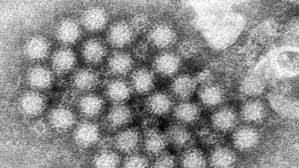
Cases of norovirus, commonly known as the “winter vomiting disease,” have been rising in the United States in recent weeks.
- Norovirus is a common and highly contagious virus that causes inflammation in the stomach and intestines, a condition known as gastroenteritis.
- It is also sometimes referred to as the ‘stomach flu’ or the ‘winter vomiting bug’.
- Norovirus outbreaks usually happen seasonally in colder months.
- People of all ages can get infected and sick with norovirus, which spreads very easily and quickly.
- It gets transmitted from an infected person, contaminated food or water, or by touching contaminated surfaces.
- Symptoms:
- Vomiting, diarrhea, stomach cramp, nausea, fever, and tiredness.
- In extreme cases, loss of fluids could lead to dehydration.
- Treatment:
- Most people recover completely without treatment.
- No vaccines are currently available to prevent norovirus.
- It is important to maintain hydration in the acute phase.
- In extreme cases, patients have to be administered rehydration fluids intravenously.
Sariska Tiger Reserve : Adopting New Technology To Monitor
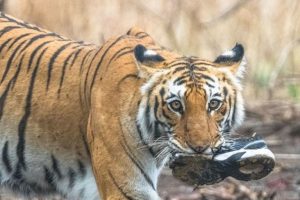
The administration of the Sariska Tiger Reserve in eastern Rajasthan is adopting new technology like drones to monitor its steadily increasing tiger population.
- It is located in the Alwar district, Rajasthan.
- It is a part of the Aravali Range and the Kathiawar-Gir dry deciduous forests eco-region.
- It became a Tiger Reserve under Project Tiger in 1979.
- It holds the distinction of being the world’s first reserve to successfully relocate tigers after local extinction due to poaching in 2004.
- It is also famous for old temples, palaces, and lakes such as Pandu Pol, Bhangarh Fort, Ajabgarh, Pratapgarh, Siliserh Lake, and Jai Samand Lake.
- It possesses a rocky landscape, scrub thorn arid forests, grasses, hilly cliffs, and semi-deciduous wood.
- The vegetation of Sariska corresponds to Northern Tropical Dry Deciduous Forests and Northern Tropical Thorn
- The area of this reserve is covered with dhok trees.
- Other species found include salar, kadaya, gol, ber, Banyan, gugal, bamboo, kair, adusta, etc.
- A variety of other wild animals, like the leopard, sambhar, chital, nilgai, four-horned antelope, wild boar etc are found in the reserve apart from the tiger.
Svalbard:
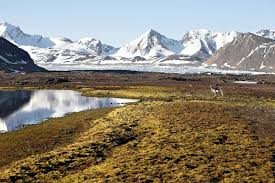
A significant new discovery recently emerged in the Arctic, with scientists spotting an unexpected gathering of walruses on the remote shores of Svalbard, a wild stretch of land nestled between mainland Norway and the North Pole.
- Svalbard is a Norwegian archipelago that is situated in the Arctic Ocean, to the north of the European mainland.
- It is located about halfway between the North Pole and the northern part of Norway.
- It is the northernmost place in the world with a permanent population.
- It was discovered by the Dutch explorer Willem Barentsz in 1596.
- The Svalbard Treaty, 1920 established Norwegian sovereignty over the Svalbard Islands.
- Spitsbergen is the largest and most populous
- The island is bounded by the Arctic Ocean, the Greenland Sea, and the Norwegian Sea.
- The Svalbard Global Seed Vault is also located on Spitsbergen. It is the largest backup facility for the world’s crop diversity.
- The archipelago features an Arctic climate, although with significantly higher temperatures than other areas at the same latitude.
- Due to its location in the northern part of the Arctic Circle, the Svalbard Islands experience the midnight sun during the summer months and polar night during the winter months.
- Vegetation consists mostly of lichens and mosses; the only trees are the tiny polar willow and the dwarf birch.
- Svalbard is a breeding ground for many seabirds, and also features polar bears, reindeer, the arctic fox, and certain marine mammals.
- Walrus is a large mammal that lives in the cold Arctic seas of Europe, Asia, and North America.
- It is closely related to the seals.
- The walrus can be told apart from seals by the two large upper teeth, called tusks, that stick down from its mouth.
- Scientific Name: Odobenus rosmarus.
- There are two subspecies: the Atlantic walrus (Odobenus rosmarus rosmarus) and the Pacific walrus (O. rosmarus divergens).
Ramban Sulai Honey:

The Prime Minister, during the 128th episode of his radio programme ‘Mann Ki Baat’ noted that Ramban Sulai honey from Jammu and Kashmir, made from wild basil, gained wider recognition after receiving a GI tag.
- Ramban Sulai Honey, produced in the Ramban District of Jammu and Kashmir, is known for its rich taste, aromatic floral undertones, and high nutritional value.
- Extracted from Sulai plants growing in the Himalayas, it is valued for its medicinal properties and purity.
- The bees forage on the nectar of snow-white blossoms of Sulai during the months of August to October to produce this well-rounded, naturally sweet honey with floral undertones.
- This crystal-clear honey, ranging from white to amber, contains essential minerals, enzymes, and vitamins that enhance its health benefits.
- Due to superior bee strains and favourable climatic conditions, the honey yield in Ramban is significantly higher than in other regions.
- It earned a Geographical Indication (GI) tag in 2021.
- The Government of India declared Ramban Sulai Honey as the district’s “One District, One Product.”
Protosticta sooryaprakashi:
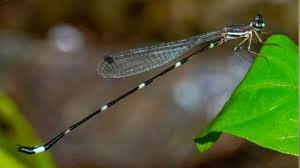
A new species of damselfly named, Protosticta sooryaprakashi, sporting vibrant sky-blue markings, has been recently discovered in the biodiversity hotspots of India’s Western Ghats.
- It is a new species of damselfly.
- Named the Kodagu Shadowdamsel, it was discovered in Karnataka’s Kodagu district.
- The species has been named in honour of the late Dr. Sooryaprakash Shenoy, a renowned botanist.
- Sporting striking sky-blue markings, the Kodagu Shadowdamsel thrives in low-light habitats and requires pristine environmental conditions to breed.
- Its presence is a strong indicator of a healthy ecosystem with minimal pollution.
- Despite its resemblance to its close relatives, its slender build makes it the thinnest member of the damselfly family.
- Unlike dragonflies, which inhabit bright, sunny spaces, damselflies like the Kodagu Shadow damsel favour cool, shaded areas, making sightings rare and significant.
Booth Level Officer:
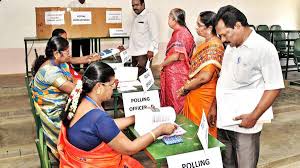
Concerns have been raised with several Booth Level Officers (BLOs) deaths that have been reported from the states undergoing Special Intensive Revision (SIR) of electoral rolls.
- The BLOs are representatives of the Election Commission of India (ECI) at the grass-root level who assist in updating the electoral roll using their local knowledge.
- They are local government officials who are familiar with the local electors and enrolled as voters in the same polling area.
- Teachers, Anganwadi workers, Panchayat Secretary, Village Level Workers, Electricity Bill Readers, etc are mainly appointed as BLOs.
- BLOs are not full-time electoral officials.
- Section 13B (2) of the Representation of People Act, 1950 provision paved the way for the introduction of appointing a BLO for the first time in August 2006.
- They play a significant role in the process of roll revision and collecting actual field information with regard to the roll corresponding to the polling area assigned to them.
- They maintain accuracy and fidelity of the electoral roll at the polling booth level.
- An important role of the BLO is the distribution of Voter Slips to the voters’ households before the poll day.
- BLOs inform the eligible Electors (senior citizens above 85 years & PwDs with benchmark certificate) about availing Home Voting Facility and Postal Ballot Facility by filling Form 12D.
- BLOs promote applications launched by the ECI to facilitate voting and ensure an accurate electoral roll.
- The popular voter oriented apps like Voter Helpline App, e-VIGIL app, Know you candidate app, Saksham-ECI.
Darjeeling Mandarin Orange:
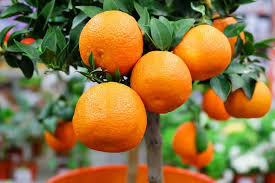
The Darjeeling Mandarin orange received the Geographical Indication status.
- It is grown in the hills of Darjeeling in West Bengal.
- The Mandarin Orange (Citrus reticulata Blanco) is a major cash crop of the Darjeeling Hills.
- It is the third product from the region, after Darjeeling Tea and Dalley Khursani chilli, to get the tag.
- It is commonly known as “suntala”, and is the pride of Darjeeling hills due to its delightful aroma and flavou
- It grows well in all frost free tropical and sub-tropical regions.
- Annual rainfall: 100-120 cm.
- Temperature: Ranging from 10–35°C is suitable for cultivation of the crop.
- Soil: It requires medium or light loamy soils.
Geographical Indication Tag:
- It is used for products with a specific geographical origin, possessing unique qualities or reputation due to that origin.
- This is typically used for agricultural products, foodstuffs, beverages, handicrafts and industrial products.
- The Geographical Indications of Goods (Registration and Protection) Act, 1999 seeks to provide for the registration and better protection of geographical indications relating to goods in India.
- This GI tag is valid for 10 years following which it can be renewed.
Bamboo Shrimp:
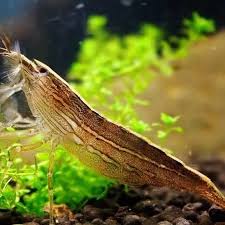
A team of researchers rediscovered Indian populations of the bamboo shrimp in Karnataka and Odisha after 72 years.
- Bamboo Shrimp is a freshwater shrimp native to Southeast Asia.
- Common names: Wood Shrimp, Flower Shrimp, Singapore Wood, Marble Shrimp and Asian Fan Shrimp.
- Characteristics of Bamboo Shrimp:
- They have the ability to camouflage themselves according to the environment.
- They are primarily nocturnal, spending daylight hours sheltering under rocks or driftwood.
- They are adapted to live in fast-moving streams and rivers, using their strong legs to cling to rocks and other surfaces.
- These shrimps are found in various countries of Southeast Asia. Their distribution range includes Malaysia, Singapore and Thailand.
- They are social invertebrates commonly found in fast-flowing streams and rivers.
- They are omnivorous filter feeder shrimp species, that feed on algae and microscopic organisms.
Khiamniungan Tribe:
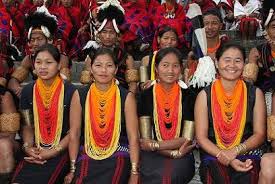
The Prime Minister of India mentioned about the Khiamniungan tribe in his ‘Mann Ki Baat’ episode.
- The Khiamniungan tribe is one of the major tribes among the Nagas, with habitation both in India and Myanmar.
- The meaning of the term Khiamniungan is ‘source of great water or river’.
- The traditional social structure was based on the clan system.
- They speak Khiamniugan, one of the Naga languages which belong to the Sino- Tibetan language.
- They celebrate Tsokum Sumai in the month of September or in the first past of October to invoke blessing for a rich harvest.
- They also celebrate Khaotzao Sey Hok-ah sumai which marks the end of all agricultural activities for the year.
- Farming is one of the primary occupations of the people of this region. They traditionally practice jhum cultivation.
- They have been practicing cliff-honey hunting for centuries.
Perseverance Rover:

NASA’s Perseverance rover recently detected electrical activity in Mars’ atmosphere for the first time.
- Perseverance, nicknamed “Percy“, is a semi-autonomous rover the size of a small car designed to explore the surface of Mars.
- It is part of NASA’s ongoing Mars 2020 Mission.
- Successfully landed on the surface of Mar’s Jezero Crater in 2021.
- It is the first rover to actually land in an ancient Martian river delta, located inside the Jezero crater.
- Seek signs of ancient life and collect samples of rock and regolith (broken rock and soil) for possible return to Earth.
- The rover will be able to detect organic matter and minerals, map the chemical composition of rocks and sediments, and zoom in on distant rocks and rugged terrain for further inspection.
- It is the first rover to record sounds on Mars and broadcast them back to Earth.
- It is the first rover to create oxygen on Mars. Perseverance carries an instrument called MOXIE, which can generate oxygen from Mars’ carbon dioxide atmosphere.
- Perseverance is built from the same basic design as Curiosity, which landed on Mars about a decade before Perseverance.
- Multi-Mission Radioisotope Thermoelectric Generator (MMRTG). It converts heat from the radioactive decay of plutonium into electricity.
- Ingenuity Helicopter is a small, autonomous aircraft.
- Objective: Technology demonstration to test the first powered flight on Mars.
- The helicopter rode to Mars attached to the belly of the Perseverance rover.
- It became the first aircraft in history to make a powered, controlled flight on another planet.
- Ingenuity uses solar power to charge its batteries and can operate autonomously.
India’s Disaster Risk Financing:
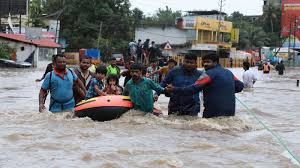
The Union Government recently sanctioned only Rs 260 crore in disaster relief to Kerala following the devastating Wayanad landslides of July 2024, against the State’s estimated losses of Rs 2,200 crore.
- This glaring disparity has reignited debates around the weakening of cooperative federalism and the increasing centralisation of disaster-risk finance in India.
- 15th Finance Commission (2021-22 to 2025-26): Expanded India’s disaster-financing architecture beyond the earlier response-only funds, the National Disaster Response Fund (NDRF) and State Disaster Response Fund (SDRF) created under the Disaster Management Act, 2005.
- It recommended separate mitigation funds at both levels, leading to the creation of the National Disaster Risk Management Fund (NDRMF) and State Disaster Risk Management Funds (SDRMF), combining relief and mitigation into a unified risk-management framework.
- The 15th Finance Commission (2021–26) allocates disaster-management funds primarily on population, total geographical area, and historical spending trends.
- State Disaster Response Fund: Primary fund with States for immediate relief (food, shelter, medical aid, compensation).
- Funded 75:25 (Centre:State) for general States and 90:10 for Northeast & Himalayan States.
- Covers notified disasters such as floods, cyclones, earthquakes, landslides, etc.
- States may use up to 10% for local disasters based on State-defined norms.
- The annual Central contribution is released in two equal installments as per the recommendation of the Finance Commission.
- National Disaster Response Fund (NDRF) supplements SDRF when a disaster is declared “severe” and SDRF is insufficient.
- NDRF is entirely funded by the Central Government.
- National & State Disaster Risk Management Funds (NDRMF & SDRMF): As recommended by the 15th Finance Commission central government had constituted the National Disaster Mitigation Fund (NDMF) in 2021 and also advised all the State Governments to set up State Disaster Mitigation Fund (SDMF) in the State.
- So far, all the States, except Telangana, have initiated the setting up of SDMF.
- The Centre contributes 75% of SDMF for general states and 90% for North-Eastern and Himalayan states, strengthening long-term resilience across vulnerable regions.
- These funds support states in implementing mitigation projects such as flood control, landslide prevention, and seismic safety.
Uranium Contamination in Delhi:
New groundwater testing by the Central Ground Water Board shows rising uranium levels in Delhi, with 13–15% of samples showing elevated contamination.Uranium contamination refers to the presence of uranium— a naturally occurring radioactive heavy metal— in groundwater at levels above permissible limits for safe drinking water.
World Health Organization (WHO) guideline
30 micrograms per litre (µg/L)
Equivalent to 03 milligrams per litre (mg/L).
BIS (Bureau of Indian Standards) – IS 10500:2012 (Revised)
World AIDS Day 2025:

The Ministry of Health and Family Welfare organised the World AIDS Day 2025 observance under the theme “Overcoming disruption, transforming the AIDS response” and highlighted the national progress on AIDS control.
- In 1998, WHO marked the first World AIDS Day on 1st December to recognize the crucial role of civil society in driving a global response to HIV/AIDS.
- HIV is a virus that attacks the immune system, primarily damaging CD4 cells (white blood cells), weakening the body and making it vulnerable to infections and cancers.
- Occurs via direct contact with infected bodily fluids (blood, semen, breast milk, vaginal fluids) like unprotected sex, shared needles, or unsterilized tattooing. It is not spread through casual contact.
- Early signs include fever and rash. Later stages may involve swollen lymph nodes, weight loss, and diarrhea. Severe HIV can lead to opportunistic illnesses such as tuberculosis, meningitis, and cancers like lymphoma.
- There is no cure. However, lifelong daily Antiretroviral Therapy (ART) effectively controls the virus.
- UN Sustainable Development Goal 3.3 aims to end the HIV epidemic as a public health threat by 2030.
India Re-Elected to UNESCO Executive Board for 2025–29:
India has been re-elected to the UNESCO Executive Board for the 2025–29 term, reaffirming global confidence in its leadership in multilateral governance.The Executive Board is one of UNESCO’s three constitutional organs responsible for supervising programme implementation and providing strategic direction to the organisation.UNESCO was created in 1945, and the Executive Board became its core governing body soon after the Constitution came into force in 1946. The Board consists of 58 Member States each elected for a four-year term by the General Conference. Members are selected through regional electoral groups to ensure equitable representation.Headquarters: UNESCO and its Executive Board operate from Paris, France.



