
Today’s Current Affairs: 2nd January 2026 for UPSC IAS exams, State PSC exams, SSC CGL, State SSC, RRB, Railways, Banking Exam & IBPS, etc
Table of Contents
Close Quarter Battle (CQB) Carbine:

The Ministry of Defence recently signed defence procurement contracts worth ₹4,666 crore for the acquisition of Close Quarter Battle (CQB) Carbines for the Indian Army and Navy and Heavyweight Torpedoes for the Indian Navy.
- The 56 x 45 mm CQB Carbine is an indigenously designed, developed and manufactured (IDDM) compact firearm.
- It has been designed by DRDO’s Armament Research & Development Establishment (ARDE), Pune, and is being manufactured by Bharat Forge Ltd (a Pune based Indian multinational).
- CQB carbines are compact, lightweight weapons designed specifically for urban warfare, close-range engagements and counter-terrorism
- Their reduced size compared to standard rifles offers enhanced manoeuvrability in confined spaces whilst maintaining operational effectiveness.
- It has an effective range of 200 meters.
- The weapon also uses a 30-round curved magazine to ensure reliable feeding during rapid fire.
- It can fire both NATO-standard and INSAS ammunition.
Oreshnik Missile:

Russia recently announced that its nuclear-capable Oreshnik missiles have entered active service in Belarus, a neighbouring ally that shares borders with NATO members Poland, Lithuania, and Latvia.
- It is a Russian-made intermediate-range nuclear-capable ballistic missile.
- It was first launched operationally in 2024, in a precision strike targeting the Pivdenmash defence-industrial facility in Dnipro, Ukraine.
- It is mounted on a mobile transporter and launcher for rapid deployment and concealment.
- It has an estimated range range of 5,000 kilometres.
- Equipped with Multiple Independently Targetable Re-entry Vehicles (MIRVs), the “Oreshnik” can carry six to eight warheads, conventional or nuclear, hitting multiple targets simultaneously.
- It is a hypersonic missile, capable of reaching speeds up to Mach 10.
Sirkeer Malkoha:
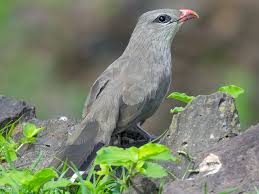
The rare Sirkeer Malkoha (Taccocua leschenaultii), a bird species typically found in Uttarakhand’s plains, has been recently recorded for the first time in the Uttarkashi district.
- The sirkeer malkoha, or sirkeer cuckoo, is a special type of cuckoo bird.
- Scientific Name: Taccocua leschenaultii
- Unlike some cuckoos, it does not lay its eggs in other birds’ nests.
- This species is widespread across the sub-Himalayan Indian subcontinent, extending into Bangladesh, Sri Lanka, and, more patchily, into Pakistan and Rajasthan.
- It is typically found in scrub and thin forest habitats, often favoring hilly terrain.
- These birds have special feet called zygodactyle feet. This means two toes point forward and two point backward. This helps them grip branches and move on the ground.
- Conservation Status:IUCN Red List: Least Concern.
PathGennie:

The Ministry of Science and Technology has developed new open-source software called PathGennie.
- It is a novel computational framework developed by scientists can significantly accelerate the simulation of rare molecular events.
- It is open source software developed for fast tracking of drug discovery by accurately tracking molecular unbinding pathways.
- It addresses a long-standing challenge in molecular simulations — accurately modelling how drug molecules detach from their target proteins.
- This process, known as ligand unbinding, plays a key role in determining a drug’s “residence time”, which is often more relevant to therapeutic effectiveness than binding strength alone.
- It predicts the potential drugs unbind from their protein targets without the artificial distortions commonly used in standard methods.
- It mimics natural selection on a microscopic scale instead of forcing the molecule to move.
- It captures rare molecular events without artificial acceleration.
- It generates multiple competitive unbinding pathways.
- It estimates residence time of drug molecules.
- It eliminates bias introduced by external force-based simulations.
BEE Standards and Labelling Programme:

The Bureau of Energy Efficiency (BEE) has tightened India’s energy efficiency regime by making star labelling mandatory for a wider range of appliances, thereby expanding compulsory energy performance disclosure under the Standards and Labelling (S&L) Programme.
- BEE’s Standards and Labelling (S&L) Programme launched in 2006 under the Energy Conservation Act, 2001 by the Ministry of Power, Government of India, and implemented by the BEE.
- S&L Programme enables informed consumer choice, reduces electricity consumption and energy bills, and encourages manufacturers to adopt energy-efficient technologies.
- A key feature of the programme is the star labelling system, which rates appliances on a scale of one to five stars based on their energy efficiency.
- Five stars indicating the most energy-efficient product within a given category, making efficiency comparison simple and visual for consumers.
- Under the programme, appliances are tested against prescribed Indian Standards and assigned star ratings based on their energy consumption and performance parameters, with labels displaying essential information such as star rating, annual energy use, product category, and brand.
- The programme covers a wide range of household appliances and industrial equipment, with some products brought under mandatory star labelling and others under voluntary labelling, depending on government notifications and market readiness.
Government Notifies Market Access Guidelines under EPM:
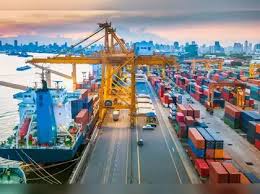
The Ministry of Commerce & Industry has notified the first set of market access guidelines under the Export Promotion Mission (EPM) to enhance global market reach for Indian exporters.
- Exporters, especially MSMEs, receive funding for trade fairs, Buyer-Seller Meets (BSMs), Mega Reverse Buyer-Seller Meets (RBSMs), and trade delegations.
- Financial assistance will be provided for up to two delegates per firm, with a minimum delegation of 50 participants, of which at least 35% must be MSMEs.
- Firms eligible for up to 3 BSMs, MSMEs up to 4 BSMs per financial year.
- It is a single, digitally enabled umbrella framework aimed at strengthening India’s export ecosystem and enhancing the global competitiveness of MSMEs and labour-intensive sectors.
- The EPM merges fragmented schemes into a unified framework through two core sub-schemes:
- Niryat Protsahan: Provides financial support, including affordable trade finance, interest subvention, collateral aid, and credit enhancement for MSMEs.
- Niryat Disha: Focuses on non-financial enablers like quality compliance, branding, logistics support, trade fair participation, and district-level capacity building.
- It is anchored in a coordinated institutional framework involving the Department of Commerce, Ministry of MSME, Ministry of Finance, DGFT, Export Promotion Councils, and state governments.
- The Directorate General of Foreign Trade (DGFT) serves as the implementing agency.
Haryana Village Common Lands (Regulation) Act, 1961:
The Haryana Legislative Assembly has amended the Haryana Village Common Lands (Regulation) Act, 1961 to enable unauthorised occupants to purchase certain categories of ‘Shamilat deh’ land from gram panchayats and convert it into private ownership, shifting village commons governance from social protection to ownership through payment.
- It aims to reduce long-pending litigation, clear revenue court backlogs, resolve village land disputes and generate revenue for gram panchayats.
- It converts long-standing informal possession into formal ownership, improving land records, planning and service delivery.
- The amendment moves village commons from a rights-based protective framework towards a market-based ownership model, prioritising administrative efficiency over social justice.
- Landless and Dalit households risk shrinking access to village commons, weakening a critical social safety net for grazing, fuel and subsistence.
- It may legitimise long-standing illegal occupation, converting de facto possession into de jure ownership rather than correcting unequal land control.
- Those with money, paperwork capacity and political networks are more likely to gain ownership, stabilising elite capture of commons.
Dynamic Ground Water Resource Assessment Report, 2024:
Geographical features and their location-changes in critical geographical features (including water-bodies and ice-caps).he Union Minister of Jal Shakti has released the Dynamic Ground Water Resource Assessment Report, 2024, showing a net improvement in groundwater status with higher recharge and lower long-term extraction compared to 2017.
Key trends of ground water resources in India:
- Total annual groundwater recharge is 446.90 BCM, showing a long-term rise driven by rainwater harvesting and water conservation structures.
- Annual groundwater extraction stands at 245.64 BCM, with the stage of extraction at 60.47%, indicating overall national-level sustainability.
- 73.4% of assessment units are now categorised as Safe, up from 62.6% in 2017, reflecting improved management practices.
- Over-exploited units have fallen from 17.24% (2017) to 11.13% (2024), indicating partial reversal of groundwater stress.
- Recharge from tanks, ponds and water conservation structures has increased to 25.34 BCM, nearly doubling since 2017.
- Over-exploited and critical units remain concentrated in Punjab, Haryana, Delhi, Rajasthan, Tamil Nadu, Karnataka, Telangana and Gujarat.
- Nearly 61% of recharge comes from rainfall, making groundwater availability highly sensitive to monsoon variability and climate change.
E-Bill System for fertiliser subsidies:

The Union Government has launched an integrated e-Bill System to digitally process fertiliser subsidies worth about ₹2 lakh crore.
- The e-Bill System is an end-to-end digital platform for submission, processing, tracking, and payment of fertiliser subsidy bills, replacing the earlier manual, paper-based workflow.
- Ministry involved: Ministry of Chemicals and Fertilizers
- Aim:
- Ensure timely, transparent, and accountable disbursal of fertiliser subsidies.
- Strengthen financial control, auditability, and efficiency through digital governance.
BSNL launches Voice over WiFi (VoWiFi):
BSNL has launched Voice over WiFi (VoWiFi) services nationwide across all telecom circles, enabling calls and messages over Wi-Fi.Voice over WiFi (VoWiFi) is a technology that allows users to make and receive voice calls and SMS over a Wi-Fi network instead of a mobile tower.
- It works using IMS (IP Multimedia Subsystem) and uses the same mobile number and phone dialer, without any third-party app.
- The smartphone uses an available home, office, or public Wi-Fi network to connect to the telecom network, instead of relying on a nearby mobile tower
- The user is authenticated through the SIM card, ensuring the same level of security and identity verification as regular mobile calls.
- Voice is converted into digital data packets and transmitted over the internet, allowing calls even where mobile signals cannot reach.
- When Wi-Fi becomes weak or unavailable, the call automatically shifts to the mobile network (VoLTE) without interruption or call drop.
The Central Excise (Amendment) Act, 2025:
The Centre has notified the Central Excise (Amendment) Act, 2025 and related tax changes on tobacco products, effective February 1, 2026.
- The Central Excise (Amendment) Act, 2025 amends the Central Excise Act, 1944 to revise excise duties on tobacco and tobacco-related products, which remain outside the full GST framework.
- The move ends the GST compensation cess, revises excise duties, and aims to raise tobacco prices in line with public health and fiscal objectives.
Key features of the Act:
- Updates central excise duties on tobacco to maintain and enhance the overall tax burden after the end of GST compensation cess.
- Higher duties on tobacco products:
- Unmanufactured tobacco: 64% → 70%
- Chewing tobacco: 25% → 100%
- Hookah/gudaku tobacco: 25% → 40%
- Smoking mixtures for pipes/cigarettes: 60% → 325%
- Cigarettes: From ₹200–₹735 to ₹2,700–₹11,000 per thousand sticks
- Public health objective: Aligns with global guidance to ensure real cigarette prices rise faster than incomes.
- GST rate restructuring:
- Beedis: Moved to 18% GST
- All other tobacco products: Moved to 40% GST
- New valuation mechanism: GST value based on retail sale price declared on the package for chewing tobacco, gutkha, khaini, jarda, etc.
UPI Transactions Surge to 21.63 Billion in December 2025:
India’s digital payments ecosystem continues to expand rapidly. In December, transactions through the Unified Payments Interface recorded strong growth in both volume and value. The latest figures underline the growing reliance on cashless payments by individuals and businesses, reinforcing India’s position as a global leader in real-time digital payment systems.The National Payments Corporation of India (NPCI) released data showing that UPI transaction volume increased by 29% year-on-year to 21.63 billion transactions in December. Transaction value and daily usage also rose significantly, reflecting sustained growth in digital payment adoption across the country.UPI transactions reached 21.63 billion, showing a sharp annual rise of 29%.The value of transactions increased by 20% year on year, reaching nearly ₹28 lakh crore.On a monthly basis as well, both volume and value showed healthy growth, indicating consistent user engagement rather than one-time spikes.
India, Pakistan Complete Exchange of Nuclear Facility Information:
India and Pakistan have continued an important diplomatic tradition related to nuclear safety. Both countries exchanged the list of their nuclear installations and facilities through official diplomatic channels. This step reflects an established confidence-building mechanism aimed at reducing risks and maintaining strategic stability in South Asia.India and Pakistan exchanged their lists of nuclear installations on January 1 as mandated under a bilateral agreement. This exchange, carried out simultaneously in New Delhi and Islamabad, marks the 35th consecutive year of compliance with the agreement meant to prevent attacks on nuclear facilities.The exchange takes place under the Agreement on the Prohibition of Attack against Nuclear Installations and Facilities.The agreement was signed on December 31, 1988, and came into force on January 27, 1991.It obligates both countries to inform each other annually about nuclear installations and facilities covered under the pact.
Gaganyaan and Artemis-II:
The year 2026 is expected to be a defining moment for global space exploration. India and the United States are preparing two major human spaceflight missions. While India’s Gaganyaan will test indigenous crewed spaceflight systems, NASA’s Artemis-II will take humans beyond the Moon after more than five decades, shaping the future of space travel.India’s Indian Space Research Organisation (ISRO) and the National Aeronautics and Space Administration (NASA) are preparing for historic missions in 2026. ISRO’s uncrewed Gaganyaan G1 mission and NASA’s Artemis-II mission are expected to lay the technological foundation for future human missions to space and deep space.The Gaganyaan programme aims to establish India’s independent capability to send humans into space and bring them back safely.The first uncrewed orbital test mission, G1, is tentatively planned for March 2026.It will be launched aboard the LVM3 (Gaganyaan-Mk3) rocket, which has been human-rated for astronaut safety.
Assam Becomes First State to Constitute 8th State Pay Commission:
Assam has taken a lead in government pay reforms by becoming the first state in the country to set up its 8th State Pay Commission. This proactive decision comes just before the end of the 7th Pay Commission’s term on January 1, 2026. The move has drawn attention from state employees, pensioners, and other states, as pay commissions play a crucial role in revising salaries, allowances, and pensions of government staff. Early constitution of the panel signals Assam’s intent to speed up the pay revision process.
India-UAE Desert Cyclone II Military Exercise Concludes in Abu Dhabi:
India and the United Arab Emirates continue to deepen their strategic defense partnership through regular joint military exercises. Desert Cyclone II, the second edition of the bilateral army exercise, concluded successfully in Abu Dhabi, showcasing growing interoperability, trust, and coordination between the armed forces of both nations.The second edition of the India-UAE joint military exercise Desert Cyclone II concluded on December 30, 2025, in Abu Dhabi after nearly two weeks of intensive training aimed at enhancing interoperability and cooperation in urban and sub-conventional warfare operations.Desert Cyclone II is a bilateral military exercise between the Indian Army and the UAE Land Forces. Conducted from December 18 to 30, 2025, at Al-Hamra Training City in Abu Dhabi, the exercise reflects the growing defence ties and shared security interests of India and the UAE.
Bulgaria became the 21st member of the Eurozone:
Bulgaria became the 21st member of the Eurozone bringing it closer to full European integration.The eurozone, or officially the euro area, refers to the geographic and economic region comprising those members of the European Union that have fully adopted the euro as their official currency.Bulgaria is located in the south eastern region of the European continent, occupying the eastern part of the Balkan Peninsula. It is bordered by Romania, Turkey, Greece, Macedonia and Serbia.It is bounded by the Black Sea in the east.Capital City: Sofia
Vande Bharat Sleeper Train Cleared for Service:
Indian Railways is set to usher in a new era of long-distance rail travel with the successful trial and certification of the Vande Bharat Sleeper Train. Designed for overnight journeys, this next-generation train promises high speed, modern amenities and affordable fares, marking a major leap in passenger comfort and rail technology.The Vande Bharat Sleeper Train has successfully completed trials, testing, and certification, and the Guwahati–Kolkata route has been selected as its first operational corridor, as announced by Railway Minister Ashwini Vaishnaw.



