
Today’s Current Affairs: 23rd February 2026 for UPSC IAS exams, State PSC exams, SSC CGL, State SSC, RRB, Railways, Banking Exam & IBPS, etc
Table of Contents
Baglihar Hydropower Project:
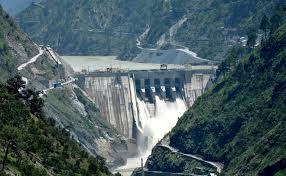
Operations were suspended at the 450MW stage 1 Baglihar hydropower project on the Chenab river in Jammu and Kashmir after it got flooded recently.
- It is a 900 MW run-of-the-river power project on the Chenab River in the Ramban district of Jammu and Kashmir.
- It consists of a concrete gravity dam.
- The project consists of two stages of 450 MW each.
- Chenab River is the largest of the five tributaries of the Indus River.
- It is formed by the confluence of two streams, Chandra and Bhaga, in the Lahaul and Spiti Districts of Himachal Pradesh.
- In its upper reaches, it is also known as the Chandrabhaga.
- It flows through the Jammu and Kashmir union territory, Himachal Pradesh, and after receiving the Jhelum River near Trimmu, the Chenab empties into the Sutlej River.
- The Chenab valley is a structural trough formed by the great Himalayan and Pir Panjal ranges.
- Major Tributaries:
- Left Bank: Niru, Tawi, Neeru, and Liddrari.
- Right Bank: Ans, Bhut Nalla, Bichleri, Kalnai Marusudar, and Miyar Nalla.
- Major Dams on Chenab River: Salal (rockfill dam), Aalal (concrete dam), Baglihar, and Dul.
Exercise Vajra Prahar 2026:

The Indian and US armies will hold the 16th edition of joint Special Forces exercise, Vajra Prahar, at the Special Forces Training School, Bakloh, Himachal Pradesh.
- It is the joint Special Forces exercise between the Indian Army and US Army.
- The exercise is designed to deepen defence cooperation, enhance interoperability and joint operational readiness, and enable the exchange of advanced special operations tactics, techniques, and procedures.
- The year 2026 marks the 16th edition of the exercise.
- It will be held at the Special Forces Training School, Bakloh, Himachal Pradesh.
- The focus this year will be on the exchange of advanced special operations tactics, techniques and procedures (TTPs), honed through rigorous training in realistic combat scenarios.
- It will place strong emphasis on counter-terror operations, precision strikes, intelligence-based missions, and joint planning under simulated battlefield conditions.
Panama Disease:
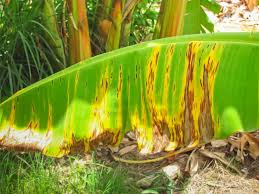
Scientists discovered a gene that could save bananas from deadly Panama disease.
- Panama disease is also known as fusarium wilt.
- It is a devastating disease of bananas caused by the soil-inhabiting fungus species.
- It is caused by the fungus Fusarium oxysporum f. sp. cubense, which lives in soil and can survive there for many years.
- This disease affects the Cavendish variety or the G9 Banana cultivar, which is the most widely grown banana in the world.
- The fungus resides below ground and infects the plant through its roots.
- The infection then stops water and essential nutrients from being transported to the rest of the plant.
- The disease is so deadly that it is sometimes referred to as ‘banana cancer’.
- The leaves begin to wilt, and the stem of the plant starts turning dark brownish before the plant dies.
- The first external symptom of Panama is the irregular yellowing of the margins of older leaves, which later turn brown and dry out.
- These leaves eventually collapse along the leaf stalk or at the junction of the stalk and stem, resulting in a skirt of dead leaves forming around the lower part of the plant.
Tetanus and Adult Diphtheria (Td) Vaccine:

Union Minister for Health and Family Welfare will launch the Tetanus and Adult Diphtheria (Td) vaccine at the Central Research Institute (CRI), Kasauli, Himachal Pradesh.
- It provides protection against both tetanus and diphtheria.
- It is prepared by combining purified diphtheria toxoid and purified tetanus toxoid.
- The antigens are adsorbed onto aluminum phosphate, which acts as an adjuvant, and thiomersal is added as a preservative.
- The Td vaccine is aimed at strengthening protection among adolescents and adults and reducing morbidity and mortality associated with these vaccine-preventable diseases.
- Td is freeze and heat sensitive.
- The vaccine has been developed and manufactured by the Central Research Institute (CRI), which functions under the Directorate General of Health Services.
- Tetanus is an acute infectious disease caused by toxigenic strains of the bacterium Clostridium tetani.
- The disease may occur at any age and case-fatality rates are high even where intensive care is available.
- It causes painful muscle stiffness and spasms and can lead to severe health complications.
- Inability to open the mouth (lockjaw), difficulty in swallowing and breathing, and may result in death.
- Diphtheria is caused by Corynebacterium diphtheriae, has been one of the most feared infectious diseases globally, which causes devastating epidemics.
- South East Asia is the primary driver of global diphtheria incidence, especially since 2005.
- It can spread from person to person, usually through respiratory droplets, like from coughing or sneezing.
- It is a potentially life-threatening infection that can cause breathing difficulties, heart failure, paralysis, and death.
Gentoo Penguin:
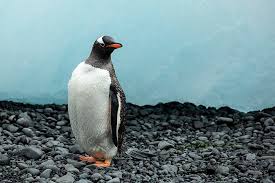
Gentoo penguins have become the first bird species confirmed to be infected with H5 avian influenza on an Australian territory.
- The Gentoo penguin (Pygoscelis papua) is a penguin species in the genus Pygoscelis.
- It is most closely related to the Adélie penguin and the Chinstrap penguin.
- Gentoo penguins typically are found along the shoreline. This allows the penguins to be able to quickly access food while remaining close to their nest.
- Gentoo penguins are found along the coastlines of the Antarctic Peninsula, sub-Antarctic islands, and the Falkland Islands in the southern part of the Atlantic Ocean.
- Gentoo penguins are the fastest underwater swimmers of all penguins
- It is exclusively found in the Southern Hemisphere between 45 and 65 degrees south latitude.
- It is a diurnal and social bird, breeding in colonies and remaining together for the rest of the year.
- These are carnivorous (piscivorous) birds.
- Conservation Status
- IUCN Red List: Least Concern.
Arisaema siahaense:
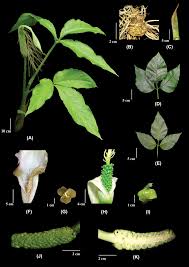
Researchers recently discovered a new species of Cobra Lily hidden within the rugged, misty mountains of Northeast India.
- It is a new species of Cobra Lily.
- It was discovered in the Siaha District of Mizoram.
- It is an evergreen herb.
- It belongs to a group of plants commonly known as Cobra Lilies because their flowering structure (the spathe) resembles a cobra’s hood.
- What makes this specific species unique is its spadix appendix, a long, slender growth that emerges from the flower.
- Unlike its closest relatives found in China and Southeast Asia, this plant grows from a rounded tuber rather than a creeping rootstock and features leaves divided into exactly three segments.
- Although it is currently classified as Data Deficient by international standards, the scientists observed that its habitat is under pressure from road construction, grazing animals like goats and mithuns, and the spread of invasive weeds.
Ottawa Convention: Poland’s withdrawal

Poland’s withdrawal from the Ottawa Convention, as announced by the Prime Minister recently, is a strategic maneuver that allows the country to deploy anti-personnel mines swiftly along its eastern borders if necessary
- The Ottawa Convention, also referred to as the “Mine Ban Treaty,” prohibits the use, stockpiling, production, and transfer of anti-personnel landmines (APLs).
- It requires states-parties to destroy their stockpiled APLs within four years and eliminate all APL holdings, including mines currently planted in the soil, within 10 years.
- Countries may request a renewable extension, which can be up to 10 years long, to fulfill their destruction obligations.
States-parties are also required annually to report their total APL stockpiles, the technical characteristics of their APLs, the location of all mined areas, and the status of APL destruction programs. - The convention, which is of unlimited duration and open to all nations, entered into force in 1999.
- The Treaty has 164 States Parties, including 34 out of the 50 States that produced mines before 1997, and 33 Signatories.
- However, six major countries remain outside the Convention: China, India, Pakistan, Republic of Korea, Russian Federation and United States.
- States Party to the Ottawa Treaty commit to:
- Never use APLs, nor “develop, produce, otherwise acquire, stockpile, retain, or transfer” them;
- Clear mined areas in their territory within 10 years;
- In mine-affected countries, conduct mine risk education and ensure that mine survivors, their families, and communities receive comprehensive assistance;
- Offer assistance to other States Parties, for example, in providing for survivors or contributing to clearance programs;
- Adopt national implementation measures (such as national legislation) in order to ensure that the terms of the treaty are upheld in their territory.
Bhavani River:
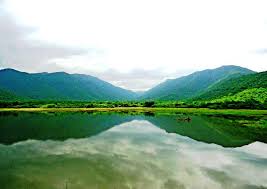
An RTI activist recently filed an online petition to the Prime Minister’s Office seeking criminal, departmental, and regulatory action against officials responsible for the pollution of the Bhavani river.
- It is a major tributary of the Cauvery River.
- It flows through the states of Kerala and Tamil Nadu.
- It is the second largest river in Tamil Nadu.
- The Bhavani River starts its journey in the Nilgiri hills, which are part of the Western Ghats mountain range.
- From there, it flows into Kerala, passing through the beautiful Silent Valley National Park.
- After flowing through Kerala, the river turns and flows back into Tamil Nadu.
- Finally, the river merges with the Cauvery River in the town of Bhavani, at a location known as Bhavani Sangameshwarar Temple, a significant pilgrimage site for Hindus.
- It is a “perennial” river, which means it flows all year round and never dries up.
- The drainage basin of the Bhavani River spans across Tamil Nadu, Kerala, and Karnataka:
- The largest tributaries of the Bhavani River are West and East Varagar, which come from the Nilgiris.
- There are two major dams on the Bhavani River:
- Bhavani Sagar Dam
- Kodiveri Dam.
Kolleru Wildlife Sanctuary:
New aquaculture tanks have reportedly been dug in parts of the Kolleru Wildlife Sanctuary, where illegal tanks were demolished recently as part of an encroachment drive undertaken following the Supreme Court orders.
- It is a significant wetland sanctuary located in the West Godavari and Krishna districts of the Indian state of Andhra Pradesh.
- The sanctuary protects part of the Kolleru Lake wetland, which gained Ramsar Convention for International importance in 2002.
- The lake is fed directly by the seasonal Budameru and Tammileru rivers and is connected to the Krishna and Godavari systems by inflowing drains and channels.
- It is a crucial wetland ecosystem and serves as a stopover point for migratory birds.
- The sanctuary’s flora includes various aquatic plants, submerged macrophytes, and wetland vegetation that provide essential food and shelter for the diverse bird species.
- It is home to many species of resident and migratory birds.
- Commonly found birds in the sanctuary are: little egret, cattle egret, pied kingfisher, small blue kingfisher, blackcapped kingfisher, pond heron, reef heron, grey heron, night heron, etc.
INS Krishna:

Indian naval cadets will now get to train aboard dedicated “floating classrooms” as the Indian Navy has commissioned ‘INS Krishna’, the first of three indigenously built cadet training ships (CTS).
- It is the first of three indigenously built cadet training ships (CTS) of the Indian Navy.
- These CTS will be utilised for training officer cadets, including women, at sea after their basic training ashore, and cadets from friendly foreign countries.
- These vessels function as “floating classrooms and living labs”, offering hands-on instruction in navigation, seamanship, and watch-keeping under real maritime conditions.
- Apart from serving as a training platform, the ship is designed to undertake non-combatant evacuations, humanitarian aid and disaster relief, and search-and-rescue operations.



