
Today’s Current Affairs: 25th February 2026 for UPSC IAS exams, State PSC exams, SSC CGL, State SSC, RRB, Railways, Banking Exam & IBPS, etc
Table of Contents
Lenacapavir:
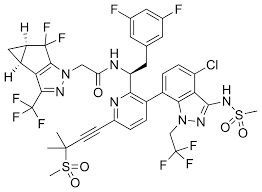
Zimbabwe has begun rolling out lenacapavir, a long-acting injectable HIV prevention medicine.
- It is the new long-acting injectable HIV-prevention drug.
- It is the first twice-yearly injectable pre-exposure prophylaxis (PrEP) for HIV, offering a highly effective, long-acting alternative to daily oral pills.
- PrEP is a medication that can reduce the risk of HIV infection for individuals who are HIV-negative but are at risk of contracting the virus.
- The results of two key studies have shown that it helps prevent 99.9 per cent of all HIV transmission.
- It is developed by Gilead Sciences and marketed under the brand name Yeztugo.
- Lenacapavir is a capsid inhibitor, a class of drugs that blocks the protein shell (capsid) the HIV virus needs to replicate.
- Unlike oral PrEP pills that must be taken daily, lenacapavir is administered as an injection once every six months, providing a discreet and highly effective method of prevention.
Traditional Knowledge Digital Library:

The National Institute of Industrial Property (INPI), Brazil and the Council of Scientific and Industrial Research (CSIR), India have entered into a cooperation arrangement on access to the Traditional Knowledge Digital Library.
- It is a unique initiative, established in 2001 by the Government of India through collaboration between CSIR and the Ministry of AYUSH.
- Its primary objective is to prevent the erroneous grant of patents on Indian traditional knowledge and to safeguard the country’s knowledge heritage from misappropriation.
- Features of Traditional Knowledge Digital Library
- It currently contains information on numerous formulations and practices drawn from Indian systems of medicine such as Ayurveda, Unani, Siddha and Sowa Rigpa, as well as Yoga, sourced from authoritative traditional texts.
- Under this initiative, knowledge from multiple languages and disciplines is translated, structured and linked with modern scientific and technical terminology.
- The database is available in five international languages—English, German, French, Japanese and Spanish.
- To this platform, access is provided to patent offices through Non-Disclosure Agreements.
- With the inclusion of INPI, Brazil, the number of patent offices worldwide with access to the TKDL rises to eighteen.
- The TKDL is widely regarded as a global benchmark for the defensive protection of traditional knowledge.
Vaan Island:
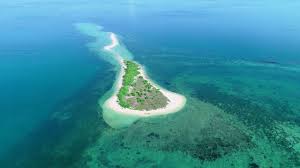
A decade-long artificial reef restoration of Vaan Island generated socio-ecological benefits worth ₹61.67 crore—over twice its inflation-adjusted cost, according to a technical assessment by the Tamil Nadu Coastal Restoration Mission and its partners.
- Vaan is located in the Gulf of Mannar, which was declared a marine biodiversity park in 1986.
- It is part of the Tuticorin group of islands.
- It had suffered severe erosion.
- To arrest the decline, scientists deployed a specially designed artificial reef modules around the island beginning in 2015.
- The reef modules also facilitated rapid biological colonisation, supporting coral colonies per module.
- Gulf of Mannar is an inlet of the Indian Ocean, between southeastern India and western Sri Lanka.
- It is bounded to the northeast by Rameswaram (island), Adam’s (Rama’s) Bridge (a chain of shoals), and Mannar Island.
- It receives several rivers, including the Tambraparni (India) and the Aruvi (Sri Lanka).
- The port of Tuticorin is on the Indian coast.
- The gulf is noted for its pearl banks and sacred chank (a gastropod mollusk).
Sayyad-3G Missile:
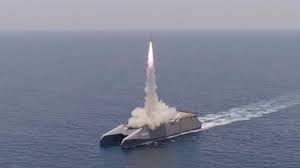
Iran’s Islamic Revolutionary Guard Corps (IRGC) Navy recently tested the Sayyad-3G air defense missile.
- It is a naval surface-to-air defense missile developed by Iran.
- Derived from the land-based Sayyad-3 missile, the Sayyad-3G has been adapted for maritime use, providing medium-range air defense for warships and naval vessels.
- It is launched from ships via a Vertical Launch System (VLS), offering 360-degree coverage and rapid response against aerial threats.
- The missile is capable of intercepting multiple airborne targets, including warplanes, maritime patrol aircraft, and high-altitude UAVs.
- It can operate both independently and as part of an integrated naval command-and-control network, using the ship’s onboard radar while retaining autonomous tracking and targeting capability.
- Its operational range is reported to be approximately 150 kilometers.
Kole Wetlands:
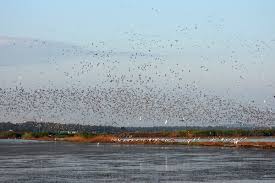
A recent scientific study conducted at the Kole wetlands, a Ramsar-listed ecosystem in Kerala, has documented a total of 12 species of pygmy grasshoppers.
- The Kole wetlands are located in Kerala.
- It is popular for its paddy cultivation that dates back to 300 years.
- The wetland gets its name from its high productivity – ‘Kole’ literally translates to ‘bumper crop’ in Malayalam.
- The Kole areas are low-lying and have a central, narrow strip covering a long expanse, with many pockets running into cultivated land on either side.
- The region is naturally subject to saltwater ingression. During the monsoon, the entire region, which gets submerged under water, is cultivated by draining the water and by erecting bunds.
- As Kole is a large sprawling wetland with human habitation all around, there are coconut and arecanut plantations, gardens and cultivated plants.
- It is one of largest, highly productive and threatened wetlands in Kerala.
- It is a part of the Central Asian Flyway of migratory birds.
- It has been recognised as one of India’s Important Bird Areas by BirdLife International.
- It was declared as a Ramsar site of international importance in 2002.
- Pygmy Grasshoppers are species of insects (order Orthoptera) and are related to true grasshoppers.
- However, the pygmy grasshopper has the forewings either reduced to small pads or absent.
- The pygmy grasshopper is distinguished from the short-horned grasshopper by its practice of depositing its eggs singly in small grooves in the soil, rather than in underground chambers.
- It is abundant in fields containing short grasses and on muddy shores.
- Many species are dimorphic, having both a short form with reduced hindwings and a long form with functional hindwings.
- Sound-producing and hearing organs are absent in pygmy grasshoppers.
Takeshima:
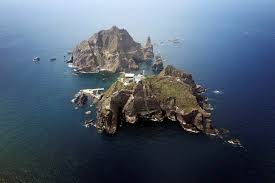
South Korea recently protested a Japanese government-backed “Takeshima Day” event, calling it an unjust assertion of sovereignty over disputed islands also claimed by Japan.
- Takeshima is a group of small islets situated in the middle of the Sea of Japan.
- It is called Dokdo in South Korea and Takeshima in Japan.
- It has also been known as the Liancourt Rocks, named by French whalers after their ship in 1849.
- South Korea currently administers the islets, maintaining a small police detachment and facilities.
- Japan claims sovereignty and considers the issue an unresolved territorial dispute.
- The Sea of Japan, or East Sea, is a marginal sea of the western Pacific Ocean.
- It is bound by Japan and Sakhalin to the east and by mainland Russia, North Korea, and South Korea to the west.
Rapti River:
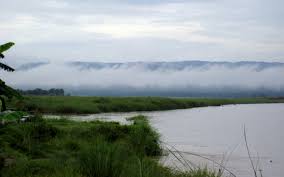
The National Green Tribunal (NGT) has directed the Uttar Pradesh government to correct official records and restore the Suav, a major tributary of the Rapti river status from a “drain” to a “river” in the revenue records and gazetteer.
- Rapti River is the most important left bank tributary of the Ghaghra River.
- Historically, the Rapti River was known as Iravati.
- The Rapti River originates in Nepal near Rukumkot in the Mahabharat range of the lesser Himalayas.
- The entire basin’s topography is made up of lofty mountains, inner and outer Tarai, and undulating plain regions.
- Burhi Rapti and Rohini are the major left bank tributaries of Rapti.
- After flowing through Nepal, it enters Eastern Uttar Pradesh.
National Green Tribunal:
- It has been established under the National Green Tribunal Act, 2010.
- It is a specialized body equipped with the necessary expertise to handle environmental disputes involving multi-disciplinary issues.
- It shall be guided by principles of natural justice.
- The Tribunal is mandated to make and endeavour for disposal of applications or appeals finally within 6 months of filing of the case.
- New Delhi is the Principal Place of Sitting of the Tribunal and Bhopal, Pune, Kolkata and Chennai shall be the other four place of sitting of the Tribunal.
- Composition of NGT:
- Chairperson: A retired Supreme Court judge.
- Judicial members: Retired High Court judges.
- Expert members: Professionals with at least 15 years of experience in fields related to environment or forest conservation.
Apple Cultivation:

According to the J&K Economic Survey 2025-26, apple production comprises 50% of the total horticulture production of J&K against pear, apricot, peach, plum, cherry, citrus, mango, walnut, almond etc.
- Apple (Malus pumila) is an important temperate fruit.
- The average summer temperature should be around 21-24 degree C during the active growth period.
- Well-distributed rainfall of 1000-1250 mm throughout the growing season is most favourable for the optimum growth and fruitfulness of apple trees.
- Apples grow best on well-drained, loamy soils.
- In India, apple is primarily cultivated in Jammu & Kashmir; Himachal Pradesh; the hills of Uttar Pradesh and Uttaranchal.
- It is also cultivated to a small extent in Arunachal Pradesh; Nagaland; Punjab and Sikkim.
Ferruginous Pochard:
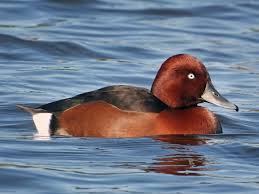
A lone Ferruginous Pochard was found among a flock of Common Pochards at Amoor lake, Chennai.
- Ferruginous Pochard is also known as ferruginous duck, common white-eye or white-eyed pochard(Aythya nyroca ) is a medium-sized diving duck from Eurosiberia.
- It prefers quite shallow fresh waterbodies with rich submerged and floating vegetation with dense stands of emergent vegetation on the margins.
- It is mainly found in Europe, Asia, Africa especially China, Mongolia, Portugal, France, Albania, Austria, Belgium, Bosnia.
- The duck winters throughout the Mediterranean Basin and the Black Sea, smaller numbers migrate into sub-Saharan Africa via the Nile Valley.
- They eat aquatic plants with some molluscs, aquatic insects and small fish.
- It is threatened by the degradation and destruction of its habitats by anthropogenic causes which are very wide and varied including impoundment, drainage, pollution and mismanagement.
- Conservation Status
- IUCN Red List: Near Threatened
National Organ and Tissue Transplant Organization:
India has achieved a significant milestone in the field of organ donation and transplantation, with the National Organ and Tissue Transplant Organization (NOTTO) recording unprecedented progress in organ donation, allocation, and transplantation across the country.
- It is a national-level organization set up under the Directorate General of Health Services, Ministry of Health and Family Welfare in New Delhi.
- The establishment of NOTTO is mandated as per the Transplantation of human Organs and Tissues (Amendment) Act of 2011.
- It has the following two divisions:
- National Human Organ and Tissue Removal and Storage Network
- National Biomaterial Centre
- It functions as the apex centre for all India activities of coordination and networking for:
- procurement and distribution of organs and tissues; and
- registry of Organs and Tissues Donation and Transplantation in the country
- The following activities are undertaken at National Level by NOTTO to facilitate Organ Transplantation in the safest way in the shortest possible time and to collect data and develop and publish National Registry.
Hoysala Temples:
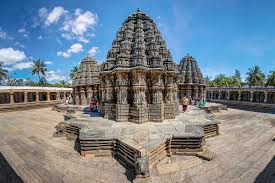
Several lesser-known 11th–13th century Hoysala-era temples across Karnataka are drawing fresh attention for their intricate soapstone carvings and distinctive star-shaped architecture.
- The Hoysala temples were developed in the period from 1050-1300 A.D., with prominent seats at Belur, Halebid and Sringeri, though the dynasty’s architectural influence spread across present-day Karnataka, including the regions near Mysore.
- Hoysala architecture represents a distinct hybrid style often termed Vesara, which uniquely blends elements of the northern Nagara and southern Dravida temple architectural traditions.
- Hoysala architects favoured chloritic schist (soapstone), soft when quarried but hardening over time. Its pliability allowed microscopic detailing- jewellery, fingernails, hair curls, rendered in stone.
Rajagopalachari Statue to Replace Lutyens at Rashtrapati Bhavan:
The Prime Minister of India announced that the statue of British architect Edwin Lutyens at Rashtrapati Bhavan will be replaced by that of C. Rajagopalachari.While Edwin Lutyens designed the monumental Rashtrapati Bhavan, C. Rajagopalachari holds the distinction of being the first Indian occupant of the building as the Head of State. Chakravarti Rajagopalachari, popularly known as Rajaji, was a towering Indian freedom fighter, politician, and the first and last Indian Governor-General of independent India.Inspired by Lokmanya Bal Gangadhar Tilak, he joined the Indian National Congress and took part in the freedom struggle and later hosted Mahatma Gandhi during the anti-Rowlatt agitation.He led the Vedaranyam Salt Satyagraha (1930) from Tiruchi to Vedaranyam.Rajaji served as the Prime Minister of Madras Province (1937), where he promoted Khadi, and advocated for the abolition of the Zamindari system.Rajaji formed the Swatantra Party in 1959 which actively campaigned for a market economy. As the Chief Minister of Madras State, one of his first acts was to decontrol the distribution of foodgrains and their prices.He founded an ashram in Madras Province (1925) for social upliftment, and published Vimochanam (Tamil) and Prohibition (English).He won the 1958 Sahitya Akademi Award in Tamil literature for his retelling of the Ramayana, titled Chakravarthi Thirumagan.He was one of the first three recipients of India’s highest civilian award, Bharat Ratna (1954) alongside Dr. S. Radhakrishnan and C.V. Raman.
Namo Bharat Rapid Rail and Meerut Metro:
The Indian Prime Minister inaugurated both the Namo Bharat Rapid Rail and the Meerut Metro from a single platform, marking the first time in India that a rapid rail and metro service were launched together on the same day.Meerut Metro, connecting Meerut South and Modipuram, is India’s fastest metro with speeds up to 120 km/h, operating on Namo Bharat infrastructure in a first-of-its-kind project.Namo Bharat Rapid Rail is India’s inaugural Regional Rapid Transit System (RRTS), a dedicated semi-high-speed commuter rail network designed to revolutionize connectivity across the National Capital Region (NCR).It supports a maximum design speed of 180 km/h, with operational speeds reaching up to 160 km/h and average speeds around 100 km/h.The system aims to alleviate congestion on conventional rail and road networks by providing a modern, high-frequency alternative for commuters traveling distances of 100-200 km.
India and France Amend Double Taxation Avoidance Convention:
India and France have signed an amending protocol to the India-France Double Taxation Avoidance Convention (DTAC, 1992), introducing key changes to capital gains taxation, the Most-Favoured-Nation (MFN) clause, and incorporating provisions of the multilateral Base Erosion and Profit Shifting (BEPS) framework.The amendments are designed to provide greater tax certainty for taxpayers and are expected to boost the flow of investment, technology, and personnel between the two nations.The Protocol provides full taxing rights in respect of capital gains arising from the sale of shares of a company, to the jurisdiction where such company is a resident.The agreement formally deletes the MFN Clause from the Protocol to the DTAC, thereby bringing to rest all issues relating to it. The agreement modifies the taxation of income from dividends by replacing a single rate of 10% with a split rate, i.e., 5% for those holding at least 10% of capital and 15% of tax for all other cases.It modifies the definition of ‘Fees for Technical Services’ (FTS) by aligning it with the definition in the India-US Double Taxation Avoidance Agreement.The Protocol expands the scope of ‘Permanent Establishment’ (PE) by adding Service PE.It updates provisions on Exchange of Information and introduces a new article on Assistance in Collection of Taxes, as per international standards, to facilitate seamless exchange and strengthen mutual tax cooperation.The Protocol incorporates within the DTAC the applicable provisions of the BEPS Multilateral Instrument (MLI), which had already become applicable consequent to the signing and ratification of MLI by India and France.
V.O. Chidambaranar Port:
The Union Minister of Ports, Shipping and Waterways inaugurated and laid the foundation for infrastructure and green energy projects worth over Rs 1,500 crore at V.O. Chidambaranar (VOC) Port in Tuticorin, Tamil Nadu.Originally known as Tuticorin Port, it was renamed in 2011 to honor V.O. Chidambaranar, the legendary freedom fighter who launched the Swadeshi Steam Navigation Company in 1906 to challenge the British maritime monopoly.VOC Port is an artificial, all-weather deep-sea port located on the Coromandel Coast, playing a pivotal role in India’s maritime trade with the Mediterranean region, Europe, and the United States.VOC Port, located on the Coromandel Coast in the Gulf of Mannar, is an artificial, all-weather deep-sea port strategically positioned near the East–West international sea route, giving it a strong advantage in India’s trade with the Mediterranean, Europe, and the US.VOC Port is naturally sheltered from storms and cyclones due to the presence of Sri Lanka to its southeast.It is the first Indian port to produce and use green hydrogen on-site, with a pilot project active since late 2025.It is the first in India to deploy a Digital Twin platform, creating a real-time virtual replica of port operations for predictive maintenance and data-driven optimization.In February 2026, it became the first Indian port to implement an advanced anti-drone system using radar and radio frequency technologies to safeguard critical infrastructure.The VOC Maritime Heritage Museum serves as a cultural landmark, highlighting the maritime history of the Coromandel Coast.
Anjadip Vessel:
The Indian Navy is set to commission Anjadip, an indigenous Anti-Submarine Warfare Shallow Water Craft (ASW-SWC) at Eastern Naval Command at Chennai Port, reinforcing its capabilities to counter underwater threats in the vital littoral waters.Anjadip is the 3rd of eight ships in the ASW-SWC project, representing a major step towards ‘Aatmanirbhar Bharat’ in defence. It is built by Garden Reach Shipbuilders & Engineers (GRSE), Kolkata.
It marks another key milestone in the transformation of the Indian Navy into a formidable ‘Builder’s Navy’, emphasizing self-reliance in warship construction.It has been engineered to function as a ‘Dolphin Hunter’, tasked with detecting, tracking, and neutralizing enemy submarines in coastal areas.The warship is equipped with a state-of-the-art indigenous weapons and sensor package, which includes the Hull Mounted Sonar ‘Abhay’, alongside Lightweight Torpedoes and ASW Rockets.Beyond its core ASW function, the highly manoeuvrable ship is capable of conducting Coastal Surveillance, Low-Intensity Maritime Operations (LIMO), and Search & Rescue (SAR) missions.It features a high-speed Water-Jet Propulsion system, allowing it to achieve a top speed of 25 knots for rapid response.
E175 Jets in India:
In a major push for “Make in India” in the aviation sector, Adani Defence & Aerospace and Brazil’s Embraer have signed an enhanced MoU to establish a Final Assembly Line (FAL) for E175 regional jets in India.The partnership aims to build a comprehensive Regional Transport Aircraft (RTA) ecosystem, covering manufacturing, supply chain management, and pilot training.The E175 jet, with a seating capacity of up to 88 passengers, is specifically designed for high-frequency operations connecting Tier-2 and Tier-3 cities.India is projected to require at least 500 aircraft in the 80–146 seat segment over the next two decades.The project aligns with the Regional Connectivity Scheme (RCS-UDAN), addressing the critical need for an indigenous aviation ecosystem to support economic expansion in underserved markets.Beyond assembly, the collaboration focuses on aftermarket services and securing orders to sustain the viability of the proposed assembly line.
Prahaar Anti Terror Policy:
India has unveiled its first-ever comprehensive anti-terror policy, titled ‘Prahaar’, formalising a proactive and intelligence-led counter-terror doctrine.Prahaar is India’s first integrated national counter-terrorism policy and strategy, designed as a doctrine-level framework for preventing, responding to and recovering from terrorism threats.It adopts a whole-of-government and whole-of-society approach, combining intelligence, law enforcement, technology and international cooperation.Introduced by the Government of India as a national counter-terror strategy framework involving central and state security agencies.Aim is to prevent and neutralize terrorism through proactive, intelligence-guided operations and coordinated institutional mechanisms,to disrupt terror ecosystems by targeting financing, recruitment, radicalisation, logistics and cyber networks.
National Monetisation Pipeline 2.0 (NMP 2.0):
Union Finance Minister has launched the National Monetisation Pipeline 2.0 (NMP 2.0) to accelerate infrastructure financing through asset monetisation.NMP 2.0 is the second phase of India’s national asset monetisation programme that provides a medium-term roadmap for monetising operational public infrastructure assets.It focuses on unlocking value from existing brownfield assets to generate resources for new infrastructure creation and capital expenditure.Developed by NITI Aayog in consultation with infrastructure line ministries.Implemented under the guidance of the Ministry of Finance and monitored by the Core Group of Secretaries on Asset Monetisation (CGAM).
2025 UNESCO Asia-Pacific Awards for Cultural Heritage Conservation:
The Our Lady of Grace Cathedral, Vasai (Maharashtra) has won the Award of Merit at the 2025 UNESCO Asia-Pacific Awards for Cultural Heritage Conservation.A prestigious UNESCO initiative that recognises outstanding heritage conservation projects across the Asia-Pacific region.It honours restoration efforts that combine technical excellence with cultural authenticity and community participation.Established in 2000, by UNESCO to promote best practices in cultural heritage preservation across Asia and the Pacific.Aim is to encourage high-quality conservation of historic sites while maintaining cultural integrity and sustainability,to promote community participation and adaptive reuse of heritage structures for long-term preservation.
The International Emergency Economic Powers Act (IEEPA), 1977:
The US Supreme Court recently struck down tariffs imposed by President Donald Trump under the International Emergency Economic Powers Act (IEEPA), 1977.The IEEPA is a US federal law that grants the President authority to regulate international commerce during a declared national emergency arising from external threats.It allows economic measures such as sanctions and restrictions on transactions to protect US national interests.Enacted in 1977 by the US Congress.It replaced and limited the earlier broad powers under the Trading with the Enemy Act (TWEA), 1917.Aim is to enable the US President to respond swiftly to extraordinary external threats affecting national security, foreign policy, or the economy.Primarily designed as a sanctions framework rather than a trade tariff instrument.
Slice Small Finance Bank Appoints Rajan Bajaj as MD & CEO:
Slice Small Finance Bank has appointed its founder Rajan Bajaj as the new Managing Director (MD) and Chief Executive Officer (CEO). The appointment has been approved by the bank’s board, shareholders, and the Reserve Bank of India (RBI), reflecting strong confidence in Bajaj’s leadership and digital-first vision.Rajan Bajaj, an alumnus of Indian Institute of Technology Kharagpur, founded Slice in 2016 as a Bengaluru-based fintech startup. The company initially focused on providing innovative credit and payment solutions to young and underserved customers.In 2024, Slice merged with North East Small Finance Bank, transforming into a fully regulated small finance bank. After serving as Executive Director post-merger, Bajaj now succeeds Satish Kumar Kalra as MD and CEO.
ICRA Projects India’s GDP Growth to Moderate to 7.2% in Q3 FY2025-26:
Rating agency ICRA has projected that India’s year-on-year (YoY) GDP growth will moderate to 7.2% in Q3 FY2025-26, compared to 8.2% recorded in Q2 FY2025-26. The slowdown is mainly due to weaker performance in the services and agriculture sectors, despite improved growth in industry.
Sector-Wise Performance:
Services Sector:
- Growth expected at 7.8% in Q3 FY26
- Down from 9.2% in Q2 FY26
- Affected by lower government spending and weaker services exports
Agriculture Sector
- Growth projected at 3.0% in Q3 FY26
- Down from 3.5% in Q2 FY26
Industrial Sector:
- Growth improved to a six-quarter high of 8.3% in Q3 FY26
- Up from 7.7% in Q2 FY26
Yogi Adityanath Inaugurates IBM’s AI GovTech Innovation Centre in Lucknow:
Uttar Pradesh Chief Minister Yogi Adityanath inaugurated IBM’s AI GovTech Innovation Centre in Lucknow, calling it a major step toward strengthening technology-driven governance in the state. He said the initiative will help Uttar Pradesh emerge as a leader in emerging technologies such as artificial intelligence, deep tech and quantum computing.The AI GovTech Innovation Centre, set up in collaboration with IBM, will serve as a platform to design and scale AI-based solutions to improve governance, transparency and public service delivery.The Chief Minister said Uttar Pradesh has strong potential in advanced technology. He recalled that India’s first computer was installed at Indian Institute of Technology Kanpur with IBM’s support, highlighting the state’s historical link with technological progress.
Delhi to Implement ‘Rah-Veer’ Scheme to Reward Good Samaritans:
The Delhi government has decided to implement the Centre’s ‘Rah-Veer’ scheme in the national capital to encourage citizens to help seriously injured road accident victims.Chief Minister Rekha Gupta announced that under this scheme, individuals who assist accident victims and ensure they receive timely medical care will receive a cash reward of ₹25,000 along with a certificate of appreciation.The main aim of the Rah-Veer scheme is to ensure that seriously injured victims receive treatment within the ‘golden hour’, which is considered crucial for saving lives after an accident.The government believes that quick public response can significantly reduce road accident deaths in a busy city like Delhi, where thousands of vehicles ply daily.



