
Today’s Current Affairs: 3rd March 2026 for UPSC IAS exams, State PSC exams, SSC CGL, State SSC, RRB, Railways, Banking Exam & IBPS, etc
Table of Contents
Tomahawk Missile:
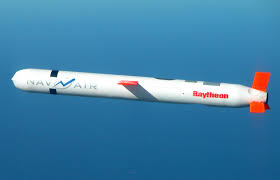
The United States unleashed an array of weaponry against Iranian targets recently, including Tomahawk cruise missiles, stealth fighters, and for the first time in combat, low-cost one-way attack drones modeled after Iranian designs.
- It is an American-made long-range subsonic cruise missile used for deep land attack warfare.
- It is launched from ships or submarines through a Vertical Launch System.
- The Tomahawk was first conceptualised in the early 1970s as a Cold War-era weapon.
- It can carry a 1,000-pound conventional warhead or cluster munitions.
- It is powered by a solid propellant during its launch phase. Thereafter, it is powered by a turbofan engine that does not emit much heat, which makes infrared detection difficult.
- They cruise at subsonic speeds of 880 kmph and fly as low as 30-50 metres to avoid radar detection.
- Tomahawks are guided by advanced GPS, inertial navigation, and terrain contour mapping. This makes them highly accurate-with a margin of error of just 10 meters.
- They are built to follow a non-linear path, reducing the chance of interception.
- It has a range of up to approximately 2,400 km.
India Meteorological Department (IMD):
An above-normal number of heatwave days are expected over most parts of the country between March and May, the India Meteorological Department (IMD) said in its monthly forecast.
- Established in 1875, IMD is the National Meteorological Service of the country and the principal government agency in all matters relating to meteorology and allied subjects.
- It functions under the Ministry of Earth Sciences (MoES).
- It is headquartered in Delhi and operates hundreds of observation stations across India and Antarctica.
- There are 6 Regional Meteorological Centres, each under a Deputy Director General, with headquarters at Mumbai, Chennai, New Delhi, Calcutta, Nagpur, and Guwahati.
- IMD Mandate:
- To take meteorological observations and to provide current and forecast meteorological information for weather-sensitive activities like agriculture, shipping, aviation, offshore oil explorations, etc.
- To warn against severe weather phenomena like tropical cyclones, norwesters, duststorms, heavy rains and snow, cold and heat waves.
- To provide meteorological statistics required for agriculture, water resource management, industries, oil exploration, and other nation-building activities.
- To conduct and promote research in meteorology and allied disciplines.
- IMD is also one of the six Regional Specialized Meteorological Centres of the World Meteorological Organization (WMO).
- It is responsible for forecasting, naming, and distributing warnings for tropical cyclones in the Northern Indian Ocean region, including the Straits of Malacca, the Bay of Bengal, the Arabian Sea, and the Persian Gulf.
Persian Gulf:
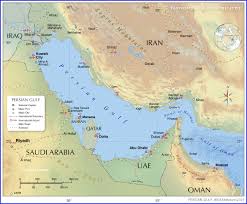
The Directorate General of Civil Aviation (DGCA) recently issued an urgent advisory, asking all Indian carriers to avoid flying through the West Asian and Persian Gulf airspace following escalating military tensions in the region.
- It is a marginal sea of the Indian Ocean, located in Western Asia.
- It is an extension of the Gulf of Oman and connects to the Indian Ocean via the Strait of Hormuz in the east.
- It is also referred to as the Arabian Gulf or Gulf of Iran.
- It lies between the Arabian Peninsula and Iran to the southwest and northeast, respectively.
- Iran borders it from the north, east and northeast, while Oman and UAE surround it from the south and southeast.
- It is surrounded by Qatar, Saudi Arabia and Bahrain from the southwest and west and Iraq and Kuwait from the northwest.
- To the west, it connects to a large river delta called Shatt al-Arab. Here, the waters from two major rivers, the Euphrates and the Tigris, flow into the Gulf.
- It has a coastline length of about 5,117 km, with Iran having the longest coastline (1,536 km).
- There are several islands in the Persian Gulf, including Bahrain, the Persian Gulf state. Bahrain comprises over 50 islands centered on Bahrain Island.
- Qeshm Island is the largest island in the Persian Gulf, almost 2.5 times the size of Bahrain.
- The area in and around the Persian Gulf holds the world’s largest amounts of crude oil.
- Al-Safaniya, the world’s largest offshore oilfield, is located in the Persian Gulf.
Kosi River:
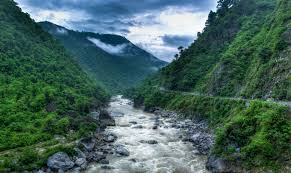
Over the past 200 years, the Kosi River has shifted its path westward by over 100 kilometres.
- It is a transboundary river which flows through China, Nepal, and India.
- It is a prominent tributary of the Ganges, also known as “Sorrow of Bihar” because of the big floods it can cause, especially in the Indian state of Bihar.
- The river Kosi is formed by the confluence of three streams, namely the Sun Kosi, the Arun Kosi, and the Tamur Kosi, all of which have their origin in the Himalayan region of Nepal and Tibet.
- About 48 km north of the Indian-Nepalese frontier, the Kosi is joined by several major tributaries and breaks southward through the Siwalik Hills at the narrow Chatra Gorge.
- The river then emerges on the great plain of northern India in Bihar state on its way to the Ganges River, which enters south of Purnea after a course of about 724 km.
- Over the last 250 years, the Kosi has shifted its course over 100 kilometres from East to West and the unstable nature of the river is attributed to the heavy silt it carries during the monsoon season.
- Corn (maize) is extensively cultivated on the sandy soils of the Kosi’s basin.
- It has seven major tributaries: Sun Koshi, Tama Koshi or Tamba Koshi, Dudh Koshi, Indravati, Likhu, Arun, and Tamore or Tamar.
Debrigarh Wildlife Sanctuary:

The Debrigarh Wildlife Sanctuary is set to host the second edition of the two-day ‘Indian Bison Fest’.
- It is situated in the Bargarh district of Odisha.
- It is located near Hirakud Dam (the longest dam in India and the longest earthen dam in the world) on the Mahanadi River.
- It is historically significant as the 19th-century guerrilla base for freedom fighter Veer Surendra Sai. Specifically, the Barapathara area within the sanctuary served as his stronghold against British colonial rule.
- Most of the plant sanctuary is covered with mixed and dry deciduous forest.
- Major trees found here are Sal, Asana, Bija, Aanla, Dhaura, etc.
- Indian leopards, sloth bears, chousingha (four-horned antelope), sambar deer, gaurs (Indian bison), wild boars, and Indian wild dogs (dholes) are among the notable animal residents.
- It is one of the most flocked wintering grounds of migratory birds that visit the sanctuary from far-off places.
- Some of the most prominent among them are the crested serpent eagle, Flower Peckers, red-vented bulbul, tree pie, drongo, and white eye oriental.
- Indian Bison also known as Gaur, is the largest species among the wild cattle and the Bovidae.
- They have strong and mightily built, with a high grey ridge on their forehead between their horns, which curve upwards from the sides of the head.
- Gaurs are indigenous to the South and Southeast parts of Asia.
- Gaurs are primarily found in evergreen and semi-evergreen forests along with moist deciduous forests with open grasslands.
- They prefer hilly terrains below an altitude of 1,500-1,800 m with large and undisturbed forest tracts and abundant water.
- Conservation Status:
- IUCN Red List: Vulnerable.
Eligible Manufacturer Importers (EMIs) Scheme:
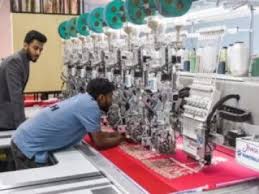
The Central Board of Indirect Taxes and Customs (CBIC) has issued detailed eligibility conditions, application process and operational guidelines for Eligible Manufacturer Importers (EMIs) scheme.
- It is designed as a trust-based facilitation measure, encouraging compliant manufacturers to benefit from simplified procedures.
- Under this initiative, Eligible Manufacturer Importers (EMI) will be able to clear imported goods without paying Customs duty at the time of clearance.
- Instead, the applicable duty can be paid on a monthly basis as prescribed under the Deferred Payment of Import Duty Rules, 2016.
- EMI facility will be available from 1st April, 2026 and will remain in force till 31st March,
- Existing Authorised Economic Operators (AEOs) AEO-T1 entities, including MSMEs that fulfill the eligibility conditions are also eligible to participate.
- Under this, approved Eligible Manufacturer Importers are expected to progressively obtain AEO-T2 or AEO-T3 status, enabling access to enhanced facilitation, faster clearances and priority treatment under the AEO Programme.
- It is expected to improve ease of doing business, strengthening compliance culture, and boosting domestic manufacturing.
Sulphur Dioxide:
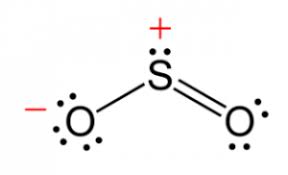
It was observed that India still has no national standards for sulphur dioxide (SO2) emissions from steel-producing facilities like sinter plants, mill zones, despite their being recognised as SO2 emission sources.
- It is a gaseous air pollutant composed of sulfur and oxygen. It forms when sulfur-containing fuel such as coal, petroleum oil, or diesel is burned.
- Properties of Sulphur Dioxide:
- It is a liquid when under pressure, and it dissolves in water very easily.
- It has a pungent, irritating odor, familiar as the smell of a just-struck match.
- Sulfur dioxide in the air comes mainly from activities such as the burning of coal and oil at power plants or from copper smelting.
- It is usually prepared industrially by the burning in air or oxygen of sulfur or such compounds of sulfur as iron pyrite or copper pyrite.
- In nature, sulfur dioxide can be released to the air from volcanic eruptions.
- The largest source of SO2 in the atmosphere is the burning of fossil fuels by power plants and other industrial facilities.
- It is used to manufacture chemicals, in paper pulping, in metal and food processing.
- It is harmful for human health, environment and climate.
Innovators Business Environment Index (IBEI) 2026:

StartupBlink released the Innovators Business Environment Index (IBEI) 2026, which measures foundational business conditions like regulation, capital, and infrastructure using a 0–100 score.
- IBEI Rankings 2026: The United States ranked 1st with a perfect score of 100, while Singapore ranked 2nd and the United Kingdom ranked 3rd.
- India’s Performance: India is ranked 54th globally with a score of 55.035. India is ranked ahead of China, which is placed 85th.
- The report identifies India’s business environment as being marked by robust regional strengths, reliable access to capital, a large market size, and a competitive cost structure.
Innovators Business Environment Index (IBEI):
- The IBEI evaluates national business environments based on their accessibility, predictability, and low-friction systems for innovators.
- It focuses on inputs and enabling conditions for starting and scaling businesses, differentiating itself from outcome-based metrics like startup success rates.
- The index aggregates scores from over 30 measurable indicators across key pillars:
- Regulation and Government: Ease of starting and operating a business, and regulatory friction.
- Access to Capital & Financial Infrastructure: Funding availability and credit conditions.
- Taxation: Incentives and tax conditions for businesses.
- Digital Infrastructure: Internet speed, freedom, and connectivity.
- Global Mobility & Openness: International accessibility, market perception, and governance stability.
Meningococcal Bacterial Infection:
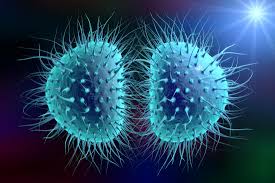
The Meghalaya has issued a high-level health advisory following the death of two Agniveer trainees due to suspected meningococcal bacterial infection at the Assam Regimental Centre (ARC) in Shillong.
- The disease is a severe, rapidly progressing infection caused by the bacterium Neisseria meningitidis.
- The meningococcal infection primarily leads to meningitis (inflammation of the brain and spinal cord lining) or meningococcemia (a life-threatening blood infection/sepsis).
- Spreads through direct contact with nose/throat discharges from infected individuals.
- More common in infants under 5, teenagers, young adults (16–23), and people in crowded settings like college dorms or military barracks.
- Immediate treatment with antibiotics is crucial to reduce mortality, which is roughly 10%–15% even with care.
- The World Health Organization (WHO) recommended meningitis vaccine, Men5CV, is the first conjugate vaccine to protect against the five main causes of meningococcal meningitis.
16th Finance Commission on Centre-State Fiscal Relations:

The 16th Finance Commission has retained the States’ share of tax devolution at 41%, imparting it a “semi-permanence,” while introducing significant changes to the horizontal distribution formula and proposing a ‘grand bargain’ to merge cesses and surcharges into the divisible pool.
- The 16th Finance Commission retained 41% tax devolution while shifting toward performance-based horizontal distribution.
- Its proposals on cesses, fiscal discipline, and grant rationalisation have sparked debate over equity and state autonomy.
- The recommendations underscore evolving tensions between fiscal consolidation and cooperative federalism in India.
Key Recommendations of the 16th Finance Commission (2026–31):
- Vertical Devolution and a ‘Grand Bargain’: The Commission retained States’ share in the divisible pool at 41%, unchanged from the 15th Finance Commission.
- To address the states’ concern over fiscal space eroded by rising cesses and surcharges (which are outside the divisible pool), the 16th FC proposed a ‘grand bargain’, i.e., states accept a smaller share of a larger divisible pool if the Centre merges most levies into shareable taxes.
- The Commission introduced a major shift toward rewarding economic performance with a revised formula:
- Income Distance (42.5%): Based on the gap from the average of the top three states, ensuring equity.
- Population (2011 Census) (17.5%): Reflects expenditure needs.
- Demographic Performance (10%): Rewards lower population growth (1971–2011).
- Forest & Ecology (10%): Now includes open forests, not just dense forests.
- Area (10%): Remains unchanged at 10% (as per 15th FC).
- Contribution to GDP (10%): A new criterion measured by share in all-State GSDP (using its square root to moderate impact), replacing the tax effort/fiscal discipline criterion.
PSB Reforms under EASE 9.0:

Under the EASE 9.0 reforms agenda, public sector banks (PSBs) will pursue important reforms to prepare PSBs to leverage technology and improve productivity and scale through new business models.
- Public sector banks will implement a global capability centre (GCC) strategy in FY 2026-27 and prepare a capacity-building roadmap.
- State Bank of India (SBI), which established the first GCC among state-run lenders earlier this year (in Karnataka), will take the lead.
- GCCs are offshore units of multinational corporations that perform strategic functions like IT, R&D, and business support.
- Banks are expected to assess active-active data centre models for inclusion in their five-year business plans to ensure business continuity and resilience.
- Develop core AI stacks, including LLM (Large Language Model) licensing, GPU strategies, and private cloud model deployment.
- Build enterprise-wide consent management capabilities.
- Implement at-scale data tokenisation and anonymisation to enable continuity of data usage for business and strategic purposes.
- Banks will combine strengths to offer complete banking solutions, including blockchain technology, advanced risk assessment, and fraud detection models.
Nucleic Acid Amplification Testing:
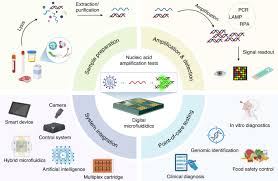
The Supreme Court of India has sought comprehensive details regarding the cost, feasibility, and infrastructure required to implement Nucleic Acid Amplification Testing (NAT) in government hospitals, responding to a Public Interest Litigation (PIL) that advocates for the prevention of transfusion-transmitted infections.
- The PIL, urges the Court to declare the “Right to Safe Blood” as an intrinsic facet of the Right to Life under Article 21 of the Indian Constitution.
- The petition seeks directions to make NAT mandatory across all Indian blood banks.
- This aims to accurately detect Transfusion Transmissible Infections (TTIs), including HIV, Hepatitis B (HBV), Hepatitis C (HCV), malaria, and syphilis, before the blood is transfused.
- Currently, under the Drugs and Cosmetics Act of 1940, mandatory blood screening in India only requires serological testing (such as Enzyme-Linked Immunosorbent Assays).
- Nucleic Acid Testing is not legally mandatory across the country.
- The plea highlights the systemic failure to protect highly vulnerable patients, noting that India is considered the “Thalassemia capital of the world.”
- Thalassemia is an inherited (genetic) blood disorder characterized by the body’s inability to produce sufficient haemoglobin (the protein in red blood cells that carries oxygen).
- Thalassemia patients require life-saving blood transfusions every 15 to 20 days, making them highly susceptible to TTIs if blood is improperly screened.
- The petition highlighted preventable cases in Madhya Pradesh, Jharkhand, and Uttar Pradesh where children contracted HIV and Hepatitis due to unsafe blood transfusions.
Nucleic Acid Amplification Testing (NAT):
- It is a highly sensitive molecular technique that screens blood donations by amplifying targeted regions of viral Ribonucleic Acid or Deoxyribonucleic Acid.
- Traditional serological tests must wait for the human body to produce an immune response (antibodies) before an infection can be detected.
- Nucleic Acid Testing directly detects the virus, drastically narrowing the “window period” (the time between initial infection and detectability) for Human Immunodeficiency Virus, Hepatitis B Virus, and Hepatitis C Virus.
- This advanced testing helps identify “false reactive” blood donations that standard serology methods incorrectly flag as infected.
- This ensures safe blood is not unnecessarily discarded and aids in accurate donor counselling.
NITI Aayog-JICA Cooperation on SDGs:
NITI Aayog and the Japan International Cooperation Agency (JICA) signed the Record of Discussions (RoD) for the “Project for Promotion of the Program for Japan-India Cooperative Actions Towards Sustainable Development Goals (SDGs) – Phase II”.The project aims to strengthen policy frameworks and implementation systems across six key themes, i.e., Global Partnership, Health & Nutrition, Education, Agriculture & Water Resources, Financial Inclusion & Skill Development, and Basic Infrastructure.It focuses on institutional capacity building, improved monitoring and evaluation, and effective localisation of SDGs in Aspirational Districts and Aspirational Blocks. Key activities include people-to-people exchanges, capacity-building programs, Japan–India knowledge forums, and identification and dissemination of Best Practices.
India–Canada Negotiation for CEPA:
India and Canada have signed a billion long-term uranium supply agreement and launched formal negotiations for a Comprehensive Economic Partnership Agreement (CEPA).The Comprehensive Economic Partnership Agreement (CEPA) is a proposed broad-based trade and economic agreement between India and Canada. It seeks to reduce trade barriers, promote investment, and enhance cooperation across goods, services, technology, and strategic sectors.Aim is to increase bilateral trade to billion by 2030.Facilitate smoother market access for goods and services.Strengthen resilient supply chains, especially in critical minerals and clean energy sectors.
70 Years of Central Warehousing Corporation (CWC):
The Central Warehousing Corporation (CWC) celebrated its 70th Foundation Day on March 2, 2026, marking seven decades of contribution to India’s food security and logistics infrastructure.The Central Warehousing Corporation (CWC) is a Central Public Sector Enterprise (CPSE) under the Ministry of Consumer Affairs, Food & Public Distribution.It serves as a premier logistics and warehousing organization supporting India’s food security, agricultural storage, and integrated supply chain management.Established in 1957 under the Warehousing Corporations Act, 1962 (later governed under Companies Act framework).
Oleum Gas:
A major oleum gas leak at Bhageria Industries Ltd in Boisar, Maharashtra, forced the evacuation of over 2,000 residents, including 1,600 students.Oleum, commonly referred to as fuming sulfuric acid, is a highly corrosive chemical consisting of dissolved sulfur trioxide (SO₃) in concentrated sulfuric acid (H₂SO₄). It releases dense white fumes when exposed to moist air.Oleum is produced through the Contact Process, which involves:Burning sulfur to produce sulfur dioxide (SO₂),Oxidizing SO₂ to sulfur trioxide (SO₃),Absorbing SO₃ into concentrated sulfuric acid to form oleum. This method avoids directly dissolving SO₃ in water, which would create an uncontrollable acid mist.
Properties of the Gas:
- It appears as dense, white cloudish smoke when leaked into the air.
- Its freezing point varies strongly with concentration; it can be solid at room temperature or remain liquid as low as zero degree.
- It is an extremely strong dehydrating agent, capable of pulling water elements out of sugars to leave pure carbon (the carbon snake reaction).
- It is highly corrosive but lacks free water to attack surfaces, making it less corrosive to certain metals in its pure form compared to diluted acid.
Karbi Anglong Ginger : GI Tag
Assam has marked a major agricultural milestone by flagging off its first-ever trial export consignment of 1.2 metric tonnes of GI-tagged Karbi Anglong Ginger to London.Karbi Anglong Ginger is a premium variety of ginger known for its distinct aroma, strong pungency, and medicinal properties.
It has received a Geographical Indication (GI) tag, certifying its unique origin and quality attributes.



