
Today’s Current Affairs: 5th March 2026 for UPSC IAS exams, State PSC exams, SSC CGL, State SSC, RRB, Railways, Banking Exam & IBPS, etc
Table of Contents
Cushing’s Syndrome:
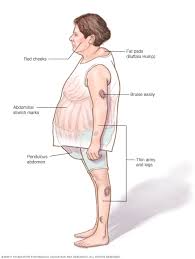
Recent studies have reported expanding treatment options for Cushing’s syndrome.
- It is a disorder that occurs when the body makes too much of the hormone cortisol over a long period of time.
- Cortisol is produced by the adrenal glands and helps control blood pressure, metabolism, immunity, and the body’s response to stress.
- The most common cause is long-term use of steroid medicines prescribed for asthma, autoimmune diseases, arthritis, or after organ transplants.
- The body produces excess cortisol on its own. This is usually due to a non-cancerous tumour in the pituitary gland (called Cushing’s disease).
- Signs and Symptoms:
- Weight gain especially around the abdomen and face and develop fat buildup between the shoulders.
- The skin becomes thin and bruises easily. Wounds may heal slowly. Wide purple stretch marks can appear on the abdomen, thighs, breasts, or arms.
- Acne and increased facial or body hair (especially in women) can also occur.
- Women may notice irregular or absent periods, while men may experience reduced libido or fertility issues.
- Many people develop high blood pressure and high blood sugar, and some develop diabetes.
- Bone loss can lead to osteoporosis and fractures.
- Anxiety, irritability, depression, mood swings, sleeps problems and memory problems.
- Women are more commonly affected than men in naturally occurring (endogenous) cases, especially between ages 30 and 50.
- Treatment:
- Treatment depends on the cause and aims to bring cortisol levels back to normal.
- If steroid medicines are the cause, doctors slowly reduce the dose under supervision.
- If a tumour is causing excess cortisol, surgery is usually the first treatment.
New Earthworm Species:
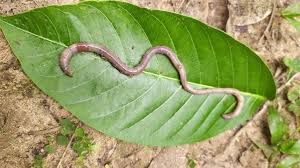
A team of researchers have discovered two previously unknown species of moniligastrid earthworms and named them as Moniligaster girishi and Drawida reynoldsi.
New Earthworm Species:
- Moniligaster girishi:
- It is endemic to Western Ghats and belongs to the family Moniligastridae.
- It is named after P. Girish Kumar, a scientist at the Zoological Survey of India’s Western Ghats Regional Centre, Kozhikode.
- It was collected from the tropical wet evergreen forest.
- It is distinguished by a single undivided spermathecal atrial gland on each side of the anterior body, particularly by the condition of its prostate and prostatic capsule.
- It has a smooth, tubular capsule at one end that flattens into a strap-like shape.
- Drawida reynoldsi:
- It was collected from the montane grassland.
- It is named after John Warren Reynolds, an eminent Canadian earthworm specialist.
- It belongs to the robusta species-group characterised by glandular prostates and bilobed spermathecal atria.
Karbi Anglong Ginger:
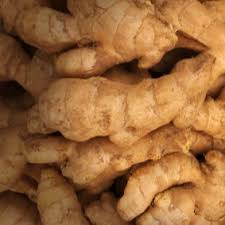
Assam Agriculture Minister flagged off the first export of GI-tagged Karbi Anglong Ginger to London.
- It is grown as an important cash crop in Singhasan Hills of Karbi Anglong district of Assam.
- It is cultivated using the age-old system of Jhum and Tila cultivation.
- Properties of Karbi Anglong Ginger:
- It is one of the most aromatic and flavourful varieties of ginger in India.
- It is renowned for its bold flavour, rich pungency, and high oil content.
- It is known for its pungent aroma and medicinal properties.
- The ginger has a distinct earthy flavour with a hint of spiciness that makes it perfect for cooking.
- It received the Geographical Indication tag in 2015.
Cassava Brown Streak Disease:
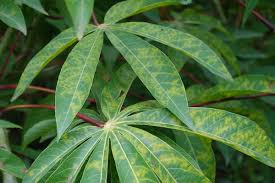
A study warns that more than a third of Africa is at risk of Cassava Brown Streak Disease.
- It is a devastating disease that causes loss of cassava root (tuber) production and quality.
- It is caused by two types of virus, Cassava Brown Streak Virus (CBSV) and Ugandan Cassava Brown Streak Virus (UCBSV).
- It was first identified in Africa in the coastal region of East Africa close to the mid-20th century.
- Its presence has now been confirmed in several eastern, central and southern African countries, including Tanzania, Uganda, Kenya, Rwanda, Burundi, Congo, the DRC, South Sudan, Malawi and now Zambia.
- It is primarily spread by the whitefly Bemisia tabaci, a pest that exists as a complex of genetically distinct groups.
- It spreads through particular whitefly populations in sub-Saharan Africa, known as Sub-Saharan Africa 1 and 2, are highly efficient at transmitting the virus.
- Symptoms of Cassava Brown Streak Disease:
- Symptoms of Cassava brown streak disease can be observed on leaves, stems and cassava roots
- Typical CBSD symptoms are leaf chlorosis, brown streaks on stems and dry hard rot in roots which affects both the quality and quantity of edible storage roots.
- The disease causes necrosis in the roots of infected plants, often leading to total crop loss.
- It is observed that weak clean-seed systems, whitefly transmission and climate pressures accelerating spread of Cassava Brown Streak Disease.
- Management of CBSD: Planting of clean cassava cuttings is the main way of controlling CBSD.
- Use of resistant varieties is the most sustainable way of controlling CBSD.
Musa sikkimensis:
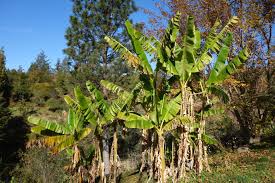
Researchers at Nagaland University highlighted genetic richness of wild banana Musa sikkimensis for climate-resilient farming.
- It is a wild banana species.
- It is native to the Eastern Himalayas and Northeast India.
- It is commonly known as the ‘Darjeeling banana’ or ‘Sikkim banana’,
- It is a tall, evergreen perennial plant that belongs to the banana family.
- It has large, paddle-shaped leaves that can grow up to 10 feet (3 meters) long and 2 feet (60 cm) wide.
- The plant produces beautiful, pendulous flowers that are a deep maroon color and can grow up to 2 feet (60 cm) long.
- It is not widely cultivated for edible fruit. It plays a crucial role in strengthening crop resilience and ensuring sustainable production.
- Its germplasm exhibits strong adaptive potential across diverse environmental conditions.
- It is a wild-seeded species that serves as a crucial genetic reservoir.
- Required Climatic Conditions for Musa sikkimensis:
- It prefers high humidity levels, around 50-60%.
- It prefers warm temperatures between 20-30°C.
- It can tolerate cooler temperatures, but not below 10°C.
- It possesses traits linked to disease resistance, environmental stress tolerance and climate adaptability, making it an invaluable resource for future banana breeding and crop improvement programmes.
Oleum:
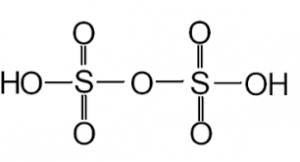
A major leak of hazardous oleum gas at a chemical unit in Maharashtra’s Palghar district recently led to the evacuation of over 2,600 people.
- Oleum is a powerful chemical solution composed of sulfur trioxide (SO₃) dissolved in sulfuric acid (H₂SO₄).
- Though oleum and sulfuric acid are closely related, they differ significantly in composition and reactivity.
- Sulfuric acid (H₂SO₄) is a powerful acid in its own right, but oleum is even more reactive due to the additional dissolved SO₃.
- The Contact Process is the primary industrial method for producing sulfuric acid, and by extension, oleum.
- Oleum is available in different concentrations, with the SO₃ content varying to suit industrial needs.
- It’s often referred to as “fuming sulfuric acid” due to its tendency to release SO₃ fumes upon exposure to air.
- In terms of appearance, oleum ranges from colorless to pale yellow, with an oily consistency.
- Oleum’s high reactivity makes it a vital component for producing highly concentrated sulfuric acid and in synthesizing crucial chemicals like explosives, dyes, and pharmaceuticals.
- Oleum’s high viscosity contributes to its “oily” appearance and influences its handling requirements in industrial applications.
- It is also an efficient dehydrating agent and can strip water from organic compounds, which is essential in certain industrial reactions.
- It is highly corrosive, meaning it can burn and damage skin, eyes, and other materials very quickly.
- Because it releases toxic fumes, it can also be harmful if inhaled.
Shtil Missile:
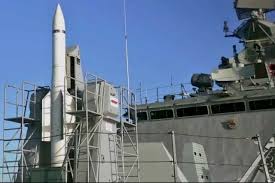
The Ministry of Defence recently signed contracts worth a total of Rs 5,083 crore for the acquisition of six Advanced Light Helicopters (ALH) Mk-III (Maritime Role) for the Indian Coast Guard and Surface-to-Air Vertical Launch – Shtil missiles for the Indian Navy.
- It is a medium-range, ship-based, vertical-launch surface-to-air missile (SAM) system developed by Russia.
- It primarily uses the 9M317ME semi-active radar homing (SARH) missile.
- It is designed to defend warships from aerial threats such as helicopters, supersonic fighter aircraft, anti-ship cruise missiles, and drones.
- It can engage up to 12 targets simultaneously.
- It has a range of 3.5 to 50 km and can engage targets at altitudes between 5 meters and 15 km.
- The Shtil SAM system uses the information provided by the ship’s 3D radar system.
- It has been highly automated to reduce the reaction time in the event of an attack.
- It can travel at 5 times the speed of sound.
World Wildlife Day 2026:
The Prime Minister reaffirmed India’s commitment to wildlife conservation and sustainable practices on the occasion of World Wildlife Day.
- It is observed every year on March 3 to celebrate wild animals and plants and recognize the unique roles and contributions of wildlife to people and the planet.
- It was established by the United Nations in 2013 after Thailand proposed to dedicate a day to raise awareness about wildlife conservation.
- On December 20, 2013, the UN General Assembly officially declared March 3 as World Wildlife Day, with the first celebration taking place in 2014.
- This date was chosen because, in 1973, the Convention on International Trade in Endangered Species of Wild Fauna and Flora (CITES) was signed on the same day.
- CITES is a global agreement to ensure that international wildlife trade does not threaten the survival of animal and plant species.
- WWD 2026 Theme: “Medicinal and Aromatic Plants: Conserving Health, Heritage and Livelihoods”
- It highlights the importance of plants used for medicine, their role in preserving cultural traditions, and the income they provide to local communities.
- Across the world, 70–95% of people in developing countries depend on traditional medicine for basic healthcare, much of it derived from plant-based resources.
- Medicinal and aromatic plants form the foundation of traditional systems of medicine and also contribute significantly to modern pharmaceuticals.
- India is one of 17 megabiodiversity-rich countries with around 15,000 medicinal plant species, of which 8,000 are used in Indian medicine, making it one of the world’s most important hubs for medicinal and aromatic plants.
World Obesity Atlas 2026:
The World Obesity Atlas 2026, released by the World Obesity Federation on World Obesity Day (4th March), reveals alarming statistics for India, highlighting a growing public health emergency.
Key Findings of the World Obesity Atlas 2026:
- The World Health Organization (WHO) defines Obesity as abnormal or excessive fat accumulation that poses health risks, with a Body Mass Index (BMI) of 25 or above classified as overweight and 30 or above as obese.
Key Findings:
- China, India, and the United States each have over 10 million children living with obesity, with China leading (62 million high Body Mass Index (BMI), 33 million obesity), followed by India, and the US (27 million high BMI, 13 million obesity cases). Among women (15-49 years), 13.4% have high BMI and 4.2% live with Type 2 diabetes.
- Over 200 million school-age children aged 5 to 19 living with overweight and obesity are concentrated in just 10 countries across the world.
- Nearly 15 million children aged five to nine years and more than 26 million children aged 10 to 19 years in India were overweight or obese in 2025.
- It positions India as having the 2nd-highest number of children with high BMI (41 million).
- The number of Indian children aged 5 to 19 with disease indicators linked to high BMI is projected to rise substantially from 2025 to 2040.
Health Consequences (2025-2040): Cases of BMI-related hypertension are expected to increase from 2.99 million to 4.21 million, hyperglycaemia (high blood sugar) from 1.39 million to 1.91 million, high triglycerides from 4.39 million to 6.07 million, and metabolic dysfunction-associated steatotic liver disease (MASLD) from 8.39 million to 11.88 million. - Key contributors include 74% of adolescents (11-17 years) failing to meet physical activity recommendations, only 35.5% receiving school meals, 32.6% of infants (1-5 months) experiencing sub-optimal breastfeeding, and children aged 6-10 consuming up to 50 ml of sugary drinks daily..
- The world is set to miss the 2025 target to halve childhood obesity rise (now extended to 2030). Currently, 20.7% of children aged 5-19 worldwide are overweight/obese (up from 14.6% in 2010), with projections of 507 million affected children by 2040 and over 57 million showing early cardiovascular disease signs.
IAEA–Iran Dispute Over Alleged Natanz Strike:
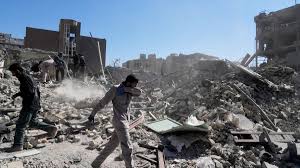
The UN nuclear watchdog International Atomic Energy Agency (IAEA) held an emergency meeting in Vienna at the request of Russia and Iran following the military engagement between the US-Israel bloc and Iran.
- The IAEA stated there is no current indication of damage to Iran’s nuclear installations (including Bushehr and the Tehran research reactor) and confirmed that radiation levels in the region remain normal.
- Iran alleged that US and Israeli airstrikes targeted the Natanz uranium enrichment facility.
- However, Iran has not provided public or technical evidence confirming damage.
- Iran has previously used foreign attacks as justification to suspend cooperation with the IAEA.
- After strikes in mid-2025, Iran passed a law suspending all cooperation with IAEA inspections, citing national security.
- Claims of attacks could help Tehran rally support from allies such as Russia and China.
- Iran could justify enriching uranium to higher levels in “self-defense” if its nuclear infrastructure is threatened.
- It may also limit transparency and restrict information sharing with international inspectors.
- Iran has long accused the IAEA of political bias, claiming Western countries use it to issue “politically motivated” reports.
- Some Iranian leaders even labelled the IAEA as “Israel’s spy” and alleged that the agency leaked coordinates of nuclear sites and scientists’ identities.
Hexagon of Alliances:
Amidst intense geopolitical competition in the Middle East and the Horn of Africa, Israel has announced the “Hexagon of Alliances,” a proposed strategic framework designed to unite moderate powers across the Indo-Pacific, Eastern Mediterranean, Gulf, and Africa that share similar views on security challenges.The Axis of Resistance led by Iran (including Hezbollah, Hamas, Houthis, and Iraqi militias).The emerging radical Sunni axis (comprising ISIS remnants and Muslim Brotherhood (founded in Egypt in 1928)-affiliated groups).India has been positioned as a central pillar in the proposed “Hexagon of Alliances” framework, with Israel, Greece, and Cyprus identified as the other core members. Additional Arab, African, and Asian nations (e.g., Ethiopia, UAE) are expected to join.The proposed alliance structure could focus on strategic cooperation in defence, intelligence sharing, technology, diplomacy and security coordination among participating countries.The alliance represents a natural evolution of existing groupings, including the Abraham Accords, India-Israel strategic ties, and the I2U2 (India-Israel-UAE-US) framework, potentially creating a continuous arc of moderate nations linking the Indo-Pacific to the Mediterranean.
IDFC First Bank Fraud:
A ₹590-crore fraud involving government accounts in IDFC First Bank has been uncovered in Haryana, with investigations revealing forged cheques, diversion of funds, and involvement of bank officials and private entities.The IDFC First Bank fraud refers to an alleged ₹590-crore financial scam involving diversion of funds from Haryana government department accounts maintained at a Chandigarh branch of IDFC First Bank.
Moonshot Project:
The Indian Institute of Science has launched a Moonshot project on brain co-processors in partnership with the Pratiksha Trust.The Moonshot Project is an advanced research initiative to develop brain co-processors—devices that interface with the human brain to decode neural signals, process them using AI, and stimulate the brain to restore lost functions.It combines neuromorphic computing, artificial intelligence, neuroscience, and bioelectronics to create closed-loop brain–machine systems.Launched by: The project is led by the Indian Institute of Science.It is funded by the Pratiksha Trust, founded by Kris Gopalakrishnan and Sudha Gopalakrishnan.
IRIS Dena was sunk by a US submarine:
An Iranian warship IRIS Dena was sunk by a US submarine off the coast of Sri Lanka while returning from the International Fleet Review 2026 at Visakhapatnam.UNCLOS is the comprehensive international treaty that establishes the legal framework governing the use of the world’s oceans and seas.It is often called the Constitution of the Oceans because it defines rights and responsibilities of states in maritime zones.Adopted in 1982 at Montego Bay, Jamaica.Entered into force in 1994 after sufficient ratifications.Members: 168 parties including the European Union.Major maritime powers like India are parties, while the United States has signed but not ratified the convention.
Project HANUMAN:
The Government of Andhra Pradesh launched Project HANUMAN on World Wildlife Day 2026 to address the rising human–wildlife conflict in the state.Project HANUMAN stands for Healing and Nurturing Units for Monitoring, Aid and Nursing of Wildlife. It is a state-level wildlife protection and conflict mitigation initiative aimed at rescuing, treating, rehabilitating, and monitoring wildlife while protecting communities near forests.Aim is to reduce human–wildlife conflict and ensure coexistence between local communities and wildlife,to improve rapid response, wildlife rescue operations, and scientific monitoring of animal movement.



