
Today’s Current Affairs: 6th April 2026 for UPSC IAS exams, State PSC exams, SSC CGL, State SSC, RRB, Railways, Banking Exam & IBPS, etc
Table of Contents
ECINet Platform:
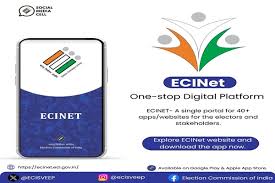
The Election Commission of India (ECI) has urged voters to make informed choices by using the “Know Your Candidates” (KYC) module available on its ECINet platform.
- It is a single-point digital platform developed by the Election Commission of India (ECI).
- It is a new user-friendly digital interface for the electors and other stakeholders such as the election officials, political parties, and civil society.
- It will integrate and reorient over 40 of ECI’s existing mobile and web applications.
- It has subsumed apps like the Voter Helpline App, Voter Turnout App, cVIGIL, Suvidha 2.0, ESMS, Saksham, and KYC App.
- It offers a range of services to voters, including registration, electoral roll search, application tracking, and grievance redressal.
- Additional features include downloading digital voter ID cards (e-EPIC), connecting with election officials, and booking calls with Booth Level Officers (BLOs).
- The platform also includes tools such as cVIGIL for reporting election code violations and Saksham for facilitating accessible services for persons with disabilities.
- It has been developed in full compliance with the Constitution of India, the Representation of the People Acts, 1950 and 1951, Registration of Electors Rules, 1960 and the Conduct of Election Rules, 1961.
National Maritime Day 2026:
The Prime Minister of India on the occasion of National Maritime Day, recalled India’s rich maritime heritage and acknowledged the invaluable contribution of all those associated with the sector.
- National Maritime Day is celebrated every year on April 5.
- National Maritime Day commemorates the maiden voyage of S.S. Loyalty, which sailed from Mumbai to London on April 5, 1919.
- This was a groundbreaking event as it represented India’s independence in maritime affairs, challenging the British shipping monopoly.
- Theme of National Maritime Day 2026: “Maritime India – Empowering Progress”
- The theme of 2026 aims at fostering a self-reliant, technologically advanced, and eco-friendly maritime sector by 2047.
- Areas for National Maritime Day 2026
- Port-Led Development: Expansion of port infrastructure, including the strengthening of the Sagarmala initiative to enhance India’s port capacity.
- Sustainability: Promoting eco-friendly practices in shipping, and focusing on reducing the carbon footprint of the maritime industry.
- Honouring Seafarers: Acknowledging the vital role maritime professionals play in driving India’s economy.
- Technological Advancement: Enhancing digital infrastructure to reduce port turnaround times and improve operational efficiency.
Udanti- Sitanadi Tiger Reserve:

A rare Indian giant flying squirrel, a native of Western Ghats, has been found in the Udanti- Sitanadi tiger reserve (USTR) in Chhattisgarh.
- It is located in the state of Chhattisgarh.
- It was established by joining the regions represented by Sitanadi and Udanti wildlife sanctuaries.
- The drainage system of the reserve consists of the Mahanadi as the main river, along with the Udanti, Sitanadi, Indravan, and Pairi Rivers as tributaries.
- The location of the reserve is strategic since it also connects with the Kanker and North Kondagaon forest divisions, forming a contiguous forest corridor to Indravati Tiger Reserve in the Bastar region.
- The forest type here is predominantly tropical dry and moist deciduous.
- The forest is dominated by Sal (Shorea robusta), which forms dense patches across the landscape.
- Alongside, species such as Teak (Tectona grandis), Bamboo, Tendu, Mahua, Bija, and Harra contribute to the green diversity of the region.
- It is home to the last few herds of the highly endangered Wild Buffalo.
- Apart from the tiger, other endangered and rare species are the Indian Wolf, Leopard, Sloth Bear, and Mouse Deer.
Appemidi Mango:
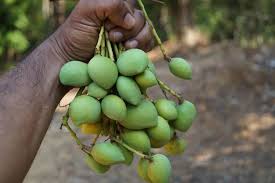
Appemidi mango (tender mango in Kannada) is facing the threat of climate change and experts are stressing the need for in-situ conservation of the natural trees in the Aghanashini valley of Karnataka.
- Appemidi Mango is found exclusively in the Uttara Kannada and Shivamogga districts of Karnataka.
- It is small and tender; it is regarded as the king among raw mango varieties.
- It is highly sought after by the South Asian pickle industry.
- These mangoes are pulpy, known for their distinctive aroma and long long shelf life.
- It has received GI (geographical indication) tag in 2009 in recognition of its culinary and cultural heritage,
- It is a traditional pickling variety of mango from Karnataka.
- Geographical Indication (GI) Tag:
- It is a sign used on products that have a specific geographical origin and possess qualities or a reputation that are due to that origin.
- This is typically used for agricultural products, foodstuffs, wine and spirit drinks, handicrafts and industrial products.
- The Geographical Indications of Goods (Registration and Protection) Act, 1999 seeks to provide for the registration and better protection of geographical indications relating to goods in India.
- GI tag is valid for 10 years following which it can be renewed.
Barnawapara Wildlife Sanctuary: Blackbucks Reintroduced
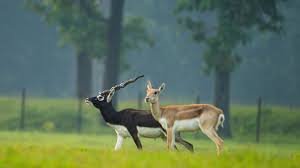
Blackbucks were reintroduced into their natural habitat at Rampur grassland in Barnawapara Wildlife Sanctuary.
- Barnawapara Wildlife Sanctuary is located in the northern part of the Mahasamund district of Chhattisgarh.
- It is named after the Bar and Nawapara forest villages, which are in the heart of the sanctuary.
- The tributaries of Mahanadi are the source of water. The River Balamdehi forms the western boundary, and the Jonk River forms the northeastern boundary of the sanctuary.
- It mainly consists of tropical dry deciduous forest.
- The flora chiefly comprises Teak, Sal, Bamboo and Terminalia being the prominent trees.
- It is home to neelgai, wild boar, tigers, leopards, Indian bison, porcupines, pythons, antelopes, sambhar and cheetal, along with 150 species of birds, including parrots, blackbucks, herons, egrets, peafowl, etc.
Sādhana Saptah Initiative:
Sādhana Saptah 2026 initiative represents a significant step towards building a future ready civil services system in India.
- It is an initiative under Mission Karmayogi, also known as the National Programme for Civil Services Capacity Building
- The Strengthening Adaptive Development and Humane Aptitude for National Advancement(Sādhana) Saptah aims to foster skills necessary for citizen centric governance.
- It is organised by the Department of Personnel and Training, Capacity Building Commission and Karmayogi Bharat.
- The initiative brings together Central Ministries, States and Union Territories, and training institutions on a common platform to promote responsive and citizen centric governance.
- It is structured around three Sutras: Technology, Tradition and Tangible Outcomes, with a focus on building skills required for achieving the vision of Viksit Bharat 2047.
- It provides multiple learning opportunities through curated courses on the iGOT Karmayogi platform, Samuhik Charcha sessions, thematic webinars and hands on workshops conducted by training institutions.
- These activities focus on competencies such as leadership, communication, data analysis, project management and digital governance.
Project Chetak:
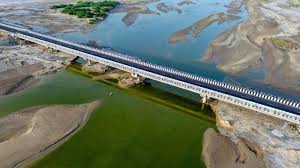
47th Raising Day of Project Chetak was celebrated at Bikaner, Rajasthan the Border Roads Organisation (BRO).
- Project Chetak was raised in 1980 in the strategically important western sector of India.
- It has played a vital role in developing and maintaining infrastructure in Rajasthan, Punjab, and the northern parts of Gujarat.
- The project has played a vital role in connecting border areas and contributing to national security and regional development, it said.
- It is one of the largest BRO projects in terms of geographical area.
- It supports the defence forces by maintaining key feeder roads towards the International Border with continuous efforts underway to upgrade them to National Highway Double Lane specifications, said the statement.
- Motto: ‘Chetak ka Prayas, Desh ka Vikas’
Border Roads Organisation:
- It is a road construction executive force in India that provides support to the Indian Armed Forces.
- BRO was entirely brought under the Ministry of Defence in 2015.
- It was formed in 1960 to secure India’s borders and develop infrastructure in remote areas of the north and northeastern states of the country.
- It develops and maintains road networks in India’s border areas and friendly neighboring countries.
- BRO specialises in constructing and maintaining Roads, Bridges, Tunnels, Airfields and Marine Works across some of the world’s most challenging terrains.
- Motto: Shramena Sarvam Sadhyam (everything is achievable through hard work).
Yuva Sangam Phase-VI:
Registrations for institution-led exposure tours across paired regions under Yuva Sangam Phase-VI held.
- Yuva Sangam is a youth exchange programme that brings young people from different parts of the country together.
- It is designed for those aged 18–30 years, including students, National Service Scheme and Nehru Yuva Kendra Sangathan volunteers, and young professionals.
- It is anchored by the Ministry of Education and implemented through Higher Education Institutions.
- It creates a structured platform for youth engagement across regions.
- It was launched under the Government of India’s Ek Bharat Shreshtha Bharat (EBSB) initiative.
- It supports the experiential learning approach of the National Education Policy 2020, where learning extends beyond classrooms into real-world contexts.
- The programme is structured around the five thematic pillars — the 5 Ps:
- Paryatan (Tourism), Parampara (Traditions & Culture), Pragati (Development & Governance), Paraspar Sampark (People-to-People Connect), and Prodyogiki (Technology & Innovation)
FAO Food Price Index:

FAO Food Price Index is a measure of the monthly change in international prices of a basket of food commodities.
- It consists of the average of five commodity group price indices (cereal, vegetable, dairy, meat and sugar), weighted with the average export shares.
- Base year: 2014-16.
- Food and Agriculture Organization is a specialized agency of the United Nations that leads international efforts to defeat hunger and improve nutrition and food security.
- Its goal is to achieve food security for all and make sure that people have regular access to enough high-quality food to lead active, healthy lives.
- It consists of 195 members – 194 countries and the European Union, FAO works in over 130 countries worldwide.
- Its sister bodies are the World Food Programme (WFP) and the International Fund for Agricultural Development (IFAD).
- The State of the World’s Forests (SOFO), The State of World Fisheries and Aquaculture (SOFIA), The State of Agricultural Commodity Markets (SOCO), The State of Food Security and Nutrition in the World (SOFI).
- Headquarter: Rome (Italy)
United Nations Development Partnership Fund:
The Indian Permanent Mission to New York with the board of directors of the United Nations Development Partnership Fund, reviewed the whole gamut of the fund’s operations.
- It was established in 2017, with $150 million, led by the Government of India.
- The Fund supports Southern-owned and -led, demand-driven and transformational sustainable development projects across the developing world.
- It focuses on least developed countries and Small Island developing States.
- United Nations agencies implement the Fund projects in close collaboration with partnering Governments.
- The fund is a notable example of South-South cooperation with the system.
- Its thematic reach spans all 17 SDGs, with several initiatives addressing more than one Goal.
- These include climate resilience, environmental sustainability, renewable energy, gender equality, health and pandemic response, education and skills, livelihoods, infrastructure, water and sanitation, and agricultural development.
- Under this, the Commonwealth Window of this Fund aims to catalyze the achievement of the Sustainable Development Goals (SDGs) in the developing countries of the Commonwealth of Nations.
- Commonwealth of Nations is a voluntary association of independent and equal sovereign States comprised mainly of former territories of the British Empire, including India.\It is managed by United Nations Office for South-South Cooperation (UNOSSC),
Coal Gasification Incentive Scheme:
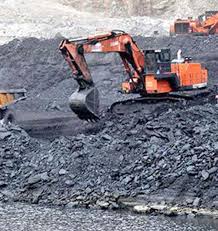
The Union Minister unveiled India’s roadmap to reduce dependency on imported petroleum, ammonia, and fertilizers, highlighting the ₹8,500 crore coal gasification incentive scheme.
- Coal Gasification Incentive Scheme was approved in 2024, for promotion of coal and lignite gasification projects for PSUs and private sector.
- It aims to achieve 100 million tonnes of coal gasification by 2030, leveraging India’s abundant domestic coal reserves to promote sustainable industrial development.
- It encourages participation from both public and private sector players to establish coal gasification projects across the country.
- This initiative is a key component of India’s clean coal transition strategy.
- It is expected to reduce environmental impact, enhance energy security, and drive economic growth through technological innovation and infrastructure development.
- Category of Projects
- Category I:PSU-led projects
- Category II: Private and PSU projects
- Category III: Demonstration and small-scale projects
- Coal Gasification is a thermo-chemical process that converts coal into syngas,
- A synthetic gas composed mainly of carbon monoxide (CO), hydrogen (H₂), carbon dioxide (CO₂), methane (CH₄), and water vapour (H₂O).
- Coal is reacted at high temperatures (1000–1400°C) with a controlled amount of oxygen and steam, producing syngas.
- Process of Coal Gasification
- Preparation: Coal is finely crushed to increase surface area.
- Gasification reactor: The powdered coal is fed into a reactor with limited oxygen/air and steam.
- Chemical reactions: Coal breaks down into syngas components due to partial oxidation.
- Gas cleaning: Impurities like tar, sulfur, and dust are removed from raw syngas.
Insolvency and Bankruptcy Code (Amendment) Bill, 2025:
The Lok Sabha has passed the Insolvency and Bankruptcy Code (Amendment) Bill, 2025, introducing 12 key amendments to Insolvency and Bankruptcy Code, 2016 (IBC) aimed at maximizing stakeholder value, enforcing strict resolution timelines, and aligning Indian law with global best practices like cross-border insolvency.
Key Provisions of the IBC (Amendment) Bill, 2025:
- New Resolution Models: The Bill replaces the fast-track process with a creditor-initiated insolvency framework featuring an out-of-court settlement option and a “debtor-in-possession, creditor-in-control” model to maintain business continuity.
- Strict Timelines: It sets a timeline of 180 days for completion of liquidation, extendable up to 90 days. Admissions of insolvency applications must occur within 14 days once a default is established.
- The Adjudicating Authority must approve or reject resolution plans within 30 days, and National Company Law Appellate Tribunal (NCLAT) appeals must be decided within 3 months.
- Compressed Process: The new out-of-court initiation mechanism has a compressed 150-day timeline to expedite the recovery process.
- Cross-Border and Group Insolvency: The Bill provides an enabling framework for cross-border insolvency and group insolvency, crucial for promoting international investor confidence and handling complex corporate structures.
- Deterrents for Litigation: To curb delays caused by extensive litigation, penalties ranging from Rs 1 lakh to Rs 2 crore will be imposed on individuals initiating frivolous or vexatious proceedings.
- Protection of Workmen: Under the IBC hierarchy, workmen’s dues are given high priority, placed on par with secured creditors and ranked above unsecured financial creditors and government dues.
- Post-Resolution Success: Market capitalization of resolved firms reportedly grew from Rs 2.8 lakh crore to Rs 9 lakh crore within 5 years, demonstrating the long-term efficacy of the framework.
Bengal Florican:
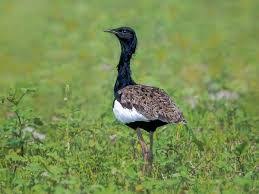
Fewer than 1,000 Bengal floricans remain worldwide, with small, fragmented populations restricted to remnant alluvial grasslands.
- Bengal Florican is a grassland indicator species.
- It is a bustard mostly found in the seasonally inundated alluvial grasslands of the Gangetic-Brahmaputra plains.
- It is distributed in Uttar Pradesh, Assam and Arunachal Pradesh in India, in the terai of Nepal and in Bangladesh
- The male bird shows black plumage, with a crest and elongated display feathers that are raised during courtship, and white wing patches become visible in flight.
- It makes vertical leaps, wing movements and vocalisations along with other males, a behaviour known as “lekking”, to establish territories and attract females.
- It shows reverse sexual dimorphism and colour dichromatism (male and female are differently coloured).
- They are omnivorous birds. They eat various insects, fruits, seeds, and flowers and also feed on small snakes and lizards.
- Threats: Land conversion, expansion of agriculture, annual grassland burning, overgrazing, encroachment, change of river course, invasive plant species and fire mismanagement have altered their habitat.
- Conservation Status:
- IUCN: Critically Endangered
- Wild Life Protection Act 1972: Schedule I
Death Anniversary of Chhatrapati Shivaji Maharaj:
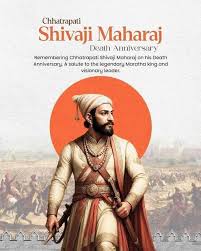
Union Home Minister and Minister of Cooperation paid tributes to Chhatrapati Shivaji Maharaj on his Punyatithi (Death Anniversary).
- Chhatrapati Shivaji Maharaj was Born on 19th February 1630 at Shivneri Fort near Pune, was the founder of the Maratha Empire and a visionary leader who resisted Mughal rule and championed self-governance.
- At a young age, Shivaji Maharaj took a pledge to establish Hindavi Swarajya (Self-Rule), a progressive concept of indigenous sovereignty, ethical governance, and political independence free from foreign domination
- He successfully united the masses around the core ideals of Swadharma (one’s own dharma/duty), Swaraj (self-rule), and Swabhasha (one’s own language), intentionally replacing Persian with Marathi and Sanskrit as the languages of administration.
- Major Battles Fought by Shivaji Maharaj: Battle of Pratapgad (1659), Battle of Pavan Khind (1660), Battle of Surat (1664), Battle of Purandar (1665), Battle of Sinhagad (1670), and Battle of Sangamner (1679).
- The Wagh nakh, was used by Shivaji to kill Afzal Khan in the 1659 Battle of Pratapgad.
- He is globally recognized for his innovative Guerrilla Warfare tactics (Ganimi Kava) and is celebrated as the “Father of the Indian Navy” for building a robust fleet and coastal forts (like Sindhudurg) to protect the western seaboard.
- He led a strong governance structured around the Ashtapradhan Mandal (Council of Eight Ministers).
- He introduced a system of direct revenue assessment and collection from cultivators, reducing intermediary exploitation.
- He was honoured with titles such as Chhatrapati, Shakakarta, Kshatriya Kulavantas, and Haindava Dharmodhhaarak, reflecting his sovereignty, warrior lineage, and role as a protector of dharma.
- He passed away on 3rd April 1680, at the Raigad Fort due to severe health complications.
Pradhan Mantri Awaas Yojana–Gramin : Completed Nearly 3 Crore Houses
As of March 2026, Pradhan Mantri Awaas Yojana–Gramin (PMAY-G) has successfully completed nearly 3 crore houses, marking a major milestone in rural transformation.With an ambitious target of 4.95 crore houses by 2029, the scheme continues to drive inclusive growth, strengthen social welfare, and advance the vision of “Housing for All” in rural India.PMAY-G aims to provide a permanent (pucca) house with basic amenities to all houseless rural households and those living in kutcha or dilapidated dwellings, thereby improving living standards and ensuring dignity and security for the rural poor.
It is implemented by the Ministry of Rural Development (MoRD) and was launched in 2016, restructuring the earlier Indira Awaas Yojana to achieve the goal of “Housing for All.”The selection of beneficiaries involves a thorough three-stage validation process, including the Socio-Economic Caste Census 2011, Gram Sabha approvals, and geo-tagging, ensuring that aid reaches the most deserving individuals.The Centre and states share expenses in the 60:40 ratio in the case of plain areas, and 90:10 for Northeastern states, two Himalayan states (Himachal Pradesh and Uttarakhand) and the Union Territory(UT) of J&K.



