
Today’s Current Affairs: 7th April 2026 for UPSC IAS exams, State PSC exams, SSC CGL, State SSC, RRB, Railways, Banking Exam & IBPS, etc
Table of Contents
Government e Marketplace:

The Government e Marketplace (GeM) has achieved a cumulative Gross Merchandise Value (GMV) of ₹18.4 lakh crore, including crossing ₹5 lakh crore GMV in the financial year 2025–26.
- Government e Marketplace is India’s national public procurement portal launched in 2016 by the Ministry of Commerce & Industry.
- It enhances transparency, efficiency and inclusivity in procurement.
- It is the portal for procurement of goods and services for all Central Government and State Government Ministries, Departments, Public Sector Units (PSUs) and affiliated.
- It is a fully digital, cashless and system-driven platform that offers an end-to-end solution for all government buyers and sellers.
- It uses AI-powered tools and a multilingual Learning Management System (LMS) to facilitate access to public procurement.
- It also features voice-enabled navigation and region-specific training modules that support onboarding and transactions for sellers, including those in remote and underserved areas.
- Objectives of GeM Portal:
- To increase efficiency, transparency and speed in public procurement
- To provide multiple modes of procurement like direct purchase; bidding with reverse e-auction; e-bidding and direct reverse auction.
- To make ministries/ government departments to mandatorily procure goods and services from the portal
- To enable efficient price discovery; economies of scale and dissemination of best practices
Indian Crested Porcupine:
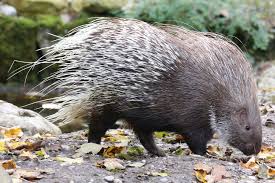
It was observed that the Indian crested porcupine (Hystrix indica) has begun feeding on saffron corms beneath the soil, hollowing out harvests before they can bloom in Kashmir.
- Indian Crested Porcupine is a large rodent belongs to the Old World porcupine family, Hystricidae.
- It mainly occurs on rocky hillsides but is also found in tropical and temperate scrublands, grasslands, and forests.
- They are also found throughout the Himalayan Mountains, reaching up to elevations of 2400 meters.
- It is found throughout southeast and central Asia and in parts of the Middle East, including such countries as India, Nepal, Bhutan, Bangladesh, Sri Lanka, Pakistan, Israel, Iran, and Saudi Arabia.
- Lifespan: 18 to 20 years
- A porcupine’s best defense is the formidable set of quills on its back. But it can’t “throw” them. When alarmed, the Indian Porcupine launches its quill for a backward attack.
- It is nocturnal, with the species seeking shelter in caves, between rocks, or in its burrow during the day.
- They have a very broad and mostly herbivorous They primarily feed on fruits, grains, roots, and other vegetable material.
- Conservation Status: IUCN Red List: Least Concern.
New Nematode Species:
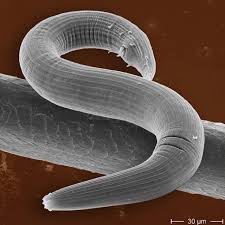
Researchers from the Zoological Survey of India (ZSI) have identified two new species of free-living marine nematodes off the coast of Tamil Nadu and named them as Corononema dhriti and Epacanthion indica.
New Nematode Species:
Corononema dhriti:
- It is a free-living marine nematode found off the coast of Tamil Nadu.
- It is only the fourth known species of this genus globally.
- It was previously documented only in Australia, Thailand, and Vietnam.
Epacanthion indica:
- It stands out due to its complex anatomy.
- Unlike many nematodes that feed on microbes, indica possesses specialized mandibles and “teeth,” positioning it as a microscopic predator within the benthic food web.
Significance of marine nematodes:
- Nutrient Cycling: Breaking down organic waste and recycling essential nutrients back into the ocean.
- Sediment Health: Maintaining the stability and productivity of coastal sediments.
- Bio-Indicators: Serving as vital markers for environmental health and climate change impact.
Nematodes:
- These are any worm of the phylum Nematoda.
- They occur as parasites in animals and plants or as free-living forms in soil, fresh water, and marine environments.
- Nematodes are bilaterally symmetrical, elongate, and usually tapered at both ends.
- Some species possess a pseudocoel, a fluid-filled body cavity between the digestive tract and the body wall.
- They have been reported from every continent on earth and occur in deserts, swamps, the oceans, the tropics and Antarctica..
Psychedelics: Study
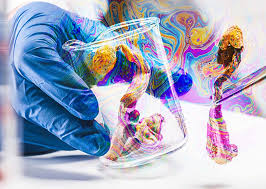
Recent study revealed that Psychedelics can temporarily ‘loosen’ the brain patterns that support the feeling of a ‘me’, allowing researchers to watch that system reorganise itself in real time.
- Psychedelics are drugs that induce states of altered perception, behaviour, consciousness and thought, often with increased awareness of the senses.
- Psychedelics are non-addictive and non-toxic. Compared to illicit drugs, psychedelics cause much less harm to the end user.
- The term ‘psychedelic’ comes from two Greek words denoting mind or soul and manifesting.
- It is a subset of psychotropic substances that can alter a person’s thoughts and perceptions, and elicit intense hallucinations.
- Most psychedelics work by increasing the availability of serotonin—a mood stabilising hormone—in the brain by binding to serotonin receptors.
- In India, the Narcotic Drugs and Psychotropic Substances Act 1985 prohibits the use of psychedelic substances.
- These are categorised into two broad categories
- Classical psychedelics: These are thought to trigger hallucinations by activating a receptor called serotonin 5-HT, which is widely present in the human body, from the gastrointestinal tract to platelets to the nervous system. Examples: LSD, psilocybin and DMT
- Nonclassical psychedelics: These psychedelics bind to varied receptors. Examples: ketamine and MDMA
- Five psychedelics are the subject of clinical research for use in treating mental health problems: psilocybin; lysergic acid diethylamide (LSD); 3,4-methylenedioxy-N-methamphetamine (MDMA); ketamine and N, N-dimethyltryptamine (DMT).
Guru Tegh Bahadur:
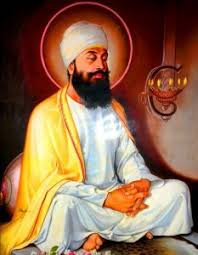
The Prime Minister of India offered homage to Sri Guru Tegh Bahadur Ji, a towering spiritual great of our civilisation, on the sacred occasion of Parkash Purab.
- Guru Tegh Bahadur (1621–1675) was the ninth of ten Gurus of the Sikh religion.
- He was born as Tyaga Mal.
- He came to be known by the name Teg Bahadur (Mighty of The Sword), given to him by Guru Hargobind after he showed his valour in a battle against the Mughals.
- In 1664, Guru Teg Bahadur succeeded Guru Har Krishan Ji as the ninth Sikh Guru.
- He was revered with the honour of ‘Hind Di Chadar’.
- He raised an army against the Mughals and introduced the concept of warrior saints.
- He built the city of Anandpur Sahib (in Rupnagar/Ropar district, on the edge of Shivalik Hills, near the Sutlej River, in Punjab).
- Here the last two Sikh Gurus lived and where Guru Gobind Singh Ji founded the Khalsa Panth in 1699.
- He contributed more than 100 poetic hymns to the Granth Sahib, which cover various topics, such as the nature of God, human attachments, body, mind, dignity, service, etc.
- His martyrdom is remembered as the Shaheedi Divas of Guru Tegh Bahadur every year on 24 November, according to the Nanakshahi calendar released by the Shiromani Gurdwara Parbandhak Committee in 2003.
Per- and Polyfluoroalkyl Substances:
The European Union (EU) Parliament approved updated EU water pollution standards and added Per- and polyfluoroalkyl substances (PFAS) into the pollutants list which needs to be monitored.
- Per- and Polyfluoroalkyl Substances are toxic, man-made, hazardous chemicals.
- These are also known as the Forever Chemicals, are a large chemical family of fluorinated chemicals that have partially or completely fluorinated carbon chains of varied lengths.
- Because the carbon-fluorine bond is one of the strongest, these chemicals do not degrade easily in the environment
- Perfluorooctane sulfonic acid (PFOS) and Perfluorooctanoic acid (PFOA), and persistent organic pollutants (POPs).
- These subgroups are currently listed under the Stockholm Convention as industrial POPs.
- PFASs are used in the chemical industry including in Polytetrafluoroethylene (PTFE) production, the metal plating industry, in the photo imaging industry, and in the semiconductor
- They are ingredients in various everyday products. For example, PFAS are used to keep food from sticking to packaging or cookware, make clothes and carpets resistant to stains.
- PFAS are used in the aerospace, automotive, construction, and electronics industries. Over time, PFAS may leak into the soil, water, and air.
- People are most likely exposed to these chemicals by consuming PFAS-contaminated water or food, using products made with PFAS, or breathing air containing PFAS.
- Impacts of PFAS on Human Health: Decreased fertility, developmental effects in children, interference with body hormones, increased cholesterol levels, and increased risk of some cancers.
- Regulation: The Stockholm Convention has listed some PFAS, such as Perfluorooctane sulfonic acid (PFOS) and Perfluorooctanoic acid (PFOA), as persistent organic pollutants (POPs).
Mission MITRA:
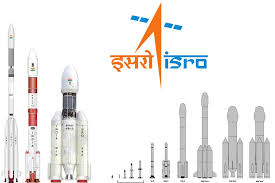
The Indian Space Research Organisation (ISRO) launched the Mission MITRA in Ladakh to test mental, physical strength of astronauts.
- The Mission MITRA (Mapping of Interoperable Traits and Response Assessment) is a first-of-its-kind team behavioral study designed by ISRO & IAF-Institute of Aerospace Medicine.
- Objective is to examine the physiological, psychological, and operational dynamics of Crew and ground teams functioning in a high-altitude environment.
- It is being conducted in the rugged, high-altitude terrain of Leh, Ladakh.
- Ladakh is known for its freezing temperatures, low oxygen levels and isolation, Ladakh is an ideal terrestrial analogue for space-like conditions.
- The mission involves India’s four designated Gaganyaan astronauts, supported by a multidisciplinary team of scientists, engineers, medical experts and psychologists.
- This study is targeted to generate vital understanding on the team inter-operability between Crew (Gaganyatris) &ground control teams and effectiveness of decision making under environmental & operational stress.
- The findings will play a vital role in shaping India’s future human spaceflight missions, especially those involving longer durations in orbit or beyond.
Centre Issues Gazette Naming Amaravati as Andhra Pradesh Capital:
Government of India has officially declared the Amaravati as the sole capital of Andhra Pradesh through the Gazette notification. This gazette notification was issued on 6th of April 2026. The decision brings the clarity to the state capital status and fulfills the long-standing demand of the people. Honorable Chief Minister N Chandrababu Naidu hailed the new move as the major victory for the state.This notification comes under the amended provisions of the Andhra Pradesh Reorganization Act, 2014.
Key Changes in the Amendment Are,
- The law now explicitly states the ‘Amaravati shall be the new capital’. The earlier wording was refereed to the new capital. After this amendment central officially recognizes Amaravati as the sole capital city.
- And this revised provision has been made effective from the June 2, 2024 and giving it the retrospective effect.
Shree Jagannath International Airport in Puri Gets Stage-I Forest Clearance:
The proposed Shree Jagannath International Airport in Puri has received the Stage-I forest clearance from the Ministry of Environment, Forest and Climate Change. This approval will marks the significant step towards to developing new aviation gateway for India’s one of the most important pilgrimage destination. The project is expected to enhance the connectivity, promote tourism and will strengthen the Odisha’s infrastructure.Shree Jagannath International Airport approval granted is the conditional or in-principle clearance which allowing the diversion of the forest land for non-forest purposes.
Key Details of the Approval:
Nearly 27.886 hectares forest land cleared for the project.
The stage-1 clearance granted on the April 1st, 2026.
It was cleared on the based of ministry’s recommendations.
Murali Sreeshankar Wins Men’s Long Jump at Indian Athletics Series 2026:
Indian long jumper Murali Sreeshankar has delivered the strong performance and won in men’s long jump event at the Indian Athletics Series 2026. He was competing for the first time this season and he recorded the jump of 8.15 metres. This is the his bet performance after returning from knee surgery in 2024. The event took place at the Kanteerava Stadium and where the Sreeshankar stand out as the only athlete to cross the 8-metre mark.



