
Today’s Current Affairs: 8th April 2026 for UPSC IAS exams, State PSC exams, SSC CGL, State SSC, RRB, Railways, Banking Exam & IBPS, etc
Table of Contents
Tar balls:
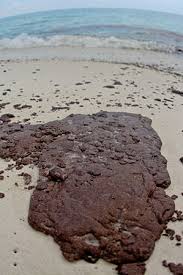
The Ministry of Environment, Forest, and Climate Change has released draft rules aimed at managing ‘tar balls’ to protect the coastline and marine environment from oil spills.
- Tar balls are small, dark, sticky blobs of weathered oil that form in marine environments due to oil spills or natural seeps.
- Tar balls are formed by weathering of crude oil in marine environments. They are transported from the open sea to the shores by sea currents and waves.
- They undergo physical, chemical, and biological processes, resulting in semi-solid or solid lumps that often wash ashore, causing environmental damage and posing risks to human health.
- Some of the balls are as big as a basketball while others are smaller globules.
- These tar balls contain toxic contaminants, such as heavy metals, trace elements, and persistent organic pollutants,
- They often accumulate on beaches and pose a danger to seabirds, fish, and marine animals, such as sea turtles, which may mistakenly ingest them, thinking they are food.
- India’s western coast, particularly the area from Gujarat to Goa, is significantly affected by tar balls, especially during the seasonal period from April to September.
Annual Survey of Incorporated Services Sector Enterprises:

The National Statistics Office (NSO) has launched the first-ever Annual Survey of Incorporated Services Sector Enterprises (ASISSE).
- It is launched by the National Statistics Office, under the Ministry of Statistics and Programme Implementation (MoSPI)
- It is aimed at developing a comprehensive database of the incorporated services sector of the country.
- The survey uses the Goods and Services Tax Network (GSTN) database as a sampling
- The survey covers corporate entities in the services sector – companies registered under the Companies Act, 1956/2013 or Limited Liability Partnership Act, 2008.
- The ASISSE will survey over 1.21 lakh enterprises, making it one of the largest exercises of its kind.
- It will be conducted under the provisions of Collection of Statistics Act, 2008, as amended in 2017 and through the Jan Vishwas (Amendment of Provisions) Act, 2023 and data will be collected through a secure web-based portal.
National Statistical Office:
- It is the central statistical agency of India responsible for collecting, processing, and disseminating official statistical data.
- The NSO was formed in 2019 by merging two key statistical bodies to improve efficiency, coordination, and data quality in India’s statistical system.
- It plays a crucial role in evidence-based policymaking, planning, and governance.
- The NSO is headed by the Chief Statistician of India (CSI), who oversees all statistical activities and ensures coordination between departments.
- It functions under the Ministry of Statistics and Programme Implementation.
Fusion Energy Viability:

A recent study published in Nature Energy warns that current cost projections for nuclear fusion are overly optimistic, raising concerns about inefficient allocation of clean energy investments.
- Experts caution that such unrealistic projections may divert funds from more viable climate solutions and suggest exploring alternative reactor designs, fuels and smaller configurations to improve cost reduction and scalability.
- Fusion is the process where two small, light atoms (like hydrogen isotopes) come together to form a bigger, heavier atom, releasing vast amounts of energy.
- This is the energy process that powers the Sun and stars.
- For example, in the Sun, hydrogen nuclei fuse to form helium and release energy in the form of light and heat.
- The fusion of nuclei releases energy because the fused product has less mass than the sum of the individual atoms. This “lost” mass, known as the mass defect, is converted into energy according to Einstein’s theory of special relativity (E=mc²).
- A tokamak is a fusion reactor that uses magnetic fields to confine and control plasma within a doughnut-shaped vessel. Its effectiveness is measured by how long it can hold the plasma without dissipation.
- Longer confinement times bring reactors closer to achieving continuous and reliable fusion reactions.
- Q Value (Energy Gain Factor): The Q value measures the efficiency of a fusion reactor.
- It is the ratio of output energy to input energy. A Q value > 1 means the reactor produces more energy than it consumes.
India’s Major Ports Surge with Record Cargo:

India’s major ports under the Ministry of Ports, Shipping and Waterways handled 915 million tonnes of cargo in FY 2025–26, with 7.06% growth, reflecting efficiency gains under the Maritime Amrit Kaal Vision 2047.
- Further, integrating Artificial Intelligence (AI) can significantly enhance operational efficiency, logistics optimization, and decision-making, marking the next phase in India’s maritime transformation.
Key Highlights of Port Performance in FY 2025–26:
- The major ports collectively handled an unprecedented 915.17 million tonnes (MT) of cargo, successfully surpassing the annual target of 904 MT.
- Top Performers: The top performers included Deendayal Port Authority (160.11 MT), followed by Paradip Port Authority (156.45 MT) and Jawaharlal Nehru Port Authority (JNPA) (102.01 MT).
- Visakhapatnam Port Authority, Mumbai Port Authority, Chennai Port Authority, and New Mangalore Port Authority also registered strong performances.
- Highest Growth Rates: In terms of growth rate, Mormugao Port Authority, Goa, recorded the highest increase at 15.91%, followed by Kolkata Dock System (14.28%) and JNPA (10.74%).
- Adoption of smart port and digital initiatives driven by IT and automation, delivering major efficiency gains across operations.
- National Logistics Portal (Marine) and Maritime Single Window enabling unified trade facilitation from a single platform.
- Sagar Setu platform and e-Samudra; unified maritime services portal bringing all maritime services under one roof.
- One-Nation-One-Document (ONOD) and One-Nation-One-Process (ONOP) reforms standardising documentation and eliminating redundant procedures across all port ecosystems including customs, immigration, and health.
- Processes that were once handled physically are now fully digital, reducing delays, paperwork, and human error.
- Smart ports are now expected to evolve further into AI-powered intelligent ports as the next phase of transformation.
- Higher volumes of key commodities such as coal, crude oil, containers, fertilizers, and petroleum, oil, and lubricants (POL) have driven overall cargo growth.
- Significant gains in turnaround time (from ~4 days in 2013–14 to less than 1 day in 2025) along with enhanced ease of doing business have boosted port performance.
- Expansion and upgradation of port infrastructure supported by reforms under the Indian Ports Act, 2025 have significantly enhanced cargo handling capacity and operational efficiency.
Syngas in Steel Production:

Syngas (synthesis gas) has been deployed in steel industry furnaces to address shortages of natural gas, LPG and propane. This marks a first-of-its-kind application in galvanising and colour-coating furnaces, ensuring continuity of operations during fuel disruptions.
- Syngas is a relatively clean fuel produced via coal gasification, which converts coal, biomass, or waste into usable energy, and mainly consists of carbon monoxide (CO) and hydrogen (H₂).
- It is used in high-temperature industrial processes such as galvanising and colour-coating furnaces, as well as in Direct Reduced Iron (DRI) production and blast furnaces.
- It reduces dependence on imported fuels like LNG and coking coal while also serving as a feedstock for chemicals such as methanol and ammonia.
- It lowers carbon emission intensity, supports low-carbon steel production and energy security, while aiding compliance with the Carbon Border Adjustment Mechanism (CBAM) and enhancing export competitiveness.
Plastic Waste Management Rules 2026:

India has amended its Plastic Waste Management Rules, 2016 (Amended in 2026) easing compliance norms for companies while retaining recycling targets under the Extended Producer Responsibility (EPR) framework.
Plastic Waste Management Rules, 2016 (Amended 2026):
- Companies that fail to meet their recycling targets for the financial year 2025–26 are no longer penalized immediately.
- The unfulfilled targets from 2025–26 can be carried forward for up to three subsequent years (starting 2026–27), provided that at least one-third of the deficit is cleared annually.
- The 2026 amendment retains a phased framework for recycled content and reuse targets in plastic packaging, continuing the trajectory initiated under the EPR framework (2022), which for the first time introduced collection targets for producers, importers, and brand owners (PIBOs).
- For 2025–26, rigid plastic packaging (Category I) must contain at least 30% recycled material, rising to 60% by 2028–29.
- Flexible plastics (Category II) have a 10% requirement, increasing to 20%, while multi-layered plastics (Category III) must meet 5%, rising to 10%.
- Additionally, reuse targets for rigid packaging have been mandated, including 10% for small containers (0.9–4.9 litres), 70% for large water packaging, and 10% for large non-water packaging, with gradual increases over time.
- The rules formalize a system where companies can meet their recycling obligations by purchasing tradable credits from other firms that have exceeded their targets.
- While the system offers flexibility and lowers costs, it allows companies to avoid recycling their own plastic. The Central Pollution Control Board found over 6 lakh fake certificates in 2023.
- The rules provide exemptions where other regulations restrict the use of recycled plastic, such as Food Safety and Standards Authority of India (FSSAI), which may exclude significant portions of the food and beverage packaging sector.
Implementation Mechanism: Compliance is monitored through a centralised EPR portal, with oversight by the Central Pollution Control Board, ensuring tracking, reporting, and enforcement of obligations. - Rules mandate that companies collect and process 100% of the plastic they introduce into the market by 2024–25, marking the final phase of EPR implementation.
- However, there is no clear public evidence of full compliance, as data largely relies on self-reporting through a centralized portal, with no comprehensive system-wide verification.
- According to the Environment Ministry, while recycling has significantly increased under EPR, it is still far from complete coverage. Since 2022, over 20.7 million tonnes of plastic waste have been recycled, yet annual plastic waste generation remains high at around 4.13 million tonnes (2022–23), highlighting the gap between targets and actual outcomes.
RBI’s Benchmark Issuance Strategy for State Development Loans:
The Reserve Bank of India (RBI) has launched a pilot Benchmark Issuance Strategy (BIS) for State Development Loans (SDLs) starting with the financial year 2026-27 to bring greater discipline, transparency, and liquidity to state borrowings.
- The RBI Act, 1934 empowers the Reserve Bank to act as a banker to state governments and manage their public debt. During FY 2025–26, heavy state borrowings and a sharp increase in the average tenor of issuances led to a demand-supply mismatch in the bond market.
- In FY 2025–26, Indian States are set to borrow nearly as much as the Centre, with gross issuances of about Rs 12.5 trillion compared to the Centre’s Rs 14.6 trillion.
- BIS for SDLs is being implemented on a pilot basis in nine states (Andhra Pradesh, Bihar, Chhattisgarh, Kerala, Madhya Pradesh, Maharashtra, Rajasthan, Telangana, and Uttar Pradesh) for the first quarter of FY 2026-27.
- Under BIS, states will issue securities in predefined benchmark maturity buckets according to a pre-announced borrowing calendar, moving away from flexible, non-standardized issuances.
- The primary goal is to reduce fragmentation in the SDL (state government bonds issued to fund this fiscal deficit) market by creating larger, more liquid benchmark securities, thereby improving price discovery, enhancing transparency, and providing investors with better visibility into state bond supply.
- Borrowing Targets: States and UTs plan to raise a total of Rs 2.54 trillion in Q1 FY27.
- The nine pilot states will raise about Rs 1.54 trillion through the new structured BIS framework, while the remaining states will use the conventional route.
- While the strategy introduces much-needed predictability, market participants note that its impact on lowering borrowing costs (yields) will be gradual due to the continued heavy supply of state bonds.
Arab League Appoints New Secretary-General:
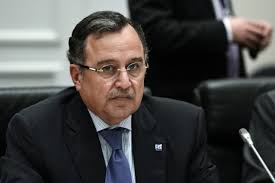
The Council of the League of Arab States(Arab League) has approved Egypt’s nomination of Nabil Fahmy as the next Secretary-General for a five-year term beginning 1st July 2026, succeeding Ahmed Aboul Gheit.
- The League of Arab States, founded in 1945 in Cairo, is a regional organisation comprising 22 Arab countries across West Asia and North Africa.
- It was formed following the Alexandria Protocol (1944) in the backdrop of post-World War II geopolitical changes, aiming to promote Arab unity, resist colonial divisions, and address concerns over developments in Palestine.
- The League aims to promote coordination and cooperation among member states in political, economic, cultural, and social domains. Its founding charter emphasises “close cooperation” and peaceful settlement of disputes, discouraging the use of force among members.
- The organisation is empowered to mediate disputes both among member states and between members and external parties.
- The 1950 Joint Defence and Economic Cooperation Pact provides for collective security and coordinated military measures.
- The League operates as a loose confederation, resulting in weak enforcement capacity, ineffective conflict resolution, internal divisions, and declining relevance.
Transforming India’s Nuclear Power Landscape:

The Government of India introduced and rapidly passed the SHANTI (Sustainable Harnessing and Advancement of Nuclear Energy for Transforming India) Bill in December 2025.
- This transformative legislation repeals the Atomic Energy Act of 1962, allowing private companies to build, own, and operate nuclear plants to achieve a target of 100 GW of nuclear capacity by 2047.
- The transformation involves a fundamental shift from a state-monopoly under the Department of Atomic Energy (DAE) to a liberalized, multi-stakeholder ecosystem.
- It aims to integrate nuclear energy as a primary baseload power source alongside renewables to achieve Viksit Bharat (Developed India) by 2047 and Net-Zero emissions by 2070.
- Data/Stats on India’s Nuclear Landscape:
- Current Capacity: India’s installed nuclear capacity stands at 8,180 MW (approx. 8.8 GW), contributing only 3% of total electricity generation despite representing 1.8% of generating capacity.
- Generation Disparity: In 2024, India’s per capita electricity generation was 1,418 kWh, significantly lower than China (7,097 kWh) and the U.S. (12,701 kWh).
- Operational Base: The Nuclear Power Corporation (NPCIL) manages 24 reactors; the majority are indigenous Pressurised Heavy Water Reactors (PHWRs).
- Cost Efficiency: India’s indigenous 700 MW PHWR construction cost is million per MW, which is among the lowest globally.
India Needs GST 2.0:
The Justice Kurian Joseph Committee on Union-State Relations released a landmark report advocating for GST 2.0.The report warns that the current GST framework has eroded the fiscal autonomy of States and needs a second generation of reforms to restore the federal balance and fix the broken digital tax backbone.The Goods and Services Tax (GST) is a comprehensive, multi-stage, destination-based indirect tax that subsumed almost all central and state indirect taxes.It was designed to create a One Nation, One Tax system, eliminating the cascading effect (tax-on-tax) and building a seamless national market through the mechanism of Input Tax Credit (ITC).
Babu Jagjivan Ram:
The nation paid rich tributes to Babu Jagjivan Ram on his 119th birth anniversary. Dignitaries, including former President Ram Nath Kovind and former Lok Sabha Speaker Meira Kumar, gathered at Samta Sthal (his memorial) in New Delhi to honor his legacy.Popularly known as Babuji, Jagjivan Ram was a towering national leader, a veteran freedom fighter, and an unwavering crusader for social justice. He holds the record for being a Union Cabinet Minister for 35 years—the longest tenure in Indian history—and served as the Deputy Prime Minister of India.Born on April 5, 1908, in Chandwa (Bihar) to a Dalit family.Despite facing severe caste-based discrimination, he excelled academically. He attended Banaras Hindu University (BHU) and later Calcutta University, where he organized students against social inequalities.In 1935, he was instrumental in foundation of the All India Depressed Classes League, an organization dedicated to attaining equality for untouchables.He was actively involved in the Quit India Movement (1942) and was imprisoned by the British for his participation. He served as a bridge between the Dalit community and the Indian National Congress, ensuring that the struggle for independence was also a struggle for social reform.In 1946, he became the youngest minister in Jawaharlal Nehru’s interim government, handling the Labour portfolio.He introduced several landmark legislations for workers’ rights, including the Minimum Wages Act and the Employees’ State Insurance (ESI) scheme.
Govt Launches First-Ever ASISSE Survey to Track Services Sector Data:
India launched the first Annual Survey of Incorporated Services Sector Enterprises (ASISSE) in April 2026 to strengthen economic data. This is introduced by the National Statistics Office under the Ministry of Statistics and Program Implementation (MoSPI) and this survey aims to capture the detailed data on the services sector. Alongside with survey the user friendly guide has also released to improve the awareness, transparency and participation among the enterprises.The Annual Survey of Incorporated Services Sector Enterprises (ASISSE) is the landmark initiative which designed to create the comprehensive database of India’s incorporated services sector.This services sector is the backbone of country’s economy and it contributing more than 50% to GDP and generating crores of jobs.
Key Highlights of ASISSE 2026:
- The survey brings the several important features and will make it a crucial development in India’s statistical ecosystem.
- First nationwide survey will be focusing exclusively on the incorporated service enterprises
- It Covers all States and Union Territories
- Reference period from the Financial Year 2024-25
- Will take sample size of over 1.21 lakh enterprises
- Uses the GSTN database as the sampling framework
- Data collection via a secure web-based portal
Menaka Guruswamy Takes Oath, Becomes India’s First Openly Queer MP:
Menaka Guruswamy took oath as the Member of Parliament in the Rajya Sabha and she became the India’s first openly queer (LGBTQ+) MP. This will be marks the major step forward for the LGBTQ+ representation in Indian politics and reflecting the gradual shift towards the inclusivity and acceptance. She known for her role to shaping constitutional law and her entry into Parliament is being seen as the powerful symbol of progress, equality.Oath taking ceremony of Menaka Guruswamy as MP is not just the personal milestone but it is the defining moment in India’s political and social journey.Her appointment signifies breaking the barriers in the traditionally conservative political space and will also increased the visibility of LGBTQ+ voices in policymaking.This moment will place the India among those countries where openly queer leaders are step into the mainstream politics.
France Hosts One Health Summit Under G7 to Promote Science-Based Health Policies:
The One Health Summit 2026 is being held from 5th to 7th in Lyon France. This summit will brings together the global leaders, scientists and various organizations to address the pressing health challenges. It will be hosted by Government of France as part of its G7 Presidency and the summit coincides with World Health Day. The Summit will highlight the interdependence of human, animal, plant and ecosystem health, and the need for coordinated, science-based approaches to address shared health threats.The One Health Summit 2026 is a high level international event which designed to promote the One Health approach. This recognizes that human health, animal health and ecosystem health are deeply interconnected.This summit marks the significant moment as it brings together Heads of State and government, several international organizations, scientists and researcher and civil societies and youth representatives.The goal is to translate the global commitments into the real actions that can prevent the future health crises and improve global preparedness.
Bhuvneshwar Kumar Becomes First Fast Bowler to 200 IPL Wickets:
Bhuvneshwar Kumar scripted history as he became the first fast bowler to take 200 wickets in the Indian Premier League. He achieved this milestone by dismissing CSK’s Ayush Mhatre. This is the significant achievement in the league when the spinners are known for the highest wicket tackers in the history of IPL.
Parliament Rejects Impeachment of Chief Election Commissioner Gyanesh Kumar:
The impeachment motion against the Chief Election Commissioner (CEC) Gyanesh Kumar has been rejected by both Houses of Parliament. The decision was taken by the Lok Sabha Speaker Om Birla and Rajya Sabha Chairman C. P. Radhakrishnan after the evaluation. This motion was backed by the Opposition members and they had alleged the bias in electoral processes.The Opposition had submitted several notice in both Lok Sabha and Rajya Sabha to seek the removal of CEC Gyanesh Kumar.
This removal motion had substantial backing of the,
130 MPs from Lok Sabha
63 MPs from Rajya Sabha
Despite this efforts both presiding officers have declined to admit the motion.
Vinay Tonse Takes Charge as MD & CEO of YES Bank:
Vinay Tonse has officially taken charge as the Managing Director and CEO of YES Bank. He has over three decades of experience across the retail, corporate and international banking, He steps in at that time when the bank is aim to accelerate the growth and to strengthen its financial position. His appointment signalling the start of a new strategic phase for the lender.Vinay Tonse appointment as MD & CEO signals the new chapter for YES Bank which has been rebuilding its operations over the past few years.His leadership comes with a clear focus to accelerating profitable growth and to strengthening the balance sheet along with enhancing stakeholder confidence with him.Tonse highlighted in statement that the bank already has a strong foundation and resilience and the next phase will be to focus on scaling up performance.