
Today’s Current Affairs: 10th April 2026 for UPSC IAS exams, State PSC exams, SSC CGL, State SSC, RRB, Railways, Banking Exam & IBPS, etc
Table of Contents
Food Safety and Standards Authority of India: Nearly 4 lakh Inspections Conducted
Official sources said that the Food Safety and Standards Authority of India (FSSAI) has conducted nearly 4 lakh inspections across food establishments in 2025-26.
- Food Safety and Standards Authority of India has been established under the Food Safety and Standards Act, 2006.
- FSSAI is responsible for setting food standards, regulating the manufacture, storage, distribution, sale, and import of food, and ensuring the availability of safe and wholesome food for human consumption.
- Functions of Food Safety and Standards Authority of India
- Standards Development: It formulates standards for various food products, ensuring they are safe for consumption.
- Food Safety Management Systems: It provides guidelines for businesses to implement effective food safety management practices.
- Licensing and Registration: FSSAI manages the licensing process for food businesses, ensuring they comply with food safety regulations.
- Surveillance and Monitoring: Regular inspections and audits are conducted to assess compliance with food safety standards.
- Consumer Awareness: Initiatives to educate the public about food safety, hygiene, and nutrition are a key focus area.
- Accreditation: The FSSAI is also responsible for the accreditation of food testing laboratories throughout India.
- Nodal Ministry: Ministry of Health and Family Welfare, Government of India.
Makhana : In News
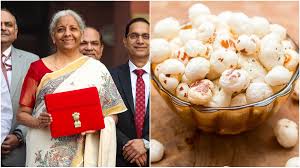
The exports of makhana (fox nuts) have been adversely affected by the ongoing West Asia war, owing to a huge drop in the demand and prices of the commodities.
- It is also known as Foxnut, is the dried edible seed of the prickly water lily or gorgon plant (Euryale ferox).
- The edible part of the Makhana plant consists of small, round seeds that have an outer layer ranging from black to brown. This has led to it being referred to as the ‘Black Diamond.’
- Makhana plant is considered as native of South-East Asia and China, but distributed to almost every part of the world.
- It is grown in stagnant perennial water bodies like ponds, land depressions, oxbow lakes, swamps and ditches.
- It is a plant of tropical and subtropical climate.
- Temperature:200C to 350 C
- Annual rainfall:100 cm to 250 cm
- Soil: Smooth loamy soil
- In India it is mainly distributed in the states of Bihar, West Bengal, Manipur, Tripura, Assam, Jammu & Kashmir, Odisha, Rajasthan, Madhya Pradesh & Uttar Pradesh.
- Bihar in India is the leading state in its production and processing.
- Makhana is a product approved under the Union government’s One District One Product scheme, under which subsidies are provided to food processors for branding, marketing, and developing infrastructure.
- It is a kind of hydrophyte used both as drug and food which exhibits much application and development prospect in the fields of medicine, food and economy.
- Makhana is the seed of a cash aquatic crop, which was popularly used as herb and food in China. Makhana possessed high nutritional value and many medical and health protection effects.
Arogya Van Initiative:

The National Highways Authority of India (NHAI) has announced a new initiative to called ‘Arogya Van.
- It is a new initiative to develop thematic medicinal tree plantations on vacant land parcels along the National Highways.
- It aims to enrich biodiversity along the National Highways by introducing medicinal tree species that support pollinators, birds and microfauna, thereby strengthening ecosystem resilience.
- In the first phase an action plan has been formulated covering 17 land parcels along different National Highway projects in the states of Madhya Pradesh, Haryana, Delhi-NCR, Andhra Pradesh, Gujarat, Karnataka, Odisha, Tamil Nadu, Rajasthan, Maharashtra and Chhattisgarh.
- Under this tree species with established medicinal properties have been identified and will be planted at land parcels as per suitability to the respective agro-climatic zones.
- Priority will be given to land parcels near toll plazas, wayside amenities, interchanges, cloverleaf junctions and other prominent stretches along National Highways
- Nodal Ministry: Ministry of Road Transport & Highways
Cornstarch : Study

Researchers reported that at an extreme speed, the cornstarch mixture behaves like a liquid first before becoming tougher.
- Cornstarch is substance produced through wet milling of corn(Zea mays).
- Wet milling separates the components of corn kernels, which consist primarily of protein, fibre, starch, and oil.
- Once separated, the starch is dried, forming a white powder called cornstarch.
- Cornstarch is high in carbohydrates but lacking in vitamins, protein, fibre, and minerals, making it one of the least nutritionally dense components of corn.
- Applications of Cornstarch:
- It absorbs moisture, however, making it useful as a thickener and anticaking agent in food products.
- It is used in certain oral medications, where it facilitates the disintegration of capsules and tablets.
- It may be used as a substitute for wheat flour in gluten-free foods and as a substitute for baby powder.
- It is used in food processing, papermaking, and the production of industrial adhesives; it is also a component of many cosmetics and oral pharmaceutical products.
- It has been used as a lubricant in surgical gloves.
National Quantum Mission: In News

Union Minister said that India has successfully demonstrated a 1,000-kilometre quantum communication network under the National Quantum Mission, marking a major breakthrough in secure communication technologies.
- National Quantum Mission was launched by the Department of Science & Technology for a period from 2023-24 to 2030-31.
- It is aiming to seed, nurture and scale up scientific and industrial R&D and create a vibrant & innovative ecosystem in Quantum Technology (QT).
- It is one of the nine initiatives under the Prime Minister’s Science Technology Innovation Advisory Council (PMSTIAC).
- It is being implemented by establishing four Thematic Hubs (T-Hubs) across leading institutions in India and each T-Hub will follow the Hub-Spoke-Spike model
- The mission focuses on 4 key areas:
- Quantum Computing: Led by the Indian Institute of Science (IISc) Bengaluru
- Quantum Communication: It is led by the Indian Institute of Technology (IIT), Madras in association with the Centre for Development of Telematics, New Delhi
- Quantum Sensing & Metrology: It is spearheaded by the Indian Institute of Technology (IIT), Bombay
- Quantum Materials & Devices: It is coordinated by the Indian Institute of Technology (IIT), Delhi.
Mount Semeru:
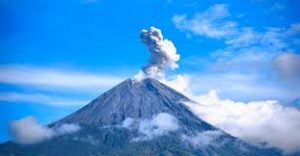
The Mount Semeru in Indonesia erupted multiple times and sent thick columns of ash up to 1,100 metres above its summit.
- It is located in East Java, Indonesia.
- It is one of the most active volcanoes in Indonesia.
- It is positioned within a subduction zone, where the Indo-Australian plate subducts beneath the Eurasia plate.
- It is the highest peak on Java Island and sits on the Pacific “Ring of Fire”.
- It lies at the southern end of a volcanic massif extending north to the Tengger caldera.
- Summit topography is complicated by the shifting of craters from NW to SE.
- Semeru, also known as Mahameru, has erupted numerous times in the past.
Exercise Cyclone 2026:

The Indian Army contingent has departed for Egypt to participate in the Exercise, Cyclone – IV.
- Exercise Cyclone 2026 is a joint special force exercise held between India – Egypt.
- It is the fourth edition of this exercise.
- It is an annual event conducted alternatively in India and Egypt.
- The Indian contingent, comprising personnel from Special Forces units, will train alongside their Egyptian counterparts in a realistic operational environment.
- It aims to enhance joint mission planning capabilities and improve interoperability through the exchange of best practices in special operations.
- The participating troops will undertake a series of training activities focused on special operational tactics, techniques and procedures in desert and semi-desert terrain.
- The joint exercise will also facilitate mutual exchange of professional expertise and provide an opportunity to strengthen bonds of camaraderie.
India Withdraws COP33 UNFCCC Host Bid:

India has withdrawn its candidacy to host the 33rd Conference of Parties (COP33) to the United Nations Framework Convention on Climate Change (UNFCCC) in 2028, citing a “review of its commitments for 2028.”
- Analysts suggest India withdraw to avoid logistical burdens of other “big-ticket” events (like a potential 2030 Commonwealth Games) or pressure for higher climate goals, a move experts believe could undermine its leadership of the Global South in securing climate finance.
- Following the confirmed hosts of Australia and Turkey (COP31, 2026), and Ethiopia (COP32, 2027), India’s withdrawal leaves South Korea as the only contender to fill the vacancy for COP33 in 2028.
United Nations Framework Convention on Climate Change (UNFCCC):
- The UNFCCC is the primary international treaty aimed at preventing “dangerous human interference with the climate system.”
- It serves as the primary international treaty for coordinating a global response to stabilize greenhouse gas (GHG) concentrations and prevent dangerous human interference with the climate system
- Adopted in 1992 at the Rio Earth Summit and entering into force in 1994, its core objective is to ensure food security and allow sustainable economic development while ecosystems adapt to climate change.
- A central pillar of the UNFCCC is the principle of “Common But Differentiated Responsibilities and Respective Capabilities (CBDR-RC).”
- This acknowledges that while all nations must act, developed countries have a greater historical responsibility and more resources to lead the fight.
- It mandates that climate action should be taken in a way that allows ecosystems to adapt naturally, ensures food security, and enables economic development to proceed sustainably.
Trade Receivables Discounting System:
The Reserve Bank of India proposed to drop the due diligence requirement for MSMEs to onboard TReDS platforms to promote ease of doing business for micro, small and medium enterprises.
- Trade Receivables Discounting System is an electronic platform for facilitating the financing/discounting of trade receivables of Micro, Small, and Medium Enterprises (MSMEs) through multiple financiers.
- These receivables can be due from corporates and other buyers, including Government Departments and Public Sector Undertakings (PSUs).
- Purpose is to allow MSME sellers to discount invoices raised against major corporations, which helps them manage their working capital demands.
- The platform enables MSMEs to receive payments more quickly.
- Participants:
- Sellers, buyers, and financiers are the participants on a TReDS platform.
- Only MSMEs can participate as sellers in TReDS.
- Corporates, Government Departments, PSUs, and any other entity can participate as buyers in TReDS.
- Banks, NBFC – Factors, and other financial institutions, as permitted by the RBI, can participate as financiers in TReDS.
- RBI has not made it compulsory for any buyer, seller, or financier to participate in TReDS.
- The Government has made it compulsory for certain segments of companies to mandatorily register as buyers on the TReDS platform(s).
The Report On From Borrowers To Builders: NITI Aayog
NITI Aayog released the second edition of the joint report From Borrowers to Builders, highlighting that women now hold a ₹76 lakh crore credit portfolio, accounting for 26% of India’s total system credit.
- The report, From Borrowers to Builders: Women and India’s Evolving Credit Market, is a comprehensive study published in April 2026 by NITI Aayog in collaboration with the Women Entrepreneurship Platform (WEP), TransUnion CIBIL, and MicroSave Consulting (MSC).
- It utilizes longitudinal credit data from 16 crore credit-active women and qualitative field insights to map the transition of women from microfinance borrowers to mature business builders.
- Key Data and Statistics:
- Women’s outstanding credit grew 4.8x from ₹16 lakh crore in 2017 to ₹76 lakh crore in 2025.
- Credit penetration among women nearly doubled, rising from 19% in 2017 to 36% in 2025.
- Business-purpose loans for women grew at a 31% CAGR over the last three years, significantly outperforming the overall commercial credit growth of 17%.
- Same-day loan approvals for women in consumption categories increased from 34% in 2022 to 45% in 2025, driven by digital onboarding.
RBI MPC Maintains Repo Rate Unchanged:
The Monetary Policy Committee (MPC) of the Reserve Bank of India (RBI) has kept the repo rate unchanged at 5.25%, reflecting a cautious approach amid global uncertainties and domestic inflation risks.
- The policy repo rate under the Liquidity Adjustment Facility (LAF) remains unchanged at 5.25%.
- Consequently, the Standing Deposit Facility (SDF) rate remains at 5%, and both the Marginal Standing Facility (MSF) rate and the Bank Rate remain at 5.50%.
- The MPC has continued with a neutral stance, adopting a wait-and-watch strategy in a volatile global environment.
- Real GDP growth for 2025-26 is estimated at 7.6% (based on the Second Advance Estimates of the new GDP series with base year 2022-23).
- However, the growth forecast for 2026-27 has been cut to 6.9% due to global financial volatility and supply shocks.
- The inflation projection has been hiked, with CPI inflation for 2026-27 projected at 4.6% (using the new CPI series: base year 2024=100). Food inflation and persistently elevated energy prices remain critical concerns.
- The primary downside risks to the Indian economy include the prolonged 2026 West Asia conflict, supply-chain disruptions in the Strait of Hormuz, resulting spikes in global energy/freight costs, and potential El Niño conditions threatening the southwest monsoon and agriculture.
- Growth continues to be driven by robust private consumption, fixed investment demand, a buoyant services sector, and healthy balance sheets of financial institutions.
- Government initiatives targeting domestic manufacturing (Union Budget 2026-27) are expected to further support the ensuing growth trajectory.
Direct-to-Device (D2D) Technologies:
The Department of Telecommunications (DoT) recently organized a high-level workshop through the Telecommunication Engineering Centre (TEC) to explore Direct-to-Device (D2D) satellite communication.It is an emerging satellite communication technology that allows standard, off-the-shelf mobile devices (like your smartphone) to connect directly to satellites without the need for specialized hardware, satellite phones, or intermediate ground equipment.It essentially turns satellites into cell towers in space, extending cellular coverage globally.
Gorakhpur’s AI-based Flood Warning System:
Gorakhpur’s AI-based Urban Flood Management Cell (UFMC) has received appreciation from the Prime Minister’s Office and NITI Aayog for its data-driven and proactive flood management model.The Urban Flood Management Cell (UFMC) is India’s first AI-enabled urban flood early warning and decision support system, established in Gorakhpur, Uttar Pradesh.It combines artificial intelligence, real-time sensors, and hydrological modelling to predict rainfall, waterlogging, and flood risks in advance.Aim is to shift urban flood management from a reactive response model to a proactive forecasting model,to reduce loss of life, property damage, and urban disruption caused by sudden flooding and waterlogging.
Argentina formally withdraws from World Health Organization:
Argentina has officially completed its withdrawal from the World Health Organization (WHO), effective March 2026, following a one-year notification period initiated by President Javier Milei’s administration.The WHO is a specialized agency of the United Nations responsible for international public health. It acts as a coordinating authority on global health work, setting norms and standards while providing technical support to countries.It was founded on April 7, 1948.The primary objective of the WHO is the attainment by all peoples of the highest possible level of health, defined not just as the absence of disease but as a state of complete physical, mental, and social well-being.
Himalayan Griffon Vultures Death:
25 Himalayan Griffon vultures died in the Dudhwa Tiger Reserve due to suspected secondary poisoning after scavenging on stray dog carcasses that had consumed pesticide-laced rice.Dudhwa Tiger Reserve in Uttar Pradesh’s Lakhimpur Kheri and Bahraich districts lies in the Terai belt along the Indo-Nepal border. It comprises Dudhwa National Park, Kishanpur Wildlife Sanctuary, and Katarniaghat Wildlife Sanctuary, and is drained by the Mohana and Suheli rivers.The Himalayan Griffon vulture (Gyps himalayensis) is an Old World vulture and ranks 2nd only to the cinereous vulture in size among Old World vultures.Old World vultures are a group of scavenging birds found in Europe, Asia, and Africa. While they share many physical similarities with New World vultures (found in the Americas), they are biologically distinct and belong to the family Accipitridae—the same family that includes eagles, hawks, and harriers.
Conservation Status:
The Himalayan Griffon is listed as Near Threatened by the IUCN.
It is listed under Schedule I of the Wildlife Protection Act, 1972, providing it the highest level of legal protection in the country.
It is listed under Appendix II of CITES, which regulates international trade of the species.



