
Today’s Current Affairs: 14th April 2026 for UPSC IAS exams, State PSC exams, SSC CGL, State SSC, RRB, Railways, Banking Exam & IBPS, etc
Table of Contents
Chagos Islands:
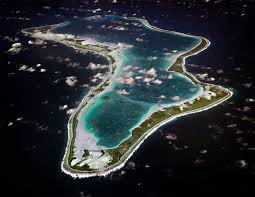
Britain’s government said that it had put on hold its deal to cede sovereignty of the Chagos Islands.
- Chagos Islands is an island group located in the central Indian Ocean.
- It is an overseas territory of the United Kingdom that was established in 1965.
- The principal islands in the archipelago include the Diego Garcia atoll, Danger Island, Egmont Islands, Eagle Islands, Nelsons Island, Peros Banhos atoll, Three Brothers Islands, and the Solomon Islands.
- Diego Garcia is the largest and the most southerly island of the Chagos Archipelago.
- The islands feature flat and low terrain.
- There are no rivers and lakes on the islands.
- It experiences a tropical marine climate with high temperatures and elevated humidity levels.
- The island’s climate is heavily moderated by the trade winds which blow over the islands.
Hib Disease:

Hib, a once-controlled but deadly bacterial infection, is resurging in the US as childhood vaccination rates decline.
- Hib Disease is a serious illness caused by the bacteria Haemophilus influenzae type b.
- Babies and children younger than 5 years old are most at risk for Hib disease, but it can also affect adults with certain medical conditions.
- Hib bacteria can cause mild illness, such as ear infections or bronchitis, or severe illness, such as infections of the bloodstream, joints, and the linings of the brain and spinal cord.
- Contrary to what the name Haemophilus influenzae suggests, the bacterium does not cause influenza.
- Hib is spread through respiratory droplets, mostly coughing and sneezing, and through lengthy contact with an infected person.
- Symptoms:
- influenzae can cause many different types of infections.
- Symptoms depend on the part of the body that’s infected.
- Serious infections can result in long-term health problems and death.
- Prevention and Treatment:
- Treatment usually includes the use of antibiotics to fight the infection. However, influenzae can be resistant to antibiotics.
- Depending on the severity of your condition, you may need additional treatment in the hospital.
- An effective vaccine against Haemophilus influenzae type b is available.
Punatsangchhu-I Hydroelectric Project:
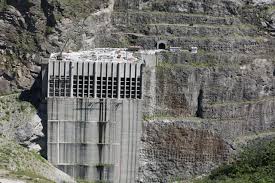
Work on Bhutan’s 1,200 MW Punatsangchhu-I hydropower project has resumed recently after a seven-year suspension, with India’s Power Minister attending a key concrete pouring ceremony marking the restart of dam construction.
- It is a 1200 MW run-of-the-river scheme located on the left bank of the Punatsangchhu River in the Southern Himalayas in Bhutan.
- It is presently the largest hydropower project under construction in Bhutan.
- The project is being implemented by the Punatsangchhu-I Hydroelectric Project Authority (PHPA), an autonomous body of the Royal Government of Bhutan and the Government of India.
- It is funded by the Government of India (GoI): 40% Grant and 60% Loan at 10% annual interest, repayable in 12 equated annual installments commencing one year after the mean date of operation.
- All the surplus power from the project will be exported to India.
Windfall Tax: Hiked Export Duty

The government recently hiked export duty, or windfall tax, on diesel to Rs 55.5 per litre and on aviation fuel ATF to Rs 42 a litre.
- A windfall tax is a higher tax levied by the government on specific industries when the industry experiences unexpected and above-average profits due to various global and geopolitical events outside the control of the industry.
- As the name suggests, “windfall” refers to a dramatic and unanticipated increase in profits. On the other hand, “tax” implies an imposition levied on this dramatic income growth.
- The government imposes this tax when it notices a sudden rise in an industry’s revenue.
- The increase in profits is not attributed to any expansion or investment strategy of a business but to a favourable external factor for which the business is not responsible.
- It is levied on industries or businesses that make disproportionate profits during unexpected situations like commodity shortages, wars, pandemics, changes in government policy, etc.
- The most common industries that fall target to windfall gains tax include oil, gas, and mining.
- Some individual taxes—such as inheritance tax or taxes on lottery or game-show winnings—can also be construed as a windfall tax.
- The primary objective of windfall taxes is to appropriate a portion of these extraordinary profits, which are perceived to exceed normal returns, for the public good.
- Governments assert that these profits are not solely due to the taxed entity’s efforts but also due to external factors, justifying the redistribution of such gains to benefit society as a whole.
- It is also used as a supplementary revenue stream for the government.
Kalai-II Hydroelectric Project:
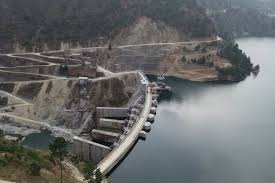
The Cabinet Committee on Economic Affairs recently approved an investment of ₹14,105.83 crore for the construction of the Kalai-II Hydro Electric Project on the Lohit River in Anjaw District.
- Kalai-II Hydroelectric Project is a hydropower project planned on the Lohit River (a tributary of the Brahmaputra River) in the Anjaw District of Arunachal Pradesh.
- It is a run-of-river with pondage project.
- The project involves construction of a concrete gravity dam, upstream & downstream coffer dam, diversion tunnel, intake tunnel, pressure Shafts, underground Powerhouse complex, surge chamber, and Tail Race Tunnel, etc.
- The project has an installed capacity of 1,200 megawatt (MW) comprising six units of 190 MW and one unit of 60 MW.
- It is projected to generate 4,852.95 million units annually..
- The project will be implemented through a joint venture company between THDC India Limited (formerly Tehri Hydro Development Corporation Limited) and the government of Arunachal Pradesh.
- The Government of India will provide budgetary support for roads, bridges and associated transmission infrastructure, along with central financial assistance towards the state’s equity share.
Dibru-Saikhowa National Park:
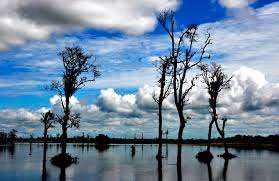
As polling ended at the remote Laika and Dodhia polling stations inside Dibru Saikhowa National Park in upper Assam, armed forest guards, not police, escorted polling teams back to district headquarters in Tinsukia and Dibrugarh, respectively.
- It is located in Dibrugarh and Tinsukia districts, Assam.
- The park is bounded by the Brahmaputra and Lohit Rivers in the north and the Dibru River in the south.
- It is also a Biosphere Reserve.
- It has a tropical monsoon climate with a hot and wet summer and cool and usually dry winter.
- It mainly consists of moist mixed semi-evergreen forests, moist mixed deciduous forests, canebrakes, and grasslands.
- It has the largest salix swamp forest in northeastern India.
- The forest consists of beautiful pine vegetation and some other common and rare tropical trees like Tetrasperma, Dalbergiasissoo, Dibru-Saikhowa, Dilleniaindica, etc.
- Though the park was primarily meant for the conservation and development of the White-winged wood duck in its natural habitat, it is also famous for its bright colored wild horses called the Feral Horses.
- It is the habitat of some rare and endangered animals such as the Hoolock gibbon, water buffalo, tiger, elephant, capped langur, slow loris, and Gangetic river dolphin.
- It is an identified Important Bird Area (IBA) having more than 382 species of birds, some of which are Greater Adjutant Stork, Lesser Adjutant Stork, Greater Crested Grebe, etc.
Khanij Bidesh India Limited:

State-owned Khanij Bidesh India Limited (KABIL) recently received environmental clearance from the Argentine govt for deep exploration of five brine lithium blocks in the South American country.
- It is a joint venture company of three Central Public Sector Enterprises, namely, National Aluminium Company Ltd. (NALCO), Hindustan Copper Ltd. (HCL), and Mineral Exploration and Consultancy Ltd. (MECL) in the ratio of 40:30:30.
- It was incorporated under the Companies Act 2013, with an objective to identify, explore, and acquire overseas mineral deposits & bring strategic minerals into India.
- It is under the aegis of the Ministry of Mines, Government of India.
- The company is currently focusing on two prime critical and strategic minerals, i.e., Lithium and Cobalt, and significant projects are underway in Argentina, Australia, and Chile.
- Amongst the three promoters, NALCO is one of the largest integrated primary producers of aluminum in Asia, HCL is India’s only vertically integrated copper producer, whereas MECL is one of the largest mineral exploration agencies of India.
- The registered office of KABIL is situated in New Delhi and managed by the lead partner NALCO.
Vitamin D : New Study
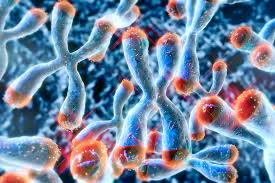
A new study says that your vitamin D level in your 30s and 40s is a determining factor of your brain age in your 60s and 70s.
- Vitamin D (also referred to as calciferol) is a fat-soluble vitamin that is naturally present in a few foods, added to others, and available as a dietary supplement.
- It is also produced endogenously when ultraviolet (UV) rays from sunlight strike the skin and trigger vitamin D synthesis.
- During periods of sunlight, vitamin D is stored in fat and then released when sunlight is not available.
- Very few foods naturally contain vitamin D. Most people get vitamin D in their diet from foods that are fortified. This means that vitamin D is added to the food. These foods may include milk, cereal, and yogurt.
- Foods that naturally have vitamin D include egg yolks, saltwater fish, and liver.
- The amount of vitamin D one needs each day depends on one’s age.
- Vitamin D promotes calcium absorption and helps maintain adequate levels of calcium and phosphorus in the blood, which is necessary for healthy bones and teeth.
- Without sufficient vitamin D, bones can become thin, brittle, or misshapen.
- Vitamin D has other roles in the body, including reduction of inflammation as well as modulation of such processes as cell growth, neuromuscular and immune function, and glucose metabolism.
- Vitamin D Deficiency:
- In children, vitamin D deficiency causes rickets, a disease in which the bones become soft, weak, deformed, and painful.
- In teens and adults, vitamin D deficiency causes osteomalacia, a disorder that causes bone pain and muscle weakness.
- Vitamin D deficiency may be more common in people with higher skin melanin content (darker skin) and who wear clothing with extensive skin coverage.
- Vitamin D be Harmful:
- Very high levels of vitamin D in your blood can cause nausea, vomiting, muscle weakness, confusion, pain, loss of appetite, dehydration, excessive urination and thirst, and kidney stones.
- Extremely high levels of vitamin D can cause kidney failure, irregular heartbeat, and even death.
South Atlantic Anomaly:
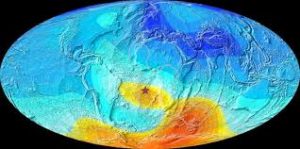
The South Atlantic Anomaly is actually splitting into two zones now, making things trickier for satellites in low Earth orbit.
- The South Atlantic Anomaly (SAA), or the “Bermuda Triangle of Space’’, is a dip in the Earth’s magnetic field which allows cosmic rays and charged particles to reach lower into the atmosphere.
- It is southeast of South America and southwest of Africa. In this area, the planet’s magnetic field dips down.
- It lies roughly between latitudes 5 and 40 degrees South and between longitudes 0 and 80 degrees West — the precise strength, shape, and size of the SAA varies with the seasons.
- Earth’s magnetic field acts like a protective shield around the planet, repelling and trapping charged particles from the Sun.
- SAA exists because the Earth’s inner Van Allen radiation belt comes closest to the planet’s surface, causing an increased flux of energetic particles.
- This leads to the penetration of solar energetic particles deep into Earth’s atmosphere, posing severe problems for airplanes and ships’ positioning systems as well as spacecraft electronic systems.
Van Allen Radiation Belts:
- The Van Allen radiation belt is a zone of energetic charged particles, most of which originate from the solar wind.
- The particles are captured by and held around a planet by that planet’s magnetic field.
- It surrounds Earth, containing a nearly impenetrable barrier that prevents the fastest, most energetic electrons from reaching Earth.
- The outer belt is made up of billions of high-energy particles that originate from the Sun and become trapped in Earth’s magnetic field, an area known as the magnetosphere.
- The inner belt results from interactions of cosmic rays with Earth’s atmosphere.
- The Van Allen belts are most intense over the Equator and are effectively absent above the poles.
- These radiation belts serve both protective and hazardous roles; while they shield Earth from harmful cosmic radiation, they can pose risks to satellites and human space missions, as the particles can interfere with electronic systems.
- They were discovered in 1958 by James A. Van Allen, the American physicist who designed the instruments on board Explorer 1, the first spacecraft launched by the United States.
Nagarjunasagar–Srisailam Tiger Reserve:
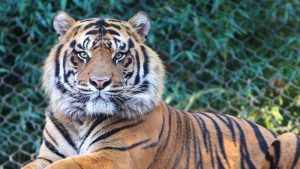
The forest Department officials have stepped up plans to resume the proposed tiger enclosure project in the Nallamala–Nagarjunasagar–Srisailam Tiger Reserve (NSTR) to care for injured, abandoned or orphaned tiger cubs.
- Nagarjunasagar–Srisailam Tiger Reserve is located in the Nallamala hill ranges of Andhra Pradesh.
- It is one of the largest tiger reserves in India.
- It is named after two major dams in the area, Nagarjuna Sagar Dam and Srisailam Dam.
- Two wildlife sanctuaries, namely Rajiv Gandhi Wildlife Sanctuary and Gundla Brahmeswaram Wildlife Sanctuary (GBM), constitute the NSTR.
- The River Krishna traverses through this reserve.
- The reserve holds significant importance with ancient temples like the Mallikarjuna Swamy Temple at Srisailam and several archaeological sites, including Buddhist relics from the Nagarjuna Konda area.
- It consists of plateaus, ridges, gorges, and deep valleys.
- It mainly consists of Tropical dry deciduous forests having an undergrowth of bamboo and grass.
- The habitat has several endemics like Andrographis nallamalayana, Eriolaena lushingtonii, Crotalaria madurensis Var, Dicliptera beddomei, and Premna hamiltonii.
- Fauna: Tiger, Leopard, Wolf, Wild Dog and Jackal, Sambar, Chital, Chowsingha, Chinkara, Mouse Deer, Wild boar, and Porcupine etc.
Sagarmala Programme:
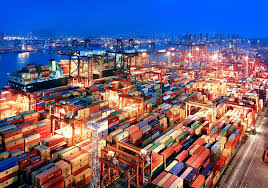
The Sagarmala Programme is implementing 845 projects worth ₹6.06 lakh crore, with 315 projects worth ₹1.57 lakh crore completed.
- It was launched in 2015 to promote port-led development.
- It aims to improve logistics efficiency, reduce transportation costs, and support trade by increasing the use of coastal shipping and inland waterways alongside existing road and rail networks.
- The overall projects under the Sagarmala Programme are divided into 5 pillars and 24
- Components of Sagarmala Programme
- Port Modernization and New Port Development: It focuses on upgrading existing ports and developing new ones to expand capacity and improve operational efficiency.
- Port Connectivity Enhancement: It aims to strengthen connectivity between ports and the hinterland to facilitate faster and more cost-efficient cargo movement.
- Port-Led Industrialization: It promotes the development of industrial clusters in port-proximate areas to support manufacturing and economic activity.
- Coastal Community Development: It focuses on improving livelihoods and promoting sustainable development in coastal regions.
- Coastal Shipping and Inland Waterways Transport: It encourages greater use of coastal shipping and inland waterways for cargo movement.
Institutional Backbone of Sagarmala - It is supported by a multi-tier framework designed to enable coordinated planning, efficient implementation, and continuous monitoring across the Centre and States.
- National Sagarmala Apex Committee (NSAC): Constituted in May 2015, NSAC is the apex body providing overall policy guidance and oversight for the programme.
- Maritime States Development Council (MSDC): It is convened periodically to facilitate centre–state coordination. It brings together all stakeholders and promotes coordinated development of ports and related infrastructure.
- State Sagarmala Committees (SSCs): Constituted in coastal states and union territories (UTs), SSCs are responsible for identifying projects, coordinating implementation, and monitoring progress at the state level.
- Sagarmala Finance Corporation Limited (SMFCL): Sagarmala Development Company Limited (SDCL), established in August 2016, has played an important role in advancing India’s maritime infrastructure.
- In June 2025, SDCL restructured as the Sagarmala Finance Corporation Limited (SMFCL).
Exercise Dustlik:
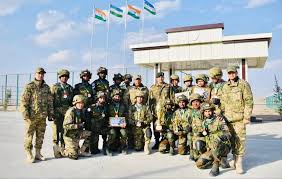
The Indian Army contingent departed for participating in the 7th edition of the Exercise Dustlik.
- Exercise Dustlik is a joint military exercise conducted between India and Uzbekistan.
- It is a yearly event conducted alternatively in India and Uzbekistan.
- It is mainly Indian Army’s Battalion of the MAHAR Regiment and personnel from the Indian Air Force.
- Aim is To foster military cooperation and enhance combined capabilities to execute joint operations in semi-mountainous terrain.
- It will also establish a unified operational algorithm between the command-and-control structures of both the contingents for planning and execution of joint operations.
- Key operational aspects to be practiced include land navigation, strike missions on enemy bases and seizure of enemy-held areas.
- It will enable the two sides
- To share their best practices in Tactics, Techniques and Procedures of conducting joint operations.
- To further strengthen interoperability, operational synergy and joint command and control coordination between the contingents.
Sentinel Species:
The International Union for Conservation of Nature (IUCN) declared the emperor penguin to be an endangered species.
- It is a species whose members’ health signals the condition of the ecosystem in which they live.
- They are among the first to respond to stressors in their environment, such as pollution and disease.
- Their response also tends to be more apparent than most other species.
- They can provide early warnings of ecosystem decline.
- These species tend to occupy a fixed territory and live long enough to accumulate toxins.
- They also have physiologies that amplify the effects of environmental Thus, when something goes wrong in their habitat, they show it first.
- Examples:
- Frog: Their skin is permeable and absorbs whatever enters the water or soil around them, making them very sensitive to pesticides and pathogens.
- Canaries in coal mines worked on the same principle: the bird’s faster metabolism made it succumb to carbon monoxide before human miners could notice anything.
- Honeybees: Researchers used this to track agricultural chemical loads.
- Polar bears are observed to monitor Arctic contaminant accumulation
Jallianwala Bagh Massacre 1919:
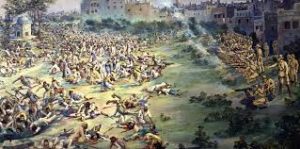
On 13th April 2026, the nation paid homage to the martyrs of the Jallianwala Bagh massacre, marking the 107th anniversary of one of the darkest chapters in India’s colonial history.
Jallianwala Bagh Massacre:
- The Rowlatt Act, 1919 (formally known as the Anarchical and Revolutionary Crimes Act, 1919) was passed based on the Sedition Committee’s recommendations.
- It authorized the British colonial government to imprison suspected political subversives without trial for up to two years.
- In response to the Rowlatt Act (1919), Mahatma Gandhi organized a nationwide hartal on 6th April 1919, marking the first all-India mass protest. He strongly opposed the Act, calling it a “Black Law,” and the day came to be known as Black Day.
- Tensions were particularly volatile in Punjab.
- On 9th April two prominent local nationalist leaders Dr. Saifuddin Kitchlew and Dr. Satyapal were secretly arrested and deported for organizing peaceful protests.
- The public anger led to riots in Amritsar.
- The British administration handed control of the city to Brigadier General Reginald Edward Harry Dyer, who practically imposed martial law, banning all public gatherings.
- 13th April 1919 coincided with Baisakhi, a major harvest festival. Thousands of men, women, and children gathered in Jallianwala Bagh, an enclosed public ground in Amritsar.
- Many were villagers unaware of Dyer’s ban on public assemblies, while a smaller contingent was there to peacefully protest the arrest of their leaders.
- General Dyer arrived with a detachment of Gurkha and Baloch.
- He deliberately blocked the main, narrow entrance with his forces and armored vehicles.
- Without issuing any warning to disperse, Dyer ordered his troops to open fire on the dense, unarmed crowd. Over 1,000 men, women, and children were killed.
- Hunter Commission (Disorders Inquiry Committee): Appointed in 1919 to investigate the massacre.
- While it censured Dyer for his actions and forced his resignation from the military, it recommended no penal or legal action against him.
- The Congress boycotted the Hunter Commission and set up its own non-official committee, comprising leaders like Mahatma Gandhi, Motilal Nehru, C.R. Das, and Abbas Tyabji, which condemned the act as a calculated piece of inhumanity.
- Aftermath:
- High-Profile Renunciations: In profound protest, Rabindranath Tagore renounced his British Knighthood, and Mahatma Gandhi returned his Kaiser-i-Hind medal.
- Sir Chettur Sankaran Nair was a prominent Indian nationalist, jurist, and social reformer. He served on the Viceroy’s Executive Council and contributed to the Montagu–Chelmsford Reforms (1919). Following the Jallianwala Bagh massacre, he resigned in protest and, in his book Gandhi and Anarchy (1922), held Michael O’Dwyer responsible, leading to a defamation case in London.
- Although the verdict went against him, his stand exposed colonial bias and strengthened nationalist sentiment.
- Catalyst for Mass Movements: The outrage over Punjab, merged with the Khilafat issue, provided the immediate political capital for Gandhi to launch the Non-Cooperation Movement (1920–1922).
- Rise of Revolutionary Extremism: The trauma deeply influenced a younger generation in Northern India, including Bhagat Singh, accelerating the shift toward militant anti-imperialism via organizations like the Hindustan Socialist Republican Association (HSRA).
- In 1940, Udham Singh (a survivor of the massacre) assassinated Michael O’Dwyer in London. O’Dwyer was the Lieutenant Governor of Punjab in 1919, who had officially endorsed Dyer’s actions.
Delhi–Dehradun Economic Corridor:
The National Highways Authority of India, in collaboration with Wildlife Institute of India, has released the report Landscapes Reconnected, documenting active wildlife use of underpasses along the Delhi–Dehradun Economic Corridor.The Delhi–Dehradun Economic Corridor is a major greenfield highway and economic connectivity project designed to improve travel efficiency between Delhi and Dehradun.It is also being recognized as an eco-sensitive infrastructure model, integrating wildlife conservation features within highway development.Located In Between Ganeshpur and Asharodi,Region: Shivalik landscape,Aim is To improve connectivity and reduce travel time between Delhi and Dehradun,To ensure safe wildlife movement and ecological connectivity,To minimize human-wildlife conflict and habitat fragmentation.
Kali Tiger Reserve:
The Union environment ministry proposes an Eco-Sensitive Zone around Karnataka’s Kali Tiger Reserve, spanning 663.32 sq km.It is located in the central portion of the Uttara Kannada (North Canara) district of Karnataka.The Tiger Reserve comprises two important protected areas of the region viz., Dandeli Wildlife Sanctuary and Anshi National Park.These two protected areas are contiguous to each other and form a single tract of the protected area located in the biologically sensitive Western Ghats.It shares a border with Bhimghad Wildlife Sanctuary in the north, which is further connected to Radhanagari and Koyna wildlife sanctuaries in Maharashtra.To the west, Kali Tiger Reserve shares borders with five protected areas in Goa.The terrain is incredibly diverse, ranging from rolling hills and steep escarpments to riverine valleys and plateaus.The Kali River, which forms the major source of water for Uttara Kannada, flows through the tiger reserve, hence the name. It is a blend of semi-evergreen and moist deciduous forests, interspersed with patches of bamboo and grasslands.The reserve is rich in plant diversity, featuring species like teak, silver oak, eucalyptus, and various medicinal plants.Animals found in the Tiger Reserve include Tiger, Leopard, Elephant, Bison, Wild dog, Sambar, Spotted deer, Sloth bear, Wild boar, Hanuman langur, Bonnet macaque, etc.The area holds one of the highest populations of Great Indian Hornbills in the Western Ghats.It is also home to rare black panthers.
Tajikistan :Earthquake Of Magnitude 4.3
Tajikistan is a landlocked country in the heart of Central Asia.It is bordered by the four countries Kyrgyzstan, Uzbekistan, China, and Afghanistan to the north, west, east, and south respectively.Capital City: Dushanbe.It is one of the members of Shanghai Cooperation Organisation.It is governed by the President, and the legislative function is assigned to the bicameral parliament.Mountainous region dominated by the Alay Mountains in the north and the Pamirs in the southeast. It consists of mid-latitude continental, hot summers, mild winters; semiarid to polar in Pamir Mountains.Tajikistan’s highest point is Qullai Ismoili Somoni.It has a dense river network, including the Syr Darya and the Amu Darya.Lake Karakul and Iskanderkul.Natural resources: Petroleum, Uranium, Mercury, brown coal, lead, zinc, antimony, tungsten, silver, gold etc.



