
Today’s Current Affairs: 24th April 2026 for UPSC IAS exams, State PSC exams, SSC CGL, State SSC, RRB, Railways, Banking Exam & IBPS, etc
Table of Contents
Dolphin Friends Initiative:
The forest department in Prayagraj has launched the Dolphin Friends volunteer network to strengthen conservation of the endangered Gangetic dolphin through community participation and regular river monitoring.Dolphin Friends is a dedicated community-based volunteer network created to monitor the movement, breeding, and habitat conditions of the endangered Gangetic river.Aim is to protect and monitor the endangered Ganges river dolphin, especially during sensitive breeding seasons like the monsoon,to create awareness among local communities and build a participatory conservation model for long-term river ecosystem protection.
Atal Pension Yojana (APY):
The Atal Pension Yojana (APY) has achieved a historic milestone by surpassing 9 crore total gross enrolments.Atal Pension Yojana is a flagship, voluntary, and contributory social security scheme of the Government of India. It is specifically designed to provide a steady income stream to workers in the unorganized sector, ensuring they have financial independence in their old age.Launched In Announced: Union Budget 2015–16.Launched: May 9, 2015, by Prime Minister Narendra Modi.The scheme is administered by the Pension Fund Regulatory and Development Authority (PFRDA).
Aim:
- To create a universal social security system for all Indians, primarily focusing on the poor and underprivileged.
- To provide a Sampurna Suraksha Kavach (Complete Security Shield) against the risks of old age.
- To encourage a culture of savings among workers who do not have access to formal institutional pension systems.
Mainstreaming Disaster Resilience into Infrastructure Project Report:
India is mainstreaming disaster resilience to protect its $4.51 trillion infrastructure pipeline and public finances from escalating climate risks that cost the country up to 2% of its GDP annually.The report is a strategic study by the Coalition for Disaster Resilient Infrastructure (CDRI), developed in partnership with India’s Department of Economic Affairs (DEA) and Ministry of Finance.It provides a framework for integrating climate-risk assessments and resilience measures into the National Infrastructure Pipeline (NIP), focusing on sectors like roads, power, and rail.
Key Findings:
- Economic Impact: Disasters cost India approximately US$ 31.59 billion in average annual losses for infrastructure assets.
- Fiscal Erosion: Natural hazards can erode government revenues by as much as 12% and reduce annual GDP by up to 2%.
- Sectoral Exposure: The Roads, Power, and Rail sectors are identified as the most exposed to climate and disaster risks.
- High Return on Investment: Pilot applications of the Resilience Cost-Benefit Analysis (CBA) tool show returns of up to 12 times the initial investment.
- Infrastructure Value at Risk: India’s development goals, including a $4.51 trillion infrastructure pipeline by 2030, are at risk without mainstreaming resilience.
- Financing Gaps: Current mechanisms like the State/National Disaster Response Funds focus on relief rather than the long-term reconstruction of public assets.
- Contractual Gaps: Existing standard agreements (EPC and PPP) often lack clear allocation of foreseeable disaster risks.
Constitutional Morality and Social Reform Laws:
The Supreme Court is currently examining whether the state can utilize constitutional morality and Directive Principles of State Policy to justify social reform laws that interfere with religious practices.Constitutional morality is a judicial principle that prioritizes the core values of the Constitution—such as justice, liberty, equality, and fraternity—over traditional social or religious norms.It acts as a safeguard to ensure that the morality applied in legal disputes is derived from the spirit of the Constitution itself, rather than the subjective views of a particular community or the majority.
Constitutional Articles Associated:
- Article 14: Guarantees equality before the law, ensuring that social reforms do not leave individuals behind due to religious or caste-based status.
- Article 15: Prohibits discrimination on grounds of religion, race, caste, sex, or place of birth, providing the bedrock for laws that reform unequal social structures.
- Article 25(2)(b): Specifically allows the State to make laws for social welfare and reform, including the opening of Hindu religious institutions of a public character to all classes.
- Article 38: Mandates the State to secure a social order for the promotion of the welfare of the people, effectively linking the Directive Principles with the goal of social reform.
Infrared Sensor Technology in Automatic Devices:

The working of sensor-based devices has gained attention, highlighting the role of infrared (IR) technology and sensors in enabling touchless operations.
- Light is an electromagnetic wave consisting of oscillating electric and magnetic fields, capable of travelling even through a vacuum.
- The spectrum of light refers to the full range of electromagnetic waves arranged according to their frequency or wavelength. It includes radio waves, microwaves, infrared, visible light, ultraviolet, X-rays, and gamma rays.
- Humans can perceive only a narrow band of this spectrum (visible light), while infrared radiation lies just below red light in frequency and remains invisible to the human eye.
- Devices like remotes and automatic washbasins use IR LEDs (light-emitting diodes) to emit these invisible infrared waves.
- Detection is enabled by sensors called Photodiodes, which act as light-sensitive switches. When IR light falls on them, they allow electric current to pass, triggering a response.
- In automatic devices like washbasins, IR light normally does not reach the sensor; however, when an object such as a hand is placed nearby, it reflects the IR waves back to the sensor, thereby activating the system.
- Such technologies are widely used in automatic doors, escalators, dryers, and remote controls.
- The underlying science integrates concepts from Optics, Electromagnetism, Condensed Matter Physics, and Quantum Mechanics, where the interaction of light with electrons in materials enables precise sensing and automated responses.
Amazon–TGRA Deal for Sustainable Rice Farming:
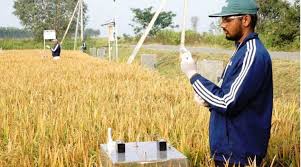
Amazon has entered into a long-term carbon credit offtake agreement with The Good Rice Alliance(TGRA) to support sustainable rice farming and methane reduction in India.
- The Good Rice Alliance is a private sector-led initiative backed by Bayer, GenZero and Shell, representing one of India’s first and largest agricultural carbon credit deals globally.
- TGRA is implementing a large-scale initiative covering over 13,000 small farmers across 35,000 hectares to reduce methane emissions from rice cultivation.
- Amazon will act as the primary buyer, committing to over 685,000 metric tons of CO₂-equivalent carbon credits during the initial phase, enabling the scalability of climate solutions.
- The programme promotes improved agricultural practices to reduce methane emissions and enhance water efficiency:
- Periodic drying of paddy fields instead of continuous flooding reduces anaerobic conditions that generate methane.
- Seeds are sown directly without transplanting in flooded fields, lowering water usage and methane emissions.
- The initiative combines climate action with livelihood gains by providing training, financial incentives, higher yields, reduced input costs, and improved resilience for farmers.
- Emission reductions are measured through field-based methods in collaboration with the International Rice Research Institute, supported by digital monitoring and third-party verification under the Verified Carbon Standard (VCS).
- Rice cultivation contributes 8–10% of global methane emissions, and with India being a major emitter and rice producer, targeted interventions offer high-impact climate mitigation potential.
India–Sri Lanka Diving Exercise (DIVEX) 2026:
The Indian Navy’s INS Nireekshak has been deployed to Colombo to participate in the fourth edition of the India–Sri Lanka Diving Exercise (DIVEX 2026), highlighting deepening maritime cooperation and proactive humanitarian outreach in the Indian Ocean Region in line with the vision of MAHASAGAR (Mutual and Holistic Advancement for Security and Growth Across Regions).DIVEX 2026 exercise focuses on specialized underwater operations, aiming to enhance operational cohesion, interoperability, and maritime security cooperation between the Indian and Sri Lankan navies.The deployment showcases the operational readiness of INS Nireekshak, a critical naval asset specifically designed for deep-sea diving support and submarine rescue missions.Humanitarian Assistance and Disaster Relief (HADR) advancing India’s ‘Neighbourhood First’ policy, the mission includes the presentation of two BHISM (Bharat Health Initiative for Sahyog Hita & Maitri) cubes under the overarching Aarogya Maitri programme.The BHISM cubes function as highly portable, state-of-the-art medical units capable of autonomously managing up to 200 emergency cases, significantly bolstering regional disaster resilience and medical diplomacy.INS Nireekshak is a Dive Support and Submarine Rescue Vessel of the Indian Navy, built by Mazagon Shipbuilders in 1985 and operational since 1989 (commissioned in 1995). It has played a key role in diving operations and holds the national record for the deepest dive at 257 metres.
Skill Development Under Vibrant Villages Programme:
The Ministry of Skill Development and Entrepreneurship convened a capacity-building workshop under the Vibrant Villages Programme(VVP) to accelerate skill-led development in border regions.
- MSDE is enabling demand-driven, locally relevant skilling initiatives to enhance livelihood opportunities, integrating skill development with regional economic needs.
- The initiative promotes peer learning, innovation, and responsive implementation to ensure skilling translates into sustainable livelihood generation in strategically important border areas.
- Vibrant Villages Programme led by the Ministry of Home Affairs, aims to transform 662 border villages into self-reliant, well-connected “first villages,” aligning with the goal of “Viksit Gaon for Viksit Bharat.”
- The initiative seeks to make local residents the “eyes and ears” of the Border Guarding Forces and wean them away from illicit activities and trans-border crimes.
- It also aims to prevent the migration of border populations to urban areas, which creates a security vacuum and leads to demographic changes by creating sustainable livelihood opportunities.
- Launched in 2023 to develop villages along the China border, the Vibrant Villages Programme was expanded as VVP-II, a 100% centrally funded Central Sector Scheme approved by the Union Cabinet in April 2025.
- States Covered Under VVP-II The programme spans Arunachal Pradesh, Assam, Bihar, Gujarat, Jammu and Kashmir, Ladakh, Manipur, Meghalaya, Mizoram, Nagaland, Punjab, Rajasthan, Sikkim, Tripura, Uttarakhand, Uttar Pradesh, and West Bengal.
- The strategy involves the saturation of existing government schemes, strengthening basic infrastructure, and developing these villages as “growth centres” to ensure economic and cultural assimilation with the nation.
- The MHA emphasizes “culturally sensitive” outreach activities to build trust between border security agencies and local communities, encouraging them to report suspicious activities.
Tuti Island Sudan:
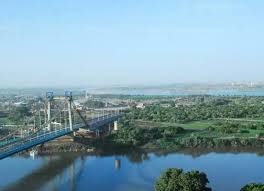
Tuti Island, historically known as a tranquil agricultural haven in Sudan, has become a focal point in the ongoing civil war between the Sudanese Armed Forces (SAF) and the paramilitary Rapid Support Forces (RSF).
- Tuti Island is a crescent-shaped landmass of about 8 sq. km located at the confluence of the White Nile and Blue Nile in Khartoum, where the White Nile, flowing from Uganda, meets the Blue Nile from Ethiopia, and is one of the city’s oldest settlements.
- It is situated in the exact geographical center of Sudan’s tri-city metropolitan conurbation, bordered by Khartoum (the political capital) to the south, Omdurman (the largest city) to the west, and Khartoum North (Bahri, the industrial hub) to the northeast.
- Formed entirely by alluvial silt deposition from the Nile’s historical flooding cycles, making its soil exceptionally fertile.
- It has traditionally served as a key source of fresh produce for Khartoum, relying on farming and fishing, which earned it the nickname “Khartoum’s garden.”
- Inhabited primarily by the Mahas tribe since the late 15th century, the community has preserved traditional agricultural methods and indigenous early-warning flood management systems (known as the al-Taya system).
- After the April 2023 Sudan civil war began, the Rapid Support Forces (RSF) imposed a blockade (June 2023–March 2025), turning the island into an open-air prison with strict control over movement and supplies.
- Residents faced acute shortages of food, medicine, and fuel, often forced to pay heavy bribes to access essentials. The blockade reflects the use of starvation as a weapon.
- The HEART project (Heritage Empowered Action for Risk in Tuti) was launched to preserve the Taya system’s knowledge, which is threatened by displacement.
Promotion and Regulation of Online Gaming Rules, 2026:

The Ministry of Electronics and Information Technology (MeitY) has notified the Promotion and Regulation of Online Gaming (PROG) Rules, 2026, which will come into effect on 1st May 2026.
- Drafted under the ambit of the landmark PROG (Promotion and Regulation of Online Gaming) Act, 2025, this operational architecture aims to position India as a global hub for e-sports and digital innovation.
- Key Provisions of the Promotion and Regulation of Online Gaming Rules, 2026?
- The PROG Rules, 2026 provide a structured regulatory framework for India’s online gaming sector. They aim to regulate online money games while supporting the growth of e-sports and safe digital gaming.
- The Rules seek to protect users, especially children, from financial loss and addiction, while ensuring regulatory certainty for the industry.
- They aim to prevent illegal financial activities, promote responsible gaming, and strengthen coordination among regulators, financial institutions, and law enforcement agencies.
- Key Provisions
- Online Gaming Authority of India (OGAI): The OGAI is established as an attached office of MeitY, headquartered in the NCT of Delhi, and is mandated to operate primarily as a digital-first office.
- It is chaired by the Additional Secretary, MeitY (ex officio). To ensure holistic governance, it includes Joint Secretary-level representatives from the Ministries of Home Affairs (MHA), Finance (DFS), Information and Broadcasting (MIB), Youth Affairs and Sports, and Law and Justice.
- The Authority is tasked with maintaining public lists of banned money games, issuing operational codes of practice, adjudicating user complaints, and executing targeted enforcement actions.
- The Rules provide a determination test under the PROG Act, 2025 to classify whether an online game constitutes an online money game.
- This can be initiated by the Authority, service providers, or the government, based on factors like stakes, rewards, and monetisation.
- The process is to be completed within 90 days, with the final decision issued as a determination order for each game.
- Registration is not blanket; it is mandatory only for games intended to be recognized as e-sports, or for specific social games notified by the Centre based on risk, scale, and origin.
- Successful registration grants a digital certificate valid for up to 10 years.
- The rules explicitly mandate that an “online money game” is entirely ineligible for recognition or registration as an e-sport under the National Sports Governance Act, 2025.
- The Rules mandate user safety features, including age verification, time limits, parental controls, reporting tools, counselling support, and fair-play monitoring.
- Service providers must disclose these safeguards and their grievance mechanisms during registration or determination.
- The Rules provide a two-tier grievance redressal system, where complaints are first addressed by the service provider, followed by an appeal to the Authority, and a final appeal to the Secretary, MeitY, with each stage resolved within 30 days.
- Enforcement proceedings will be conducted digitally and concluded within 90 days.
- Penalties are calibrated based on the gravity of the violation, user loss, recurrence, and the financial gain derived from non-compliance.
Technology Development and Investment Promotion Scheme:
The Union Communications Minister has released revised guidelines for the Technology Development and Investment Promotion (TDIP) Scheme to strengthen country’s global telecom presence.
- It is aimed at strengthening India’s participation in global telecom standardization and accelerating the development of indigenous telecom technologies
- Financial Outlay and Duration: ₹203 crore for the period 2026–31
- It has been designed as a comprehensive support framework to enable Indian entities to actively contribute to global standards, promote innovation, and enhance India’s competitiveness in next-generation telecommunications technologies.
- It seeks to enhance India’s representation and influence in leading international telecom standardization bodies such as the International Telecommunication Union (ITU), 3GPP and oneM2M.
- It expands the scope of the scheme to include startups, MSMEs, academia, research institutions, telecom service providers and industry players.
- It will be implemented through Telecommunications Standards Development Society, India (TSDSI), Telecom Centres of Excellence, India (TCoE) and Telecommunications Consultants India Limited (TCIL).
Prime Minister Internship Scheme:

The government has expanded eligibility criteria of the Prime Minister Internship Scheme to include final-year graduate and post-graduate students.
- It is a Government of India initiative aimed at providing internship opportunities to youth in top companies of India.
- These internships span 24 sectors, including oil, gas, energy, travel, hospitality, automotive, banking, and financial services.
- Financial Assistance: Interns will receive minimum financial assistance of ₹9,000 per month.
- Eligibility Criteria:
- Passed 10th, 12th, ITI, Polytechnic, or Diploma courses.
- Fresh graduates from non-premier institutions.
- Students from IITs, IIMs, National Law Universities, and individuals with professional degrees like CA, MBA, MBBS, etc., are excluded to promote inclusivity for underrepresented groups.
- It provides young individuals aged 21-25 years from low-income households with 12-month internship opportunities in the country’s top 500 companies.
- The income of any of your family members (self, parents, or spouse) should not exceeds ₹12 lakh in the preceding financial year
No family member has a government job.
- New Changes:
- Final-year undergraduate and postgraduate students are now eligible to apply under PMIS
Students are required to submit a No Objection Certificate (NOC) from their respective educational institutions during the application process.
- Final-year undergraduate and postgraduate students are now eligible to apply under PMIS
Curiosity Rover:

The Curiosity rover, part of NASA’s Mars Science Laboratory mission, has found a mix of organic molecules on Mars.
- It is a U.S. robotic vehicle designed to explore the surface of Mars.
- It was launched aboard an Atlas V rocket in 2011.
- It has been moving around the Gale crater and Mount Sharp on Mars.
- The rover is part of NASA’s Mars Science Laboratory mission which tested a novel landing method that saw the spacecraft descend on a parachute before its landing system fired up its rockets and hovered as the rover was lowered down onto the surface.
- It draws its electric power from a thermoelectric power generator, with the heat source being the radioactive decay of plutonium and the heat sink being Mars’s atmosphere.
- According to NASA, Curiosity has four main science goals in support of the agency’s Mars exploration program:
- Determine whether life ever arose on Mars.
- Characterize the climate of Mars.
- Characterize the geology of Mars.
- Prepare for human exploration.
Haemophilia : Study
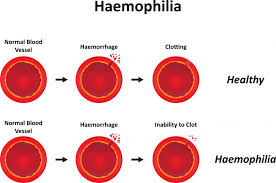
The World Health Organization has advanced a resolution aimed at improving equity in care for people living with haemophilia.
- It is a rare, inherited bleeding disorder in which the blood does not clot properly.
- It is due to low or absent levels of clotting factors, mainly factor VIII in haemophilia A and factor IX in haemophilia B.
- Haemophilia is typically inherited in an X-linked recessive pattern, meaning it predominantly affects males, while females are usually carriers.
- Research has shown that nearly one-third of haemophilia cases arise from spontaneous mutations, meaning the condition can occur even without a known family history.
- Individuals with severe haemophilia often experience frequent spontaneous bleeding episodes.
- Common manifestations include prolonged bleeding, easy bruising, and frequent nosebleeds
- In rare but serious cases, bleeding can occur in critical areas such as the brain.
- The standard treatment is clotting factor replacement therapy, administered either to control active bleeding or as a preventive measure.
Atal Pension Yojana : Achivement

The Atal Pension Yojana (APY) has achieved a significant milestone by surpassing total gross enrollments of nine crore subscribers.
- It is a flagship social security scheme of the Government of India.
- It was launched in 2015, with the vision of establishing a universal social security system for all Indians.
- It is a voluntary, contributory pension scheme primarily focused on the poor, the underprivileged, and workers in the unorganized sector.
- It provides a guaranteed monthly pension ranging from ₹1,000 to ₹5,000 for subscribers after attaining 60 years of age.
- Same pension continues to the spouse after the subscriber’s demise.
- The return of the corpus accumulated till the age of 60, to the nominee after the death of both.
- It is open to all Indian citizens between the age of 18 and 40 years, except those who are or have been income tax payers.
- Voluntary Exit: Allowed, but the subscriber only receives the contribution made (with interest) and government co-contribution (if any) is forfeited.
- It is administered by the Pension Fund Regulatory and Development Authority (PFRDA).
Limnonectes motijheel:
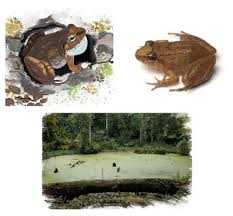
Indian scientists recently discovered a rare, fanged mud-nesting frog, Limnonectes Motijheel, in Namdapha Tiger Reserve, Arunachal Pradesh.
- Limnonectes motijheel is a new species of frog.
- It was discovered from Namdapha Tiger Reserve in Arunachal Pradesh.
- It is named after Motijheel Lake, known for its rich amphibian diversity.
- It belongs to a group commonly called Fanged Frogs, named for small, fang-like projections in the lower jaw of the males. Scientists say this feature may aid feeding or territorial behaviour.
- These frogs are found across South and Southeast Asia and are known for their unusual breeding habits.
- The new species has been placed within the genus Limnonectes, which now counts six known species in India.
- Unlike most frogs that lay eggs in water or on leaves, this species builds a nest out of mud beneath leaf litter on the forest floor. This is a behaviour not previously recorded in this group from India.
- Namdapha, a national park and tiger reserve, lies on the international border between India and Myanmar within Changlang District in the state of Arunachal Pradesh.
- It is located at the junction of the Indian Sub-Continent Bio-geographic region and the Indo-China Bio-geographic Region.
- It is nestled between the Dapha Bum ridge of the Mishmi Hills of the northeastern Himalayas and the Patkai ranges.
- It has a common boundary with Kamlang Wildlife Sanctuary (Arunachal Pradesh).
- The Namdapha River (a tributary of the Noa-Dihing River) flows right across in a north-south direction of this reserve, and hence the name Namdapha has been given.
- It consists of Northern Tropical Evergreen Forest, North Indian Tropical Moist Deciduous Forests, East Himalayan Moist Temperate Forests, and Moist Alpine Scrub Forests.
- It consists of species like Pinus merkusi and Abies delavavi being exclusive to the park.
- It is home to the Blue Vanda, which is a rare and endangered orchard.
- It also consists of medicinal plants like Mishimi Teeta (Copti teeta), which is used by the local tribes to treat different types of diseases.
- Elephants, Himalayan Black Bear, Himalayan Sun Bear, Hoolock Gibbon (only ape in India), Slow Loris,
- It is the only park in the world to have the four feline species of big cats, namely the Tiger (Panthera Tigris), Leopard (Panthera Pardus), Snow Leopard (Panthera Uncia), and Clouded Leopard (Neofelis Nebulosa) and numbers of lesser cats.
INS Nireekshak:
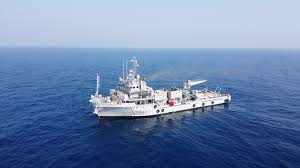
INS Nireekshak recently arrived in Colombo to participate in the fourth edition of the India–Sri Lanka Diving Exercise (DIVEX 2026).
- It is a Dive Support and Submarine Rescue Vessel of the Indian Navy.
- Built by Mazgaon Shipbuilders in 1985, the ship has been in service with the Navy since 1989 and was commissioned in the year 1995.
- Equipped with advanced deep-sea diving systems, recompression chambers, and submarine rescue infrastructure, the vessel can deploy Deep Submergence Rescue Vehicles and support saturation diving missions.
- Its sophisticated systems allow it to maintain stability during sensitive underwater operations, making it indispensable for search-and-rescue missions, underwater inspections, and diver training.
DIVEX 2026:
- It is the fourth edition of the India–Sri Lanka Diving Exercise.
- The week-long exercise will bring together diving teams from the Indian Navy and the Sri Lankan Navy to undertake a series of specialised underwater operations and training drills.
- The initiative is aimed at enhancing interoperability, strengthening coordination, and facilitating the exchange of best practices between the two maritime forces.
- As part of India’s humanitarian outreach, the INS Nireekshak will also hand over two BHISM (Bharat Health Initiative for Sahyog Hita & Maitri) cubes to Sri Lankan authorities under the government’s Aarogya Maitri initiative.
- These portable medical units are equipped to handle up to 200 emergency cases and come with essential medicines and basic surgical capabilities, as per the release.
Santiaguito Volcano:
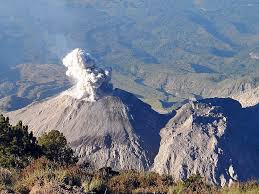
A group of hikers were forced to flee as Guatemala’s Santiaguito Volcano erupted recently, throwing rocks into the air around them.
- It is an active volcano located in western Guatemala near the city of Quetzaltenango.
- It was created in the wake of the Santa María Volcano’s 1902 eruption.
- The Santiaguito lava-dome complex is one of the most active volcanic areas in Guatemala and worldwide.
- It belches smoke and ash on a regular basis but sometimes emits lava and pyroclastic flows.
Online Gaming Authority of India:

The government recently constituted the Online Gaming Authority of India, comprising six members.
- It is a regulatory body established under the Promotion and Regulation of Online Gaming Act 2025.
- The authority will be a digital office under the Ministry of Electronics and Information Technology (MeitY), Government of India. It will be operational starting May 1.
- It will act as the central regulator for online games, including esports, bringing them under a formal registration and classification system.
- The function of the authority will include categorising and registering online games, deciding whether a game qualifies as a money game, and addressing public grievances.
- It is established to issue guidelines, codes of practice, and directions to ensure compliance.
- It will also coordinate with financial institutions and law enforcement agencies to ensure effective enforcement.
- The authority will comprise 6 members in which the Additional Secretary of the MeitY will be Chairperson.
- Other five members will include Joint Secretaries from the Ministry of Home Affairs, Information and Broadcasting, Youth Affairs and Sports, Department of Financial Services, and Department of Legal Affairs.
Narcotics Analysis & RAG-based Investigation Tool (NARIT-AI):
The Gujarat government recently announced the Narcotics Analysis & RAG-based Investigation Tool (NARIT-AI), designed to help law enforcement agencies in handling complex narcotics cases under the Narcotics Drugs and Psychotropic Substances (NDPS) Act framework.
- It is an Artificial Intelligence (AI)-based investigation tool launched by the Gujarat Police, making it the first state police force in India to deploy an AI-driven system for narcotics investigations.
- It was built by the Western Railway Police (Vadodara Division) with private partner Gradiante Creative Services.
- It aims to strengthen the handling of narcotics cases and improve conviction rates.
- The tool is designed to act as a digital legal consultant for investigating officers handling complex cases under the NDPS Act by providing real-time legal analysis and procedural guidance.
- The system utilizes Retrieval Augmented Generation (RAG) technology, which allows it to analyse FIRs in a closed database of Supreme Court and High Court judgments, bare acts (BNS, BNSS, BSA), and government circulars.
- Unlike open-source AI, NARIT AI does not use the general internet, ensuring data privacy and preventing “hallucinations” or false legal assumptions.
- The tool generates comprehensive reports highlighting the strengths and weaknesses of a case, providing an evidence checklist, and even predicting potential defence arguments in court to help prosecutors prepare rebuttals.



