
Today’s Current Affairs: 23rd April 2026 for UPSC IAS exams, State PSC exams, SSC CGL, State SSC, RRB, Railways, Banking Exam & IBPS, etc
Table of Contents
Tashkent to Host World Para Athletics Championships 2027 in June:
World Para Athletics has announced that Tashkent will host the 2027 World Para Athletics Championships. This event is scheduled to be held in the June 2027. This will marks the first time the Central Asia will host the prestigious event. The championship which is one of the largest para sporting events in the world will take place at the state-of-the-art Olympic City Main Stadium in Tashkent.The announcement confirms that Tashkent will host the 13th edition of the World Para Athletics Championships.This decision showcases the Uzbekistan’s expanding infrastructure and its commitment to promote the inclusive sports and global sporting events.This event will be staged at the Olympic City Main Stadium which is the modern facility capable of to hosting international competitions.
Goldman Environmental Prize 2026 Honours First All-Women Cohort of Environmental Leaders:
Goldman Environmental Prize 2026 has been awarded to the six women leaders from across the world. And its marks the first all-women cohort since the inception of the award. This award is often referred to as the ‘Green Nobel’ and the prize honors grassroots activists who are working to protect the environment and to combat climate change. This year’s winners represent the different six regions and showcase how local action can drive the global environmental change.
For the first time in the history the all six winners are women and representing different parts of the world:
Iroro Tanshi (Nigeria) – Africa
Borim Kim (South Korea) – Asia
Sarah Finch (United Kingdom) – Europe
Theonila Roka Matbob (Papua New Guinea) – Islands & Island Nations
Alannah Acaq Hurley (United States) – North America
Yuvelis Morales Blanco (Colombia) – South & Central America
The India–Africa Forum Summit (IAFS):
India is set to host the Fourth India-Africa Forum Summit (IAFS) 2026 in late May, marking the first such gathering in over a decade since 2015.The India–Africa Forum Summit (IAFS) is the official institutional platform for African-Indian relations. It serves as a high-level consultative mechanism between the Government of India and the member states of the African Union (AU) to promote South-South cooperation.Established In First Summit: April 4–8, 2008, in New Delhi, India.Aim is to widen and deepen the ambit of mutual cooperation for the benefit of both regions,to support Africa in health, education, and human resource development through initiatives like the IIT Madras campus in Zanzibar,to move beyond traditional trade and Line of Credit models toward direct Foreign Direct Investment (FDI) and industrial partnerships.
United Nations Economic and Social Commission for Asia and the Pacific (UN ESCAP):
The United Nations Economic and Social Commission for Asia and the Pacific (UN ESCAP) has released its 2026 Economic Survey, warning that the West Asia conflict is driving up energy and food costs.UN ESCAP is the most inclusive intergovernmental platform in the Asia-Pacific region and serves as one of the five regional commissions of the United Nations. It comprises 53 member states and 9 associate members, representing nearly two-thirds of the world’s population.Established In 1947 in Shanghai as the Economic Commission for Asia and the Far East (ECAFE) to aid post-WWII reconstruction.
Renamed to ESCAP in 1976 to reflect its broader social mandate and relocated its headquarters to Bangkok, Thailand.Aim is to promote regional cooperation to overcome challenges such as income inequality, climate change, and gender disparities.To guide the region in achieving the 17 Sustainable Development Goals (SDGs).To support member states in emerging more robust and future-focused following global shocks like the COVID-19 pandemic.
Narcotics Analysis & RAG-based Investigation Tool (NARIT-AI):
The Gujarat Police has introduced the Narcotics Analysis & RAG-based Investigation Tool (NARIT-AI) to address declining conviction rates in drug-related cases, which fell to 25% in 2022.
- NARIT-AI is a specialized, private artificial intelligence system designed to assist law enforcement officers in the investigation and prosecution of complex narcotics cases.
- Unlike general-purpose AI, it operates within a closed environment specifically trained on Indian legal statutes and judicial precedents.
- Aim is To ensure that investigating officers (IOs) adhere strictly to the primacy of procedure required by the NDPS Act, where even minor lapses can lead to acquittals.
- To provide real-time legal and analytical support that makes investigations robust enough to withstand defense scrutiny in court.
- The tool utilizes Retrieval-Augmented Generation (RAG) technology:
- Curated Database: Instead of searching the open internet, it references a specific data library containing the NDPS Act, the three new criminal laws (BNS, BNSS, BSA), and thousands of Supreme Court and High Court judgments.
- FIR Integration: An officer simply uploads a First Information Report (FIR) into the system.
- Analytical Response: The AI analyzes the FIR against its database to generate case-specific instructions, checklists, and legal strategies.
- Eliminating Hallucinations: Because it operates in a closed sandbox, it does not invent fake citations or laws, ensuring all generated advice is factually grounded in Indian law.
Adi Shankaracharya:
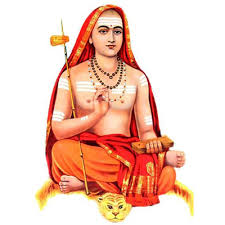
Prime Minister of India paid tribute to Adi Shankaracharya on his Jayanti, celebrating the 1,200th birth anniversary of the philosopher-saint.
- Adi Shankaracharya (approx. 788–820 CE) was a philosopher, theologian, and saint who is credited with reviving Hinduism at a time when it was declining under superstition and ritualism.
- Born in Kalady, Kerala, he lived a short but miraculous life of only 32 years, during which he traveled the length and breadth of India to spread the message of the Vedas.
- At the age of eight, driven by a desire for liberation, he left Kerala and walked 2,000 kilometers to the banks of the Narmada to find his Guru, Govindapada.
- Under his Guru’s guidance, he mastered the Vedic scriptures by age twelve and completed all his major commentaries by the age of sixteen.
- Advaita Vedanta (Non-Dualism): Shankaracharya’s core philosophy is summarized in the statement: Brahma Satyam Jagan Mithya, Jeevo Brahmaiva Na Para (Brahman is the only Truth, the world is unreal, and there is no difference between the individual self and Brahman).
- He taught that the Atman (soul) and Brahman (Universal Consciousness) are one and the same.
- He explained the world’s perceived reality as Maya (illusion), which disappears once true knowledge (Jnana) is attained.
- He introduced the Shanmata system, organizing the worship of six primary deities (Siva, Vishnu, Shakti, Ganesha, Muruka, and Surya) to unify diverse Hindu sects.
- Shankaracharya was a prolific writer and a brilliant organizer who restructured the spiritual landscape of India.
- He wrote fundamental commentaries on the Prasthanatrayi—the Brahma Sutras, the Bhagavad Gita, and 12 major Upanishads.
- He composed over 72 hymns, including Soundarya Lahari, Sivananda Lahari, and the famous Nirvana Shatakam.
- Authored 23 books on Advaita philosophy, such as Viveka Chudamani and Atma Bodha.
- Establishment of the Four Amnaya Maths is To preserve the Vedas, he established four primary monasteries in the four corners of India:
Strengthening India’s Food Processing Ecosystem:

The Ministry of Food Processing Industries has reported that the Production-Linked Incentive Scheme (PLISFPI) has significantly outperformed its targets, creating 3.39 lakh jobs against a goal of 2.5 lakh by 2026.
- The Food Processing Industry (FPI) acts as a high-value link between agriculture and manufacturing. It involves the transformation of raw agricultural, dairy, or marine produce into edible products through various techniques, thereby increasing shelf-life, reducing wastage, and enhancing the economic value of the produce.
- Data and Statistics on Indian FPI:
- Economic Contribution: The Gross Value Added (GVA) of the sector rose from ₹1.34 lakh crore in 2014-15 to ₹2.24 lakh crore in 2023-24.
- Export Growth: The share of processed food in total agricultural exports increased from 13.7% to 20.4% over the last decade.
- Capacity Expansion: Processing and preservation capacity has increased by 34 lakh MT per annum as of February 2026.
- Investment Mobilization: Beneficiaries under the PLI scheme have reported private investments amounting to ₹9,207 crore.
- Global Footprint: Cumulative export sales of PLISFPI beneficiaries reached ₹89,053.44 crore between April 2021 and September 2025.
The Radical Security Shift in J&K:
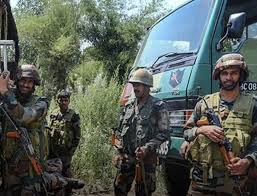
The first anniversary of the Pahalgam terror attack has prompted a comprehensive review of Jammu & Kashmir’s security architecture, which shifted from urban containment to high-altitude terrain dominance.
- The shift refers to the structural transformation of the Valley’s security posture following the targeting of tourists at scale for the first time. It involves a move from reactive, visible policing in towns to proactive ridge-holding in the high-altitude Pir Panjal range, integrating advanced surveillance with a database of local service providers.
- The 2025 attack marked a transition where tourists, rather than just security forces or political workers, became primary targets in remote meadows.
- Over the last year, 43 Temporary Operating Bases (TOBs) have been established at altitudes between 3,000 and 9,000 feet.
- More than 50,000 locals (pony handlers, guides, etc.) have been enrolled in an Aadhaar-linked, QR-coded database to prevent militant infiltration into the tourism economy.
- Under Operation Mahadev, the three-member module responsible for the Pahalgam attack was eliminated within three months.
Pradhan Mantri Gram Sadak Yojana-III (PMGSY-III):
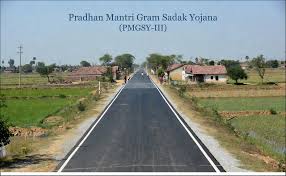
The Union Cabinet approved the continuation as well as increased the budget of PMGSY-III beyond March 2025 till March 2028 to enhance rural connectivity.
- PMGSY is a central government scheme launched in 2000 to provide all-weather road connectivity to unconnected rural habitations.
- The scheme was originally a 100% centrally-sponsored initiative, but starting from the financial year 2015-16, the funding has been shared between the Central and State governments in a 60:40 ratio.
- Around 800,000 kilometres of rural roads have been built and 180,000 habitations were connected under various phases of the PMGSY scheme.
- PMGSY-III Focus focuses on consolidation of through routes and major rural links connecting habitations with Gramin Agricultural Markets, higher secondary schools and healthcare facilities.
- The scheme extends completion timelines till March 2028 for roads and bridges in plain areas and roads in hilly areas, and till March 2029 for bridges in hilly areas.
- The scheme will boost the rural economy, improve market access, reduce transportation costs, generate employment, enhance access to essential services, bridge the rural-urban divide, and support the vision of Viksit Bharat 2047.
SC Forms Panel for Disabled-Friendly Prison Reforms:

The Supreme Court has directed a high-powered committee, chaired by Justice S. Ravindra Bhat, to formulate a comprehensive plan to make prisons disabled-friendly, integrating reform with security considerations.
- The committee was originally constituted to reform open correctional institutions, and its scope has now been expanded to include disability-inclusive prison reforms, reflecting a broader systemic approach.
- The committee has now been tasked with creating uniform norms for procurement, maintenance, and security of assistive devices, tailored to prisoners’ specific needs.
- Building on earlier orders, the Court mandated provision of assistive devices, specialised medical care, and enhanced visitation rights, while warning of penalties under the Rights of Persons with Disabilities Act, 2016 for violations.
- The Court emphasised a rights-based approach, stating that prisoners with disabilities must be protected under Articles 14 and 21, ensuring equality and dignity are not diluted during incarceration.
- The committee’s composition has been expanded to include key ministries and departments related to social justice and disability empowerment, ensuring coordinated institutional response.
- The Court envisaged a structured, continuous, and expert-driven review of existing laws, practices, and facilities across States and Union Territories to ensure cohesive implementation.
- A time-bound mechanism has been set with the committee required to submit a consolidated status report within four months.
Japan Eases Defense Export Rules:
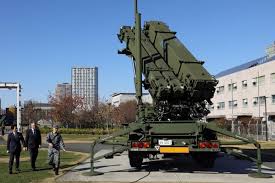
In a historic shift from its post-World War II pacifist stance, Japan officially scrapped the “five-category” restriction on arms exports in April 2026.
- This move authorizes the export of lethal weapons to third-party nations.
- After World War II, in the shadow of the devastation of Hiroshima and Nagasaki, Japan adopted a pacifist constitution. Article 9 renounces war and prohibits maintaining forces with war potential, expressing a commitment to non‑aggression and international peace.
- Previously, exports were restricted to five non-lethal areas: Rescue, Transport, Warning, Surveillance, and Minesweeping.
- The 2026 revision allows for the export of missiles, destroyers, and fighter jets. The shift aims to revitalize Japan’s domestic defense industry, which has faced stagnation due to the limited “Self-Defense Forces only” market.
- The decision was accelerated by the Global Combat Air Programme (GCAP), a trilateral project with the UK and Italy to build a 6th-generation stealth fighter by 2035.
- Japan needs the ability to export this jet to third countries to manage production costs and remain a viable project partner.
- Lethal exports are restricted to 17 countries (as of April 2026) that have signed bilateral defense-tech transfer agreements with Tokyo (including India, Australia, Philippines, and the US).
- Furthermore, such transfers require approval by Japan’s National Security Council and are generally prohibited to countries involved in active conflicts or under UN restrictions, while recipients must commit to using the equipment in accordance with the UN Charter.
World Earth Day 2026:
World Earth Day also known as International Mother Earth Day is a global observance held annually on 22nd April to foster awareness and drive collective action against pressing environmental challenges like climate change, pollution, and biodiversity loss.
- 2026 Theme: The theme for 2026 is “Our Power, Our Planet”, which heavily emphasizes community action, the transition to renewable energy, and boosting accountability for environmental damage.
- The Earth Day observance began on 22nd April 1970, marking the birth of the modern environmental movement. It was initiated by U.S. Senator Gaylord Nelson following a 1969 Santa Barbara oil spill.
- The initial 1970 rallies and protests directly contributed to the creation of key environmental laws and the Environmental Protection Agency (EPA) in US.
- The United Nations General Assembly designated 22nd April as International Mother Earth Day through a resolution adopted in 2009.
- It is now observed in over 190 countries, uniting governments, NGOs, and individuals.
- It serves as a vital platform to push for policies protecting natural resources and educates the masses on adopting sustainable habits for future generations.
- India’s shift towards sustainability is reflected in its Panchamrit commitments, including net-zero emissions by 2070, achieving 50% renewable energy capacity by 2030, and reducing carbon intensity, signalling a move from rhetoric to responsibility while aligning development with global climate goals.
- This is complemented by a multi-sectoral approach to environmental protection, with initiatives such as solar expansion, electric mobility under FAME, biodiversity conservation through Project Tiger, and pollution control via National Clean Air Programme (NCAP) collectively providing practical pathways for sustainable development.
Privilege Notice and Parliamentary Privileges in India:
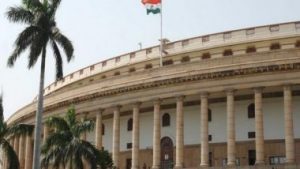
A privilege notice has been submitted against the Prime Minister of India, alleging breach of parliamentary privilege following remarks made after the defeat of the Constitution (131st Amendment) Bill, 2026.
- A Privilege Notice (or Motion) is a formal notice submitted by a member of parliament (MP) alleging a breach of their parliamentary rights, immunities, or the dignity of the House.
- It is used to initiate action against members or outsiders who have committed a breach of privilege or contempt of the House (e.g., misleading the House, withholding facts, or casting aspersions on members).
- It is moved under Rule 222 in the Lok Sabha and Rule 187 in the Rajya Sabha.
- The Speaker (Lok Sabha) or the Chairman (Rajya Sabha) is the first level of scrutiny.
- The Presiding Officer examines it and may give or withhold consent for it to be raised in the House.
- After the Speaker/Chairman admits the notice, the member seeks leave of the House (formal permission of the House to allow a member to raise a particular matter (like a privilege issue) for discussion) and if no objection or if at least 25 members support, leave is granted.
- Privilege Notice is usually raised after Question Hour, but can be allowed anytime in urgent cases.
- Once admitted, the House may debate directly or refer to the Committee of Privileges of the House for examination, investigation, and report. However, the final decision rests with the House itself.
- It is a Standing Parliamentary Committee. Its function is semi-judicial.
- Lok Sabha: Consists of 15 members nominated by the Speaker.
- Rajya Sabha: Consists of 10 members nominated by the Chairman.
- It examines every question involving a breach of privilege, determines the facts, and makes recommendations to the House regarding the action to be taken.
- The accused member is given an opportunity to present their explanation.
India-Republic of Korea Strategic Vision 2026–2030:
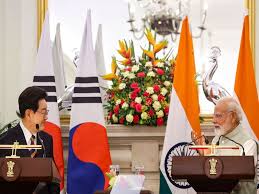
India and the Republic of Korea (ROK) have unveiled a Joint Strategic Vision for 2026–2030 during the state visit of South Korean President Lee Jae Myung to India.
- The vision outlines an ambitious roadmap to deepen the India–ROK Special Strategic Partnership across political, economic, technological, and cultural domains.
- The India–Republic of Korea (ROK) Joint Strategic Vision (2026–2030) marks a shift from economic ties to a comprehensive strategic partnership spanning Indo-Pacific security, emerging technologies, defence, and climate cooperation.
- Its success depends on addressing trade imbalances, deepening defence and tech collaboration, and aligning geopolitical priorities to fully realise the partnership’s potential.
Key Highlights of the India-Republic of Korea (ROK) Joint Strategic Vision (2026-2030):
- Strengthening Political and Institutional Engagement: India and the ROK agreed to reinforce ties through annual leader-level meetings, expanded ministerial dialogues, and the launch of an India–ROK Industrial Cooperation Committee as a new mechanism for industry-level engagement, while promoting parliamentary exchanges, youth interactions, and deeper state-to-province partnerships.
- India and the ROK agreed to deepen strategic coordination by building on the Foreign Policy and Security Dialogue and operationalising cooperation through the Defence Industry Joint Committee and the inaugural 2+2 Dialogue at the Vice Minister level.
- Act East meets New Southern Policy: The Vision officially synchronizes India’s “Act East Policy” with South Korea’s “New Southern Policy,” transitioning the relationship from purely economic ties to a broader Indo-Pacific security partnership.
- India and the ROK reaffirmed their shared vision of a free, open, and rules-based Indo-Pacific, and welcomed the ROK’s participation in India-led Indo-Pacific Oceans Initiative (IPOI).
- The India–ROK Economic Security Dialogue aims to de-risk supply chains by reducing dependence on China and promoting diversification of critical resources and technologies.
- The Vision explicitly outlines a roadmap for joint defense R&D, focusing on co-production under the Atmanirbhar Bharat initiative, moving past the bureaucratic hurdles that stalled previous naval deals (like the minesweepers project).
- They welcomed the opening of the office of Korea Marine Equipment Association (KOMEA) in Mumbai, the first such office that will contribute to the development of ancillary ecosystem to support the maritime industry.
- The India-Korea Digital Bridge is a new initiative targeting critical and emerging technologies (CET).
- It establishes joint task forces focused on Artificial Intelligence (AI), data governance, and semiconductor design and fabrication guided by the principles of “AI for All” and “MANAV”.
- A landmark Memorandum of Understanding (MoU) was signed integrating India’s National Payment Corporation of India Limited (NPCIL) with Korea’s KFTC (Korea Financial Telecommunications and Clearings Corporation).
- This allows for seamless, real-time cross-border payments, bypassing traditional Western financial clearing houses.
- India and the ROK agreed to enhance space cooperation by establishing an Indian Space Research Organisation (ISRO) – Korea Aerospace Administration (KASA) Joint Working Group and promoting collaboration through initiatives like the India–ROK Space Day held in Bengaluru on 20th April 2026.
- A Joint Declaration was issued to formally restart and expedite the stalled upgrade of the Comprehensive Economic Partnership Agreement (CEPA).
The outcome document specifically acknowledges the need to address the “trade asymmetry” and dismantle Non-Tariff Barriers (NTBs) hindering Indian exports. - ROK welcomed India’s participation in the Pax Silica initiative, while India appreciated ROK’s leadership in Forum on Resource Geostrategic Engagement (FORGE).
- The FORGE is a United States-led multinational initiative launched in February 2026 to secure and diversify global supply chains for critical minerals.
- India is a supporter and participant of FORGE.
- Both agreed to enhance cooperation on securing critical materials like naphtha during supply disruptions and expand bilateral trade in such resources.
- The two nations established a framework under Article 6.2 of the Paris Agreement to cooperate on carbon credit trading and joint emissions reduction projects.
- South Korea officially joined the India-headquartered International Solar Alliance (ISA), while India reciprocated by formally joining the Seoul-headquartered Global Green Growth Institute (GGGI), cementing a two-way institutional climate partnership.
- India and the ROK agreed to enhance cooperation in multilateral forums such as the G20, especially in light of the ROK’s upcoming presidency in 2028.
- Reaffirmed commitment to resolving disputes peacefully in accordance with international law, including UNCLOS.
- India and the ROK agreed to deepen cultural cooperation by extending the Cultural Exchange Programme (2026–2030), declaring 2028–29 as the Year of Friendship.
Truck Mounted Attenuator:
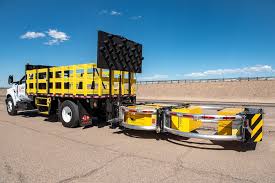
The Ministry of Road Transport and Highways (MoRTH) has introduced truck mounted safety system i.e Truck Mounted Attenuator to reduce risks in construction and maintenance zones.
- Truck Mounted Attenuators are specially designed impact-absorbing safety devices that play a critical role in protecting both workers and road users.
- In the event of a collision, these systems absorb and dissipate kinetic energy, reducing the force of impact. This helps:
- Protect maintenance crews working ahead of the vehicle
- Reduce injury risks for occupants of the impacting vehicle
- Minimize the severity of accidents in highway work zones
- In many ways, TMAs act like an invisible shield — standing between danger and human life.
- Early warnings that prevent accidents: These TMAs are equipped with high-intensity wig-wag warning lights, designed to flash in alternating patterns that form directional arrows.
- These signals provide clear and timely warnings to approaching drivers.
- It is especially valuable on high-speed highway corridors, during night-time operations and in foggy or low-visibility conditions
- By alerting drivers well in advance, these systems help prevent collisions before they occur.
United Nations Economic and Social Commission for Asia and the Pacific:
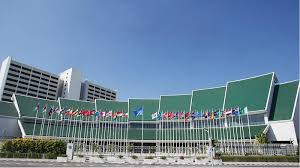
Recent report released by the United Nations Economic and Social Commission for Asia and the Pacific (ESCAP), projects that inflation in developing economies in the region will climb to 4.6 per cent in 2026, up from 3.5 per cent in 2025.
- It is the most inclusive intergovernmental platform in the Asia-Pacific region.
- It was established in 1947.
- It is To promote economic and social development in the Asian and Pacific region by fostering cooperation between its members and associate members.
- The Commission promotes cooperation among its 53 member States and 9 associate members in pursuit of solutions to sustainable development challenges.
- It is one of the five regional commissions of the United Nations.
- One of the main functions of UNESCAP is to promote economic and social development through regional and subregional cooperation and integration.
- It carries out work in the areas like Macroeconomic Policy, Poverty Reduction and Financing for Development, Trade, Investment and Innovation, Transport, Environment and Development, Information and Communications Technology and Disaster Risk Reduction and Social Development etc.
Headquarters: Bangkok, Thailand



