
50th Anniversary of Sikkim’s Integration with India:
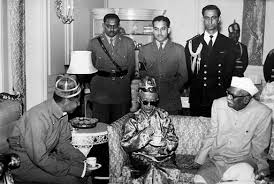
The Prime Minister of India participated in the closing ceremony of Sikkim’s 50th Year of Statehood celebrations in Gangtok.
- During the event, the Prime Minister lauded Sikkim’s natural and organic farming model serves as a template for the entire country.
- The Chogyal Dynasty: Before its integration into India, Sikkim was an independent Himalayan kingdom ruled by the Namgyal dynasty, whose monarchs, known as the Chogyals, governed the region as a hereditary monarchy from 1642 to 1975.
- British Colonial Treaties:
- Treaty of Titaliya (1817): Granted the British authorities strategic commercial and political advantages in the region.
- Treaty of Tumlong (1861): Formally established Sikkim as a protectorate state of British India.
- Calcutta Convention (1890): Demarcated the vital Sikkim-Tibet border (signed between Viceroy Lord Lansdowne and Qing China), a boundary later affirmed by the Lhasa Convention (1904).
- “Protectorate” Status (1947–1974): When India gained independence in 1947, Sikkim chose not to join the Indian Union immediately.
- Instead, under the Indo-Sikkim Treaty of 1950, Sikkim became an Indian “protectorate.”
- This meant Sikkim retained its internal autonomy, but the Government of India took responsibility for its defense, external affairs, and communications.
- Transition to an “Associate State” (1974): By the early 1970s, there was growing political unrest in Sikkim, with the local population demanding greater democratic rights and closer ties with India.
- In response, the Indian Parliament passed the 35th Constitutional Amendment Act in 1974.
- This amendment gave Sikkim the unique status of an “Associate State” of the Indian Union, a status not given to any other state before or since.
- Full Statehood (1975): The “Associate” status did not fully satisfy the democratic aspirations of the Sikkimese people. In April 1975, the Chief Minister of Sikkim appealed to the Indian Parliament for full integration.
- A special referendum was held, where over 97% of the voters chose to abolish the Chogyal monarchy and fully join India.
- Consequently, the 36th Constitutional Amendment Act, 1975 was passed. It officially made Sikkim the 22nd State of the Indian Union on 16th May 1975.
- Special Constitutional Protections: To protect the unique cultural identity, history, and land rights of the Sikkimese people, Article 371F was inserted into the Indian Constitution.
- This article safeguards old Sikkimese laws and ensures that land and properties cannot be easily purchased by non-Sikkimese individuals, preserving the local demographics.
- Sikkim is the only state in India where eligible native residents are exempt from income tax, secured by Article 371F of the Constitution and Section 10(26AAA) of the Income Tax Act, 1961.
- This special status stems from the 1975 merger treaty, allowing residents to pay no tax on income from any source within Sikkim.



