
Tristan da Cunha:
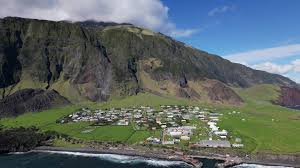
British military medics recently carried out a rare parachute mission to the remote South Atlantic island of Tristan da Cunha to assist a UK national suspected of contracting hantavirus after leaving the virus-hit cruise ship MV Hondius.
- It is both a group of islands in the South Atlantic Ocean and the largest island of that group.
- The archipelago is volcanic in origin.
- It is about midway between southern Africa and South America.
- It is considered the most remote inhabited chain of islands in the world.
- The islands were discovered in 1506 by Portuguese explorer Tristão da Cunha, after whom they are named.
- The island group is a constituent part of the British overseas territory.
- The main island, Tristan da Cunha, has a small settlement named Edinburgh of the Seven Seas. It has an estimated population of 250 permanent residents.
- Other islands in the Tristan Archipelago are uninhabited: two (Gough Island and Inaccessible Island) form a UNESCO World Heritage Site; Nightingale Island, Stoltenhoff and Alex (or Middle) Island also have globally significant biodiversity.
- The archipelago contains no airstrip and is accessible only by boat or helicopter.
- Tristan da Cunha has a unique economic and social structure in which land is communally owned and all families engage in farming.
Outsiders cannot settle or buy land on the islands. - In addition to agriculture, the other sectors of the economy are government and commercial fishing.



