
Table of Contents
Daily Current Affairs for UPSC IAS: 19th May 2026:
Today’s Current Affairs: 19th May 2026 for UPSC IAS exams, State PSC exams, SSC CGL, State SSC, RRB, Railways, Banking Exam & IBPS, etc
Barda Wildlife Sanctuary:

Barda Wildlife Sanctuary is being developed as a crucial second habitat for Asiatic lions to reduce the extinction risk posed by keeping the world’s entire wild lion population confined to Gir Forest alone.
- It is located in the Barda Hills of Gujarat, near the coastal city of Porbandar.
- Known locally as Jam Barda, it was once a private hunting ground for the royal families of Jamnagar and Porbandar.
- It is surrounded by agricultural fields, wastelands, and forest, and the terrain of Barda is almost hilly.
- There are two waterways, the Bileshvary River and the Joghri River, and two dams, Khambala and Fodara.
- Ethnic races such as Maldharis, Bharvads, Rabaris, and Gadhvis live in this region.
- The sanctuary is a significant biodiversity hotspot and a key area for the conservation of Asiatic Lions.
- To develop Barda as the second home for the Asiatic lion, the state government implemented the ‘Gir-Barda Project’ in 1979.
- It is the first fully protected satellite lion habitat in Gujarat.
- About 650 plant and tree species constitute the flora of the park, and that includes trees and plants like Babul, Bamboo, Amli, Jamun, Dhundhlo, Ber, Gorad, Rayan, Dhav, etc.
- Medicinal plants of great use grow profusely within the forested belt of the sanctuary.
- It shelters species like leopards, wolves, sambar deer, chinkara, hyenas, and blue bulls (nilgai).
- The sanctuary is also a paradise for bird watchers, with numerous resident and migratory birds such as eagles, owls, crested serpent eagles, and partridges found here.
Public Health Emergency of International Concern (PHEIC):
The World Health Organization (WHO) recently declared the ongoing Ebola outbreak in the Democratic Republic of the Congo (DRC) and Uganda a Public Health Emergency of International Concern.
- It is an emergency declaration formally announced by the World Health Organization (WHO) in response to a crisis of international proportions that can affect people’s health.
- It is the WHO’s highest level of global health alert.
- Such a declaration may require immediate action at a global level against the international spread of disease.
- A PHEIC is subject to the International Health Regulations (IHR), which require those states involved to promptly respond to the crisis at hand.
- PHEICs are decided upon by a governing body of international experts known as the IHR Emergency Committee, a group formed in the aftermath of the 2002–2004 SARS outbreak.
- The declaration is reviewed on a tri-monthly basis and renewed as needed.
- However, certain disease outbreaks can be declared a PHEIC without the approval of the IHR.
- Alongside infectious disease, a PHEIC can also be declared in response to outbreaks of public health hazards such as chemical agents or radioactive materials.
- International Health Regulations (IHR) was adopted by the Health Assembly (decision-making body of WHO) in 1969 in an effort to prevent the spread of disease across national borders.
- Following the chaotic global outbreak of severe acute respiratory syndrome (SARS) that lasted between 2002 and 2004, revisions were made to the IHR to account for such global emergencies.
- A new IHR was adopted at the 58th World Health Assembly in May 2005.
- The IHR 2005 was an international agreement among 196 countries committed to upholding global health security.
- WHO was deemed the coordinating body of this agreement.
IN–SPACe:
Nine Indian space-tech companies, which were part of the delegation led by the Indian National Space Promotion and Authorisation Centre (IN-SPACe), have signed multiple partnerships and collaborations at the recently held Space Meetings Veneto 2026 in Venice, Italy.
- Indian National Space Promotion and Authorization Center (IN-SPACe) is a single-window, independent, nodal agency that functions as an autonomous agency in the Department of Space (DOS).
- It is formed following the Space sector reforms to enable and facilitate the participation of private players.
- IN-SPACe is responsible to promote, enable, authorize and supervise various space activities of non-governmental entities (NGEs) including
building launch vehicles & satellites and providing space-based services;- sharing space infrastructure and premises under the control of DOS/ISRO; and
establishing of new space infrastructure and facilities. - The agency acts as an interface between ISRO and NGEs and assesses how to utilize India’s space resources better and increase space-based activities.
- It also assesses the needs and demands of private players, including educational and research institutions, and explores ways to accommodate these requirements in consultation with ISRO.
- sharing space infrastructure and premises under the control of DOS/ISRO; and
- Headquarters: Ahmedabad, Gujarat
- Three Directorates, Promotion Directorate (PD), Technical Directorate (TD) and Program Management and Authorization Directorate (PMAD) are carrying out the functions of IN-SPACe.
Red Sand Boa:
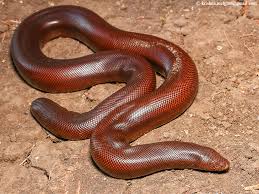
The Hyderabad zonal unit of Directorate of Revenue Intelligence (DRI) recently recovered live Indian Red Sand Boa (Eryx johnii) from a person, who was involved in illegal trading of live snakes at Warangal.
- The Red Sand Boa, commonly called the Indian Sand Boa, is a non-venomous snake species found throughout the dry parts of the Indian subcontinent.
- Scientific Name: Eryx johnii
- The species is endemic to Iran, Pakistan, and India
- These snakes prefer dry, sandy, and loose soil environments that support their fossorial lifestyle.
- It is ovoviviparous and nocturnal and spends the majority of its time underground.
- Unlike most snakes, the tail is almost as thick as the body and gives the reptile the appearance of being “double-headed”.
- Conservation Status:
- IUCN Red List: Near Threatened
PM SHRI Scheme:
The Union ministry of education signed a memorandum of understanding (MoU) with the West Bengal government to implement the PM SHRI Schools initiative in the state.
- The Pradhan Mantri Schools for Rising India (PM-SHRI) Scheme is a centrally sponsored initiative launched by the Government of India under the guidance of the Ministry of Education.
- It aims to transform school education across the nation by developing over 14,500 model schools that reflect the spirit and vision of the National Education Policy (NEP) 2020.
- These schools will be managed by the Central Government, State and Union Territory Governments, local bodies, Kendriya Vidyalaya Sangathan (KVS), and Navodaya Vidyalaya Samiti (NVS).
- Key Features of PM SHRI Schools
- Enhanced infrastructure: Labs, libraries, art rooms.
- Integration of technology: Smart classrooms and digital learning tools.
- Holistic learning approach: Play-based learning in the early years, with flexible teaching methods.
- School Quality Assessment Framework (SQAF): Regular evaluation to maintain high standards.
- Time Period: 5 years (2022-23 to 2026-27).
- Funding Pattern:
- For General States and UTs with Legislature: The funding ratio is 60:40, where 60% of the funds are provided by the Central Government and 40% by the State or UT Government.
- Northeastern and Himalayan States, including Jammu & Kashmir: The funding ratio is 90:10, with the Centre contributing 90% of the total cost.
- For Union Territories without a Legislature: The scheme is fully funded by the Central Government (100%).
National One Health Mission:
The Fifth Meeting of the Scientific Steering Committee on National One Health mission was held in New Delhi.
- It was launched in 2024.
- It is a collaborative, multidisciplinary approach that unites human, animal, and environmental health sectors.
- It recognizes the interconnectedness of these domains, aiming to optimize health outcomes and address challenges across the sectors.
- It was launched to safeguard national health by unifying human, animal, and environmental surveillance systems to ensure robust pandemic preparedness and integrated disease control.
- Nodal Agency: Indian Council of Medical Research (ICMR) under Office of the Principal Scientific Adviser (PSA).
- Governance of the National One Health Mission:
- It is two tiered:
- Executive Committee: It is chaired by the Ministry of Health & Family Welfare (MoHFW) with Principal Scientific Adviser as vice chair and Member Health, NITI Aayog is a permanent invitee.
- Secretaries of various stakeholder departments and two states (on rolling basis) are members.
- The committee provides overall policy guidance for the progress of the mission and its associated activities.
- Scientific Steering Committee: It is chaired by the PSA and has Secretaries/DGs of all stakeholder departments and two states (on rolling basis) as members. It provides overall scientific direction, oversight and guidance to the National One Health Mission.
- Executive Committee: It is chaired by the Ministry of Health & Family Welfare (MoHFW) with Principal Scientific Adviser as vice chair and Member Health, NITI Aayog is a permanent invitee.
- It is two tiered:
Zimbabwe : Membership In The BRICS New Development Bank
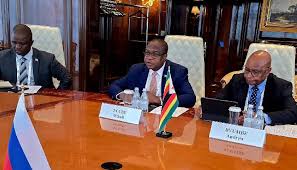
Zimbabwe is a landlocked country in southern Africa.
- It shares its borders with four countries: Mozambique to the northeast and east, South Africa to the south, Botswana to the southwest and west, and Zambia to the northwest.
- Capital City: Harare
- Geographical Features of Zimbabwe:
- Zimbabwe is characterized by a high plateau, known as the highveld, or grassland, which covers roughly one-quarter of the country’s area.
- It is completely within the tropics but enjoys subtropical conditions because of its high average elevation.
- Highest Peak: Mount Nyangani
- Lakes:Lake Kariba, sits on the Zambia-Zimbabwe border.
- Major Rivers: The major rivers of Zimbabwe include the Zambezi, Limpopo, Sabi, and Runde.
- It includes parts of the Kalahari Desert.
- It mainly consists of coal, chromium ore, vanadium, lithium, tin, platinum etc.
Jaggery:
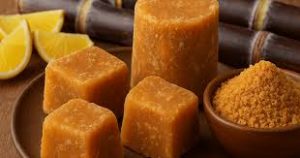
India accounts for over 70% of global jaggery production, firmly establishing itself as the world leader in natural sweeteners.
- Jaggery is commonly known as gur and is a traditional, unrefined, natural sweetener.
- It is produced by concentrating sugarcane juice without the use of chemicals.
- It retains essential minerals and micronutrients that are typically lost during the sugar-refining process.
- It retains minerals like calcium, magnesium, potassium, phosphorus, sodium, iron, zinc, copper, and manganese.
- It also contains trace amounts of vitamins, including folic acid and B-complex vitamins, as well as vitamins A, C, D, and E.
- India accounts for over 70 percent of global jaggery production. This makes it the world’s largest jaggery producer.
- Uttar Pradesh contributed 48.5 percent of total production, followed by Maharashtra (24.1 percent) and Karnataka (10.5 percent).
- Geographical Indication (GI) Tagged Jaggery Varieties in India:
- Kolhapur Jaggery (Maharashtra): It is valued for its golden colour and high sucrose content.
- Muzaffarnagar gur (Uttar Pradesh): It is export-oriented and made from high-quality cane.
- Marayoor and Central Travancore jiggery (Keralam): These are recognized for their purity, medicinal value, traditional processing and regional distinctiveness.
SMILE Mission:

The Chinese and European space agencies are launching SMILE, their first joint mission, to investigate Earth’s defenses against the Sun.
- SMILE (Solar wind Magnetosphere Ionosphere Link Explorer) is a joint ESA (European Space Agency)and Chinese Academy of Sciences (CAS) mission.
- It will study the interaction of the solar wind with the Earth’s magnetosphere and ionosphere.
- It aims to capture the first X-ray images of Earth’s protective magnetic shield in action as it battles and deflects harmful charged particles and energies coming from the Sun.
- It will be positioned at about 1.21 lakh km above Earth’s north pole and be able to observe the edge of the magnetosphere in its entirety.
- Mission Life: SMILE weighs about 2,600 kg and has a mission life of about three years.
- The mission is carrying four scientific instruments,
- ESA has developed the Soft X-ray Imager (SXI), whereas the Chinese team has developed the other three payloads — Magnetometer, Light Ion Analyser (LIA) and Ultraviolet aurora Imager (UVI).
- The four instruments will operate both on X-ray and ultraviolet wavelengths of the electromagnetic spectrum.
- All these payloads will use remote sensing and make in situ(on site) observations along the near-Earth regions.
- It is designed to get answers interaction of a stream of solar wind with Earth’s magnetic shield and the magnetic glitches occurring on the dark side of Earth.
- It will help solar physicists better understand space weather.
- It will also help forecasting any impending solar storm or likely perturbations to space weather.
India’s Total Sugar Export Ban:
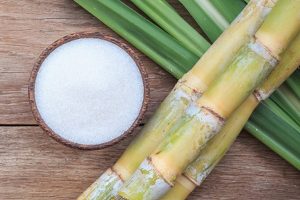
The Directorate General of Foreign Trade (DGFT) has issued a notification placing the export of all categories of sugar (raw, white, and refined) under the “Prohibited” category with immediate effect until 30th September 2026.
- This regulatory intervention marks a strategic shift from quantitative restrictions (“Restricted” category) to a total freeze on outbound shipments, driven by cascading geopolitical and agro-climatic vulnerabilities.
- India has imposed a complete ban on sugar exports till September 2026 to safeguard domestic supply, control inflation, and prepare for future risks from El Niño, fertilizer disruptions, and declining sugar stocks.
The ban highlights deeper structural issues in India’s sugar sector, including water stress, pricing distortions (FRP-SAP), cane arrears, and the growing importance of ethanol blending and bioenergy as long-term solutions.
Reasons for the Total Sugar Export Ban:
- While the 2026–27 crop is secure, global meteorological models predict a moderate-to-strong El Niño persisting through 2026.El Niño suppresses the Southwest Monsoon, threatening the crucial planting window for the 2027–28 sugar year. Sugarcane has a prolonged vegetative phase. In North India (Suru crop), it takes 11–12 months. In Maharashtra (Pre-seasonal and Adsali crops), it takes 15–18 months.Moisture stress during late 2026 will contract supplies two years later. The government is locking down current surpluses to build a multi-year buffer.Geopolitical Spillover on Agri-Inputs: Sugarcane is a highly water and fertilizer-intensive crop.The geopolitical escalation in West Asia threatens maritime chokepoints, risking massive disruptions in the global supply chains for nitrogenous and phosphatic fertilizers.
Input shortages directly depress cane yields and sucrose recovery rates.Inflationary Targeting: Sugar holds a sensitive weight in the Consumer Price Index (CPI).Amidst global volatility in food and fuel matrices, the government is exercising extreme caution to prevent domestic speculative hoarding and localized price shocks.
Roadmap of India-Netherlands Strategic Partnership (2026-2030):
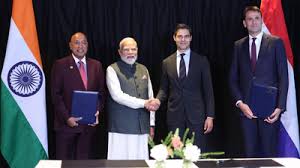
The Prime Minister of India paid an official visit to the Netherlands. During this visit, both nations agreed to elevate their bilateral relationship to a “Strategic Partnership” and adopted the comprehensive “Roadmap of India-Netherlands Strategic Partnership (2026-2030)”.
- India and the Netherlands upgraded their ties to a Strategic Partnership focused on water management, semiconductors, defence, green energy, Indo-Pacific cooperation, migration, and trade resilience.
- The partnership also highlights cultural diplomacy through the return of the Chola-era Leiden Copper Plates, while challenges remain in areas such as export controls, CBAM regulations, technology transfer, and strategic differences.
- A new annual review mechanism at the Foreign Ministers’ level will be instituted to monitor the progress of the roadmap and provide strategic guidance.
- Regular bilateral meetings between Heads of Government, Foreign Ministers, and Cabinet Ministers will be maintained, both via state visits and on the sidelines of multilateral forums.
- Leveraging annual JTIC meetings to expand trade and market access across high-potential sectors like electronics, telecommunications, infrastructure, pharmaceuticals, and iron & steel.
- Periodic reviews of the existing bilateral Fast Track Mechanism to facilitate cross-border investment and resolve corporate bottlenecks.
- Launching a strategic partnership under a dedicated MoU to collaborate on critical minerals exploration, research, ESG standards, and value chain diversification.
- Active promotion of two-way investments, joint ventures, and public-private partnerships, with a strong focus on enabling Small and Medium Enterprise (SME) participation.
- Commitment to renew the flagship water partnership (originally signed in 2022) until March 2027, reviewed by a Ministerial Joint Working Group.
- Collaboration on integrated water resource management, coastal zone management, flood resilience, and restoring water quality in the Ganga Basin.
- This includes creating Urban River Management Plans using the ‘Water as Leverage’ approach.
- Partnering with the India-led Coalition for Disaster Resilient Infrastructure (CDRI) to develop climate-and-disaster-resilient urban water frameworks globally.
- Upgrading the Joint Agriculture Working Group and expanding agricultural technology collaboration, including the establishment of Clean Plant Centres to boost sustainable agriculture.
- Strengthening research on cross-border infectious diseases, Anti-Microbial Resistance (AMR), and digital health via collaboration between the Dutch National Institute for Public Health and the Environment (RIVM) and the Indian Council of Medical Research (ICMR).
2026 US-China Summit and its Impact on India:
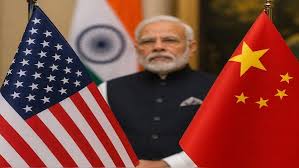
The President of the US visited China for a two-day summit, followed by the scheduled visit of the Russian President linked to the 25th anniversary of the Sino-Russian Treaty.
- The engagements highlight China’s growing centrality in great-power politics and sparked debate over a possible shift from post-Cold War unipolarity and 21st-century multipolarity towards a new US-China-Russia strategic triangle and an emerging “G-3” world order.
Key Highlights of the US-China Summit:
- Economic Relaxation: As a transactional compromise, China agreed to step up the purchase of 200 Boeing aircraft, increase beef imports by relaxing restrictions, and buy more American soybeans.
- Technology and Investment: The US permitted 10 Chinese firms to resume purchases of advanced Nvidia chips, which are critical for artificial intelligence, high-performance computing, and semiconductor-driven technological competition.
- Both nations discussed establishing a Board of Trade and a Board of Investment to manage tariffs and green-light non-sensitive investments, signaling a pause in their bruising trade war.
- Strategic Stability: China proposed a new framework, calling for a “constructive relationship of strategic stability” to manage differences over sensitive flashpoints like Taiwan and the South China Sea.
- Thucydides Trap: China explicitly invoked the need to avoid the “Thucydides Trap”- a historical concept coined by Graham Allison which states that when a rising power threatens to displace an established one, the result is almost always war.
- West Asia and Energy Security: Both the US and China converged on the importance of keeping the Strait of Hormuz open and preventing Iran from acquiring nuclear weapons.
CIC Exemption of BCCI from the RTI Act, 2005:
The Central Information Commission (CIC) has ruled that the Board of Control for Cricket in India (BCCI) does not qualify as a “public authority” under the Right to Information (RTI) Act, 2005.
- The CIC reversed its 2018 order, which had earlier declared the BCCI a public authority under the RTI Act.
- The CIC held that the BCCI fails to satisfy the statutory definition of a “public authority” under Section 2(h) because it is a private society registered under Tamil Nadu law, rather than an entity established by Parliament, state legislatures, or an executive notification.
- The Commission explicitly clarified that tax exemptions or statutory concessions available generally under law do not constitute “substantial financing” by the government (a critical legal threshold required to bring an independent body under the RTI Act).
- The ruling highlighted that the government exercises no meaningful administrative control over the BCCI, plays no role in appointing its office-bearers, and does not fund its multi-crore market-driven operations (IPL media rights, sponsorships, etc.).
- The CIC grounded its decision in established jurisprudence:
- Thalappalam Service Cooperative Bank v. State of Kerala (2013): The Supreme Court held that bodies receiving indirect benefits or limited government aid cannot automatically be treated as “public authorities” under the RTI Act.
- Zee Telefilms v. Union of India (2005): The Court ruled that the Board of Control for Cricket in India is not “State” under Article 12 of the Constitution despite performing public functions.
- Dalco Engineering v. Satish Prabhakar Padhye (2010): The Supreme Court clarified that substantial government financing or control is necessary for an entity to fall within statutory public accountability frameworks.
- The Commission noted that the Supreme Court’s verdict in BCCI v. Cricket Association of Bihar (2016) mandated internal governance reforms but stopped short of declaring the BCCI a public authority.
- The order observed that the transparency recommendations made by the Justice R.M. Lodha Committee (2015) and the Law Commission of India’s 275th Report (2018) on transparency and accountability were termed merely advisory and cannot override the explicit statutory language enacted by Parliament.
- Caution Against Regulatory Overreach: The CIC concluded that superimposing public-sector administrative oversight frameworks onto autonomous, market-driven sports entities could create unintended disruptions in a finely balanced economic structure, noting that government control does not automatically guarantee fairness.



