
Today’s Current Affairs: 26th May 2026 for UPSC IAS exams, State PSC exams, SSC CGL, State SSC, RRB, Railways, Banking Exam & IBPS, etc
Table of Contents
Supreme Court’s Revival of Sedition Trials:
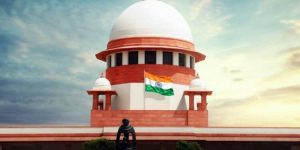
The Supreme Court of India, in its May 2026 clarification in Kamran v. State of Madhya Pradesh, held that lower courts are permitted to proceed with trials and appeals under Section 124A (Sedition) of the Indian Penal Code (IPC), on the condition that the accused persons explicitly consent to the proceedings.
- The clarification has reignited discussions over the colonial-era sedition law, even as its constitutional validity remains under challenge before the Supreme Court.
- A Colonial Relic: Section 124A was drafted by Thomas Babington Macaulay in 1837 but was omitted when the IPC was first enacted in 1860.
In 1890, sedition was included as an offence under section 124A IPC through the Special Act XVII to suppress the rising nationalist dissent. It carries harsh penalties, including life imprisonment. - Use Against Freedom Fighters: The law was extensively used as a weapon against prominent Indian independence leaders, most notably Bal Gangadhar Tilak (tried three times for his writings in Kesari) and Mahatma Gandhi (for his articles in Young India in 1922).
- Gandhi famously described Section 124A as “the prince among the political sections of the Indian Penal Code designed to suppress the liberty of the citizen.”
Judicial Pronouncements: - Romesh Thapar v. State of Madras (1950): The Supreme Court held that mere criticism of the government or creation of disaffection against it cannot justify restrictions on free speech unless it threatens the security of the State or seeks to overthrow it.
- Subsequently, the Punjab and Haryana High Court in Tara Singh Gopi Chand v. The State (1951), and the Allahabad High Court in Ram Nandan v. State of Uttar Pradesh (1959) declared that Section 124A of the IPC was primarily a tool for colonial masters to quell discontent in the country and declared the provision unconstitutional.
- Kedar Nath Singh v. State of Bihar (1962): The Supreme Court upheld the constitutional validity of Section 124A but severely restricted its application.
- The Court ruled that mere strong criticism of the government is not sedition unless it is accompanied by an incitement to violence or an intention to create public disorder.
- Balwant Singh v. State of Punjab (1995): The Supreme Court held that the mere casual raising of anti-national slogans a few times by a couple of individuals, which did not lead to any public response or violence, does not amount to sedition.
- The S.G. Vombatkere Freeze (2022): In S.G. Vombatkere v. Union of India (2022), the Supreme Court placed Section 124A in complete abeyance.
- The Court observed that the law was engineered for a colonial regime and was entirely out of sync with the modern democratic social milieu.
- The Court directed that no fresh First Information Reports (FIRs) were to be registered, no investigations were to continue, and no coercive measures taken under Section 124A.
- If a fresh case was erroneously registered, affected citizens were granted the liberty to directly approach the appropriate courts for immediate relief.
- All pending trials, appeals, and proceedings across the country concerning sedition were to be kept strictly in abeyance.
- The Court echoed the doctrine from I.R. Coelho versus State of Tamil Nadu (2007) that laws must be in step with the “march of time.”
- Transition: With the repeal of the IPC, the sedition framework has transitioned into the Bharatiya Nyaya Sanhita (BNS), 2023.
- Removal of the Word “Sedition”: The term sedition (Rajdroh) has been consciously dropped from the new legal lexicon.
- Section 152 of BNS: The BNS introduces a provision penalizing acts that endanger the “sovereignty, unity, and integrity of India.”
- Shift in Focus: While Section 124A of the IPC penalized disaffection towards the Government, Section 152 of the BNS shifts the focus to penalizing acts that threaten the State (India) itself specifically criminalizing secessionist activities, armed rebellion, or subversive activities, with punishment up to life imprisonment or seven years with fine.
Draft Rules for VB-G RAM G:
The Centre has released draft rules for the new Viksit Bharat–Guarantee for Rozgar and Ajeevika Mission (VB-G RAM G) Act, 2025 which will replace the 20-year-old Mahatma Gandhi National Rural Employment Guarantee Act (MGNREGA) from July 2026.
- The draft rules propose a new allocation formula based on the 16th Finance Commission’s devolution criteria and introduce performance-based funding for States.
Key Highlights of the Draft rules for the VB-G RAM G Act, 2025:
- Shift to a “Normative Allocation” Funding Model: The draft rules shift away from MGNREGA’s open-ended, demand-driven funding model.
- Central allocations will now act as a spending ceiling based on the objective horizontal devolution formula recommended by the 16th Finance Commission.
- Prioritizing Poorer States: The formula relies heavily on GSDP Distance (42.5% weightage), which measures how far a State’s per capita income falls short of the wealthiest States, ensuring poorer States get a larger share.
- The next highest weightage is given to population (17.5%), benefiting larger States, while all of the other metrics carry a 10% weightage each in this formula.
- Revised Cost-Sharing: Unlike MGNREGA, where the Centre paid 100% of the wage bill, the new framework implements a 60:40 cost-sharing ratio between the Centre and most States (90:10 for northeastern and Himalayan States).
- Any expenditure beyond the normative allocation must be borne entirely by the State.
- Performance-Linked Funding: From the second year of implementation, a portion of the Central allocation will be contingent on State-level performance criteria.
- These metrics include the timely payment of wages, strict compliance with social audit requirements, and the percentage of completed public works.
- Governance and Administrative Mechanisms:
- National Level Steering Committee: A 16-member committee headed by the Union Rural Development Secretary. Its mandate is to recommend decisions relating to normative allocations to States, set standards, and monitor guidelines.
- Composition: It will include at least five representatives from State governments (nominated by the Centre), along with representatives from NITI Aayog and other Union Ministries.
- Central Gramin Rozgar Guarantee (GRG) Council: Headed by the Union Minister for Rural Development, this body is intended to advise the Centre on the overall implementation of the new law.
- Temporary Validity of Job Cards: Existing e-KYC-verified MGNREGA job cards will remain valid during the transition phase until new Gramin Rozgar Guarantee Cards are issued to workers.
Judicial Decorum in the Digital Age:
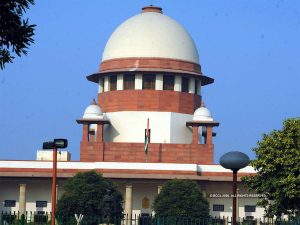
The Chief Justice of India (CJI) issued a formal clarification following public outrage over sharp oral observations made during a Supreme Court hearing. The controversy intensified on social media, where satirical movements such as the mock “Cockroach Janta Party” emerged after the CJI used terms like “cockroaches” and “parasites” to criticize unmeritorious litigation and the alleged infiltration of professions by individuals holding fake degrees.
- The Restatement of Values of Judicial Life (1997): Adopted by the Supreme Court Full Court in 1997, Item 8 of Restatement of Values of Judicial Life (1997) mandates that a judge should not enter into public debates or express views in public on political matters or issues pending judicial determination.
- Bangalore Principles of Judicial Conduct (2002): Endorsed by the United Nations, as a complement to the 1985 United Nations Basic Principles on the Independence of the Judiciary, it constitutes the foundational international framework on judicial ethics and conduct.
- It emphasizes that a judge’s behavior must constantly reaffirm public faith in the judiciary’s impartiality.
- The Vijayabhaskar Standard (2021): The Supreme Court formally codified the boundary between bench speech and judicial decree in Chief Election Commissioner vs. M.R. Vijayabhaskar. Adjudicating on harsh oral remarks made by the Madras High Court during the Covid-19 pandemic, the Court established a dual doctrinal standard:
- The Epistemic Utility of Bench Speech: Acknowledged the necessity of judicial questioning to foster a “spontaneity of thought” and provide clarity during hearings.
- The Primacy of the Written Record: Established unequivocally that “the formal opinion of a judicial institution is reflected through its judgments and orders, not its oral observations during the hearing.”
- A.M. Mathur v. Pramod Kumar Gupta (1990): The Supreme Court held that “Judicial restraint and discipline are as necessary to the orderly administration of justice as they are to the effectiveness of the army.”
- The Court warned that judges must not use the bench as a pulpit to express personal grievances, “spasmodic sentiment,” or unregulated anger.
- Modern Context: In Supriyo vs Union of India (2023), oral observations by the bench regarding non-absolute concepts of gender led the public to believe the court would read same-sex unions into the Special Marriage Act, 1954.
- However, the final written judgment went the opposite way, proving that oral testing does not equate to the final judicial stance.
Raghav Chadha Appointed Chairman of Rajya Sabha Committee on Petitions:
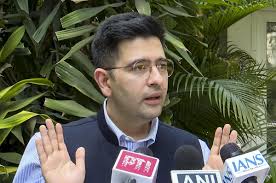
Rajya Sabha MP Raghav Chadha was appointed as the new Chairman of the Committee on Petitions of the Rajya Sabha.
- The Committee on Petitions is one of the oldest committees of Parliament, originating from a Council of State resolution moved on 15th September 1921 to create a Committee on Public Petitions with power to take evidence.
- The Committee received its present name, Committee on Petitions, in 1933.
- The Rajya Sabha Committee on Petitions was first constituted in 1952 with a Chairman and four other members; its membership was increased to ten in 1964 and has continued as such.
- It is a Standing Committee of the Rajya Sabha, constituted under Rule 147 of the Rules of Procedure and Conduct of Business in Rajya Sabha.
- Members are nominated by the Chairman of Rajya Sabha, who also appoints the Committee Chairman; quorum is five and the Committee is usually reconstituted annually.
- The Committee examines petitions referred to it, reports to the House on specific complaints, and may recommend individual remedies or broader corrective measures.
- The Committee may take evidence, call for papers, seek comments from Ministries or Departments, examine witnesses, hear petitioners and suggest remedial measures to address grievances or prevent their recurrence.
- A petition must be submitted in the prescribed form, addressed to the Rajya Sabha, written in respectful and temperate language, contain a concise statement of grievance and prayer, and be signed or thumb-impressed by the petitioner.
- Since the 1964 revision of the Rules, petitions may be presented not only on Bills or pending business but also on matters of general public interest, subject to certain limitations.
- A member gives advance notice to the Secretary-General; the Secretariat checks admissibility, the Chairman admits it, and it is presented after papers are laid on the Table without debate, after which it is referred to the Committee.
Cockroach Janta Party:
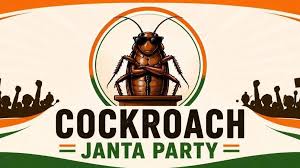
The Central Government used Section 69A of the IT Act to block the website and social media handles of the newly formed Cockroach Janta Party (CJP).
- The satirical online movement, launched by a 30-year-old student after a CJI courtroom remark, gained over 2 crore followers by tapping Gen Z anger over NEET leaks and unemployment.
- Gen Z and Democracy represents the evolving relationship between the youngest voting cohort (born roughly between 1997 and 2012) and established democratic institutions.
- Unlike previous generations whose political lives began with physical, grassroots mobilization, Gen Z experiences democracy as a digital-first, heavily networked phenomenon.
- Role of Social Media in Strengthening Democracy:
- Instantaneous Democratization of Dissent: Social media allows marginalized youth to bypass elite media gatekeepers and broadcast real-time grievances to a massive audience.
- Low-CostPolitical Mobilization: It eliminates the heavy financial barriers historically required to build a political movement, allowing organic ideas to scale rapidly.
- Rapid Amplification of Governance Failures: Digital platforms serve as a hyper-vigilant civic audit tool, exposing institutional corruption or policy lapses instantly.
- Fostering Decentralized Global Solidarity: Connects localized youth struggles to international human rights standards and successful global resistance models.
- Promoting Creative Political Engagement: Replaces dry, unengaging policy text with creative political satire and visual storytelling, making civic awareness accessible to the masses.
Major Abhilasha Barak Wins UN Military Gender Advocate Award:

Major Abhilasha Barak, an Indian peacekeeper serving with the UN Interim Force in Lebanon (UNIFIL), has been named the recipient of the 2025 UN Military Gender Advocate of the Year Award.
- She will be honoured at the UN Headquarters during the commemoration of the International Day of UN Peacekeepers, observed every year on 29th May to honour the service and sacrifice of UN peacekeepers.
- Major Abhilasha Barak is serving with the Indian Battalion in UNIFIL as the Commander of the Female Engagement Team (FET).
- UNIFIL is a UN peacekeeping mission deployed in Lebanon, with India contributing 642 personnel to the mission.
- She has been honoured for outreach and community engagement with women and adolescent girls, along with gender sensitisation training for peacekeepers.
- She is also the first woman combat helicopter pilot of the Indian Army, adding to the significance of the award.
- She is the third Indian recipient after Major Suman Gawani (2019) and Major Radhika Sen (2023), reflecting India’s strong role as one of the largest troop and police contributors to UN peacekeeping missions.
- The UN Military Gender Advocate of the Year Award was created in 2016 by the Office of Military Affairs under the Department for Peace Operations.
- The award recognises military peacekeepers who best integrate a gender perspective into peacekeeping activities and promote the principles of UN Security Council Resolution 1325 on Women, Peace and Security.
Bharat Audyogik Vikas Yojna:
The Department for Promotion of Industry and Internal Trade (DPIIT) officially released the operational guidelines for the Bharat Audyogik Vikas Yojna (BHAVYA).
- BHAVYA is a landmark Central Sector Scheme designed to establish world-class, investment-ready, plug-and-play industrial smart cities across India.
- Nodal Department: Department for Promotion of Industry and Internal Trade (DPIIT), Ministry of Commerce & Industry.
- Project Management Agency (PMA): National Industrial Corridor Development Corporation (NICDC).
- Financial Allocation: Total budget outlay of ₹33,660 crore.
- Timeline: Six-year implementation window spanning from FY 2026-27 to FY 2031-32.
Aim:
- The scheme aims to eliminate long-standing entry barriers for global and domestic manufacturers by providing ready-built infrastructure, streamlined regulatory approvals, and multi-modal logistics connectivity.
- It serves as a core infrastructure engine to accelerate Make in India, advance Aatmanirbharta, and build a competitive, manufacturing-led economy.
Key Features of the BHAVYA Scheme:
- Scale of Deployment: Targets the complete development of 100 industrial parks nationwide. The initial phase will select the first 50 parks via a challenge-based competitive framework among states and union territories.
- Sizable Financial Subsidies: Provides financial assistance of up to ₹1 crore per acre. Additionally, the scheme funds up to 25% of the cost for external infrastructure to ensure seamless last-mile connection to national freight grids.
- Challenge-Mode Selection Matrix: Avoids arbitrary allocations. Project proposals are scored on objective indices, including site suitability, environmental sustainability, policy facilitation, and existing regional ecosystem strengths.
- Strict Corporate SPV Model: Deployed via Special Purpose Vehicles (SPVs) incorporated under the Companies Act, 2013. The government’s fiscal help is routed as equity contributions linked directly to state land transfers and project milestones.
- Comprehensive Multi-Tier Infrastructure Framework: Funding is divided into three functional pillars:
- Core Infrastructure: Internal roads, underground utility corridors (enabling a no-dig environment), smart drainage, and Common Effluent Treatment Plants (CETPs).
- Value-Added Infrastructure: Ready-built factory sheds, built-to-suit manufacturing units, quality-testing laboratories, and advanced logistics warehousing.
- Social Infrastructure: On-site worker housing, healthcare centers, skill-development facilities, and community amenities.
11th Review Conference of the Nuclear Non-Proliferation Treaty:
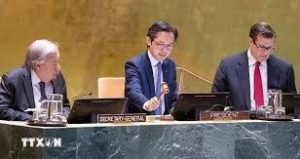
The 11th Review Conference of the Nuclear Non-Proliferation Treaty (NPT) at the UN Headquarters in New York collapsed without reaching a consensus on a final declaration.
- The NPT Review Conference is a high-level plurilateral diplomatic forum held every five years to assess the implementation, structural health, and modernization of the Treaty on the Non-Proliferation of Nuclear Weapons (NPT).
- Initiated in 1975, these month-long sessions bring together nearly 190 signatory states to review past disarmament pledges, inspect safeguard protocols, and address emerging geopolitical flashpoints threatening the global non-proliferation architecture.
Key Features of the NPT Treaty:
- The original 1968 treaty operates on a tripartite pillars framework, structurally bridging three distinct global security objectives:
- The Core Grand Bargain: Establishes an asymmetric legal contract between two blocks: Non-Nuclear Weapon States (NNWS) agree never to acquire nuclear warheads, while Nuclear-Weapon States (NWS) pledge to pursue good-faith atomic disarmament.
- The Sovereign Cut-Off Date: Recognizes only five nations as legitimate Nuclear-Weapon States based on whether they manufactured and exploded a nuclear device prior to January 1, 1967: the United States, Russia (formerly the Soviet Union), China, the United Kingdom, and France (the P5).
- The IAEA Safeguards Matrix: Empowers the International Atomic Energy Agency (IAEA) to run strict, mandatory on-site inspections of NNWS facilities, ensuring that civil nuclear fuel and material cycles are never diverted for weaponization.
- Inalienable Right toPeaceful Nuclear Technology: Guarantees all compliant signatories unfettered access to nuclear fuel, materials, and research for civilian applications, including electricity generation, medical diagnostics, and agricultural mutation breeding.
- Indefinite Legal Extension: Originally drafted to run for a 25-year block, the treaty was extended indefinitely in 1995 during the New York Review Conference, making its commitments permanent for all member states.
The Hainan FTP Initiative:
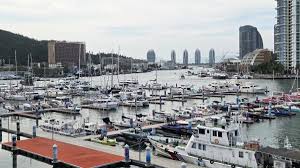
China’s Hainan Free Trade Port (FTP) initiative has driven an aggressive expansion of its zero-tariff trade rules, increasing eligible product categories from 1,900 to 6,600.
- The Hainan Free Trade Port (FTP) is China’s most ambitious modern-era economic opening-up project. First unveiled in June 2020 and officially implemented with full island-wide special customs operations, it transforms the entirety of Hainan Island into a unique, low-tax offshore economic enclave.
- The Two-Line Customs Model:
- The First Line links Hainan with global markets, removing most customs duties and trade barriers to create a free-trade commercial hub.
- The Second Line connects Hainan with mainland China, where normal Chinese customs duties apply when goods enter the mainland.
- The initiative seeks to strengthen China’s high-tech supply chains, expand trade integration with the Global South, and transform Hainan into a major global trade, tourism, and manufacturing hub.
Key Features:
- Massive Tariff Relief: Around 74% of goods qualify for zero tariffs, reducing annual duty costs significantly.
- 30% Value Addition Rule: Duty-free imported raw materials processed with at least 30% value addition in Hainan can enter mainland China tax-free.
- Low-Tax Incentives: Eligible businesses and skilled professionals benefit from a flat 15% corporate and personal income tax rate.
- Duty-Free Consumption Hub: Mainland Chinese tourists can shop duty-free up to 100,000 RMB annually in cities like Sanya and Haikou.
- Visa-Free Access: Citizens from 86 countries enjoy visa-free entry, boosting tourism and global business connectivity.
Hainan Province:
- Hainan is China’s southernmost province and a tropical island in the South China Sea, separated from mainland China by the Hainan Strait.
- It became a separate province in 1988 after being part of Guangdong and lies close to northern Vietnam across the Gulf of Tonkin.
- Key Features:
- Mountainous Interior: The island’s southwest is mountainous, with Mount Wuzhi as its highest peak.
- Coastal Plains & Rivers: Fertile coastal plains are nourished by major rivers like the Nandu, Changhua, and Wanquan.
- Tropical Monsoon Climate: Hainan experiences hot, wet summers, mild winters, and frequent typhoons.
- Rich Rainforests: Dense tropical forests support agriculture and allow multiple rice harvests annually.
- Unique Biodiversity: The island hosts rare species such as the critically endangered Hainan black-crested gibbon.
- Strategic Importance: China uses Hainan as a base for its maritime claims in the disputed South China Sea region, including the Paracel and Spratly Islands.
The Padma Awards:
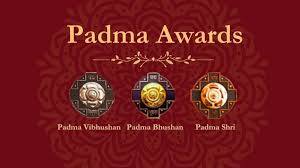
President will present 66 Padma Awards, including 2 Padma Vibhushan, 6 Padma Bhushan, and 58 Padma Shri, at the first Civil Investiture Ceremony at Rashtrapati Bhavan.
- The Padma Awards are amongst the highest civilian honors of India, announced annually on the eve of Republic Day.
- They are designed to recognize works of distinction and celebrate exceptional achievements or service where an element of public service is involved. The awards are structured into three distinct tiers:
- Padma Vibhushan: Conferred for exceptional and distinguished service.
- Padma Bhushan: Conferred for distinguished service of a high order.
- Padma Shri: Conferred for distinguished service in any specific field.
- The Government of India instituted two civilian awards in 1954: the Bharat Ratna and the Padma Vibhushan.
- Originally, the Padma Vibhushan was classified into three tiers: Pahela Varg (First Class), Dusra Varg (Second Class), and Tisra Varg (Third Class).
- These were subsequently renamed as the Padma Vibhushan, Padma Bhushan, and Padma Shri via a Presidential Notification issued on January 8, 1955.
- These honors have been announced every year since their inception, except for brief suspensions in 1978–1979 and 1993–1997.
The Conocarpus Plant:
Ecologists raised urgent alarms as recent highway development projects across Tamil Nadu continue to plant the invasive Conocarpus tree along medians.Scientific Name: Conocarpus erectus (commonly known as Buttonwood, Button Mangrove, or Green/Silver Buttonwood).
Taxonomy: A hardy mangrove shrub or tree belonging to the Combretaceae family.Geographical Origin: Native to the tropical and subtropical shorelines of the Americas and West Africa—stretching from South Florida and Mexico down to Peru and Brazil.Initially imported and widely distributed by civic authorities and highway planners due to its rapid growth rate, sleek evergreen foliage, and ability to survive high temperatures and brackish water during harsh summers.



