
Majuli Island: New Study
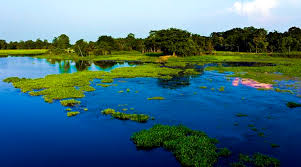
A new study has reconstructed nearly 4,000 years of climate and vegetation history of Majuli Island in Assam.
- It is located in the Brahmaputra river system, in Assam.
- It is the world’s largest river island located in Assam.
- It is formed by the Brahmaputra River in the south and the Kherkutia Xuti, a branch of the Brahmaputra, joined by the Subansiri River in the north.
- Rice cultivation is the primary livelihood for the residents of Majuli, with several unique varieties of rice, such as Komal Saul and Bao Dhan, grown in the region.
- Most of the islanders belong to three tribes-Mishing, Deori, and Sonowal Kachari, with the non-tribal Assamese comprising the rest.
- The island has also been the hub of Assamese neo-Vaishnavite culture, initiated around the 16th century by the great Assamese saint-reformer Srimanta Sankerdeva and his disciple Madhavdeva.
- They initiated the tradition of Satras (monastic institutions), and these Satras have preserved Sattriya dance, literature, bhaona (theatre), dance forms, mask making, and boat-making.
- Apart from Satras or Vaishnavite monasteries, Majuli is famous for mask-making and has a tradition of pottery making.



