
Foraminifera:
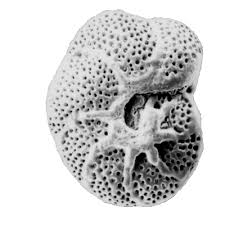
Scientists at Agharkar Research Institute (ARI), Pune have discovered a new species of Foraminifera and named it as Portatrochammina bharatensis.
- Foraminifera is a group of single-celled organisms that have inhabited the world’s oceans for over 500 million years.
- The shells have hundreds of tiny holes called foramen, the Latin word for window.
- They are among the most abundant and ecologically important organisms in the ocean.
- Features of Foraminifera:
- They are generally sand-grain size, measuring between 500 and 50 µm.
- They live in the open ocean, along the coasts, and in estuaries.
- Most have shells for protection and either float in the water column (planktonic) or live on the sea floor (benthic).
- They construct their intricate shells, called “tests,” from materials they scavenge from their surroundings (agglutinating mineral grains).
- The most of foraminifera” ‘crawl around’ using their pseudopodia.
- They don’t have a wall around their cell membranes, they are extremely flexible and can change shape.
- The organism pushes extensions of its cytoplasm called pseudopodia (or false feet) through these holes to gather food.
- Foraminifera eat detritus on the sea floor and anything smaller than them: diatoms, bacteria, algae, and even small animals such as tiny copepods.
- They build complex shells, consisting at their simplest of one chamber (like a vase or tube) to many chambers that coil in elaborate ways.



