
Lake Chad Basin:
The Islamic State West Africa Province (ISWAP) has emerged as the most powerful jihadist organisation in the Lake Chad basin, overtaking Boko Haram in influence and capability.
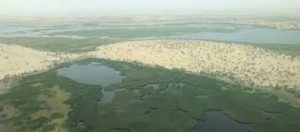
- The Lake Chad Basin is a major transnational drainage basin in Central and West Africa, covering nearly 8% of Africa’s land surface and extending across parts of Nigeria, Niger, Chad, Cameroon and Benin.
- The basin contains extensive wetlands and floodplains, especially along the Chari, Logone and Yobe rivers, including sites such as Yaeres, Sategui-Deressia and Hadejia-Nguru.
- The basin has faced severe droughts, shrinking lake area, reduced river flows, falling groundwater levels, soil erosion, invasive weeds, loss of plant species and declining wildlife populations.
- Lake Chad is a major freshwater lake and an important wetland in the Sahel region
- It is shared by Nigeria, Cameroon, Niger and Chad, with the Nigerian section mainly in Borno and Yobe States.
- It is a shallow endorheic lake, fed mainly by the Logone-Chari and Komadougou rivers, with no outlet to the sea.
- It supports rich biodiversity, including migratory birds, hippopotamus, Nile crocodile, Nile monitor, tortoise, otter, giraffe and ostrich.
- The region has a Sahelian climate, with low rainfall, a short rainy season and a long dry season.
- Lake Chad has been linked to the ancient Sao civilisation and continues to support communities such as the Kotoko, Kanembou, Barma, Boulalan and Hausa through fishing, farming, cattle rearing and trade.