
IMI-Resistant Mustard Through Mutation Breeding:
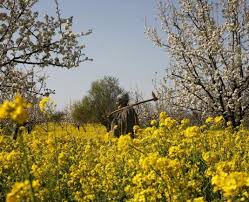
India is set to begin large-scale cultivation of Imidazolinone-resistant (IMI-resistant) mustard hybrids during the 2026-27 rabi season to combat the parasitic weed Orobanche, aiming to boost domestic oilseed production and reduce India’s heavy reliance on edible oil imports.
- Mustard is India’s most crucial rabi oilseed crop, especially in arid northern regions.
- However, its productivity is severely suppressed by Orobanche (also known as Phelipanche), a destructive root-parasitic weed that attaches to the plant and drains it of vital water and nutrients.
- Enhancing mustard yields is a strategic necessity to address India’s massive edible oil deficit.
- In 2024-25, India imported roughly 16 million tonnes of edible oils, costing the exchequer around Rs 1.6 lakh crore.
- Non-GM Technological Breakthrough: The new IMI-resistant mustard was developed using mutation breeding, a conventional technique that preserves natural mutations, making it distinct from Genetically Modified (GM) crops.
- The ALS Enzyme Mechanism: Normal mustard plants are killed by IMI herbicides because the chemical inhibits Acetolactate Synthase (ALS), an enzyme essential for plant growth.
- In the new hybrids, a natural DNA mutation alters the ALS enzyme, making the crop resistant to IMI herbicides.
- This resistance allows herbicides to kill the underground Orobanche parasite without harming the mustard crop.
Mutation Breeding and Genetic Modification:
- Mutation Breeding (Mutagenesis): This is a conventional breeding technique where seeds or plant tissues are exposed to physical mutagens (such as X-rays or gamma rays) or chemical mutagens (such as Ethyl Methanesulfonate (EMS)).
- This exposure accelerates the natural rate of genetic mutations, after which scientists select plants exhibiting desirable traits.
- Genetically Modified Organisms: This involves the direct, targeted manipulation of an organism’s genome using biotechnology.
- Scientists isolate a specific gene responsible for a desired trait from one organism (which could be a completely different species, like a bacterium) and insert it into the DNA of the target plant using vectors like Agrobacterium or tools like a “gene gun.”



