
Matcha Tea:
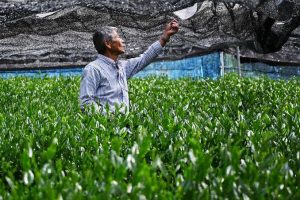
An Assam tea estate sold India’s first commercially-produced matcha tea, marking a significant shift from conventional teas.
- Matcha is a finely ground green tea powder made from specially processed, shade-grown tea leaves of Camellia sinensis.
- It originated through cultural exchanges between China and Japan during the premodern period.
- It developed from earlier powdered tea practices in China that were later introduced to Japan by Zen Buddhist monks.
- It is made after shading tea leaves for three to four weeks before harvest.
- Blocking 90% of sunlight from the leaves boosts their chlorophyll and amino acid levels, and gives them a distinct colour and flavour.
- The young leaves are harvested and steamed, then dried and de-stemmed into a flaky leaf called tencha.
- The tencha is slowly stone-ground into the fine powder we know as matcha.
- The shade-growing process gives matcha its characteristic bright green colour and rich umami flavour.
- Unlike regular green tea, where the leaves are steeped and discarded, matcha is whisked into water and consumed entirely, providing higher levels of antioxidants, amino acids, and natural caffeine.



