
Gulf of Mannar:
The Gulf of Mannar has witnessed a steep decline in bird numbers over the last four decades, with overall shorebird abundance dropping by nearly 57%, according to a peer-reviewed study published recently.
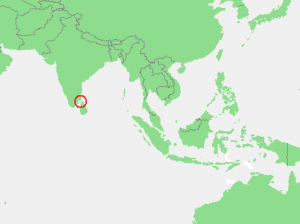
- Gulf of Mannar is a vast shallow bay that forms part of the Laccadive Sea in the Indian Ocean.
- It is located between southeastern India and western Sri Lanka.
- It is bounded to the northeast by Rameswaram (island), Adam’s (Rama’s) Bridge (a chain of shoals), and Mannar Island.
- It is connected to the Palk Bay in the north through the Palk Strait.
- It receives several rivers, including the Tambraparni (India) and the Aruvi (Sri Lanka).
- The port of Tuticorin is on the Indian coast.
- The gulf is noted for its pearl banks and sacred chank (a gastropod mollusk).
- Endowed with three distinct coastal ecosystems (coral reefs, seagrass beds, and mangroves), it is considered one of the world’s richest regions from a marine biodiversity perspective.
- Sea Turtles, sharks, dugongs, and dolphins are regular visitors to the Gulf, and species of hard coral have been recorded here.
- The Gulf became a protected national park in 1986, earning the name Gulf of Mannar National Park.
- It was designated as a Biosphere Reserve in 1989, the first such marine conservation area in India and the South Asian region.