
Adi Shankaracharya:
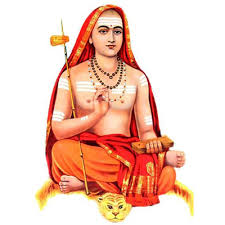
Prime Minister of India paid tribute to Adi Shankaracharya on his Jayanti, celebrating the 1,200th birth anniversary of the philosopher-saint.
- Adi Shankaracharya (approx. 788–820 CE) was a philosopher, theologian, and saint who is credited with reviving Hinduism at a time when it was declining under superstition and ritualism.
- Born in Kalady, Kerala, he lived a short but miraculous life of only 32 years, during which he traveled the length and breadth of India to spread the message of the Vedas.
- At the age of eight, driven by a desire for liberation, he left Kerala and walked 2,000 kilometers to the banks of the Narmada to find his Guru, Govindapada.
- Under his Guru’s guidance, he mastered the Vedic scriptures by age twelve and completed all his major commentaries by the age of sixteen.
- Advaita Vedanta (Non-Dualism): Shankaracharya’s core philosophy is summarized in the statement: Brahma Satyam Jagan Mithya, Jeevo Brahmaiva Na Para (Brahman is the only Truth, the world is unreal, and there is no difference between the individual self and Brahman).
- He taught that the Atman (soul) and Brahman (Universal Consciousness) are one and the same.
- He explained the world’s perceived reality as Maya (illusion), which disappears once true knowledge (Jnana) is attained.
- He introduced the Shanmata system, organizing the worship of six primary deities (Siva, Vishnu, Shakti, Ganesha, Muruka, and Surya) to unify diverse Hindu sects.
- Shankaracharya was a prolific writer and a brilliant organizer who restructured the spiritual landscape of India.
- He wrote fundamental commentaries on the Prasthanatrayi—the Brahma Sutras, the Bhagavad Gita, and 12 major Upanishads.
- He composed over 72 hymns, including Soundarya Lahari, Sivananda Lahari, and the famous Nirvana Shatakam.
- Authored 23 books on Advaita philosophy, such as Viveka Chudamani and Atma Bodha.
- Establishment of the Four Amnaya Maths is To preserve the Vedas, he established four primary monasteries in the four corners of India:



