
Allele : Study
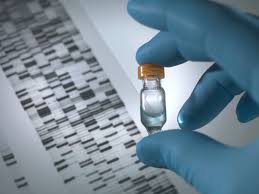
A study from South Africa finds that while protective HLA-B alleles once aided survival and reduced HIV transmission before Antiretroviral therapy, widespread ART use has significantly slowed this natural selection-driven genetic shift.
- An allele is a variant form of a gene.
- Some genes have a variety of different forms, which are located at the same position, or genetic locus, on a chromosome.
- Humans are called diploid organisms because they have two alleles at each genetic locus, with one allele inherited from each parent.
- Each pair of alleles represents the genotype of a specific gene.
- Genotypes are described as homozygous if there are two identical alleles at a particular locus and as heterozygous if the two alleles differ.
Alleles contribute to the organism’s phenotype, which is the outward appearance of the organism. - Some alleles are dominant or recessive. When an organism is heterozygous at a specific locus and carries one dominant and one recessive allele, the organism will express the dominant phenotype.
- This genetic diversity allows offspring to inherit traits from both parents while exhibiting unique characteristics.
- For example, in hair color, dark hair is typically dominant over light hair; a child may inherit light hair only if both parents pass on the recessive allele.
- All genetic traits are the result of the interactions of alleles.
- Mutation, crossing over, and environmental conditions selectively change the frequency of phenotypes (and thus their alleles) within a population.



