
Archaea : New Study:
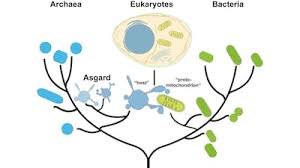
According to a study published, a DNA sequence that signals cells in almost all other organisms to stop synthesising proteins instead encodes a rare amino acid in some archaea.
- Archaea, which means “ancient things” in Greek, are one of the oldest forms of life on Earth and belong to a group called the third domain of life.
- They thrive in extreme habitats such as hot springs, cold deserts and hypersaline lakes.
- Characteristics of Archaea:
- Archaea (singular archaeon) are a primitive group of microorganisms.
- They are single-celled organisms without nucleus or organelles, and have a similar size and shape as bacteria, but differ from them biochemically.
- Their membrane is made of a unique type of lipids and most archaea have a cell wall.
- These slow-growing organisms are also present in the human gut, and have a potential relationship with human health.
- They are known for producing antimicrobial molecules, and for anti-oxidant activity with applications in eco-friendly waste-water treatment.
- Archaea are extremely difficult to culture due to challenges in providing natural conditions in a laboratory setting.
- Many archaea live in some of the harshest environments on Earth, which makes them ideal for studying how life can survive in tough conditions.



