
BHAVYA Industrial Parks Scheme:
The Union Commerce and Industry Minister chaired the Board of Trade meeting in New Delhi and urged States to prioritise exports, fully utilise the BHAVYA Industrial Parks Scheme, and strengthen India’s export competitiveness through Centre-State-industry coordination.
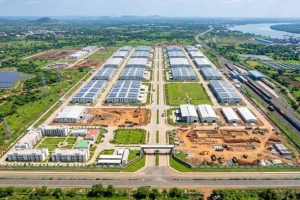
- The Bharat Audyogik Vikas Yojana (BHAVYA) is a Central Sector Scheme of the Department for Promotion of Industry and Internal Trade (DPIIT) to develop 100 investment-ready, world-class industrial parks across India.
- It aims to strengthen India’s manufacturing ecosystem by creating integrated industrial infrastructure aligned with Make in India, PM Gati Shakti and India’s goal of becoming a globally competitive manufacturing hub.
- The scheme has a total outlay of around ₹33,660 crore and will be implemented over six years from 2026-27 to 2031-32.
- BHAVYA will support both greenfield and eligible brownfield industrial parks, with minimum land requirements of 100 acres for non-hilly states and 25 acres for hilly, Northeastern, Union Territory and smaller states.
- In the first phase, up to 50 industrial parks will be selected through a competitive process based on connectivity, site suitability, infrastructure quality, industrial ecosystem, policy support, digital readiness and sustainability.
- The parks will include plug-and-play facilities, multimodal logistics connectivity, reliable power and water supply, underground utilities, waste management, common effluent treatment plants, testing laboratories, worker housing, renewable energy systems and digital single-window systems.
- Projects will be implemented through Special Purpose Vehicles (SPVs) under the Companies Act, 2013, while the National Industrial Corridor Development Corporation (NICDC) will act as the Project Management Agency for implementation and monitoring.
- BHAVYA is expected to attract large-scale domestic and foreign investment, reduce approval and land-related delays, strengthen supply chains, generate employment, boost exports and enhance India’s integration with global value chains.



