
CosmoCube Mission:
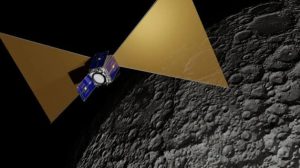
An international team of astronomers announced that CosmoCube mission will study faint radio signals from the early universe.
- CosmoCube Mission is a proposed satellite that will study the universe’s earliest stages by listening for faint radio signals from more than 13.5 billion years ago.
- It is being developed by a team of scientists led by the University of Cambridge in the United Kingdom.
- It would operate near the Moon and use the lunar far side as a natural shield against radio interference from Earth.
- It will spend around 40 minutes on the far side during every two-hour orbit.
- Time Period: Over a proposed two-year mission, the satellite could collect roughly 1,000 hours of data at extremely low radio frequencies.
- The satellite would use a lightweight radio antenna to detect the early-universe signal.
- It would also repeatedly determine its own position using onboard information and observations of its surroundings.
- This mission concept could help scientists study the poorly understood period between the Big Bang and the formation of the first stars.
- The measurements could offer scientists a clearer picture of the cosmic dark age and the transition towards the formation of the first stars and galaxies.



