
Egyptian Vulture:
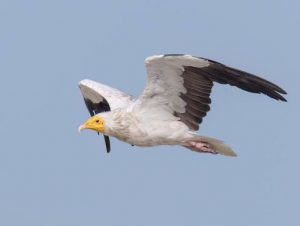
It was observed that once familiar in villages, temple towns, grazing lands and rocky cliffs across Southern India, the Egyptian Vulture (Neophron percnopterus) has almost disappeared from much of its range.
- Egyptian Vulture is one of the world’s smallest vultures.
- It inhabits open, arid areas near humans, with plenty of food options.
- It is distributed across southern Europe, northern and central Africa, the Middle East, Central Asia and the Indian subcontinent.
- These are monogamous, migrating between breeding seasons as a pair. They build a large nest and will constantly replenish it during the breeding season.
- Diverse feeding habit, from carrion to insects, small reptiles and amphibians and mammal faeces
- The loss of habitat, decrease in food supply, collisions with electricity infrastructure and poisoning from the use of agricultural chemicals.
- Conservation status
- IUCN: Endangered
- It plays a vital ecological role by removing animal carcasses from the landscape and helping maintain healthy ecosystems.



