
Mugger Crocodile: In News
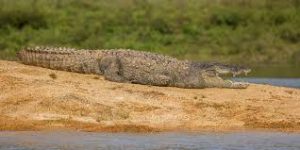
An investigation has revealed that a banned pesticide named Aldrin was responsible for the deaths of mugger crocodiles (Crocodylus palustris) in the Chandraloi river of Rajasthan’s Kota district.
- Mugger Crocodile is a medium-sized crocodile and a member of the genus Crocodylus.
- It has the broadest snout among living crocodiles. It has a powerful tail and webbed feet. Its visual, hearing, and smelling senses are acute.
- It is found in a number of freshwater habitat types including rivers, lakes and marshes.
- It occurs in the Indian subcontinent as well as surrounding countries: Sri Lanka, Pakistan and Nepal.
- It is a hole-nesting species, with egg-laying taking place during the annual dry season.
- Muggers are primarily carnivorous, eating mostly fish, frogs, crustaceans, insects etc.
- The main threats to this animal come from the destruction of its habitat and illegal hunting for its skin and for the alternative medicine market.
- Conservation Status:
- IUCN: Vulnerable
- CITES: Appendix I
- Wildlife Protection Act, 1972:Schedule
- Aldrin is a pesticide from the organochlorine group.
- It has been included in the list of banned pesticides by the Government of India because it persists in the environment for a long time and pollutes soil and water.
- It gradually accumulates in the food chain and can have serious adverse effects on the nervous system of humans and wildlife.



