
India’s Disaster Risk Financing:
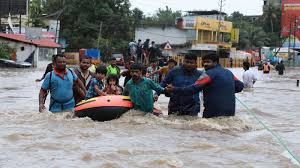
The Union Government recently sanctioned only Rs 260 crore in disaster relief to Kerala following the devastating Wayanad landslides of July 2024, against the State’s estimated losses of Rs 2,200 crore.
- This glaring disparity has reignited debates around the weakening of cooperative federalism and the increasing centralisation of disaster-risk finance in India.
- 15th Finance Commission (2021-22 to 2025-26): Expanded India’s disaster-financing architecture beyond the earlier response-only funds, the National Disaster Response Fund (NDRF) and State Disaster Response Fund (SDRF) created under the Disaster Management Act, 2005.
- It recommended separate mitigation funds at both levels, leading to the creation of the National Disaster Risk Management Fund (NDRMF) and State Disaster Risk Management Funds (SDRMF), combining relief and mitigation into a unified risk-management framework.
- The 15th Finance Commission (2021–26) allocates disaster-management funds primarily on population, total geographical area, and historical spending trends.
- State Disaster Response Fund: Primary fund with States for immediate relief (food, shelter, medical aid, compensation).
- Funded 75:25 (Centre:State) for general States and 90:10 for Northeast & Himalayan States.
- Covers notified disasters such as floods, cyclones, earthquakes, landslides, etc.
- States may use up to 10% for local disasters based on State-defined norms.
- The annual Central contribution is released in two equal installments as per the recommendation of the Finance Commission.
- National Disaster Response Fund (NDRF) supplements SDRF when a disaster is declared “severe” and SDRF is insufficient.
- NDRF is entirely funded by the Central Government.
- National & State Disaster Risk Management Funds (NDRMF & SDRMF): As recommended by the 15th Finance Commission central government had constituted the National Disaster Mitigation Fund (NDMF) in 2021 and also advised all the State Governments to set up State Disaster Mitigation Fund (SDMF) in the State.
- So far, all the States, except Telangana, have initiated the setting up of SDMF.
- The Centre contributes 75% of SDMF for general states and 90% for North-Eastern and Himalayan states, strengthening long-term resilience across vulnerable regions.
- These funds support states in implementing mitigation projects such as flood control, landslide prevention, and seismic safety.



