
India’s First Indigenous Hydrogen Train:
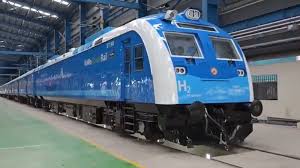
Indian Railways has officially approved the operational rollout of the country’s first-ever indigenous 10-car Hydrogen Fuel Cell-based trainset on the Jind-Sonipat section in Haryana.
- The train is a cutting-edge, 10-car eco-friendly Passenger Trainset powered entirely by an onboard hydrogen fuel cell propulsion system.
- It replaces conventional diesel engines on non-electrified routes, running as a zero-emission alternative that produces only water vapor and heat as byproducts.
- Developed By Indian Railways via its premier research and standard-setting arm, the Research Designs and Standards Organisation (RDSO).
- The train does not burn fuel like a traditional engine; instead, it mixes onboard compressed hydrogen gas with oxygen from the outside air inside a specialized fuel cell stack.
- An electrochemical reaction passes these gases through an internal membrane, combining the hydrogen and oxygen atoms to generate steady electrical energy.
- This electricity is routed directly to a heavy-duty 1,200 KW propulsion engine to turn the train’s wheels and run its onboard electronics.
- Because no fossil fuels are used, the chemical reaction leaves behind zero carbon emissions, releasing nothing but clean water vapor into the atmosphere.
- Set to begin operations along the dedicated Jind-Sonipat section in Haryana, chosen specifically to serve as the national pilot testing ground.
- Built with a powerful 1,200 KW fuel cell system engineered to handle consistent passenger transit loads across short-haul regional networks.
- Geared to run at a maximum safe operating speed of 75 kmph during its initial rollout phase.
- Supported by a local, specialized hydrogen compression and refueling infrastructure set up directly at the Jind station.
- Equipped with standard hydrogen compression units alongside a standby compressor unit to ensure continuous fueling availability.
- Protected by a network of automated safety sensors, including high-sensitivity hydrogen leak detectors and flame detectors, across the production and dispensing lines to keep operations secure.
- Backed by a dedicated maintenance workshop at Shakurbasti, operating under strict, RDSO-approved standard operating procedures and routine safety audits.
- Features around-the-clock monitoring of the fueling grids, handled by certified teams and supported by technical staff riding onboard during the early phases.



