
Judicial Decorum in the Digital Age:
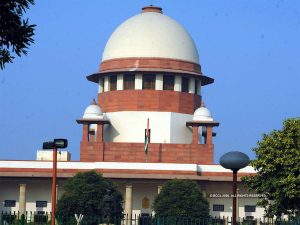
The Chief Justice of India (CJI) issued a formal clarification following public outrage over sharp oral observations made during a Supreme Court hearing. The controversy intensified on social media, where satirical movements such as the mock “Cockroach Janta Party” emerged after the CJI used terms like “cockroaches” and “parasites” to criticize unmeritorious litigation and the alleged infiltration of professions by individuals holding fake degrees.
- The Restatement of Values of Judicial Life (1997): Adopted by the Supreme Court Full Court in 1997, Item 8 of Restatement of Values of Judicial Life (1997) mandates that a judge should not enter into public debates or express views in public on political matters or issues pending judicial determination.
- Bangalore Principles of Judicial Conduct (2002): Endorsed by the United Nations, as a complement to the 1985 United Nations Basic Principles on the Independence of the Judiciary, it constitutes the foundational international framework on judicial ethics and conduct.
- It emphasizes that a judge’s behavior must constantly reaffirm public faith in the judiciary’s impartiality.
- The Vijayabhaskar Standard (2021): The Supreme Court formally codified the boundary between bench speech and judicial decree in Chief Election Commissioner vs. M.R. Vijayabhaskar. Adjudicating on harsh oral remarks made by the Madras High Court during the Covid-19 pandemic, the Court established a dual doctrinal standard:
- The Epistemic Utility of Bench Speech: Acknowledged the necessity of judicial questioning to foster a “spontaneity of thought” and provide clarity during hearings.
- The Primacy of the Written Record: Established unequivocally that “the formal opinion of a judicial institution is reflected through its judgments and orders, not its oral observations during the hearing.”
- A.M. Mathur v. Pramod Kumar Gupta (1990): The Supreme Court held that “Judicial restraint and discipline are as necessary to the orderly administration of justice as they are to the effectiveness of the army.”
- The Court warned that judges must not use the bench as a pulpit to express personal grievances, “spasmodic sentiment,” or unregulated anger.
- Modern Context: In Supriyo vs Union of India (2023), oral observations by the bench regarding non-absolute concepts of gender led the public to believe the court would read same-sex unions into the Special Marriage Act, 1954.
- However, the final written judgment went the opposite way, proving that oral testing does not equate to the final judicial stance.



