
Kishau Multipurpose Project:
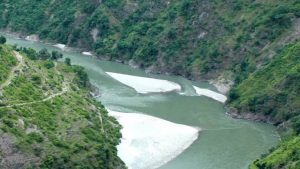
In a major push to resolve long-pending inter-state water disputes, six northern states Uttarakhand, Himachal Pradesh, Uttar Pradesh, Haryana, Rajasthan, and Delhi signed a historic Memorandum of Understanding (MoU) to pave the way for the Kishau Multipurpose Project.
- A MoU was signed in 1994, between the Yamuna basin states (undivided Uttar Pradesh, Haryana, Rajasthan, Himachal Pradesh, and Delhi) regarding the allocation of the river’s surface water.
- Because the Upper Yamuna (from its source at the Yamunotri glacier to the Okhla barrage in Delhi) lacked major storage facilities, the 1994 agreement mandated the creation of three major storage projects on the Yamuna and its tributaries:
- Lakhwar Project: On the Yamuna River (Uttarakhand).
- Renukaji Project: On the Giri River (Himachal Pradesh).
- Kishau Project: On the Tons River (Himachal Pradesh/Uttarakhand border).
Kishau Multipurpose Project: The Kishau Multipurpose Project entails the construction of a 232.6-metre-high concrete gravity dam on the Tons river (a major tributary of the Yamuna) situated along the Uttarakhand-Himachal Pradesh border.
- Designated as a National Project, the Centre funds 90% of the water component, with the remaining 10% shared among the basin states under the 1994 Yamuna framework.
- However, the dispute centered on the power component, where Himachal Pradesh refused to bear its estimated Rs 2,000-crore liability, arguing that it was unfair to impose this fiscal burden on the state when it was already shouldering the displacement and ecological costs while downstream states received most of the water and irrigation benefits.
- A consensus was reached through “cooperative federalism.” To relieve Himachal Pradesh’s financial constraints, the beneficiary downstream states agreed to cover its power-component liability.
- According to the agreement, Delhi (biggest beneficiary of the project) and Rajasthan will bear this expense in a 75:25 ratio, as they are major beneficiaries of the water supply.
- The 422-MW project is designed to generate 1,476 million units of hydropower and will create vast irrigation potential covering 97,000 hectares of agricultural land.
- Delhi stands to be the biggest beneficiary, receiving 110 million cubic metres (MCM) of water, which will provide critical, long-term support for the city’s drinking water needs.
- Correcting historical allocation flaws, 25% of the project’s water is strictly dedicated to maintaining the environmental flow of the Yamuna river.
- This is a crucial step toward the government’s target of achieving a completely clean Yamuna by 2029, which is linked to the National Mission for Clean Ganga (NMCG).



