
Lower Arun Hydroelectric Project:
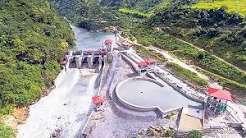
Prime Minister of India and the Prime Minister of Nepal recently laid the foundation stone of SJVN’s 669 MW Lower Arun hydroelectric project in Nepal, which is estimated to cost ₹5,792.36 crore.
- Lower Arun Hydroelectric Project is a 679 MW run-of-river project planned on the Arun River (a tributary of the Koshi River) in the Sankhuwasabha and Bhojpur districts of Eastern Nepal.
- The project will be built under the build, own, operate, and transfer (BOOT) model.
- The project is being developed by SJVN Lower Arun Power Development Company Pvt. (SLPDC), a wholly owned subsidiary of SJVN (formerly Satluj Jal Vidyut Nigam).
- SJVN Limited is a Navratna Central Public Sector Enterprise under the Ministry of Power, Government of India.
- A key feature of the Lower Arun project is its integration with SJVN’s 900 MW Arun-3 Hydroelectric Project, located upstream on the same river.
- Both projects will operate under a tandem operation system, under which water discharged from Arun-3 will be used to generate electricity at Lower Arun.
- The arrangement is designed to optimise the use of available water resources and enable additional renewable energy generation without the construction of a separate storage reservoir.
- Under the Project Development Agreement, 21 percent of the electricity generated will be provided free of cost to the Government of Nepal.
Arun-3 Hydropower Project:
- It is a 900 MW run-of-the-river hydropower project being developed on the Arun River in Sankhuwasabha District in Nepal.
- It will include the construction of a 70 m-tall and 466 m-long concrete gravity dam.
- Once completed, it will be the biggest hydroelectric facility in Nepal. It will produce 4,018.87 million units of electricity a year.
- SJVN Arun-III Power Development Company (SAPDC), a wholly owned subsidiary of India’s SJVN, is developing the project on a build-own-operate-transfer (BOOT) basis.
- SAPDC will operate the facility for a period of 25 years, excluding the construction period of five years, before transferring the ownership to the Nepal
- The project will provide surplus power to India, strengthening economic linkages with Nepal.
- The power from the project shall be exported from Dhalkebar in Nepal to Muzaffarpur in India.