
UAE’s Exit from OPEC and OPEC+:
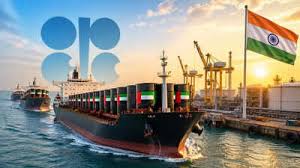
The United Arab Emirates (UAE) announced its withdrawal from the Organization of the Petroleum Exporting Countries (OPEC) and the broader OPEC+ alliance, effective 1st May 2026.
- This landmark decision marks a major shift in global energy geopolitics, threatening to weaken the historic oil cartel’s bargaining power.
- OPEC is a permanent intergovernmental organization created at the Baghdad Conference in 1960 by Iran, Iraq, Kuwait, Saudi Arabia, and Venezuela.
- Mandate to coordinate and unify the petroleum policies of its Member Countries and ensure the stabilization of oil markets.
- The UAE (through Abu Dhabi) has been a highly influential member since joining in 1967, later representing the entire federation.
- Following the UAE’s exit, OPEC is left with 11 active members: Algeria, Congo, Equatorial Guinea, Gabon, Iran, Iraq, Kuwait, Libya, Nigeria, Saudi Arabia, and Venezuela.
- OPEC+: Formed in 2016, as an alliance between OPEC and 10 other oil producers to address declining oil prices due to US shale oil growth.
- OPEC+ includes the OPEC members plus Azerbaijan, Bahrain, Brunei, Kazakhstan, Malaysia, Mexico, Oman, Russia, South Sudan, and Sudan.
- OPEC+ produced roughly 40% of the world’s crude oil and accounts for about 60% of internationally traded petroleum.
- The UAE decided to exit OPEC primarily due to restrictive production quotas that limited its ability to utilize its expanded oil capacity, even as it aims to reach 5 million barrels per day by 2027.
- At the same time, the UAE is pursuing an energy transition strategy that focuses on maximizing oil revenues in the short term before global demand shifts toward renewables.
- OPEC’s consensus-based decision-making, including the presence of Iran, further constrained the UAE’s ability to respond independently to evolving geopolitical and market conditions.
- In 2025, the UAE was the fourth-largest oil producer in OPEC, contributing around 11% of total production.
Its oil production capacity is estimated at 4.2-4.5 million barrels per day. The exit is expected to weaken OPEC’s ability to control global oil supply and prices, as it reduces collective discipline within the cartel. - For India, this could bring economic relief through lower oil prices and reduced inflation, along with greater availability of oil supplies in the global market.



