
What are Surangams?
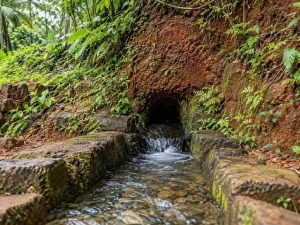
A comprehensive project to rejuvenate the district’s traditional underground water tunnels, known as “Surangams”, is set to be implemented in eight Gram Panchayats in Kasaragod District of Kerala.
- Surangams, also known as tunnel wells, are a remarkable indigenous water management system unique to the Kasaragod District of Kerala and parts of Dakshina Kannada in Karnataka.
- They are also known by different names, such as Surangas, Thurangams, or Thorappu.
- While its origins remain unclear, historians draw parallels to the Qanat system of Persia, introduced to India via the ancient Silk Route.
- These are basically horizontal tunnels dug through a laterite hillock through which water seeps out and into the tunnel.
- Water is then collected at the end of the tunnel in a storage pit.
- Built without pumps or electric motors, surangams rely entirely on natural water percolation.
- They channel underground water to the surface using gravity, ensuring a steady and sustainable supply for households and agriculture.
- Surangams are dug in places where the hydrogeological profile consists of lateritic and weathered rocks.