
Today’s Current Affairs: 12th jun 2026 for UPSC IAS exams, State PSC exams, SSC CGL, State SSC, RRB, Railways, Banking Exam & IBPS, etc
Table of Contents
RISA: Timeless Tribal
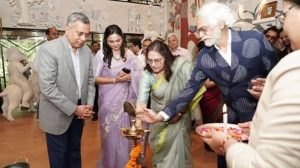
The Ministry of Tribal Affairs, through the Tribal Cooperative Marketing Development Federation of India (TRIFED), recently unveiled a dedicated premium signature brand, ‘’RISA – Timeless Tribal’’.
- RISA: Timeless Tribal is a dedicated premium brand for tribal textiles, embroideries, and handicrafts.
- It was launched by the Ministry of Tribal Affairs, through the Tribal Cooperative Marketing Development Federation of India (TRIFED).
- The RISA initiative has been conceptualized:
- to create a distinct brand identity for tribal products
- strengthen market linkages for tribal artisans
- facilitate design development and product diversification, and
- promote tribal heritage in premium domestic and international markets.
- It seeks to generate enhanced livelihood opportunities for tribal artisans while ensuring the preservation of traditional crafts and indigenous knowledge.
- As part of the first phase of implementation, seven tribal textile and embroidery traditions have been identified based on their cultural significance and market potential.
- These include Eri Silk and Muga Silk of Assam, Santal Cotton of Jharkhand, Changpa Pashmina of Ladakh, Kotpad Cotton and Dongria Embroidery of Odisha, and Toda Embroidery of Tamil Nadu.
- The first phase also includes focused promotion of selected tribal handicrafts, namely Longpi Pottery of Manipur, Turtuk Brass Cutlery of Ladakh, and Dokhra Art of Chhattisgarh.
- To facilitate design interventions and product development, eminent fashion designers have been associated with the initiative.
- The initiative is being implemented through the National Design Centre (NDC), an autonomous organisation under the Ministry of Textiles.
- The project encompasses design development, creation of garment prototypes, capacity building of tribal weavers and artisans, establishment of stitching facilities, strengthening of weaving and handicraft clusters, and improvement of product presentation and packaging.
- The National Institute of Design (NID), Haryana, has been engaged for the development of premium and environmentally sustainable packaging solutions for products marketed under the RISA brand.
- First exclusive RISA Store: Gallery No 2, Rajiv Gandhi Handicrafts Bhawan, Connaught Place, New Delhi.
International Labour Conference:

The Union Minister of State for Labour and Employment Shobha Karandlaje led the Indian delegation at the 114th International Labour Conference (ILC) in Geneva, Switzerland.
- International Labour Conference is the supreme deliberative and decision making body of the International Labour Organization.
- The Conference meets annually, bringing together tripartite delegations from the Organization’s 187 Member States and a number of observers.
- Tripartite Delegation: Each national delegation has a minimal composition of two Government one Employers’ and one Worker delegates (2–1–1).
- The Government, Employers’ and Workers’ delegates participate and vote independently.
- Role of the International Labour Conference:
- Crafting and adoption of international labour standards (Conventions and Recommendations);
- Supervision of the application of standards through its Committee on the Application of Standards;
- Approval of the biennial programme and budget of the Organization and the allocation of expenses among Member States;
- Election of the members of the Governing Body;
- Admission of new Member States which are not members of the United Nations;
- Discussion on the reports of the Director-General and the Chairperson of the Governing Body;
- Adoption of resolutions that provide guidelines for the ILO’s general policy and future activities.
C-295 Aircraft:

The Indian Air Force (IAF) said that the first made-in-India C-295 military transport aircraft successfully completed its maiden flight.
- C-295 Aircraft is a new-generation medium tactical military transport aircraft.
- It is a reliable and highly versatile tactical transport that is tailored for missions that range from carrying troops and cargo, maritime patrol, airborne warning, surveillance and reconnaissance to signals intelligence, armed close air support, medical evacuation, Air-to-Air refueling.
- The aircraft, with a flight endurance of up to 11 hours, can function under all weather conditions.
- It is capable of carrying up to nine tonnes of payload.
- The C295 is designed to provide outstanding low-level flight characteristics for tactical missions, flying at speeds as slow as 110 knots.
- It is powered by two turboprop engines.
- It has short take-off and landing (STOL) characteristics and the ability to use unprepared airstrips.
Epichlorohydrin:
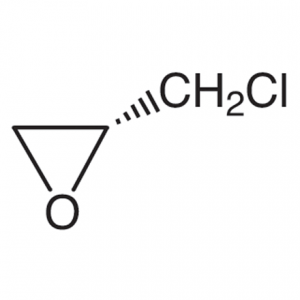
The Bureau of Indian Standards (BIS) has implemented strict standards for tea bags, prohibiting harmful chemicals like epichlorohydrin.
- Epichlorohydrin is an epoxide in which one of the methyl hydrogens is substituted by chlorine.
- It is a volatile and flammable, clear, colorless, liquid, chlorinated cyclic ether with an irritating, chloroform-like odor.
- It emits toxic fumes of hydrochloric acid and other chlorinated compounds when heated to decomposition.
- It is soluble in water.
- It is used mainly for the manufacture of glycerol and unmodified epoxy resins.
- It is used in the manufacture of elastomers, water treatment resins, surfactants, ion exchange resins, plasticizers, dyestuffs, pharmaceutical products, oil emulsifiers, lubricants and adhesives
- Exposure to epichlorohydrin irritates the eyes, skin and respiratory tract, and can cause chemical pneumonitis, pulmonary edema, and renal lesions.
Bureau of Indian Standards:
- It is the national standard body of India established under the Bureau of Indian Standards Act 2016.
- It was established for the harmonious development of the activities of standardization, marking, and quality certification of goods and for matters connected therewith or incidental thereto.
- It is the successor of the Indian Standards Institution (ISI), which was created in 1947.
- BIS represents India in International Organization for Standardization (ISO) and International Electrotechnical Commission (IEC).
- Nodal Ministry: It is functioning under the administrative control of the Ministry of Consumer Affairs, Food and Public Distribution.
- Headquarter: It is headquartered in New Delhi and maintains regional and branch offices throughout the country.
Pseudocapritermes novus:
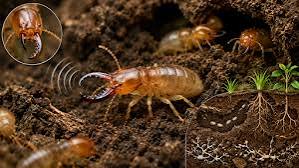
Researchers recently discovered a new species of soil-dwelling termite named Pseudocapritermes novus within the lush forests of West Bengal.
- Pseudocapritermes novus is a new species of soil-dwelling termite.
- It was discovered during an exploration of the Chapramari Wildlife Sanctuary, West Bengal.
- It is different from the usual termites that are destructive in nature.
- These soil-feeding termites play a crucial role in enriching the earth by feeding on soil and humus, making them vital indicators of an ecosystem’s soil health and fertility.
- This discovery brings the total number of Pseudocapritermes species found in India to five.
- The new termite stands out from its closest relatives in the unique shapes of its mouthparts and body armour.
- Like others in its group, this insect belongs to a special club of termites known for their asymmetrical, snapping jaws, which they use to defend themselves or raise an alarm by producing a loud clicking sound.
- However, compared to its closest known cousin, P. bhutanensis, the newly discovered species boasts a strongly bent left jaw with a slightly incurved tip, a more rounded swollen section below its beak, and a longer, wider postmentum (the lower part of its mouth).
American Foulbrood (AFB):
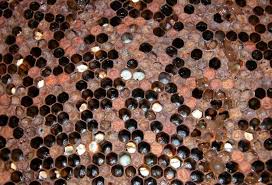
Beekeepers have been warned to increase the biosecurity of their hives after an outbreak of American Foulbrood disease (AFB) was recently confirmed in Scotland.
- It is a fatal infectious disease of honey bee larvae, caused by a spore-forming bacterium called Paenibacillus larvae.
- While it only attacks larvae, AFB weakens the colony and can quickly lead to its death in only three weeks.
- Paenibacillus larvae produce spores when subjected to stress such as lack of nutrients.
- It’s these spores that actually cause and are the source of the disease.
- Spores enter the larva through feeding of contaminated food.
- The bacteria kill the bee larva by completely consuming the body tissues.
- The spores are highly resistant to extremes of temperature, chemical attack, and other adverse conditions and can remain viable for over 50 years
- Once hardship has passed, for example, when nutrients become available again, the bacterium will germinate and reproduce.
- The cycle will repeat if hardship occurs again. This means that it is difficult to eliminate the spores from colonies.
- Although AFB is not highly contagious, bacterial spores can easily be spread between hives and apiaries through beekeeping practices such as the exchange of equipment and movement of infected combs.
- Though adult bees are not affected by AFB, they can spread spores within and between infected and clean hives through robbing and drifting.
- Treatment: The disease is not able to be cured, meaning that destruction of infected colonies and hives or irradiation of infected material is the only way to manage AFB.
Dark Patterns : Data

Indian consumers are losing an estimated ₹25,000 crore to ₹28,000 crore annually due to deceptive interface designs, commonly known as dark patterns, across online marketplaces, according to a recent report.
- Dark patterns, also known as deceptive patterns, are deliberate design tactics that trick online users into making choices that aren’t always in their best interest.
- They are designed to mislead users to do something they originally did not intend or want to do.
- At their core, dark patterns exploit cognitive biases. They leverage the way our brains process information to nudge us toward specific decisions, often against our best interests.
- Dark patterns take many forms, and different sources may categorize them in various ways.
- Each is designed to manipulate users into making choices that benefit the company rather than the user.
- These deceptive design tactics can pop up across websites, forms, emails, and apps.
- The Central Consumer Protection Authority notified the Guidelines for Prevention and Regulation of Dark Patterns in 2023 and specified 13 dark patterns, namely:
- False urgency, Basket Sneaking, Confirm shaming, forced action, Subscription trap, Interface Interference, Bait and switch, Drip Pricing, Disguised Advertisements and Nagging, Trick Wording, Saas Billing and Rogue Malwares. For example, drip pricing is when extra costs appear after the user has started the purchase process.
- False urgency: Dark patterns sometimes invent deadlines or stock shortages, sometimes known as scarcity cues, to exploit a fear of missing out, pressuring users into quick decisions without taking the time to think through the purchase.
- Basket Sneaking: This is when extra products or services are added to a user’s shopping cart without their explicit consent.
- Subscription Trap: This dark pattern is the common case of making it substantially harder to cancel a subscription than it was to start the subscription in the first place.
Gharials : Hatchlings Released
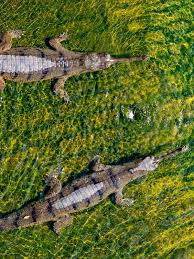
31 Gharials (Gavialis gangeticus) hatchlings have been released in the Bagaha area along the Gandak River in Bihar.
- Gharials is a freshwater crocodile belonging to the Crocodylia Order and Crocodylidae Family.
- The name ‘gharial’ comes from the Hindi word ghara, meaning pot or vessel, referring to the bulbous snout tip of adult males, which resembles an inverted pot.
- Gharials inhabit deep, clear, freshwater rivers with sandy banks, primarily within Himalayan river systems.
- It is mainly found in the rivers of Bangladesh, Bhutan, India, Myanmar, Nepal, and Pakistan.
- Their major population occurs in three tributaries of the Ganga River: the Chambal (Hosts the largest wild population) and Girwa Rivers in India and the Rapti-Naryani River in Nepal.
- The Gharial reserves of India are located in three States: Uttar Pradesh, Madhya Pradesh, and Rajasthan.
- Predominantly piscivorous, gharials play a key role in regulating fish diversity and maintaining riverine ecological balance.
- It is one of the largest crocodilian.
- They have thick skin covered with smooth epidermal scales that do not overlap.
- The snout of the gharial is uniquely the thinnest and most elongated among all the crocodilians.
- In addition, the adult males sport a large bulb at the tip of their snout, called the ‘ghara’.
- It is also the most aquatic of all crocodilians, for it never moves far from the water. Individuals typically only leave the water to bask and nest on sandbanks.
- They mate during November–January and lay eggs March–May.
- Conservation Status:
- IUCN Red List: Critically endangered
- CITES: Appendix I
- Wildlife Protection Act 1972: Schedule I.
Eechathalakenda incognita:
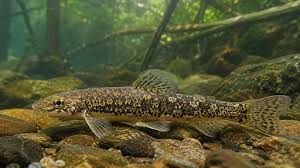
A team of scientists recently discovered a new fish species named Eechathalakenda incognita from Western Ghats of Kerala.
- Eechathalakenda incognita is a new species of fish belonging to the cyprinid subfamily Torinae.
- It was discovered from various streams inside the Periyar Tiger Reserve, Kerala.
- The genus Eechathalakenda was originally established in 1999 for a solitary, enigmatic fish species first described in 1941 from the Pamba River in Kerala.
- This newly described species had been confused with Eechathalakenda ophicephala for the last 70 years.
- However, it is visually and genetically distinct from Eechathalakenda ophicephala.
- While ophicephala sports rhomboid-shaped scales, the new species features circular scales near its upper body, alongside a unique dark lateral stripe, a different count of fin rays, and a substantial 4.9%-5.3% genetic variation.
- Their geographic distributions are exceptionally narrow; E. ophicephala is strictly confined to Pamba river headwaters, while E. incognita is isolated to specific fast-flowing, rocky streams inside the Periyar Tiger Reserve.
- incognita is the ninth point-endemic fish species (restricted to a single location in the world) to be identified within the Periyar Tiger Reserve.
Tezpur Litchi:
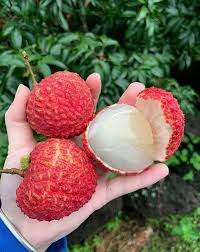
The Agricultural and Processed Food Products Export Development Authority (APEDA) facilitated the first export consignment of GI-tagged Tezpur Litchi (Litchi chinensis) from Assam to Dubai.
- Tezpur Litchi is one of Assam’s most celebrated horticultural products.
- It is renowned for its exceptional sweetness, bright-red appearance, distinctive aroma and superior eating quality.
- The region cultivates several notable varieties, including Bombaya, Bilati, Elaichi, Piyaji and Sahi.
- It has received the geographical indication (GI) tag in 2013.
- Litchi is a tropical fruit belongs to Sapindaceae family.
- It thrives best under moist sub-tropical climate.
- It usually prefers low elevation and can be grown up to an altitude of 800 m.
- Deep, well drained loamy soil, rich in organic matter and having pH in the range of 5.0 to 7.0 is ideal for the crop.
- The temperature should not go beyond 40.5 degree Celsius in summer and below freezing point in winter.
- Prolonged rain may be harmful especially at the time of flowering, when it interferes with pollination.
- The young trees require protection against frost and hot winds for several years till they are firmly established.
- It is sensitive to frost during winter and dry heat in summer.
- India is the second largest producer of litchi in the World after China. Other major producing countries are Thailand, Australia, South Africa, Madagascar and Florida in the US.
- It is widely cultivated in India, especially in Bihar, West Bengal, Uttar Pradesh, Jharkhand, and Assam.
National SC-ST Hub Scheme:
The Ministry of Micro, Small & Medium Enterprises is promoting inclusive entrepreneurship through the National SC-ST Hub Scheme.
- National SC-ST Hub Scheme was launched in 2016.
- It is one of the flagship schemes of the Ministry of Micro, Small & Medium Enterprises.
- It is aimed at capacity enhancement of Schedule Caste – Schedule Tribe entrepreneurs and promoting “entrepreneurship culture” amongst the SC-ST population.
- It is implemented by the National Small Industries Corporation Ltd. (NSIC).
- The NSSH scheme supports purchase of plant & machinery/equipment; capacity building & training, market linkage, facilitation for participation in exhibitions, credit, Udyam registration and GeM onboarding.
- Functions of the scheme:
- To encourage SC/ST owned units to be part of 4% of total procurement being made by Central/State Governments, CPSEs and other government agencies
- To prepare strategy for intervention through industry associations to sensitize, encourage and enable the SC/ST owned units for participation in Public Procurement Process
- Facilitating SC/ST Entrepreneurs to be part of vendor development programs and mentoring support by specific CPSE matching the products/services of such entrepreneurs
- Capacity building of existing and prospective SC/ST entrepreneurs through skill development programs
- Sharing of SC/ST MSEs data with CPSEs to enhance the procurement from SC/ST
- These initiatives are fostering inclusive economic growth, promoting self-reliance and strengthening the MSME ecosystem by creating greater opportunities across India.
11th Governing Council Meeting of NITI Aayog:
The Prime Minister chaired the 11th Governing Council Meeting of NITI Aayog, emphasizing that India continues to progress steadily despite global uncertainty and instability.
- In a landmark moment for cooperative federalism, the 11th Governing Council Meeting of NITI Aayog witnessed participation from all 28 States and 5 Union Territories, with Chief Ministers from every State attending together for the first time since the Council’s inception.
- The theme of the 11th NITI Aayog Governing Council Meeting, “Inclusive Human Development for Viksit Bharat @2047,” focused on inclusive development through cooperative federalism, harnessing the demographic dividend, promoting women-led development, and expanding global economic integration through Free Trade Agreements (FTAs).
- Specific Initiatives:
- Women’s Empowerment: Called for increasing the number of Lakhpati Didis from 3 crore to 6 crore and ensuring a secure environment for women (Nari Shakti).
- Export & Manufacturing: Urged States to develop export strategies around the One District One Product (ODOP) initiative and to formulate policies to capitalize on India’s emerging defence manufacturing sector.
- Technology: Emphasized branding and infrastructure development for data centers and Artificial Intelligence (AI), urging States to view AI as an economic opportunity and skill their populations accordingly.
- Agriculture & Environment: Addressed concerns regarding El Niño, appealing for strict water conservation and the promotion of natural/organic farming.
- Suggested identifying 100 specific “aspirational districts” in the agricultural sector to drive phenomenal, targeted improvements.
- District-Level GDP Estimates: Prime Minister called states to generate district-level GDP metrics to accurately identify and address economic challenges at the grassroots level.
- Rapid Grievance Redressal: States were urged to fast-track the resolution of investor grievances to actively draw in foreign direct investment (FDI) from partner nations.
IMI-Resistant Mustard Through Mutation Breeding:
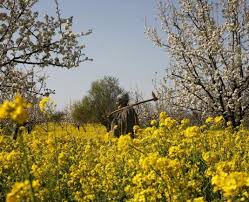
India is set to begin large-scale cultivation of Imidazolinone-resistant (IMI-resistant) mustard hybrids during the 2026-27 rabi season to combat the parasitic weed Orobanche, aiming to boost domestic oilseed production and reduce India’s heavy reliance on edible oil imports.
- Mustard is India’s most crucial rabi oilseed crop, especially in arid northern regions.
- However, its productivity is severely suppressed by Orobanche (also known as Phelipanche), a destructive root-parasitic weed that attaches to the plant and drains it of vital water and nutrients.
- Enhancing mustard yields is a strategic necessity to address India’s massive edible oil deficit.
- In 2024-25, India imported roughly 16 million tonnes of edible oils, costing the exchequer around Rs 1.6 lakh crore.
- Non-GM Technological Breakthrough: The new IMI-resistant mustard was developed using mutation breeding, a conventional technique that preserves natural mutations, making it distinct from Genetically Modified (GM) crops.
- The ALS Enzyme Mechanism: Normal mustard plants are killed by IMI herbicides because the chemical inhibits Acetolactate Synthase (ALS), an enzyme essential for plant growth.
- In the new hybrids, a natural DNA mutation alters the ALS enzyme, making the crop resistant to IMI herbicides.
- This resistance allows herbicides to kill the underground Orobanche parasite without harming the mustard crop.
Mutation Breeding and Genetic Modification:
- Mutation Breeding (Mutagenesis): This is a conventional breeding technique where seeds or plant tissues are exposed to physical mutagens (such as X-rays or gamma rays) or chemical mutagens (such as Ethyl Methanesulfonate (EMS)).
- This exposure accelerates the natural rate of genetic mutations, after which scientists select plants exhibiting desirable traits.
- Genetically Modified Organisms: This involves the direct, targeted manipulation of an organism’s genome using biotechnology.
- Scientists isolate a specific gene responsible for a desired trait from one organism (which could be a completely different species, like a bacterium) and insert it into the DNA of the target plant using vectors like Agrobacterium or tools like a “gene gun.”
The Pink Saheli Cards:

Reports indicate that many transgender persons in Delhi are facing difficulties in obtaining ‘Pink Saheli’ smart cards, despite being officially included as beneficiaries under the free bus travel scheme.
- The Pink Saheli Cards is a smart-card-based free bus travel scheme launched by the Delhi Government in March 2025 for women and transgender persons travelling on Delhi Transport Corporation (DTC) and cluster buses.
- Aim is To ensure affordable and accessible public transport for women and transgender persons, enhancing their mobility and participation in economic and social activities.
- To provide a transparent, digital, and beneficiary-linked system for delivering transport subsidies while promoting gender inclusivity.
- Key Features:
- Free Bus Travel Benefit: Eligible women and transgender persons can travel free of cost on Delhi government-operated buses using the smart card.
- Smart Card-Based Digital System: The scheme replaces paper-based pink tickets with a reusable digital card linked to passenger identity records.
- Inclusive Eligibility Framework: Official guidelines recognize both women and transgender persons as beneficiaries under the scheme.
- Aadhaar-Based Verification: Card issuance and validation are linked to identity verification, enabling streamlined beneficiary management and monitoring.
Foreign Currency Non-Resident (Bank):
The Reserve Bank of India (RBI) introduced a special dispensation allowing commercial banks to mobilize fresh three- to five-year Foreign Currency Non-Resident (Bank), or FCNR(B).FCNR(B) deposits are specialized, fixed-term foreign currency bank accounts opened in India by Non-Resident Indians (NRIs), Overseas Citizens of India (OCIs), and Persons of Indian Origin (PIOs).Unlike standard NRI accounts that automatically convert foreign currency into Indian Rupees, FCNR(B) deposits allow overseas Indians to fully retain their savings in global currencies.The aim of the FCNR(B) scheme is to provide Indian banks with a stable, large-scale source of low-cost overseas funding to shore up the country’s capital account.For depositors, it provides an investment route to earn tax-free returns in India without taking on the risk of local currency depreciation.
The Disqualification of Rajya Sabha Candidature:
The Rajya Sabha nomination of senior Congress leader Meenakshi Natarajan from Madhya Pradesh was officially rejected by the Returning Officer during candidate scrutiny.Disqualification of a Rajya Sabha candidature refers to the statutory rejection of a person’s nomination papers or the termination of an active member’s seat in the Upper House of Parliament. It occurs when an individual fails to meet the basic constitutional eligibility criteria or triggers specific legal penalties designed to preserve the integrity of India’s legislative bodies.The Constitution of India (Article 102): Outlines the primary grounds for disqualifying a member from either House of Parliament, such as holding an Office of Profit, being declared of unsound mind by a competent court, or being an undischarged insolvent.The Representation of the People Act, 1951 (RPA): Provides detailed statutory rules for disqualification under Chapter III, detailing offenses, convictions, and administrative errors that bar a citizen from contesting or holding office. The Conduct of Elections Rules, 1961 (Form 26): Mandates that every candidate submit a comprehensive affidavit covering criminal antecedents, assets, liabilities, educational qualifications, and income tax filing status.
The Sitapur 250 MW Solar-BESS Project:
Union Raksha Mantri has approved the development of a first-of-its-kind 250 MW Solar Power Project with an integrated Battery Energy Storage System (BESS) at Sitapur, Uttar Pradesh.The Sitapur Solar-BESS Project is a highly advanced, utility-scale renewable energy facility spreading across roughly 850 acres ofvacant defense land at the former Sitapur Cantonment.Implemented by state-run energy major NTPC Limited through a competitive bidding process, it acts as a smart microgrid that integrates macro solar generation with high-capacity battery reserves.Solar panels generate DC electricity, which is converted by a bidirectional PCS into AC power for immediate use or routed to batteries for storage.Excess solar power is stored in lithium-ion or sodium-ion battery banks, enabling energy availability even when sunlight is unavailable.The EMS and BMS continuously monitor battery health, temperature, and charge levels to ensure safe and efficient operation.Time-Shifting Distribution (Peak Shaving):During night or cloudy conditions, stored energy is released back into the grid, ensuring uninterrupted and stable power supply.



