
Today’s Current Affairs: 12th May 2026 for UPSC IAS exams, State PSC exams, SSC CGL, State SSC, RRB, Railways, Banking Exam & IBPS, etc
Table of Contents
2 New Semiconductor Units Approved in Gujarat Under ISM:
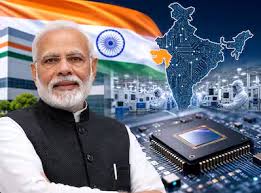
Under the India Semiconductor Mission (ISM) 1.0, the Union Cabinet approved two semiconductor projects in Gujarat, including India’s 1st commercial GaN-based Mini/Micro-LED display facility and a semiconductor packaging unit.
- With the approval of these two projects, the total number of semiconductor plants under the ISM 1.0 has increased to 12, with facilities being established across Gujarat, Assam, Andhra Pradesh, Uttar Pradesh, and Odisha.
- India Semiconductor Mission (ISM) 1.0 was launched in 2021 under the Ministry of Electronics and Information Technology (MeitY) to develop a robust semiconductor and display manufacturing ecosystem in India. With an outlay of Rs 76,000 crore, the mission supports semiconductor fabrication, display manufacturing, and chip design to strengthen India’s integration into global electronics value chains.
- India is expected to attain the capability to design and manufacture chips catering to nearly 70–75% of domestic applications by 2029 and emerge among the world’s leading semiconductor nations by 2035. Building on this progress, the government announced the next phase, India Semiconductor Mission (ISM) 2.0, in the Union Budget 2026–27.
- India Semiconductor Mission (ISM) 2.0:
- ISM 2.0 marks a shift from manufacturing-focused incentives towards a broader USD 11 billion strategy aimed at ecosystem localisation and indigenous chip design.
- It seeks to develop a full-stack semiconductor ecosystem by supporting ancillary sectors such as chemicals and capital goods.
- These facilities will meet rising semiconductor demand across consumer electronics, industrial, auto, telecom, aerospace, and power sectors.
- Projects utilizing indigenous technologies for assembly, testing, and packaging reflect India’s growing capabilities, reduced external dependence, and deeper integration into the global semiconductor value chain.
India’s Dual-Track Sports Policy for Pakistan:
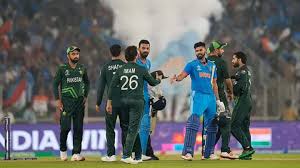
India has formally institutionalized a dual-track sports policy that maintains a strict freeze on bilateral engagements with Pakistan while ensuring full compliance with multilateral sporting commitments (ICC, IOC, etc.) hosted in India or abroad.
- By following the “practices of international sports bodies,” the policy prevents Indian athletes from being disadvantaged or disqualified due to geopolitical friction.
- The memo transitions the handling of Pakistan-origin athletes and officials from an unpredictable case-by-case basis to a structured, transparent regulatory framework.
- Supportive Visa Regime is to meet international norms, the government has simplified the visa process for athletes, technical personnel, and officials, including multi-entry visas for international federation representatives for up to 5 years.
Significance - This shift is critical for India’s bids to host the 2030 Commonwealth Games, 2036 Olympics (India has made an aggressive pitch to host it), and 2038 Asian Games, where inclusive participation is a prerequisite for host city selection.
- The policy paves the way for high-stakes encounters in the Cricket Champions Trophy in 2029, 50-over World Cup in 2031, and upcoming FIH Pro League and Hockey World Cup matches.
Andaman & Nicobar Islands Set Guinness World Records:
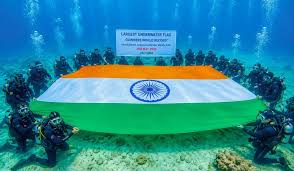
The Andaman and Nicobar Islands recently hosted two unique underwater world records at Swaraj Dweep (Havelock Island) to promote eco-tourism and establish the islands as a prime adventure destination.
- The events included the “Largest Flag Unfurled Underwater” near Radha Nagar Beach, where a 60m x 40m Indian flag was unfurled, and the “Tallest Human Stack Underwater” near the lighthouse area, where divers formed a 10-meter-high stack, both aiming to set new world records.
Andaman and Nicobar Islands - The Andaman and Nicobar Islands are a Union Territory of India comprising 836 islands, islets, and rocks located in the Bay of Bengal, with Port Blair as its capital.
- Swaraj Dweep, formerly known as Havelock Island, is part of the Ritchie’s Archipelago in the Andaman Islands.
- It was renamed in 2018 to honour India’s freedom struggle and national identity.
- The Ten Degree Channel, located near the 10° north latitude, separates the Andaman Islands from the Nicobar Islands.
- Great Nicobar Island is the largest island in the Nicobar group, covering about 910 sq km, while Indira Point on this island marks the southernmost point of India.
- The islands are home to five Particularly Vulnerable Tribal Groups (PVTGs): Great Andamanese, Jarwa, Onge, Shompen, and Sentinelese.
- The region is known for its rich biodiversity, including tropical rainforests, mangroves, coral reefs, and endemic flora and fauna species, and is also important for tourism activities such as eco-tourism and scuba diving.
- The islands hold major strategic significance due to their proximity to the Strait of Malacca, one of the world’s busiest maritime trade routes, and host India’s only integrated tri-service command.
Prasoon Joshi Appointed Prasar Bharati Chairman:
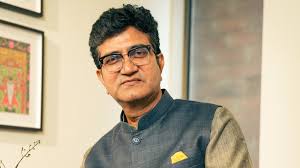
The Government of India appointed noted lyricist and writer Prasoon Joshi as Chairman of Prasar Bharati, marking a key leadership change in public broadcasting.
- Prasar Bharati is a statutory autonomous public service broadcaster established under the Prasar Bharati Act, 1990, and became operational in 1997.
- It functions under the Ministry of Information and Broadcasting.
- Prasar Bharati comprises Akashvani (All India Radio), one of the world’s largest radio networks, and Doordarshan, India’s national television broadcaster.
- It functions as India’s national public broadcasting organisation with the mandate of providing information, education, and entertainment services.
- Prasar Bharati has also launched Waves OTT platform for strengthening free-to-air OTT services in the spirit of public broad casting.
Renewable Energy Capacity:

India has emerged as the world’s 3rd largest country in installed renewable energy capacity, reflecting rapid growth in solar and wind power generation.
- A recent Morgan Stanley report highlighted that India’s renewable energy transition is accelerating, though dependence on imported upstream solar components remains a challenge.
- India has emerged as the third-largest country globally in terms of installed renewable energy capacity, driven mainly by rapid growth in solar and wind energy infrastructure.
Key Features:
- Renewable Capacity Growth: India’s non-fossil fuel energy capacity crossed 262.7 GW, accounting for over 50% of total installed power capacity.
- Solar Manufacturing Expansion: Domestic solar module manufacturing capacity increased from 38 GW (2024) to 74 GW (2025), while solar cell capacity rose from 9 GW to 25 GW.
- Dependence on Imports: Despite progress, India still imports a large share of upstream components like wafers and polysilicon, with 60–80% sourced from China.
- Energy Transition Focus: Solar and wind energy constitute the majority of new renewable energy additions in India.
Significance:
- Energy Security: Expanding renewable capacity reduces dependence on imported fossil fuels and enhances strategic energy resilience.
- Climate Commitments: Supports India’s Net Zero targets and commitments under the Paris Climate Agreement by accelerating clean energy adoption.
Jan Suraksha Schemes:
The three flagship Jan Suraksha Schemes—Pradhan Mantri Jeevan Jyoti Bima Yojana (PMJJBY), Pradhan Mantri Suraksha Bima Yojana (PMSBY), and Atal Pension Yojana (APY)—completed 11 years of providing affordable social security.
- The Jan Suraksha Schemes were launched by Prime Minister of India on May 9, 2015, to create a universal social security system for all Indians.
- Aimed primarily at the unorganized sector and vulnerable populations, these schemes provide low-cost life insurance, accidental insurance, and old-age pension support through a seamless, digitized framework.
- Jan Suraksha Schemes:
Pradhan Mantri Jeevan Jyoti Bima Yojana (PMJJBY):
- A one-year life insurance cover of Rs. 2 lakh for death due to any reason.
- Eligibility: Individual bank/post office account holders in the age group of 18 to 50 years.
- Premium: Highly affordable at Rs. 436 per annum (less than Rs. 2 per day) via auto-debit.
Pradhan Mantri Suraksha Bima Yojana (PMSBY):
- An accidental insurance scheme providing Rs. 2 lakh for accidental death/total disability and Rs. 1 lakh for partial disability.
- Eligibility: Available to account holders in the age group of 18 to 70 years.
- Premium: Extremely low at Rs. 20 per annum (less than Rs. 2 per month).
Atal Pension Yojana (APY):
- Nature: A guaranteed pension scheme for the unorganized sector, providing a monthly pension of Rs. 1,000 to Rs. 5,000 after age 60.
- Eligibility: Open to bank account holders aged 18 to 40 years who are not income tax payers.
- Benefits: The pension is guaranteed for the subscriber, then the spouse, after which the entire corpus is returned to the nominee.
Baksa Honey:

The Agricultural and Processed Food Products Export Development Authority (APEDA) facilitated the first-ever export of 20 Metric Tons of ODOP honey from Assam’s Aspirational District, Baksa, to the USA.
- Baksa Honey is a premium, near-organic honey variety produced in the Baksa district of Assam (part of the Bodoland Territorial Region). It has been identified as the signature product of the district under the One District One Product (ODOP) initiative due to its traditional significance and export potential.
Key Features:
- Natural Purity: Sourced from eco-friendly, pesticide-free environments, it is known for its high quality and near-organic characteristics.
- Floral Diversity: The honey reflects the rich biodiversity of the region, collected from diverse forest and agricultural flora.
- Nutritional Value: It is highly regarded for its rich nutritional profile and medicinal properties, rooted in centuries of traditional use by communities like the Bodo tribes.
- Global Quality Standards: The honey is processed in facilities equipped with APEDA-supported testing laboratories to ensure it meets stringent international food safety requirements.
- This export initiative is expected to deliver nearly 43% higher price realization for local beekeepers compared to local farm-gate prices.
- It strengthens the rural economy in an Aspirational District by providing sustainable income opportunities for indigenous beekeeping communities.
- Highlights the North Eastern Region’s potential as a hub for high-value, niche agricultural exports.
One District One Product (ODOP):
- The One District One Product (ODOP) initiative is a transformative program aimed at identifying, branding, and promoting a unique product from each district across India.
- It seeks to turn every district into an export hub by focusing on its traditional or specialized strengths.
- The primary goal is to strengthen local economies by enhancing the value addition of district-specific products, generating local employment, and connecting small-scale producers directly to national and global markets.
169th anniversary of the Revolt of 1857,:
India marked the 169th anniversary of the Revolt of 1857, which officially broke out in Meerut on this day in 1857.The occasion serves to remember the legacy of the First War of Independence and the foundational sacrifice of Sepoy Mangal Pandey.The Revolt of 1857, often called the Sepoy Mutiny by British historians and the First War of Indian Independence by Indian nationalists, was a major, armed uprising against the rule of the British East India Company. It began as a mutiny of sepoys in the Company’s army but soon expanded into a broad-based popular rebellion involving peasants, artisans, and dispossessed royalty.The treacherous takeover of Awadh on grounds of misgovernance deeply hurt the sentiments of the sepoys, as nearly 75,000 soldiers in the British army hailed from this region.The immediate spark was the introduction of the Enfield rifle. Its cartridges were rumored to be greased with beef and pork fat, offending both Hindu and Muslim religious sentiments.The confiscation of land from taluqdars and high revenue demands under the land settlement of 1856 turned the peasantry against the British. On March 29, 1857, Mangal Pandey of the 34th Bengal Native Infantry fired at his European officers in Barrackpore. His execution on April 8, 1857, became a rallying cry for soldiers across North India.
European Central Bank (ECB):
The Reserve Bank of India (RBI) and the European Central Bank (ECB) signed a Memorandum of Understanding (MoU) to enhance cooperation in central banking.
- European Central Bank (ECB) is the prime monetary authority of the European Union and the central component of the Eurosystem and the European System of Central Banks (ESCB).
- It is one of the world’s most influential central banks, overseeing a combined balance sheet of approximately €7 trillion.
- Founded in: 1st June 1998, by the under the Maastricht Treaty framework.
- The euro was launched on 1 January 1999.
- Gained the status of an official EU institution on December 1, 2009, via the Treaty of Lisbon.
- Headquarters: Frankfurt, Germany.
- Aim:
- The primary objective of the ECB is to guarantee and maintain price stability within the Eurozone. It manages the Euro—the single currency of the EU—and works to keep consumer price inflation low and stable to support economic growth and job creation.
- The ECB governs the Eurozone, which has expanded from its original 11 members to 21 countries as of 2026.
- Croatia joined in January 2023, and Bulgaria became the latest member in January 2026.
- Its capital stock (€11 billion) is owned by the central banks of all 27 EU member states as shareholders, with shares determined by each nation’s population and GDP.
Baiga tribe:
Thirteen children from the Baiga tribe were recently rescued from a major human trafficking and bonded labor network in Chhattisgarh’s Kabirdham district.The Baiga are an ethnic group of central India and are recognized as one of the Particularly Vulnerable Tribal Groups (PVTGs) by the Government of India.The name Baiga translates to sorcerer or medicine man, reflecting their traditional role as healers and spiritual guides. They are categorized as a Scheduled Tribe in states like Madhya Pradesh and Uttar Pradesh.They are found mostly in Madhya Pradesh (specifically the Baiga-chuk region in Mandla and Balaghat districts). Smaller populations reside in Chhattisgarh, Uttar Pradesh, and Jharkhand.It is believed their ancestors spoke an Austroasiatic language, though modern Baigas primarily speak Baigani (an Indo-Aryan language influenced by Chhattisgarhi and Gondi) and Hindi.
D’Ering Memorial Wildlife Sanctuary:
For the first time in nearly two decades, a tiger has been captured by camera traps in Arunachal Pradesh’s D’Ering Memorial Wildlife Sanctuary.The D’Ering Memorial Wildlife Sanctuary is a unique protected area spanning 190 sq. km. It is renowned for its riverine island ecosystem, characterized by vast alluvial grasslands that provide a critical habitat for a variety of rare, threatened, and endangered species.State: Arunachal Pradesh, India (East Siang district).Located near Pasighat, the district headquarters. It is accessible via the Anchalghat and Borguli ranges.The sanctuary was established in 1978.It is named after Daying Ering, a former Union Minister and influential chairman of the Ering Commission, which played a pivotal role in shaping India’s Panchayati Raj system.The sanctuary is defined by approximately 100 km of river courses, functioning essentially as a series of riverine islands.
Habitat Composition: It is one of a kind in the state, with 75–80% of the area consisting of alluvial grasslands. The remaining area comprises riverine forests mixed with bamboo and secondary woodland.The altitude is relatively low, ranging from 135 m to 140 m above Mean Sea Level (MSL), gradually decreasing from north to south.



