
Today’s Current Affairs: 13th jul 2026 for UPSC IAS exams, State PSC exams, SSC CGL, State SSC, RRB, Railways, Banking Exam & IBPS, etc
Table of Contents
Lymphatic Filariasis: In News
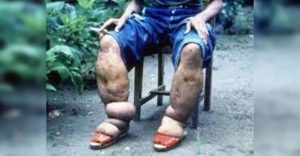
The West Bengal Health Department recently started a Mass Drug Administration (MDA) drive against filariasis (commonly known as elephantiasis) and aims to eliminate the disease in the State by 2030.
- Lymphatic filariasis (LF), commonly known as elephantiasis, is a parasitic infection and a neglected tropical disease.
- It can cause severe swelling in the legs and other parts of the body.
- It is caused by infection with parasites classified as nematodes (roundworms) of the family Filariodidea. T
- There are 3 types of these thread-like filarial worms:
- Wuchereria bancrofti, which is responsible for 90% of the cases.
- Brugia malayi, which causes most of the remainder of the cases.
- Brugia timori, which also causes the disease.
- It is a vector-borne disease transmitted by the female Culex mosquito.
- Adult worms nest in the lymphatic vessels and disrupt the normal function of the lymphatic system, where they produce millions of microfilariae (immature larvae) that circulate in the blood.
- In general, a person won’t get filariasis from a single mosquito bite.
- It usually takes repeated mosquito bites over several months (or even years) for a person to get the condition.
- Treatment:
- Elimination of lymphatic filariasis is possible by stopping the spread of the infection through preventive chemotherapy.
- The WHO-recommended preventive chemotherapy strategy for lymphatic filariasis elimination is mass drug administration (MDA).
- MDA involves administering an annual dose of medicines to the entire at-risk population.
Parrot bornavirus 4 (PaBV-4):
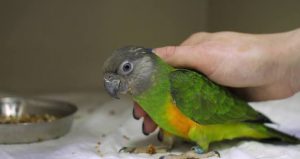
A team of scientists has, for the first time in India, identified and genetically characterised Parrot bornavirus 4 (PaBV-4) that often causes rapid death in captive psittacine birds.
- Parrot bornavirus 4 (PaBV-4) is an enveloped single-strand RNA virus that infects parrots and other psittacine birds (such as macaws, cockatoos, parakeets, and conures).
- It belongs to the genus Orthobornavirus in the family Bornaviridae.
- PaBV-4 is one of several parrot bornavirus species and is among the most commonly detected in captive parrots worldwide.
- PaBV causes proventricular dilatation disease (PDD), a largely fatal condition affecting birds’ digestive and nervous systems.
- The virus is believed to spread mainly through contact with infected birds or their droppings and feather dust, although the exact routes of transmission are not yet fully understood.
- Infected birds may carry and shed the virus without showing clinical signs, facilitating its spread.
- Treatment and Prevention:
- There is currently no specific antiviral treatment or vaccine for PaBV-4.
- Management focuses on supportive care, reducing inflammation, and maintaining nutrition.
- Prevention relies on strict biosecurity, quarantine of new birds, routine health screening, and minimizing contact between infected and healthy birds.
Phu Quoc Island:

At least 15 Indian tourists were killed after a boat carrying visitors capsized off Vietnam’s southern island of Phu Quoc recently.
- Phu Quoc, also known as Pearl Island, is a Vietnamese island located in the Gulf of Thailand.
- It is famous for its stretches of white sand beaches.
- A large part of the island is protected under Phú Quốc National Park, which is recognized as a UNESCO Biosphere Reserve.
- The highest point on the island is located on Mount Chua.
- Tropical Phu Quoc has just two seasons – six months of dry, sunny weather between November and April and six rainy months between May and October.
- The island’s cultural identity remains deeply rooted in its maritime heritage, with traditional fishing villages like Ham Ninh maintaining age-old customs.
- It is also famous for producing fish sauce (nước mắm) and black pepper, both of which are important local products.
Sheathia meghalayensis:
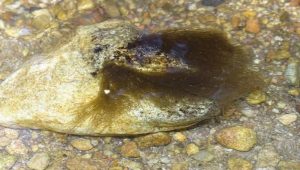
Researchers recently discovered a new species of freshwater red algae named Sheathia meghalayensis.
- Sheathia meghalayensis is a new species of freshwater red algae.
- It was discovered near Crinoline Waterfalls in East Khasi Hills, Meghalaya.
- Freshwater red algae are highly sensitive organisms that act as critical bioindicators of pristine, undisturbed aquatic ecosystems.
- Such algae thrive only in clean, oxygen-rich freshwater, making them important indicators of healthy river ecosystems.
- They are also known to produce bioactive compounds with antiviral, antioxidant, anti-inflammatory, and anti-tumour properties.
- Members of this group are also valued for compounds used in pharmaceuticals, nutrition, and biotechnology.
- Previously, only two species of Sheathia (Sheathia indonepalensis and Sheathia assamica) had been discovered from the Northeast, both in Assam.
- The researchers have proposed that Sheathia meghalayensis be classified as Critically Endangered.
Khawthlangtuipui River:
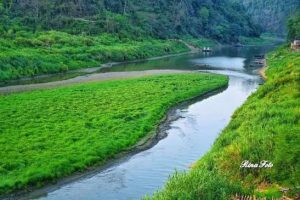
More than 80 families have been evacuated to safer locations after the Khawthlangtuipui river overflowed in Mizoram’s Lunglei district bordering Bangladesh following incessant rainfall over the past week.
- The Khawthlangtuipui, also known as the Karnaphuli, is a transboundary river flowing through India and Bangladesh.
- It originates in the Lushai Hills of Mizoram, India.
- It extends through the Chittagong Hill Tracts of southeastern Bangladesh before discharging into the Bay of Bengal near the port city of Chittagong.
- Principal tributaries include the Kawrpui River or Thega River, Tuichawng River, and Phairuang River.
- It serves as an important source of irrigation, inland navigation, fisheries, and hydroelectric power for the region.
- The river is home to the Kaptai Dam, Bangladesh’s largest hydroelectric power project, which forms the Kaptai Lake, the country’s largest artificial lake.
Trachynotothrips vyaghravahini:
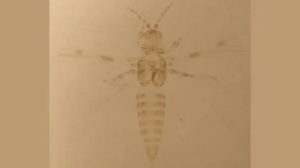
Researchers recently discovered a new species of insect named Trachynotothrips vyaghravahini in the biodiversity-rich Western Ghats of Karnataka.
- Trachynotothrips vyaghravahini is a new species of insect belonging to the group known as thrips.
- It was discovered inside the bright flowers of a tropical plant in the biodiversity-rich Western Ghats of Karnataka.
- It was named vyaghravahini, which is derived from the ancient Sanskrit words ‘vyaghra’ (meaning tiger) and ‘vahini’ (meaning flowing river).
- This name is a direct nod to the specific location where the insect was found, Pilikula, which historically was known as a river where wild tigers frequently came to drink water.
- Unlike similar species, the newly discovered species has a uniformly pale midsection without any brown stripes and entirely pale hind legs.
- Furthermore, it lacks the distinct spine-like hairs on the sides of its abdomen and features a different arrangement of microscopic bristles on its lower body compared to its insect cousins.
- Thrips are minute, slender-bodied insects less than 1/16 inch to about 3/16 inch in length.
- Adults that range in color from yellow to black and have four long, narrow, fringed wings.
- The young nymphs are smaller, wingless, and range in color from yellow to white.
- Many thrips are plant feeders attacking flowers, leaves, fruit, twigs, or buds.
- Thrips are rarely seen because of their small size.
- The insects feed by puncturing the surface of the plant parts with their single large mandible and slurping the plant juices that seep from the wound.
- Flowers or leaves may develop silvery streaks. Heavily infested leaves appear brownish or silvery, and growing points may become contorted.
- Some species of thrips leave sooty spots of black fecal matter on the leaves.
- Thrips also vector plant diseases.
- A few species are beneficial predators of mites and small insects including other thrips, and some feed on fungal spores.
Chandraprabha Wildlife Sanctuary:

Researchers recently discovered a new disease-causing fungal genus named Hyalokamalomyces during a research on another plant disease at the Chandraprabha Wildlife Sanctuary in Chandauli.
- Chandraprabha Wildlife Sanctuary is located in the Chandauli district of Uttar Pradesh.
- It lies on the Naugarh and Vijaigarh hillocks on the north slope of the Kaimur Range.
- It is named after the Chandraprabha River, meaning ‘The Luminescence of Moon’.
- The river is a tributary of the Karamnasha River, and both flow through the forest to finally meet the Ganges.
- In the early 18th century, this area became a hunting ground for the rulers of Varanasi, but eventually, in 1957, the sanctuary was established here.
- Asiatic lions were introduced at Chandra Prabha in 1958.
- The exercise was successful in the beginning, with the number of lions increasing from three to eleven by 1969. However, the following year the lions were found missing.
- The predominant geological formations consist of limestone and sandstone, exhibiting a high thermal mass that moderates temperature fluctuations within the habitat.
- The sanctuary’s vegetation is predominantly deciduous forest, interspersed with grasslands, which supports a diverse range of species.
- Tendu, Blue Berries, Mahua, Goose-berry, Palash, Sal, Neem, Semal, and many other varieties of plantation are found in abundance.
- Unique and rare medicinal plants used in the formulation of Ayurvedic medicines like Musli, Chitawar, Ashwagandha, Chirata, Sarpgandha, etc. are also found.
- Wild animals that dot this sanctuary include Leopard, Sloth bear, Chinkara/Cheetal, Hyena, Fox, Jackal, etc.
- Many colourful and different species of birds, like Peacock, Red Jungle Fowl, Quail, Partridge, Eagle, Vulture, Wild Mynah, Parakeet, Cuckoo, Barn Owl and the Bulbul are natural inhabitants of this sanctuary.
Global Liveability Index 2026:

Global Liveability Index 2026 was released and Delhi at 120 among 173 cities.
- Global Liveability Index is published by the Economist Intelligence Unit (EIU).
- Its purpose is to evaluate how suitable cities are for living by measuring everyday living conditions rather than economic size or tourist popularity.
- It assesses 173 cities across the world across 30 indicators.
- It is grouped into five categories namely
- Stability (25%)
- Healthcare (20%)
- Culture & Environment (25%)
- Education (10%)
- Infrastructure (20%)
- Score: It uses a 1–100 scale.
Key Highlights of Global Liveability Index:
- The report finds that although the global average liveability score remained unchanged at 1 out of 100.
- Among the five categories, healthcare registered the strongest year-on-year improvement, increasing by an average of 0.74 points.
- Global Top Cities: Copenhagen (Denmark) remains the world’s most liveable city, edging out Vienna (Austria) and Melbourne (Australia).
- India: New Delhi ranked 120, followed by Mumbai (121), Chennai (123), and Bengaluru (127).
One-Horned Rhinoceros:
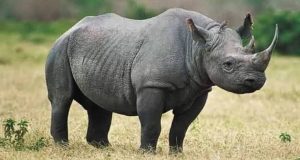
The central government approved a landmark conservation initiative to create a DNA-based indexing system for the greater one-horned rhinoceros.
- One-Horned Rhinoceros greater one-horned rhino, also known as Indian rhinoceros, is the largest of the three Asian rhinos.
- It is found in semi-aquatic and often take up residence in swamps, forests, riversides, and anywhere that is near nutritious mineral licks.
- It can be found in India and Nepal, particularly in the foothills of the Himalayas.
- In the past, Greater one-horned rhinos roamed freely in the floodplains and forests alongside the Brahmaputra, Ganges, and Indus River valley.
- Kaziranga National Park in Assam, India, contains the largest population.
- It is identified by a single black horn and a grey-brown hide with skin folds, which gives it an armor-plated appearance.
- The species is solitary, except for females with small calves. Males maintain loosely defended territories.
- Indian rhinos are herbivores (graminivores, folivores, frugivores, lignivores). They eat grass, leaves, fruit, branches, aquatic plants, as well as cultivated crops.
- Threats: Hunting is largely responsible for the Indian rhino decline.
- Conservation Status:
- IUCN: Vulnerable
Manas Tiger Reserve:
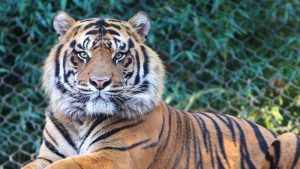
It was observed that, over 30 years, 14 invasive plant species have been a major factor behind losing more than 43% of its grassland cover of Manas Tiger Reserve.
- Manas Tiger Reserve is located in the state of Assam.
- Borders:
- To the north, it is separated from the Royal Manas National Park of Bhutan by the River Manas and its tributaries- Beki and Hakua;
- To the west, it is separated from the Buxa Tiger Reserve of West Bengal by the River Sankosh.
- It has a unique distinction of being a Natural World Heritage Site, an Elephant Reserve, a Biosphere Reserve and an Important Bird Area.
- It consists of scrub forests, semi-evergreen and mixed deciduous forests, interspersed with grasslands and riparian vegetation (in core area).
- Flora: Sal (Shorea robusta), alluvial savannah woodlands, Riparian fringing forest and Khair-Sisoo forests.
- Fauna: It serves as a crucial habitat for several rare and endangered species, including the tiger, greater one-horned rhino, swamp deer, pygmy hog, and Bengal florican.
Cyanobacteria : New Study
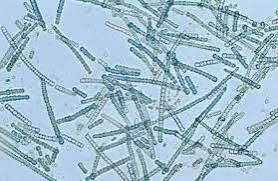
Researchers found that cyanobacteria can be used to absorb lead from contaminated water.
- Cyanobacteria are also called blue-green algae, microscopic organisms found naturally in all types of water.
- They have the distinction of being the oldest known fossils, more than 3.5 billion years old.
- These single-celled organisms live in fresh, brackish (combined salt and fresh water), and marine water.
- Characteristics of cyanobacteria:
- Autotrophs: All cyanobacteria are autotrophs, meaning they produce their own energy by photosynthesizing sunlight. Cyanobacteria are a very old group of organisms.
- Reproduction in Cyanobacteria: Cyanobacteria also reproduce asexually and the commonest mode of reproduction in them is transverse binary fission.
- Some are solitary others are colonial and few cyanobacteria produce toxins.
- Cyanobacteria blooms can form in warm, slow-moving waters that are rich in nutrients from sources such as fertilizer runoff or septic tank overflows.
- In warm, nutrient-rich environments, microscopic cyanobacteria can grow quickly, creating blooms that spread across the water’s surface and may become visible.
Financial Intelligence Unit–India:

The Financial Intelligence Unit–India (FIU-IND) has earned another significant international recognition with its case regarding a large-scale cyber fraud, securing the Runner-up position at the prestigious Best Egmont Case Award (BECA) 2026.
- Financial Intelligence Unit–India was set by the Government of India in 2004.
- It is the central national agency responsible for receiving, processing, analyzing and disseminating information relating to suspect financial transactions.
- FIU-IND is an independent body reporting directly to the Economic Intelligence Council (EIC) headed by the Finance Minister.
- Function of Financial Intelligence Unit-India:
- It acts as the central reception point for receiving Cash Transaction reports (CTRs), Non-Profit Organisation Transaction Report (NTRs), Cross Border Wire Transfer Reports (CBWTRs), Reports on Purchase or Sale of Immovable Property (IPRs) and Suspicious Transaction Reports (STRs) from various reporting entities.
- Analyze received information in order to uncover patterns of transactions suggesting suspicion of money laundering and related crimes.
- It shares information with national intelligence/law enforcement agencies, national regulatory authorities and foreign Financial Intelligence Units.
- It establishes and maintains a national database on the basis of reports received from reporting entities.
- It coordinates and strengthens collection and sharing of financial intelligence through an effective national, regional and global network to combat money laundering and related crimes.
- Monitor and identify strategic key areas on money laundering trends, typologies and developme
Samriddh Gram:

The Department of Telecommunications’ (DoT) Samriddh Gram has won the World Summit on the Information Society (WSIS) Prizes 2026 under Action Line C6 – Enabling Environment.
- Samriddh Gram is a flagship rural digital transformation initiative of the Department of Telecommunications built on the BharatNet network.
- It is envisaged as a pioneering phygital (physical + digital) Services model integrating on-ground presence with robust digital infrastructure to empower rural citizens.
- It is aimed at transforming rural India through a seamless integration of physical and digital services.
- At the heart of the initiative are Samriddhi Kendras, established as one-stop village-level hubs delivering integrated phygital services by combining reliable telecom connectivity, digital platforms and assisted physical service delivery.
- The Samriddhi Kendras will deliver a comprehensive suite of services
- Education & Skilling: Smart classrooms, AR/VR-based learning, and digital skilling aligned with government schemes/initiatives.
- Agriculture: IoT-based soil testing, drone support, and smart irrigation systems.
- Healthcare: Teleconsultations, Health ATMs, and emergency care.
- e-Governance: Assisted access to citizen services, documentation, and grievance redressal.
- E-Commerce: Integration with ONDC and digital marketplaces for local entrepreneurship.
- Financial Inclusion: Digital banking and payments
- Connectivity Backbone: Strengthened BharatNet FTTH with a Village Area Network and public Wi-Fi hotspots.
Flue Cured Virginia (FCV) Tobacco:
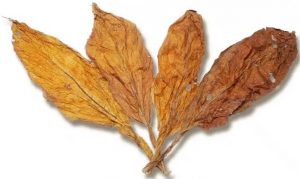
A team of senior officers from the Ministry of Commerce & Industry recently reviewed the ongoing Andhra Pradesh Flue Cured Virginia (FCV) Tobacco Marketing Season 2025–26 in Hyderabad.
- Flue-cured Virginia tobacco, which is also known as Virginia Tobacco or Bright Leaf, is a bright, golden-leaf tobacco variety cured using controlled heat from flues — a process that preserves natural sugars and produces a mild, clean-burning leaf.
- It is one of the most widely traded tobacco types in international commerce.
- Curing is a process by which the harvested tobacco leaf is made ready for the market.
- To create smoking tobacco, the tobacco leaves need to be cured, or dried out.
- The wet, green tobacco leaves of a tobacco plant initially contain too much moisture to catch fire.
- They also have higher chlorophyll content. By releasing a certain amount of chlorophyll from the leaves during the drying out process, the natural tannins come out giving the smoked tobacco its flavor and scent.
- Curing is a well standardized process to achieve the desirable qualities in the cured leaf along with the removal of moisture.
- There are three types of tobacco curing methods traditionally used: Air-Cured, Fire-Cured, and Flue-Cured.
- Each of the different curing methods results in a tobacco product that is distinguishable by both its nicotine content and its aroma.
Key characteristics of Flue Cured Tobacco:
- Produces primarily cigarette tobacco
- Contains a high sugar content
- Contains medium to high levels of nicotine
- Rich in natural tannins which creates its distinct mild and slightly sweet flavor and aroma.
- In India Flue Cured Virginia (FCV) Tobacco is mainly produced in India in 2 states, Andhra Pradesh and Karnataka.
AN/FPS-115 Pave Paws:
Taiwan’s AN/FPS-115 Pave Paws radar system played a crucial role in tracking China’s recent ballistic missile launch from the South China Sea.It is an ultrahigh-frequency (UHF; 420–450 MHz) phased-array system for detecting submarine-launched ballistic missiles.It was developed by US defence contractor Raytheon.Besides tracking ballistic missiles, it can monitor aircraft, cruise missiles, and maritime activity.It can detect targets with a radar cross section of 10 square metres at a range of 3,000 nautical miles (approximately 5,600 km).The array antenna contains 1,792 active elements within a diameter of 72.5 feet (22 metres).Each active element is a module with its own solid-state transmitter, receiver, duplexer, and phase shifter.Two antennas make up a system, with each capable of covering a sector 120 degrees in azimuth. Vertical coverage is from 3 to 85 degrees.The unique aspect of this radar system is the phased array antenna technology.This system differs from a mechanical radar, which must be physically aimed at an object in space to track or observe it.The phased array antenna is a fixed position and is part of the exterior building wall.Phased array antenna aiming, or beam steering, is done rapidly by electronically controlling the timing, or phase, of the incoming and outgoing signals.Thus, it continuously scans large areas without mechanical rotation, enabling rapid detection and tracking of multiple targets



