
Today’s Current Affairs: 15th jul 2026 for UPSC IAS exams, State PSC exams, SSC CGL, State SSC, RRB, Railways, Banking Exam & IBPS, etc
Table of Contents
Maori:

Addressing the Indian community in Auckland, the Prime Minister of India recently invoked the Maori concept of ‘waka’ to describe India-New Zealand ties.
- The Maori Tribe is an indigenous tribe, which has inhabited New Zealand for centuries.
- New Zealand consists of two islands, the North Island and the South Island.
- The South Island is larger and more mountainous than the North Island.
- The vast majority (86%) of present-day Maori live on the North Island.
- They first arrived on the islands in the early 13th century.
- Today Māori make up about a sixth of New Zealand’s population.
- Culturally, they are Polynesians, most closely related to eastern Polynesians.
- Maori culture has endured centuries of torture and struggle, first in the hands of the ‘Crown’, and later others who wished to claim a spot on their land.
- Maori is classified as part of the Polynesian group of the Eastern Oceanic Branch of the Austronesian languages.
- Approximately one-third of the Maori still speak their ancestral language, with the vast majority fluent in English as well.
- The Māori language is an official language of New Zealand.
- At the center of Māori tradition is the marae—a sacred, communal meeting ground.
- The marae usually consists of buildings and an open space.
- It is used within the community for important meetings, communal meals, arts and crafts, and cultural shows.
- A famous aspect of Maori culture is the Haka, a powerful war dance known for its intensity, facial expressions, and rhythm.
- Their distinctive costumes serve as a visual expression of their heritage, reflecting their deep connection to the land and ancestral spirits.
- Another very prominent identity of the Maori people is their tattoos, which can be seen on their faces.
- These tattoos are called ‘ta moko’ which is a traditional Maori art form, deeply symbolic and respected.
- Ta moko designs are unique to each person and are a depiction of their social status, their genealogy, what they have done for society, and more.
- In recent decades, there has been a resurgence of Māori culture and activism, particularly following the civil rights movements in the 1960s and the establishment of the Treaty of Waitangi Act in 1975, which allowed for claims regarding historical grievances.
Waka:
- Waka means a canoe or vessel.
- However, in Maori culture, the meaning of waka goes far beyond that of a boat. It symbolises a shared journey, unity, and cooperation.
New Species of Jumping Spiders:
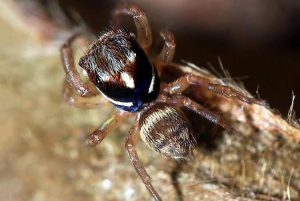
Three new species of rare jumping spiders, genus Onomastus, have been discovered by a team of researchers from India and Sri Lanka.
- All three species of jumping spiders belong to the genus Onomastus.
- The new species are:
- Onomastus brahmagiri: It was discovered in the Brahmagiri Hills of the Western Ghats in India.
- Onomastus silentvalley: It was discovered in the shola forests of Silent Valley National Park, Kerala.
- Onomastus wijesinghei: It was discovered in the montane forests of Sri Lanka.
- Onomastus belongs to one of the oldest lineages of jumping spiders and is restricted to the Oriental region.
- The newly described species are known only from isolated montane forests and are believed to have limited dispersal ability.
- The findings support the “sky island” concept, in which isolated montane habitats act as natural islands, promoting long-term geographic isolation, speciation, and high levels of endemism.
Australian Grass Owl:
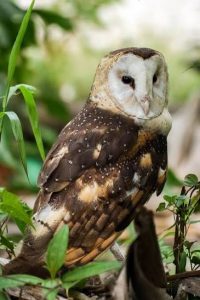
A rare sighting of an Australian Grass Owl at Maguri Motapung Beel in Assam’s Tinsukia district has excited birdwatchers and wildlife enthusiasts recently.
- Australian grass owl, also known as the Eastern grass owl, is an elusive species of owl in the family Tytonidae.
- Scientific Name: Tyto longimembris
- It lives in eastern, southern and southeast Asia, parts of New Guinea, Australia (mainly in Queensland) and the western Pacific.
- It has also been found in the coastal islands.
- It prefers grassland habitat, including savanna, floodplains and agricultural fields.
- One of the most remarkable aspects of this species is its preference for roosting and nesting on the ground, a behavior uncommon among owls.
- The owl constructs its nest amidst tall grass, meticulously hidden from view.
- Conservation Status:
- IUCN Red List: Least Concern
Maguri Motapung Beel:
- It is a large freshwater wetland located near the Motapung village of Assam’s Tinsukia district.
- It is located in the south bank of the Dibru River, which is a channel of the mighty Brahmaputra
- The Beel is connected to the Dibru River by a system of channels and is very rich in aquatic life.
- The wetland was declared an Important Bird and Biodiversity Area (IBA) in 1996.
- The lake supports many species of birds and a large human population, most of which depend on fishing for a livelihood.
- It is a major stopover for wintering migratory birds. It hosts species like the Greater Adjutant Stork, Spot-billed Pelican, and various migratory waterfowls during winter months.
Eärendil-1:
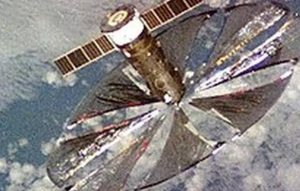
The U.S. Federal Communications Commission (FCC) authorised a company named Reflect Orbital to launch and operate a test satellite Eärendil-1 designed to deploy a large mirror in orbit around the earth.
- Eärendil-1 is the first satellite planned by US startup Reflect Orbital.
- Its purpose is to reflect sunlight towards specific spots on the earth at nighttime.
- It is a single satellite in a non-geostationary orbit fit with a “deployable, highly specular thin-film reflector”.
- The reflector will be motorised and can be steered to different orientations.
- It is intended to use this technology to extend the usable hours for solar panels and provide light during “critical operations” like emergency or humanitarian missions.
- The satellite will operate at a LEO altitude between 600 kilometers and 650 kilometers.
- It makes clean, abundant energy available on demand and that its technology can help alleviate energy concerns, aid with disaster responses, fulfill industrial needs and boost agriculture.
Dudhwa Tiger Reserve: In News
According to the fourth rhino census the rhino population in the Dudhwa Tiger Reserve (DTR) has increased to 53.
- Dudhwa Tiger Reserve is located on the Indo-Nepal border in the district of Lakhimpur-Kheri in Uttar Pradesh.
- It includes the Dudhwa National Park and two nearby sanctuaries, viz. Kishanpur and Katerniaghat.
- It is a typical Tarai-Bhabar habitat of the upper Gangetic plains biogeographic province.
- The Sharda River flows by the Kishanpur WL Sanctuary, the Geruwa River flows through the Katerniaghat WL Sanctuary, and the Suheli and Mohana streams flow in the Dudhwa National Park, all of which are tributaries of the mighty Ghagra River.
- The vegetation is of the North Indian Moist Deciduous type, containing some of the finest examples of Sal forests in India.
- It mainly consists of Sal Forest along with its associate tree species like Terminalia alata (Asna), Lagerstroemia parviflora (Asidha), Adina cordifolia (Haldu), etc.
- Tiger, leopard, Swamp deer, Rhinoceros, chital, hog deer, barking deer, Sambhar, wild boar, and Ratel.
- There are about 400 species of birds in the park, such as the Florican and black-necked storks.
Negotiated Dealing System-Order Matching:

Bloomberg has introduced the first electronic trade in Indian government bonds (IGBs) through its terminal by directly connecting to the Negotiated Dealing System-Order Matching (NDS-OM).
- Negotiated Dealing System-Order Matching was launched in 2005 by the Reserve Bank of India.
- It is a screen based electronic anonymous order matching system for secondary market trading in Government securities owned by RBI.
- Presently the membership of the system is open to entities like Banks, Primary Dealers, Insurance Companies, Mutual Funds etc.
- All central government securities, state government securities and treasury bills are tradable on the NDS-OM Web Module.
- Additionally, it allows members to negotiate bilaterally through “Request for Quote”
- The system is designed to bring transparency to secondary market transactions while enabling members to place bids and offers directly on the NDS-OM screen.
- There are two types of NDS-OM members, including:
- Direct Members: Direct members have current accounts with the RBI and can directly settle trades on NDS-OM.
- Indirect Members: Indirect members do not have current accounts with the RBI and must settle through NDS-OM members that have direct accounts.
- Most foreign institutional investors have indirect access, while resident entities may have direct access.
- Trade Settlement: Under this trades are settled at T+1 and guaranteed by Clearing Corporation of India Limited (CCIL).
- Benefits:
- Wider market access; level playing field for all.
- Immediate dissemination of market info
- Lower transaction cost.
Convention on International Trade in Endangered Species of Wild Fauna and Flora:
Wildlife experts from around the world are meeting in Geneva, Switzerland for the 34th meeting of the Animals Committee of the Convention on International Trade in Endangered Species of Wild Fauna and Flora (CITES).
- CITES was adopted in 1973 and entered into force in 1975.
- It is a global agreement between 185 Parties (184 countries and the European Union) that regulates international trade in wild animals and plants.
- It aims to ensure that international trade in wild animals and plants is legal, sustainable and traceable, and does not threaten the survival of the species in the wild.
- CITES regulates international trade in specimens of species of wild animals and plants based on a system of permits and certificates issued under certain conditions.
- It covers export, re-export, import and landing from the high seas of live and dead animals and plants and their parts and derivatives, including any processed products.
- Although CITES is legally binding on the Parties – in other words, they have to implement the Convention–it does not take the place of national laws.
- CITES Secretariat: Geneva, Switzerland (administered by the United Nations Environment Programme )
- Representatives of CITES nations meet every two to three years at a Conference of the Parties (or COP) to review progress and adjust the lists of protected species, which are grouped into three categories with different levels of protection:
- Appendix I:
- It includes species threatened with extinction and provides the greatest level of protection, including a prohibition on commercial trade.
- Appendix II:
- It includes species that are not currently threatened with extinction but may become so without trade controls.
- Regulated trade is allowed if the exporting country issues a permit based on findings that the specimens were legally acquired and the trade will not be detrimental to the survival of the species or its role in the ecosystem.
- Appendix III:
- It includes species for which a country has asked other CITES parties to help control international trade.
- Trade in Appendix III species is regulated using CITES export permits (issued by the country that listed the species in Appendix III) and certificates of origin (issued by all other countries).
- Countries may list species for which they have domestic regulations in Appendix III at any time.
Special Assistance to States for Capital Investment Scheme:

The Centre has approved all 28 major projects proposed by the Delhi government under the Special Assistance to States for Capital Investment (SASCI) scheme.
- Special Assistance to States for Capital Investment Scheme is an important scheme of the Central government under which states and Union Territories receive interest-free financial aid for infrastructure projects.
- It is managed by the Ministry of Finance.
- SASCI was launched in 2020-21 amid the financial stress caused by the Covid-19 pandemic.
- Salient features of SASCI Scheme:
- Under this, the Centre provides long-term, 50-year interest-free loans to states and union territories to boost capital spending.
- It also provides incentives tied to reforms and capital investment by states.
- It has an endeavor of developing end to end tourist experience, funding support to the shortlisted proposals, strengthening all points of the tourist value chain, harnessing quality expertise for design and development, sustainable operations and maintenance etc.
- Under this scheme projects have been identified based on the project proposals submitted by the concerned State Governments.
Ladakh to Extend Autonomous Hill Councils to All 7 Districts:
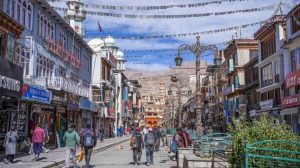
The Ladakh administration has announced the extension of the Ladakh Autonomous Hill Development Council (LAHDC) framework to all seven districts, alongside the creation of 17 new tehsils, to strengthen democratic decentralisation, grassroots governance and protection of Ladakh’s land, culture and identity.
- Ladakh earlier had only the Leh and Kargil districts. Following the creation of five new districts (Sham, Nubra, Changthang, Zanskar, and Drass) in April 2026, the administration has added 17 new tehsils (bringing the total to 32).
- The Ladakh Autonomous Hill Development Council Act, 1995, permits the establishment of an Autonomous Hill Development Council in every district, although necessary amendments and delimitation of constituencies will be required.
- Each of the seven districts will now possess its own elected Autonomous Hill Development Council (AHDC).
- Under the existing LAHDC framework, these councils exercise important executive, financial and administrative functions relating to district-level development, land use and allotment, infrastructure, health, education and tourism.
- However, the precise powers of the five new councils, including their role in recruitment and service matters, will depend on the amended legal framework, official notifications and delimitation process.
- To ensure seamless public service delivery in high-altitude zones, the administration has set up four new divisions under the Public Health Engineering (PHE) and Flood Control Department and five new divisions under the Public Works Department (PWD) and Pradhan Mantri Gram Sadak Yojana (PMGSY).
- Customised Article 371 Model: To address long-standing local demands for demographic and tribal safeguards (previously advocated through mass protests by activists like Sonam Wangchuk), the Ministry of Home Affairs (MHA) is considering a customised sui generis model under Article 371 of the Constitution, rather than direct inclusion under the Sixth Schedule.
- Constitutional Framework of Article 371: Contained within Part XXI of the Constitution (Articles 371 to 371J), these special provisions grant asymmetrical autonomy to specific states and regions to preserve their cultural identity, land rights, employment quotas, and indigenous administrative arrangements based on unique historical or geographical vulnerabilities.
India-New Zealand Strategic Partnership: Roadmap to 2030

The Prime Minister of India paid a historic official visit to New Zealand, the first by an Indian Prime Minister in four decades, during which both countries elevated bilateral ties to a Strategic Partnership and adopted the India-New Zealand Strategic Partnership: Roadmap to 2030.
- Furthermore, a special gala event themed “India-New Zealand: A Winning Partnership” was hosted by the Prime Minister of New Zealand to commemorate the deepening ties and shared democratic values.
- India and New Zealand elevated bilateral ties to a Strategic Partnership and adopted the Roadmap to 2030, expanding cooperation in trade, defence, maritime security, agriculture, technology, clean energy, disaster management, and the Indo-Pacific.
- The partnership aims to double bilateral trade to NZ$7 billion by 2030 and deepen strategic cooperation, but faces challenges from dairy-sector sensitivities, New Zealand’s economic dependence on China, connectivity gaps, labour mobility constraints, and transnational extremism concerns.
Key Features of the India-New Zealand Strategic Partnership: Roadmap to 2030
- Institutionalises regular high-level visits, Foreign Ministers’ Dialogue, parliamentary exchanges, and annual Secretary-level meetings to steer the Strategic Partnership.
- Expands military exchanges and naval exercises and implements new arrangements on Maritime Cooperation, Hydrography and Nautical Cartography, and Mutual Logistics Support.
- An annual Maritime Security Dialogue will also be established for regular cooperation, coordination, and information exchange.
- Establishes a Joint Working Group on Counter-Terrorism, strengthens cooperation on narcotics trafficking and law enforcement, and enhances cybersecurity cooperation through the India-New Zealand Cyber Dialogue.
- The Roadmap sets an aspirational target of doubling bilateral trade to NZ$7 billion (₹35,000 crore) by 2030 and facilitates trusted trade through the 2025 Authorised Economic Operators Mutual Recognition Arrangement (AEO-MRA) under the aegis of the 2024 Customs Cooperation Arrangement (CCA), alongside efforts towards the early implementation of the India-New Zealand Free Trade Agreement.
- Expands cooperation in horticulture, forestry, animal husbandry, and dairying.
During the visit, an Memorandum of Cooperation (MoC) on Animal Husbandry and Dairying was concluded and under the Agricultural Productivity Partnership, a Kiwifruit Action Plan and two Centres of Excellence in Nagaland and Uttarakhand will promote productivity through agricultural innovation, skills, and education. - The Tourism Cooperation Agreement signed during the visit aims to increase two-way tourist flows, while the updated Air Services Agreement seeks to encourage direct non-stop flights between India and New Zealand.
- The India-New Zealand Joint Action Plan on Sport will expand collaboration beyond cricket, particularly as India prepares to host the 2030 Commonwealth Games.
- The Cultural Cooperation Arrangement will promote exchanges in arts and heritage, while cooperation between the National Maritime Heritage Complex, Lothal, and the New Zealand Maritime Museum will strengthen collaboration in maritime history and heritage.
- The roadmap expands cooperation in education, climate, digital transformation, and emerging technologies.
- Agreements between National Centre for Polar and Ocean Research (NCPOR) and the University of Canterbury will strengthen Antarctic research, while cooperation between National Institute of Food Technology, Entrepreneurship and Management, Kundli (NIFTEM-K) & Massey University, New Zealand will promote research, academic exchanges, and student mobility.
- New Zealand joined the Global Biofuels Alliance, while an MoC between India’s National Disaster Management Authority (NDMA) and New Zealand’s NEMA was concluded to strengthen earthquake resilience, tsunami preparedness, coastal hazard mitigation, and disaster-response capacity.
- New Zealand prioritised the Maritime Security pillar of the Indo-Pacific Oceans Initiative (IPOI), with a focus on combating Illegal, Unreported and Unregulated (IUU) Fishing.
- Both countries reaffirm support for a rules-based Indo-Pacific, peaceful dispute resolution under UNCLOS, UN reform, and India’s permanent membership of a reformed UNSC.
- The Roadmap to 2030 creates no financial commitments or legally binding obligations and serves as the implementation framework for the Strategic Partnership.
China’s Helium Export Ban and Supply Chain Vulnerabilities:
China imposed a temporary and immediate ban on the export of Helium. This has raised concerns over the global supply chain of this critical resource, particularly for high-tech and medical industries.While China imports over 80% of its helium, this ban acts as a crisis-management measure to preserve existing stockpiles for its own domestic high-tech sectors, such as AI chip manufacturing and quantum computing.Helium (He) is a chemical element and the second lightest and second most abundant element in the observable universe (after hydrogen). It is the first in the Noble Gas group.It is colorless, odourless, tasteless, non-toxic, non-flammable, and chemically inert.It possesses the lowest boiling point of any element at -269°C (4.2 K), allowing it to remain in a liquid state at ultra-low temperatures.On Earth, it is a non-renewable resource, primarily generated through the natural radioactive decay of heavy elements (like uranium and thorium) deep within the Earth’s crust.
India Ranked 9th in Internet Blackout Preparedness:
India ranked 9th globally among the countries best prepared to withstand a major internet disruption, according to a study by the U.S.-based digital infrastructure provider TRG Datacenters.The United States topped the ranking with a vulnerability score of zero, followed by Indonesia and the United Kingdom. India ranked ninth among nearly 100 countries assessed for their ability to withstand a major digital breakdown. Its vulnerability score of 23.4 indicates relatively strong digital resilience, as a lower score represents better preparedness.India is connected to the global internet through 22 submarine cables, the lowest number among the top 10 ranked countries. In comparison, the United States has 115 cables, Indonesia has 72 and the United Kingdom has 65.India has 40 Internet Exchange Points, which allow domestic networks to exchange data directly. These improve internet speed, reduce costs and help maintain domestic connectivity when international routes are disrupted.



