
Today’s Current Affairs: 16th jun 2026 for UPSC IAS exams, State PSC exams, SSC CGL, State SSC, RRB, Railways, Banking Exam & IBPS, etc
Table of Contents
Greater Hog Badger:
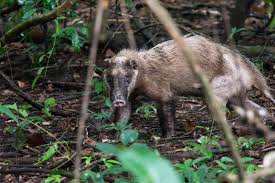
The Kaziranga National Park and Tiger Reserve has released the first scientific assessment report on the greater hog badger (Arctonyx collaris).
- Greater Hog Badger is a nocturnal small burrowing omnivore mammal.
- It is called ‘mati gahori’ in Assamese.
- Globally, there are three extant species of this mammal—the greater hog badger, the northern hog badger (Arctonyx albogularis), and the Sumatran hog badger (Arctonyx hoevenii). The first two are found in India.
- It possesses an elongated pig-like snout and modified teeth which point forward and are used for turning over the soil.
- Its body fur is dark grey to brownish.
- It is distributed across parts of South, Central, and Southeast Asia.
- Its range extends from Bangladesh and northeastern India eastwards through Myanmar, Thailand, Lao PDR and Vietnam.
- They live in tropical evergreen forests, savanna, grasslands and shrubland, hills, and mountains.
- It is a ground-dwelling very shy and leads a secretive solitary life.
- These are territorial creatures that mark their territories with their scents on the grass, rocks, and tree trunks.
- They are excellent burrowers and dig into the ground to create burrows for shelter and to find their food.
- Its diet includes worms, insects, small mammals but also fruits, tubers, and roots.
- It contributes to ecosystem function as a highly fossorial mammal (a term for animals adapted for digging, burrowing, or living primarily underground) through soil disturbance, nutrient redistribution, and leaf litter turnover during foraging.
- Such digging behaviour enhances soil aeration and may facilitate seed germination and micro-habitat formation for invertebrates and small vertebrates.
- Conservation Status
- IUCN: Vulnerable
- Wildlife Protection Act of 1972: Schedule I
Thamirabarani River:
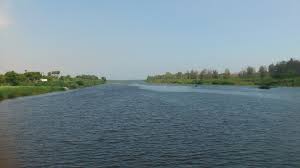
Researchers have expressed concern over the declining otter population in Tamil Nadu’s Thamirabarani River due to the increasing destruction of their natural habitat in recent years.
- The Thamirabarani River – also known as the Tamraparni River or Porunai River, a rare perennial river in southern India flowing entirely through the Tamil Nadu
- The river’s name is derived from “Thamiram” (copper) and “Barani” (vessel) in Tamil, referring to the copper-like hue of its waters—believed to result from dissolved minerals.
- Porunai is its classical name in Sangam literature, where it has extensive literary references.
- It originates from the Agastyarkoodam peak of the Pothigai hills of the Western Ghats.
- It flows through the Tirunelveli and Tuticorin Districts of the Tamil Nadu state into the Gulf of Mannar of the Bay of Bengal.
- Major Tributaries: Gadananathi River, the Manimuthar River, and the Pachaiyar
- Prominent dams include:
- Papanasam Dam
- Karaiyar Dam
- Manimuthar Dam
- Servalar Dam
- Gadananathi Dam
- Major Waterfalls:
- Banatheertham Falls
- Agasthiyar Falls
- Kalyana Theertham
- Prominent dams include:
- It is one of the richest rivers in the world with fish and is dominated by species of native snakehead fish.
- All the three species of otters in India, the Eurasian otter, the smooth-coated otter, and the Asian small-clawed otter, inhabit the Thamirabarani River.
Naval Anti-Ship Missile–Medium Range (NASM–MR):
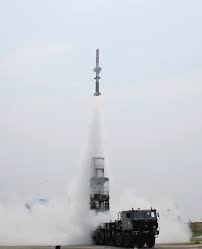
India recently concluded successful trials of a multi-layered Ballistic Missile Defence (BMD) system and the maiden flight-test of the Naval Anti-Ship Missile-Medium Range (NASM-MR).
- Naval Anti-Ship Missile–Medium Range (NASM–MR) is a subsonic, sea-skimming anti-ship missile.
- It is being developed by the Defence Research and Development Organisation (DRDO) for the Indian Navy for use against small- to medium-sized targets such as frigates, corvettes, and destroyers.
- It will have different versions, including ship-launched, air-launched, and submarine-launched
- The missile complements the existing Naval Anti-Ship Missile-Short Range (NASM-SR), which was successfully tested earlier from a helicopter platform.
- Together, these systems provide layered strike options for the Navy, enabling both close-range and medium-range engagements against hostile warships.
- Features:
- It is powered by a Small Gas Turbine Jet Engine (SGTJE).
- This all-weather missile has a strike range of up to 350 km.
- It has a warhead weighing more than 200 kilograms.
- It has an advanced guidance system, which reportedly combines an active radar seeker with an imaging infrared (IR) seeker.
- Successful Trials of multi-layered Ballistic Missile Defence (BMD) system:
- The latest tests involved advanced interceptor systems developed under Phase II of the BMD programme, including the AD-series interceptors.
- These systems have been designed to engage and neutralise advanced, high-speed threats such as intermediate-range ballistic missiles (IRBMs) and ICBMs capable of travelling up to the 5,000-km class.
- The AD-1 endo-atmospheric interceptor has been designed to intercept targets within the Earth’s atmosphere during the terminal phase of their flight.
- Propelled by a two-stage solid motor, it utilises advanced navigation and guidance algorithms to track and destroy fast-moving missiles as well as slower-moving aircraft.
- Similarly, the AD-2 interceptor has been designed to intercept incoming missiles at much higher altitudes, beyond the Earth’s atmosphere during their mid-course flight phase.
- This allows early interception in space, destroying threats before they can re-enter and target specific regions.
- Both missiles are highly manoeuvrable and capable of hypersonic speeds ranging from Mach 6 to Mach 7, enabling them to intercept fast-moving ballistic targets.
- These tests have put the country in the elite group of nations having BMD capability to engage up to ICBMs.
AN-32 Aircraft : Crashed
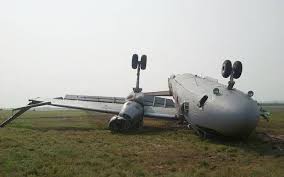
An Indian Air Force (IAF) AN-32 transport aircraft crashed and caught fire at the Air Force Station in Assam’s Jorhat recently, killing five personnel.
- The AN-32 (Antonov AN-32) is a Soviet-origin twin-engine turboprop military transport aircraft.
- Its NATO reporting name is Cline.
- It is designed and manufactured by the Antonov Design Bureau of Ukraine, then part of the USSR.
- It was purchased by India from the USSR in 1984. The planes were specially customised to suit the IAF’s requirements.
- The IAF has a fleet of around 100 AN-32 planes.
- It is designed to excel in extreme environments, functioning perfectly in high-altitude airfields (up to 4500 m above sea level) and hot tropical climates.
- It is powered by two single-shaft turboprop engines.
- It can carry a maximum weight of 27 tons at a maximum speed of 530 km/h.
- It can transport up to 7.5 tons of cargo, 50 passengers, or 42 paratroopers, and it is extensively used for supply drops in remote regions.
- The range and service ceiling of the aircraft are 2,500 km and 9,500 m, respectively.
- It can take off and land on rough airfields and dirt runways.
- It also has a limited bombing role and is used for para-trooping operations.
Chocolate Chip Sea Star:
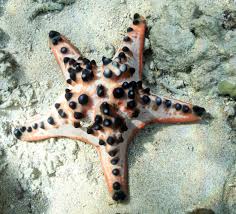
Scientists recently discovered a remarkable light-transmitting skeletal structure at the tips of the arms of the chocolate-chip sea star, which channels about 70% of incident light and concentrates it nearly threefold at its base.
- Chocolate Chip Sea Star, also known as the horned sea star, is a species of highly recognizable ornamental sea star.
- Scientific Name: Protoreaster nodosus
- They are found in the warm, shallow waters of the Indo-Pacific region, including the Red Sea, the Indian Ocean, and the western Pacific Ocean.
- They inhabit coral reefs, sandy lagoons, and seagrass beds, typically at depths of up to 30 meters.
- They have a creamy white base and dark brown projections, resembling chocolate chips.
- Often they are tan-colored, but they can be other shades as well.
- Like all sea stars, they can regenerate lost body parts.
- When threatened, they can lose one of their five limbs (a process known as autotomy) to escape predators, and the lost limb may regenerate over time.
- They are carnivores and typically feed on detritus, small invertebrates, and even the soft tissue of corals.
- Although sea stars are often called “starfish,” they’re not related to fish.
- They are invertebrates related to sea urchins, sea cucumbers, and sand dollars, which are all echinoderms.
- ‘’Echinoderm’’ means spiny skin—a reference to their hard, calcified skin, which helps to protect them from predators.
- They have radial symmetry and tube feet that help them move using water pressure.
- There are close to 2,000 species of sea stars in the world’s oceans. Most species have five arms, but some have many more—even as many as 40.
- They are often found under rocks or in crevice Their mouth, on the underside of their body, has no teeth.
- When feeding, sea stars wrap their arms around their prey and push their stomach out of their mouth to eat their food.
- They’re toxic to some predators, but if captured, sea stars can drop an arm to try to escape.
- They can regrow lost arms—and even an entire new body from a single arm and part of the central disc of their body.
Udanti-Sitanadi Tiger Reserve:
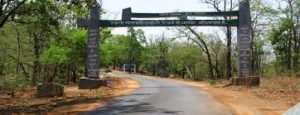
A four-year-old tigress that wandered into Chhattisgarh’s Udanti-Sitanadi Tiger Reserve (USTR) earlier this year and stayed through the scorching summer months has kindled fresh hopes for a reserve.
- Udanti-Sitanadi Tiger Reserve is located in Chhattisgarh.
- It was established by joining the regions represented by Sitanadi and Udanti wildlife sanctuaries.
- The drainage system of the reserve consists of the Mahanadi as the main river, along with the Udanti, Sitanadi, Indravan, and Pairi Rivers as tributaries.
- The location of the reserve is strategic since it also connects with the Kanker and North Kondagaon forest divisions, forming a contiguous forest corridor to Indravati Tiger Reserve in the Bastar region.
- Deo Dongri is the highest point.
- The most prominent mountain is Atānga Dongar.
- The forest type here is predominantly tropical dry and moist deciduous.
- The forest is dominated by Sal (Shorea robusta), which forms dense patches across the landscape.
- Alongside, species such as Teak (Tectona grandis), Bamboo, Tendu, Mahua, Bija, and Harra contribute to the green diversity of the region.
- It is home to the last few herds of the highly endangered Wild Buffalo, tiger, Indian Wolf, Leopard, Sloth Bear, and Mouse Deer etc.
Draft Andaman and Nicobar Islands Tribal Councils Election Rules 2026:
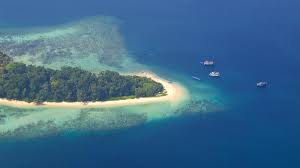
The administration of the Andaman and Nicobar Islands has proposed the Draft Andaman and Nicobar Islands Tribal Councils (Preparation of Electoral Rolls and Conduct of Elections) Rules, 2026, introducing a formal electoral framework for Nicobarese tribal councils.
- The proposal has sparked debate among the Nicobarese community, which fears that the move could alter traditional systems of self-governance and weaken customary decision-making structures.
Changes:
- Codified Representation: Introduces a formalized, legally binding five-year tenure for all Village Councils and Island Tribal Councils, replacing the fluid, need-based customary cycle.
- Mainland Electoral Mechanisms: Mandates the systematic delimitation of official electoral constituencies, the formulation of formal electoral rolls, and structured rules for candidate nomination, scrutiny, and withdrawal.
- Restructured Representative Hierarchy: Villagers will formally elect five to nine Captains per village.
- Villagers will cast direct votes to elect the Chief Captain of each Island Tribal Council.
- The First Captains of all constituent villages on an island will vote to elect the Vice-Chief Captain.
- The formalized Island Tribal Council will collectively comprise the Chief Captain, the Vice-Chief Captain, and all First Captains.
- Gender Mainstreaming: Mandates the institutional reservation of seats and leadership positions for women within both village and island councils.
- Administrative Veto Clause: Reinforces a controversial element from the baseline 2009 Presidential Regulation.
- Under this clause, the local district administration (via the Deputy Commissioner and Assistant Commissioner) retains an absolute, unilateral veto over any council decision deemed a threat to public order, likely to cause “annoyance” to the public, or lead to a breach of peace.
Artemis III : In News
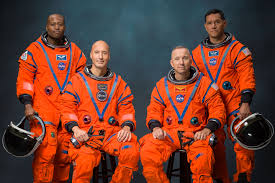
NASA has officially unveiled the four-member crew and updated operational details for the Artemis III mission, now scheduled as a highly complex Earth-orbit test flight in 2027 to lay the critical groundwork for future lunar landings.
- The mission will be started by a four-member international crew:
- NASA astronaut Randy Bresnik as Commander, ESA astronaut Luca Parmitano as Pilot (the first ESA astronaut assigned to an Artemis mission), and NASA astronauts Frank Rubio and Andre Douglas as Mission Specialists.
- Originally conceived as the mission that would return humans to the lunar surface, Artemis III has been restructured to take place entirely in Low Earth Orbit (LEO).
- A LEO satellite, or Low Earth Orbit satellite, is typically positioned between 500 and 2,000 km above Earth.
- The actual crewed landing at the lunar South Pole is now targeted for the Artemis IV mission in 2028.
- The two-week mission will serve as a rigorous testbed to demonstrate rendezvous and docking capabilities in space.
- NASA’s Orion spacecraft (launched by the heavy-lift Space Launch System or SLS rocket) will dock with two privately developed human landing systems:
- Blue Moon lander (developed by Jeff Bezos’ Blue Origin).
- Starship lunar lander (developed by Elon Musk’s SpaceX).
- Strategic and Scientific Significance: Testing critical hardware including life support, software, and docking mechanisms in Earth’s orbit significantly mitigates the risks of future deep-space operations.
- The mission is essential to maintaining American leadership in space amid growing geopolitical competition (such as China’s target of a crewed lunar landing by 2030) and serves as a foundational step toward eventually sending humans to Mars.
India-Estonia Relations:
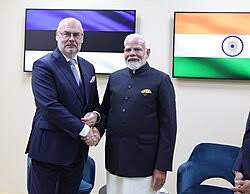
Estonian government officials and tech industry executives have expressed a strong desire to expand cooperation with India across critical sectors, particularly defence, cybersecurity, trade, and artificial intelligence (AI).
- India-Estonia Relations: India first recognized Estonia in 1921 when it joined the League of Nations.
- Following the dissolution of the Soviet Union, India re-recognized the Republic of Estonia in September 1991.
- In 2024, the two nations held the inaugural India-Estonia Cyber Dialogue, acknowledging Estonia’s status as a world leader in IT and digital governance, and India’s massive scale in rolling out Digital Public Infrastructure.
- Bilateral trade between India and Estonia stood at 139.3 million euros in goods and 66.4 million euros in services in 2025.
- As of December 2025, Indian FDI in Estonia amounted to 13.6 million euros, while Estonian FDI in India totalled 4.15 million euros during the period 2000–2025.
Estonia:
- Geographical Location: Estonia is a country located in northeastern Europe and is the northernmost of the three Baltic states (alongside Latvia and Lithuania).
- It shares land borders with Russia in the east and Latvia in the south.
- The country is bounded by the Gulf of Finland in the north, the Baltic Sea in the west, and Lake Peipus in the east. It also shares maritime borders with Finland and Sweden.
- Estonia’s territory encompasses around 1,500 islands and islets. The two largest islands, Saaremaa and Hiiumaa, are located off the mainland’s western coast.
- The highest point in the country is Suur Munamägi (318m). Its major rivers include the Narva, Pärnu, Pedja, and Kasari.
- The capital and largest city is Tallinn and it functions as a parliamentary republic.
- After being ruled by various powers including Denmark, Sweden, and the Russian Empire, Estonia saw its first period of independence in 1918. It was forcibly incorporated into the USSR in 1940.
- It remained a Soviet constituent republic until 1991, when it successfully declared its independence during the collapse of the Soviet Union.
- Following its transition to a parliamentary democracy and market economy, the country integrated with major Western institutions, becoming a full member of the European Union, the Eurozone, North Atlantic Treaty Organization, and the Nordic-Baltic Eight (NB8).
India–France ATL Bridge:
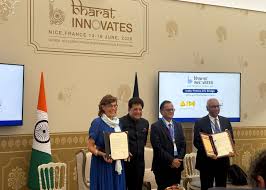
The India–France ATL Bridge was officially established during the Bharat Innovates 2026 summit in Nice, France.
- The India–France ATL Bridge is a high-level bilateral education and technology ecosystem corridor. It serves as a cross-border platform that structurally links school-level innovators, educators, and technology frameworks between India and France.
- Established through a joint partnership between the Atal Innovation Mission (AIM), NITI Aayog (Government of India) and La Fondation Dassault Systèmes (France).
- The initiative aims to democratize early-stage engineering, scientific temper, and design thinking among school-aged youth.
- By exporting India’s grassroots tinkering methodology, it seeks to build a synchronized international network where students from both nations can collaborate on technology-driven solutions to real-world global challenges.
Key Features of the Initiative:
- The initiative establishes France’s first School Innovation Lab, replicating India’s ATL model to promote hands-on learning and innovation.
- Student exchanges and mentorship programs connect young innovators with global experts, fostering entrepreneurship and collaborative problem-solving.
- The labs provide practical exposure to emerging technologies such as robotics, AI, 3D printing, microelectronics, and design thinking.
- Inspired by Vasudhaiva Kutumbakam, the partnership promotes sharing educational innovations and technology for global collective development.
Bharat Innovates 2026:
- Bharat Innovates 2026 is the maiden edition of a high-level national deep-tech acceleration programme designed to act as a global launchpad for cutting-edge technologies emerging out of India.
- It serves as a continuous, international collaboration framework linking Indian research laboratories, startups, and academic institutions with global corporate networks, investors, and overseas alumni.
- The initiative is hosted and run under the Ministry of Education, Government of India.
- 2026 Year is celebrated as India-France Year of Innovation.
- Host: Nice, France
- The primary aim of Bharat Innovates 2026 is to build a high-impact structural bridge between India’s domestic innovation ecosystem and global markets.
Elon Musk Becomes World’s First Trillionaire:
Elon Musk has created history as he become the world’s first trillionaire after the highly anticipated public listing of the SpaceX in June 2026. The aerospace and artificial intelligence company have witnessed the massive surge in the share price during the stock market debut and it pushed the valuation beyond $2 trillion.SpaceX have entered the stock market with an IPO price of $135 per share. Investor enthusiasm immediately drove the stock price higher and it was opened at $150 before closing at around $161.11 on its first day of trading.
Jharkhand’s New Geographical Indication (GI) Tag Products:
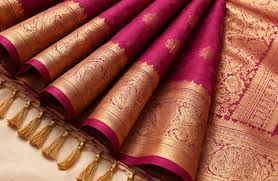
In a major milestone for tribal craftsmanship, four traditional products from Jharkhand—Bhagaiya silk, Kuchai silk, Munda jewellery, and bamboo craft—have been officially granted the prestigious Geographical Indication (GI) tag.
- A Geographical Indication (GI) tag is an official intellectual property sign used on products that have a specific geographical origin and possess qualities, characteristics, or a reputation that are essentially due to that place of origin. In India, GI registrations are governed by the Geographical Indications of Goods (Registration and Protection) Act, 1999.
Jharkhand’s New GI-Tagged Treasures:
- Bhagaiya Silk & Kuchai Silk:
- Traditional Jharkhand silks known for their natural golden sheen, durability, and eco-friendly wild Tussar silk production.
- Produced through indigenous hand-reeling techniques, reflecting the state’s rich handloom heritage.
- Munda Jewellery:
- Traditional tribal jewellery handcrafted with unique geometric patterns and nature-inspired motifs of the Munda community.
- Holds cultural and spiritual significance while preserving centuries-old indigenous metalcraft traditions.
- Jharkhand Bamboo Craft:
- Eco-friendly craft using local bamboo to create baskets, mats, utility products, and decorative items.
- Supports sustainable livelihoods and promotes bamboo-based entrepreneurship in rural forest regions.
Global Peace Index 2026:
According to the 2026 Global Peace Index (GPI) which was released by the Institute for Economics and Peace, Iceland remains as the safest and most peaceful country in the world for the 19th consecutive year.This index evaluates total 163 countries around the globe by using the indicators which are related to safety, conflict levels and militarization. Despite the increasing geopolitical tensions worldwide there are several countries continue to maintain the high standards of peace, security and stability.The 2026 edition marks the 20th release of the Global Peace Index and it covers the 99.7% of the world’s population.India ranks 127th out of 163 countries.
Russia Grand Sand Master Cup 2026:
Sand artist Sudarsan Pattnaik from Odisha became the first Indian to win the prestigious Russia Grand Sand Master Cup of 2026. He received this award at the II International Festival of Sand Sculpture in the Russia on 11th of June, 2026. Pattnaik was honored for his exceptional contribution to the sand art and his thought provoking sculpture highlighting the issue of Global Warming.



