
Today’s Current Affairs: 18th April 2026 for UPSC IAS exams, State PSC exams, SSC CGL, State SSC, RRB, Railways, Banking Exam & IBPS, etc
Table of Contents
Memristor:
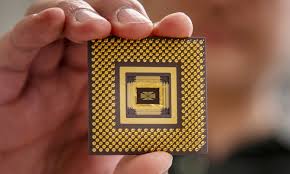
Researchers from the University of Cambridge have reported a new kind of brain-inspired nanodevice, a hafnium-oxide memristor that could dramatically cut artificial intelligence’s (AI) energy use.
- Memristor’ is a combination of ‘memory’ and ‘resistor’.
- It is an electronic component whose resistance depends on the history of current flow, allowing it to “remember” past electrical states.
- A resistor is a small device that applies a fixed amount of resistance to a current passed through it.
- Unlike a resistor, a memristor has variable resistance and ‘remembers’ the resistance.
- When the current is removed, the memristor ‘remembers’ the resistance it offered and maintains it.
- Memristors are nanomaterial and don’t take up much space. Their energy demand is also very small.
- They are usually made of a thin layer of titanium dioxide (TiO2) sandwiched between two metal electrodes.
- Applications of Memristor
- Memory Devices: Due to their ability to store previous resistive states, memristors are viable non-volatile random-access memories (NVRAM) for computers, industrial automation systems.
- Integrated Circuits: Memristors have been identified as viable components for augmenting or potentially replacing transistors in integrated circuits (ICs).
- Neuromorphic Computing: Researchers are exploring the viability of using memristors to build neuromorphic (brain-like) systems for artificial intelligence.
Potomac River:
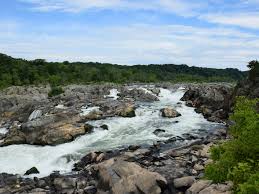
American Rivers, a United States conservation organisation working to make every river clean and healthy for people and wildlife, has nominated the Potomac, the river that flows through Washington, DC as America’s most endangered river for 2026.
- It is a river in the east central United States.
- It rises in North and South branches in the Appalachian Mountains of West Virginia.
- It flows through West Virginia, Maryland, Virginia, Pennsylvania, and Washington, D.C., before entering Chesapeake Bay, the largest U.S. estuary.
- It is the fourth largest river along the Atlantic coast and the 21st largest in the United States.
- The Potomac’s tributaries include the Shenandoah, the Monocacy, and the Anacostia.
- The river is navigable to Washington, D.C., above which it descends from the Piedmont in a series of rapids and falls, including Great Falls, a cataract about 35 feet (11 metres) high.
- The Potomac, noted for its beauty, is also rich in historical significance.
- The Potomac River is situated in an area rich in American history, which has led to the river’s nickname, “The Nation’s River”.
- During the Civil War, the Potomac River divided the Union from the Confederacy. It also gave name to the Union’s largest army, the Army of the Potomac.
- In 1864, Washington, D.C. began using the Potomac River as its principal source of drinking water when the Washington Aqueduct was opened.
- Mount Vernon, home of George Washington, is on its banks below Washington, D.C.
- The river’s name derives from “Patawomeck,” as it was recorded by the colonist John Smith in 1608.
Biomass-based Improved Cookstoves (ICS):
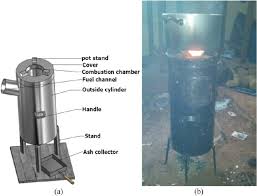
Recently, amid the LPG supply crisis, the relevance of modern biomass-based Improved Cookstoves (ICS) has come into focus, especially as many rural households shift back to firewood, raising concerns about cleaner cooking alternatives.
- Improved Cookstoves (ICS) are advanced biomass stoves designed to improve combustion efficiency and reduce emissions compared to traditional chulhas.
- ICS achieve 38–45% efficiency, significantly higher than traditional chulhas, which, due to poor airflow and substantial heat loss, operate at around 10% efficiency.
- Technologies like secondary aeration in ICS help capture soot and harmful gases before they turn into smoke, improving indoor air quality.
- ICS can reduce firewood consumption by over 50–66%, lowering resource pressure.
- Firewood (≈₹10/kg) is much cheaper than LPG (>₹100/kg), offering potential savings of over 60%, especially during supply disruptions.
- ICS can use pellets, briquettes, crop residue and dung, expanding fuel options and reducing pressure on raw firewood.
- Emission reductions can generate carbon credits, helping subsidise costs through microfinance and CSR initiatives.
- Large-scale adoption does not require massive centralized infrastructure, as fuels like firewood and crop waste are locally available.
- However, scaling depends on strong distribution networks, last-mile delivery, local partnerships, and user awareness. After-sales support is essential for sustained usage.
Delimitation and Women’s Reservation in Legislatures:
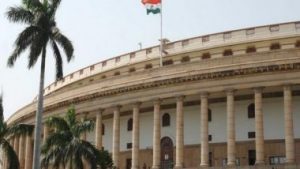
The Union government has introduced three major Bills: the Constitution (One Hundred and Thirty-First Amendment) Bill, 2026, the Delimitation Bill, 2026, and the Union Territories Laws (Amendment) Bill, 2026, to enable fresh delimitation based on the latest available Census, expand the Lok Sabha, and operationalise 33% women’s reservation in legislatures.
The Constitution (131st Amendment) Bill, 2026:
- Expanding the Lok Sabha: It amends Article 81 to increase the maximum strength of the Lok Sabha from 550 to 850 members (815 from States and 35 from Union Territories).
- Article 81 dictates the principle of equal representation; the ratio between a state’s allocated seats and its population must be roughly the same across all states (with exceptions only for very small states under 6 million).
- Removing the Delimitation Freeze: The Bill also amends the marginal heading of Article 82 from “Readjustment after each Census” to
- “Readjustment of constituencies”, and removes the requirement of readjusting the number of Lok Sabha seats in states after every Census.
- Similarly, it makes amendments to the Articles on state Assemblies (Article 170) and reservation for SCs and STs, changing the basis from the 2001 Census to “such Census” that Parliament decides by law to use.
- As of now, Article 81 (2) and (3) freeze the Lok Sabha seats as per the 1971 Census and the Assembly seats as per the 2001 Census, “until the relevant figures for the first census taken after the year 2026 have been published”.
- By decoupling delimitation from the post-2026 Census, the government can now proceed delimitation using data from the 2011 Census.
- Expediting Women’s Quota: It amends Article 334A to allow the immediate implementation of the 33% women’s reservation in the Lok Sabha and
- State Assemblies (Nari Shakti Vandan Adhiniyam (Constitution 106th Amendment Act, 2023)) right after this new delimitation process is completed, targeting the 2029 elections.
- Constitution (131st Amendment) Bill, 2026 requires a special majority in Parliament and ratification by at least half of the States, as it amends the Constitution.
IMF Cuts Global Growth Outlook:

The International Monetary Fund cut its global growth outlook, warning that the world economy is drifting toward a more adverse scenario due to the West Asia conflict, which it cautioned could trigger the largest energy crisis in modern times.
- The revision is driven by energy price spikes and disruptions in oil supply, especially the Strait of Hormuz, due to ongoing conflict.
Without the conflict, the IMF would have upgraded growth by 0.1 percentage point to ~3.4%, supported by strong technology investment, lower interest rates, and fiscal support. - However, global growth for 2026 has now been cut by about 20 basis points to ~3.1%, inflation is expected to rise before moderating, and emerging economies are likely to be more adversely affected.
- The IMF outlined three scenarios—“weaker, worse and severe”—depending on how the conflict evolves.
First Semiconductor Fab in India:
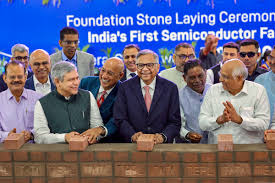
India has officially notified the establishment of the country’s 1st semiconductor fabrication plant within a new Special Economic Zone (SEZ) in Dholera, Gujarat, marking a significant leap forward in India’s electronics and IT manufacturing ecosystem.
- First Semiconductor Fab in India: The SEZ is dedicated to Electronic Hardware, Software, IT/ITES, and is projected to generate employment for 21,000 people.
- A semiconductor fabrication plant, or “fab,” is a highly advanced, multi-billion-dollar facility where microchips (integrated circuits) are produced on ultra-pure silicon wafers using nanoscale precision.
- Inside Class 1 cleanrooms, processes like photolithography, doping, and metallization create billions of transistors that power devices from smartphones to AI systems.
- Progressive SEZ Rule Amendments (June 2025) is to facilitate high-value, capital-intensive investments in this sector, the government amended the SEZ Rules, 2006. Crucial reforms include:
- Reducing the minimum land requirement for sector-specific SEZs from 50 hectares to 10 hectares.
- Introducing flexibility in encumbrance norms.
- Allowing the inclusion of free-of-cost supplies in Net Foreign Exchange (NFE) calculations.
- Permitting domestic sales in the Domestic Tariff Area (DTA) subject to the payment of applicable duties.
- India is building a complete domestic manufacturing ecosystem under the India Semiconductor Mission 2.0, focusing on producing the entire semiconductor value chain from chemicals and gases to chip-making machinery within the country.
- These initiatives aim to catalyze domestic value chains, generate high-skilled employment, reduce import dependence, and position India as a globally competitive hub for semiconductor and electronics production.
State of India’s Bats Report:
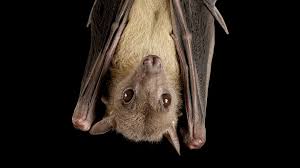
The first-ever national assessment, State of India’s Bats (2024–25), highlights the growing neglect and threats faced by bat species in India due to urbanisation, deforestation, land-use change, and climate impacts.
- Prepared by experts led by Nature Conservation Foundation and Bat Conservation International, the report underscores severe data gaps and the urgent need for research.
- Given bats’ critical ecological roles and their linkage with zoonotic diseases, the findings have implications for biodiversity conservation and public health.
- India hosts around 135 bat species, including 16 endemic species, reflecting significant biodiversity.
- However, 7 species are classified as threatened by the International Union for Conservation of Nature, while 35 species remain unassessed or data deficient, indicating serious knowledge gaps.
- Species like the Khasian Leaf-nosed bat face threats from hunting and mining, but lack proper conservation classification.
- They roost in caves, trees and man-made structures such as buildings and monuments as caves provide a stable microclimate and protection from predators
- Robber’s Cave (Mahabaleshwar) hosts one of the largest roosts of Phillip’s long-fingered bat
- Bats perform vital ecosystem services such as pollination, seed dispersal, pest control, and soil nutrient enrichment, making them indispensable for agricultural productivity and ecosystem stability.
- The report highlights bureaucratic hurdles in research permissions, contributing to persistent data deficits. Post-COVID stigma has further worsened perceptions, wrongly portraying bats primarily as disease carriers, despite their ecological benefits.
CAFE-III norms:
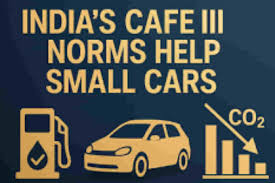
The Indian government and the automobile industry reached a broad consensus on the upcoming CAFE-III (Corporate Average Fuel Efficiency Phase III).
- CAFE (Corporate Average Fuel Efficiency) norms are government-mandated standards that regulate the weighted average fuel consumption and CO₂ emissions of an automaker’s entire fleet, rather than individual models.
- Established By: The Bureau of Energy Efficiency (BEE) under the Ministry of Power.
- These norms apply to M1 category passenger vehicles (those designed to seat up to nine persons and weighing under 3,500kg).
- The third phase (CAFE-III) is scheduled to be implemented from April 1, 2027, and will run through March 31, 2032.
- Aim of CAFE-III:
- To reduce India’s heavy reliance on crude oil imports, especially critical during geopolitical uncertainties like the West Asia crisis.
- To nudge manufacturers toward producing energy-efficient and less-polluting vehicles in line with India’s climate goals.
- To force the adoption of advanced technologies such as hybrids, electric vehicles (EVs), and flex-fuel systems.
The Union Territories Laws (Amendment) Bill, 2026:
The Union Territories Laws (Amendment) Bill, 2026 was introduced in the Lok Sabha alongside major constitutional amendments to facilitate the expansion of Parliament.
- This Bill is a supplementary piece of legislation designed to extend the provisions of the 131st Constitutional Amendment and the Delimitation Bill, 2026 specifically to the Union Territories (UTs) with legislative assemblies.
- It ensures that the legal changes regarding seat increases and women’s reservation are uniformly applied to the UTs of Delhi, Puducherry, and Jammu & Kashmir.
Key Features:
- Application to Specific UTs: The Bill primarily modifies laws governing the Legislative Assemblies of the National Capital Territory (NCT) of Delhi, Puducherry, and Jammu & Kashmir.
- Delinking from 2027 Census: Similar to the national Bill, it removes the requirement that women’s reservation must wait for the first census after 2023. Instead, it allows for reservation based on the delimitation conducted using the latest published census (2011).
- Alignment with 131st Amendment: It ensures that the increase in the maximum number of UT representatives in the Lok Sabha (from 20 to 35 members) is legally integrated into the UT-specific statutes.
- Synchronized Delimitation: It mandates that the Delimitation Commission constituted under the Delimitation Bill, 2026, will have the authority to redraw assembly seats in these UTs.
- Rotational Reservation: Provisions are included to ensure that seats reserved for women in UT assemblies are allotted by rotation to different constituencies across successive elections.
Parkinson’s Disease Awareness Month:
April marks Parkinson’s Disease Awareness Month, highlighting the importance of early diagnosis and timely treatment to improve quality of life.Parkinson’s Europe founded World Parkinson’s Day in April 1997 with support from the World Health Organisation to mark the birthday of James Parkinson, who first described the disease in 1817.Parkinson’s disease is a progressive neurodegenerative disorder that impairs movement and can eventually lead to immobility and dementia.The global burden of Parkinson’s disease has doubled in the last 25 years, with India accounting for around 10% of cases.It usually affects people in their 5th–6th decade, though younger individuals may also be affected, and men are more commonly affected than women.The disease is characterised by tremors, slowness of movement (bradykinesia), and muscle rigidity.
IVF in Vegetative State:
The Delhi High Court upheld a woman’s right to continue In-vitro Fertilization (IVF) with an Indian Army soldier in a vegetative state (disorder of consciousness), holding that his prior consent remains valid despite his current medical condition.The soldier’s wife approached the court to resume the IVF treatment, invoking her right to motherhood, dignity, and reproductive autonomy under Article 21 (Right to Life).The court stated that under the Assisted Reproductive Technology (Regulation) Act, 2021, the wife’s consent will legally be treated as valid consent on her husband’s behalf in this unique situation.Despite the medical board noting a “meagre” chance of retrieving viable sperm, the court allowed the procedure.In-Vitro Fertilization (IVF) is one of the most widely used Assisted Reproductive Technologies (ART) for treating infertility, where a woman’s eggs are fertilized with sperm outside the body in a laboratory, and the resulting embryo is transferred into the uterus to achieve pregnancy.
International Day of Zero Waste:
Following the International Day of Zero Waste (30th March), the United Nations Environment Programme (UNEP) Food Waste Index 2024 highlights that India wastes 78–80 million tonnes of food annually, exposing a stark paradox of widespread hunger alongside massive food wastage.The International Day of Zero Waste, highlights the need for better waste management and sustainable consumption. It was proclaimed by the United Nations General Assembly in 2022 and is facilitated by UNEP and United Nations Human Settlements Programme.The 2026 International Day of Zero Waste focuses on food waste, a major yet preventable cause of environmental harm.India wastes 78–80 million tonnes of food annually (₹1.55 lakh crore), even as around 194 million people remain undernourished, highlighting a serious gap in food distribution.The crisis stems from poor post-harvest infrastructure, weak supply chains, and consumer behaviour, requiring reforms in storage, processing, redistribution, and awareness to achieve food security.The world wastes roughly 1.05 billion tonnes of food annually. Households account for 60% of this waste, food services for 28%, and retail for 12%.India ranks 2nd globally in food waste (with 78-80 million tonnes of post-harvest crop and food worth Rs 1.55 lakh crore wasted annually), trailing only behind China (108 million tonnes of food per year).In comparison, the US wastes 24.7 million tonnes, while Japan, guided by its zero-waste ‘mottainai’ culture, wastes just 5.2 million tonnes.



