
Today’s Current Affairs: 18th May 2026 for UPSC IAS exams, State PSC exams, SSC CGL, State SSC, RRB, Railways, Banking Exam & IBPS, etc
Table of Contents
Anaimangalam Copper Plates:
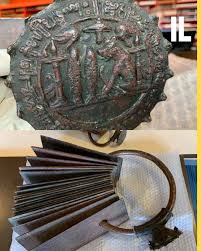
The Netherlands returned the 11th-century Anaimangalam Copper Plates (Leiden Plates) to India during the Prime Minister’s recent visit, restoring a monumental Chola-era record of maritime trade and religious pluralism.
- The Anaimangalam Copper Plates, also known as the Leiden Plates, are 11th-century inscriptions associated with the Chola Empire.
- They are held together by a bronze ring locked with the royal seal of Rajendra Chola I.
- The inscriptions on the copper plates date to the reign of Emperor Rajaraja Chola I (985–1014 CE) and his son Rajendra.
- The plates are divided into two sections: one has texts in Sanskrit; the other, in
- The initial plates are in Sanskrit, offering a detailed genealogy of the Chola rulers and linking them to mythological figures.
- The majority of plates are in Tamil, documenting administrative and grant details.
- The Tamil section records Rajaraja’s grant of land revenues and taxes to the Chudamani Vihara, a Buddhist monastery in Nagapattinam.
- The monastery was built by Sri Mara Vijayotunga Varman, the ruler of the Srivijaya kingdom in present-day Indonesia.
- The land grants were originally issued by Rajaraja Chola I, but his son, Emperor Rajendra Chola I, later had the order engraved onto the copper plates to preserve it.
- The inscriptions provide a rare insight into the maritime links, religious pluralism, and cultural exchanges that existed between South India and Southeast Asia during the peak of the Chola period.
- The plates’ journey abroad began around 1700 when Dutch missionary Florentius Camper acquired them during the Dutch East India Company’s control of Nagapattinam.
- They eventually found their way to Leiden University Library, Netherlands, where they have been studied by scholars but are largely inaccessible to the public.
International Criminal Court:
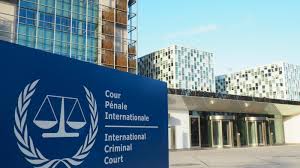
The International Criminal Court recently unsealed an arrest warrant against Senator Ronald Dela Rosa, accusing him, along with ex-President Rodrigo Duterte and other “co-perpetrators” of the “crime against humanity of murder”.
- It is a permanent and independent criminal court established to prosecute offenders of serious crimes in the international community.
- It is the only permanent international criminal tribunal.
- It was created by the Rome Statute, which came into force in 2002.
- ICC investigates and, where warranted, tries individuals charged with the gravest crimes of concern to the international community.
- Specifically, the ICC is intended to prosecute the following crimes:
- Genocide
- Crimes against humanity
- War crimes
- The crime of aggression
- The ICC is meant to serve as a last resort when the courts of sovereign states are unwilling to prosecute.
- Therefore, the ICC is complementary to national criminal jurisdiction and does not supersede it.
- Additionally, the ICC serves a different purpose than the International Court of Justice, which resolves conflicts between nations.
- Members: There are 125 member countries (China, India, Israel, Russia, and the United States are not ICC parties).
- Funding: The Court is funded by contributions from the States Parties and by voluntary contributions from Governments, international organizations, individuals, corporations, and other entities.
- The court has eighteen judges, each from a different member country, elected to non-renewable nine-year terms.
- The Presidency: Consists of three judges (the President and two Vice-Presidents) elected from among the judges. It represents the Court to the outside world and helps with the organization of the work of the judges.
- Office of the Prosecutor (OTP): OTP is responsible for receiving referrals and any substantiated information on crimes within the jurisdiction of the Court.
- OTP examines these referrals and information, conducts investigations, and conducts prosecutions before the Court.
- Registry: It provides administrative and operational support to the Chambers and the Office of the Prosecutor.
Jurisdiction: - The ICC is only competent to hear a case if:
- The country where the offence was committed is a party to the Rome Statute; or
- The perpetrator’s country of origin is a party to the Rome Statute.
- The ICC only has jurisdiction over offences committed after the Statute’s entry into force on 1 July 2002.
Model Collapse:
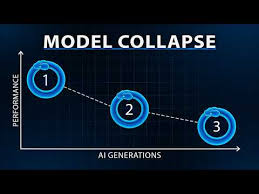
Researchers recently showed that adding just one outside data point or prior knowledge to training can reliably prevent collapse in tested models.
- Model collapse is what happens when AI models are trained on data that includes content generated by earlier versions of themselves, known as synthetic data or model-generated data.
- Over time, this recursive process causes the models to drift further away from the original data distribution, losing the ability to accurately represent the world as it really is.
- This means that large language models (LLMs) and other complex AI systems are increasingly ingesting generated data that is statistically simpler than the human-generated data on which they were originally built, leading to irreversible defects in future models.
- Instead of improving, the AI starts to make mistakes that compound over generations, leading to outputs that are increasingly distorted and unreliable.
- This takes place because any errors present in one model’s output during its fitting are later included in the training of its successor.
- AI Model Collapse Can Cause:
- Limited creativity: Collapsed models can’t truly innovate or push boundaries in their respective fields.
- Stagnation of AI development: If models consistently default to “safe” responses, it can hinder meaningful progress in AI capabilities.
- Missed opportunities: Model collapse could make AIs less capable of tackling real-world problems that require nuanced understanding and flexible solutions.
- Perpetuation of biases: Since model collapse often results from biases in training data, it risks reinforcing existing stereotypes and unfairness.
- Some solutions include tracking data provenance, preserving access to original data sources, and combining accumulated AI-generated data with real data to train AI models.
Tungabhadra Dam:
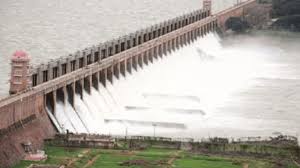
Nearly two years after Gate No. 19 was washed away, the historic Tungabhadra Dam near Hosapete stands renewed with all 33 crest gates replaced.
- Tungabhadra Dam, also known as Pampa Sagar, is constructed across the Tungabhadra River, a tributary of the Krishna
- It is located in Hosapete, Ballari District of Karnataka.
- The dam’s construction started as a joint project between the erstwhile Hyderabad State and Madras Presidency.
- It became a joint project of Karnataka and Andhra Pradesh later, which saw its completion in 1953.
- It is a multipurpose dam serving irrigation, electricity generation, flood control, etc.
- The left canals of the dam serve irrigation in Karnataka only, whereas the right canals serve parts of Karnataka and areas in the Rayalaseema region of Andhra Pradesh.
- The Tungabhadra reservoir and the Mullaperiyar dam in Kerala hold the unique distinction of being the only two reservoirs in the country that were built using a combination of mud and limestone.
- Tungabhadra River is the largest tributary of the Krishna
- It flows through the states of Karnataka and Andhra Pradesh.
- It derives its name from two streams viz., the Tunga and the Bhadra
- It is influenced chiefly by the West monsoon.
- Major Tributaries: Varada River and Hagari (Vedathy) River.
- The Tunga Anicut Dam, the Bhadra Dam, the Hemavathy Dam, and the Tungabhadra Dam.
Nordic Countries:
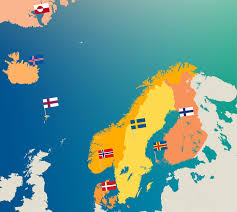
In the fourth leg of his visit, the Prime Minister will reach Norway for the 3rd India-Nordic Summit and bilateral engagements.
- The Nordic countries, also known as the Nordic region, are a group of countries in northern Europe consisting of Denmark, Finland, Iceland, Norway, and Sweden.
- The designation includes the Faroe Islands and Greenland, which are autonomous island regions of Denmark, and the Åland Islands, an autonomous island region of Finland.
- The term is sometimes used interchangeably with Scandinavia, a peninsular region of northern Europe that serves as the geographic core of the Nordic countries.
- Scandinavia is typically defined more restrictively, however, and refers primarily to Norway, Sweden, and Denmark.
- Sweden is the largest and most populous of the Nordic countries. Iceland is the least populous. Denmark is the smallest.
- The countries have many similarities in that they rank highly worldwide in such areas as education, civil liberties, quality of life, and economic competitiveness.
- Most inhabitants of the Nordic region speak North Germanic languages (also called Nordic or Scandinavian languages): Danish, Norwegian, and Swedish, as well as Faroese and Icelandic.
- Native non-Germanic languages include Greenlandic, Finnish, and Sami languages.
- Political System:
- Denmark, Sweden, and Norway are constitutional monarchies and parliamentary democracies.
- Finland and Iceland are democratic republics.
- Iceland’s parliament, the Althing, is the oldest parliament in the world.
- Cooperation:
- There is close cooperation between the countries through the Nordic Council and the Nordic Council of Ministers.
- Denmark, Sweden, and Finland are members of the European Union (EU).
- Norway and Iceland are European Economic Area (EEA) members.
- EEA includes EU countries and also Iceland, Liechtenstein, and Norway.
Democratic Republic of Congo:
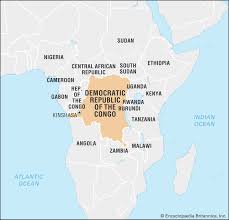
The Democratic Republic of Congo (DRC) is planning to create a new paramilitary unit to protect critical minerals mining sites and transport routes.
- It is located in Central Africa with the equator passing through the country.
- Bordering countries: Angola, Republic of the Congo, Central African Republic, South Sudan, Uganda, Rwanda, Burundi, Tanzania, Zambia.
- Maritime Border: It has a coastline on the Atlantic Ocean to the southwest.
- Capital City: Kinshasa
- Geographical Features of Democratic Republic of Congo:
- Climate: It has an equatorial climate.
- High Point: The highest point in the Republic of the Congo is Mount Nabemba.
- Plateau region: The plateaus are mostly covered in savanna grasslands, with patches of forests in the valleys and lower areas.
- Major River: Congo River
- Lakes: It has famous lakes like Lake Tanganyika, Lake Albert, Lake Edward, Lake Kivu
- Volcano: Mount Nyiragongo which is an active volcano located in Virunga Mountains.
- Natural Resources: The DRC is rich in natural resources such as industrial diamonds, cobalt, and copper etc.
National Test House: In News
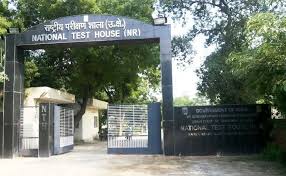
The National Test House (NTH) of Northern Region in Ghaziabad, under the Department of Consumer Affairs, has established a state-of-the-art Shoe Testing Laboratory.
- It is a premier scientific organization of the Government of India.
- It was established in 1912 under the then Railway Board.
- It is India’s largest multi-location multidisciplinary industrial central government’s testing laboratory dealing with almost all sorts of testing, calibration and quality evaluation related to industry, commerce, trade etc. as per international and national standards.
- It offers technical consultancy, testing, calibration, and quality evaluation across various sectors, adhering to both national and international standards.
- It is also actively involved in supporting the National Accreditation Board for Testing and Calibration Laboratories (NABL) and BIS by providing technical assistance in the accreditation and standard formation activities, respectively.
- It is the pioneering governmental entity in India for drone certification.
- Its branches are established at Kolkata, Mumbai, Chennai, Ghaziabad, Jaipur, Guwahati, and Varanasi.
- Nodal Ministry: It is functioning under the administrative control of the Department of Consumer Affairs, Ministry of Consumer Affairs, Food & Public Distribution.
Damodar River : 2 boys Drowned
2 boys were drowned while taking a bath in the Damodar River in Jharkhand’s Ramgarh district.
- Damodar River originates from the Palamau hills of Chota Nagpur in Jharkhand.
- It flows through the states of Jharkhand and West Bengal.
- It is in the eastern part of the Indian subcontinent and an important part of the Ganges River System.
- The river is also known as the “Sorrow of Bengal” because of its devastating floods in the plains of West Bengal.
- From its source, the river flows in a southeastern direction, passing through the Chota Nagpur Plateau, a region known for its rich mineral deposits.
- In its lower course, it flows through West Bengal’s plains and is joined by several tributaries.
- It meets the Hooghly River at Shayampur, which is 48 km from Kolkata.
- Tributaries: Barakar River, Konar River, Jamunia River, Bokaro River, Sali River, Ghari River, Guaia River, Khadia River, Bhera River.
Indian Pharmacopoeia Commission:
The Indian Pharmacopoeia Commission (IPC) organized a Scientific Conclave & Interactive Session on Indian Pharmacopoeia 2026 at the National Institute of Pharmaceutical Education and Research (NIPER), Hyderabad, Telangana.
- It is an autonomous Institution of the Ministry of Health and Family Welfare, of India.
- It is created to set standards of drugs in the country.
- Its basic function is to regularly update the standards of drugs commonly required for treatment of diseases prevailing in this region.
- It publishes official documents for improving Quality of Medicines by way of adding new and updating existing monographs in the form of Indian Pharmacopoeia (IP).
- It further promotes rational use of generic medicines by publishing National Formulary of India.
- It prescribes standards for identity, purity and strength of drugs essentially required from the health care perspective of human beings and animals.
- It also provides IP Reference Substances (IPRS) which act as a fingerprint for identification of an article under test and its purity as prescribed in IP.
- Pharmacopoeia are official compendia of quality standards of the drugs being imported, manufactured for sale, stocked or exhibited for sale or distributed in India.
Red-Necked Falcon:
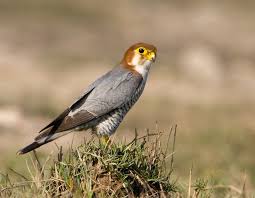
A rare Red-necked falcon was sighted in Kawal Tiger Reserve.
- The red-necked falcon (Falco chicquera ) is a bird of prey in the falcon family
- It has two disjunctive populations, one in India and the other in Africa.
- It is a medium-sized bird of prey recognised for its distinctive reddish-brown crown and neck, bluish-grey upperparts, sharp talons, and agile flight.
- The species is usually found in open woodlands, dry deciduous forests, scrublands, and agricultural fields.
- India up to Himalayan foothills and terrai; Nepal, Pakistan and Bangladesh, South of Sahara in
- Characteristics:
- It is known for its hunting abilities. It usually hunts in pairs, often at dawn and dusk.
- They are mostly resident but may make nomadic movements in response to weather.
- It feeds on small birds, insects, reptiles, and rodents.
- Threats: Habitat degradation, deforestation, pesticide usage, and disturbance in nesting areas are among the major threats.
- Conservation Status:
- IUCN: Near Threatened



