
Today’s Current Affairs: 19th Aug 2026 for UPSC IAS exams, State PSC exams, SSC CGL, State SSC, RRB, Railways, Banking Exam & IBPS, etc
Table of Contents
Medak Fort:
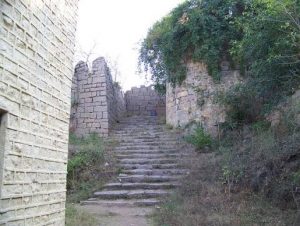
In a rare honour, the postal department launched a postal cover and a postal stamp on the historical Medak fort recently.
- It is a historic hill fort located in Medak town, Telangana.
- The fort was built during the 12th century under the reign of the Kakatiya ruler, Pratapa Rudra, and it was initially called ‘MethukuDurgam’ in Telugu.
- It served as a command post for the Kakatiyas and later for the Qutub Shahis.
- It has three main entrances, namely the “Prathama Dwaram”, the “SimhaDwaram” and the “GajaDwaram”.
- The main entrance features the double-headed “Gandabherundam”, the emblem of Vijayanagara Empire built by the great ruler Srikrishna Devaraya.
- The fort also has a 17th-century mosque on its premises built by the Qutub Shahis, as well as granaries.
Lake Powell:
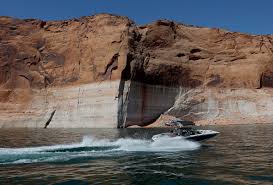
Lake Powell, one of the largest reservoirs in the United States, has fallen to its lowest level since it began filling, deepening concerns over the future of the Colorado River and the millions of people who rely on it.
- It is a huge man-made lake located on the Colorado River and stretches across parts of Utah and Arizona in the United States.
- The lake was created by building the Glen Canyon Dam, which flooded Glen Canyon.
- It’s the second-largest reservoir in the United States by volume (second only to Lake Mead).
- It is an oligotrophic reservoir, which means that nutrient concentrations and algal production are generally low. This often results in very clear-water conditions.
- The lake is also a major recreation area, known for magnificent sandstone canyons and rock formations.
INS Imphal: Students Visit
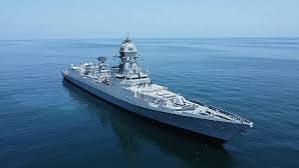
More than 200 students from Indian schools in Muscat recently visited the indigenously built warship INS Imphal while it was berthed at Sultan Qaboos Port in the Omani capital.
- INS Imphal is an indigenously built stealth guided missile destroyer of the Indian Navy.
- It is the third ship to be built under the Project P-15B series of stealth destroyers, otherwise known as the Visakhapatnam-class.
- It was commissioned into the Indian Navy in 2023.
- The Navy’s Warship Design Bureau designed the ship in-house, and Mazagon Dock Ltd. (MDL) was responsible for its construction.
- It is the first warship to be named after a city in the Northeast, Imphal — the capital of Manipur.
- It was the first naval warship commissioned with accommodation for women officers and sailors.
- It is a unit of the Indian Navy’s Western Fleet.
- Missions include anti-air warfare (AAW), anti-surface warfare (ASuW), and anti-submarine warfare (ASW).
- It is propelled by four powerful Gas Turbines, in a Combined Gas & Gas configuration, and is capable of achieving speeds in excess of 30 knots (56 km/hour).
- It has a maximum operating endurance of 45 days.
- It has enhanced stealth features, resulting in a reduced Radar Cross Section.
- The ship has BrahMos missiles, medium-range surface-to-air missiles, indigenous anti-submarine rocket launchers, and a 76 mm super-rapid gun mount.
- It has modern surveillance radar, which provides target data to the gunnery weapon systems.
- It has a total atmospheric control system (TACS) that offers protection to the crew from chemical, biological, and nuclear threats.
Mount Kanlaon: In News

A recent emission from Kanlaon Volcano produced a grayish plume that rose approximately 200 meters above the summit crater before drifting north.
- Mount Kanlaon is an active stratovolcano located in the Philippines.
- It is the tallest mountain on Negros Island and the highest peak in the Visayas region.
- It is part of the Pacific Ring of Fire.
- It is dotted with fissure-controlled pyroclastic cones and craters, many of which are filled by lakes.
Appeal and Complaint Management System Portal:
The Central Information Commission (CIC) launched its upgraded Appeal and Complaint Management System (AppCoMS 2.0).
- It is an online web application portal, initially introduced by the Central Information Commission in 2016.
- It enables citizens to file Second Appeals and Complaints online and facilitates end-to-end digital processing of cases.
- It includes registration, scheduling of hearings, issuance and uploading of decisions and other related processes.
- Appeal and Complaint Management System Portal 2.0 has been developed as a technologically upgraded platform with enhanced security standards, improved functionalities and streamlined workflows.
- AppCoMS 2.0 has introduced a feature of user accounts for Applicants, Central Public Information Officers (CPIOs) of the Public Authorities and other stakeholders, linked with their e-mail ID and mobile number.
- In the upgraded system, applicants will be able to submit Second Appeals and Complaints through their user accounts.
- Under this version, applicants can view case timelines, access documents, download hearing notices and decisions/ orders.
- It has the facility for use of Digital Signature Certificates (DSCs) for digitally signing and issuing notices/orders by the Commission.
Rotating Detonation Engine:

India-based defence start-up D-Propulse announced that it had successfully demonstrated a rotating detonation engine at a Defence Research & Development Organisation facility in Hyderabad.
- Rotating Detonation Engine (RDE) is a type of propulsion system that differs from conventional gas turbines and ramjets in the way it uses fuel.
- Usually, engines use deflagration, which is a subsonic, steady way of burning fuel through a flame.
- On the contrary, an RDE uses detonation, wherein the fuel burns faster as rapid supersonic explosions rotate through the chamber of the engine.
- This rapid detonation produces more thrust for the same amount of fuel.
- This volume savings can be used to increase fuel and/or payload volume, providing potential range, speed, and affordability benefits compared to rockets, ramjets, and gas-turbines.
- These mechanically simple RDEs have no moving parts, making them less complex than gas turbine engines and therefore potentially lower cost and simpler to manufacture.
Supreme Court on Electoral Black Money:

The Supreme Court observed that removing the influence of black money from elections is a responsibility of the Election Commission of India (ECI).
- The Court held that the use of ill-gotten money can distort the free choice of voters and undermine democracy, rule of law and the electoral process. It also issued directions for time-bound investigation, reporting of seizures and speedy trials in election-related black money cases.
- The Supreme Court has placed greater responsibility on the ECI to curb black money in elections, directing time-bound investigations, seizure reporting, quarterly monitoring and speedy trials to protect free and fair elections.
- Electoral black money undermines voter autonomy, equality, transparency and democratic accountability. Stronger political-funding transparency, expenditure regulation, financial intelligence, state funding and judicial fast-tracking are needed to address the problem.
Key Directives Issued by the Supreme Court:
- Seized cash or assets must be reported within 24 hours to the District Magistrate, Additional District Magistrate or competent court, along with reasons showing a prima facie link with the suspected electoral offence.
- Investigating Officers should complete election-related FIR investigations within one year. Any delay must be justified and reported to the ECI.
- Investigating Officers must submit quarterly status reports on such cases to the ECI.
- Static Surveillance Teams detecting cash above Rs 10 lakh must forward the information to Income Tax authorities
- High Courts must ensure expeditious disposal of election-related black money cases, including through designated courts where required.
- Withdrawal of criminal cases against candidates relating to an election cycle requires approval of the concerned High Court
- The ECI and State Governments have been directed to submit compliance reports by 18th November 2026.
Exercise MAITREE:

The Indian Army contingent departed for Thailand to participate in the 15th edition of the India-Thailand Joint Military Exercise MAITREE-XV (2026).
- Exercise MAITREE is the joint military exercise between India and Thailand.
- It was instituted in 2006.
- It is an important platform for sharing best practices and strengthening military cooperation between India and Thailand.
- In Exercise MAITREE 2026, the Indian Army contingent is represented primarily by troops from 9 Gorkha Rifles.
- The exercise will involve company-level joint training focused on operations in jungle and semi-urban terrain.
- Aim of the exercise is to foster Military Cooperation between India and Thailand.
- The Exercise will enhance combined capabilities in executing Joint Counter Insurgency/ Terrorist Operations in Jungle and semi-urban Environment under Chapter VII of United Nations Charter.
- The training will include field exercises, combat discussions, lectures, demonstrations and a culminating validation exercise.
- The contingents will also exchange operational experience and showcase contemporary equipment and technologies employed during joint operations.
- It will further reinforce the longstanding bilateral relations between the two nations.
Greenium and Sovereign Green Bonds:

India’s sovereign green bond market is gaining traction as strong investor demand has pushed green bonds to trade at a persistent greenium over comparable conventional government securities.
- The average greenium in the first half of FY27 reached its highest level since India began issuing sovereign green bonds in FY2022-23. The trend indicates that the market may be able to absorb a larger supply of green bonds in the second half of FY27.
- Greenium’ (green premium) refers to the lower yield (interest rate) that investors are willing to accept on a green bond that finance environmentally sustainable projects compared to conventional government securities.
- Since bond prices and yields move inversely, a lower yield means investors are willing to pay a higher price for green bonds, reflecting their preference for environmentally sustainable investments.
- Stable Greenium lowers the overall cost of borrowing for the government, allowing it to finance large-scale renewable energy, electric mobility, and adaptation projects needed to meet India’s Net Zero by 2070 targets economically.
- A consistent greenium spread demonstrates a maturing domestic green finance ecosystem and sustained investor confidence in the credibility of India’s green taxonomies and Environmental, Social and Governance (ESG) project evaluation.
- Sovereign Green Bond are government debt instruments introduced in the Union Budget 2022-23 to finance projects that support India’s transition towards a low-carbon economy.
- The funds raised are earmarked exclusively for eligible green projects, promoting transparency and accountability in their utilisation.
- The SGrB Framework is aligned with the International Capital Market Association (ICMA) Green Bond Principles (2021), strengthening the credibility and transparency of India’s sovereign green bonds.
- SGrBs are issued through a uniform price auction, are eligible for repo transactions, and can be traded in the secondary market.
- SGrBs are also eligible for Statutory Liquidity Ratio (SLR) purposes, allowing financial institutions to count them towards their mandatory SLR holdings.
- The Finance Ministry released India’s first Sovereign Green Bond (SGrB) Framework in 2022, specifying the projects eligible for funding.
- To strengthen credibility, the framework was validated by Norway-based CICERO, which rated it ‘Medium Green’ with ‘Good Governance’, indicating alignment with the International Capital Market Association (ICMA) standards.
154th Birth Anniversary of Aurobindo Ghose:
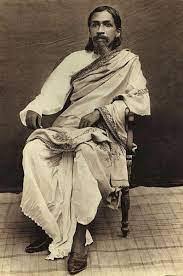
The Prime Minister paid tribute to Sri Aurobindo on his birth anniversary on 15th August 2026, highlighting his contribution to India’s freedom struggle and his ideas on human progress and transformation.
- Aurobindo Ghose, born on 15th August 1872 in Calcutta, was a yogi, philosopher, poet, seer, and nationalist. He died on 5th December 1950 in Pondicherry.
- He passed the Indian Civil Service (ICS) examination but did not qualify for appointment after failing to present himself for the compulsory horse-riding test.
- Contributions:
- Revolutionary Career: Advocated radical nationalism and called for mass mobilization before Gandhi’s leadership.
- New Lamps for Old was a series of articles by Aurobindo Ghose that criticized the Congress for its moderate policies.
- He was arrested in the Alipore Bomb Case (1908) and successfully defended by Chittaranjan Das.
- Spiritual and Philosophical: He established the Sri Aurobindo Ashram (1926) in Pondicherry and collaborated with Mirra Alfassa (The Mother), who later founded Auroville, a universal township.
- Literary: He authored seminal works including The Life Divine, Savitri, Essays on the Gita, The Synthesis of Yoga, and Defense of Indian Culture.
- He wrote for nationalist publications such as Bande Mataram and founded Karmayogin; he was also closely associated with the revolutionary milieu of Jugantar and Anushilan Samiti.
- He was nominated for the Nobel Prize in Literature (1943) and Nobel Peace Prize (1950).
- He envisioned India playing a leading spiritual and civilisational role in humanity’s future, emphasising cultural self-confidence and spiritual regeneration.
Odisha Coastal Erosion:
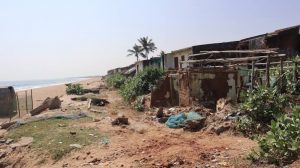
Union Minister for Ports, Shipping and Waterways informed the Rajya Sabha that 28.3% of Odisha’s 564-km coastline is undergoing erosion, based on a long-term assessment (1990–2022) by the National Centre for Coastal Research (NCCR).
- Coastal erosion is the progressive wearing away and landward displacement of beach or dune sediments caused by hydrodynamic forces such as waves, tidal currents, storm surges, and littoral drift.
- In Odisha, the interaction between severe tropical cyclones in the Bay of Bengal and human-made coastal structures alters natural sediment transport, resulting in rapid shoreline retreat, coastal flooding, and the loss of inhabited land.
Data & Statistics on Coastal Erosion in Odisha:
- Overall Coastline Dynamics: According to the NCCR mapping of Odisha’s 564.14 km coastline, 28.3% is eroding, 54.1% is accreting (growing), and 17.6% remains stable.
- Worst Affected Districts: Jagatsinghpur is the most vulnerable, with 47.6% of its 55.8-km coastline eroding, followed closely by Ganjam (45.7%) and Kendrapara (45.0%).
- Other Impacted Stretches: Moderate to low erosion is recorded across Balasore (23.8%), Puri (10.2%), and Bhadrak (4.6%).
- Submergence of Inhabited Land: Rising sea levels and coastal land loss have already submerged 16 entire villages in Kendrapara district alone, displacing hundreds of families.
The Foreign Currency Non-Resident (Bank) — FCNR(B) Deposits:
The Reserve Bank of India (RBI) advanced the deadline for fresh Foreign Currency Non-Resident (Bank) [FCNR(B)] deposits to qualify for its special USD–INR forex swap window to August 31, 2026.An FCNR(B) deposit is a term/fixed deposit account maintained in approved foreign currencies by Non-Resident Indians (NRIs) and Overseas Citizens of India (OCIs) with authorized banks in India.Unlike rupee-denominated NRI accounts (such as NRE or NRO accounts), the funds are held entirely in foreign currency, eliminating foreign exchange conversion risk for the depositor.The FCNR scheme was originally introduced in 1975 (where the exchange risk was borne by the RBI/Government).To eliminate central fiscal liabilities, the revised FCNR(B) Scheme was launched in May 1993, under which commercial banks themselves maintain and manage foreign currency exchange exposure and liabilities. Governed under the Foreign Exchange Management Act (FEMA), 1999 and RBI Master Directions on Non-Resident Deposits.Aim is to attract stable, long-term foreign currency capital into the Indian banking system, reinforce India’s external Balance of Payments (BoP), bolster gross foreign exchange reserves, and provide non-resident Indians with a secure, tax-free, and exchange-risk-free investment avenue in India.
The UN Convention to Combat Desertification:

The 17th Conference of the Parties (COP17) to the United Nations Convention to Combat Desertification opened in Ulaanbaatar, Mongolia, under the theme “Restoring Land, Restoring Hope.”
- The United Nations Convention to Combat Desertification (UNCCD) is the sole legally binding international agreement linking environment and development to sustainable land management.
- It is one of the three Rio Conventions (alongside UNFCCC for climate change and CBD for biodiversity) established at the 1992 Earth Summi
- Formally recommended by Agenda 21 at the 1992 Rio Earth Summit (UNCED).
- Adoption & Entry into Force: Adopted in Paris on June 17, 1994 (now observed globally as the World Day to Combat Desertification and Drought) and entered into force in December 1996.
- Global Membership: Has near-universal membership with 197 Parties (196 countries plus the European Union).
- Aim is to combat desertification, reverse land degradation, and mitigate the effects of drought in arid, semi-arid, and dry sub-humid areas (drylands) to achieve Land Degradation Neutrality (LDN) by 2030 and support sustainable livelihoods.
Functions of the UNCCD:
- Achieving Land Degradation Neutrality (LDN): Coordinates global efforts to ensure that the quantity and quality of land resources necessary to support ecosystem functions and food security remain stable or increase.
- Promoting Proactive Drought Resilience: Facilitates international frameworks—such as the Riyadh Global Drought Resilience Partnership—to transition countries from reactive post-disaster crisis relief to proactive drought preparedness and early warning systems.
- Decentralized Bottom-Up Governance: Mandates that National Action Programmes (NAPs) be designed with active participation from local communities, farmers, pastoralists, indigenous peoples, and women.
- Mobilizing Climate & Land Finance: Operates the Global Mechanism (GM) to help developing countries channel domestic, bilateral, private-sector, and multilateral funds into sustainable land management projects.
- Cross-Border Peace & Ecosystem Co-Management: Spearheads specialized international programs like the Peace Forest Initiative (PFI), promoting transboundary ecological restoration across conflict-affected borders.