
Today’s Current Affairs: 2nd Nov 2026 for UPSC IAS exams, State PSC exams, SSC CGL, State SSC, RRB, Railways, Banking Exam & IBPS, etc
Table of Contents
Sinhagad Fort : In news
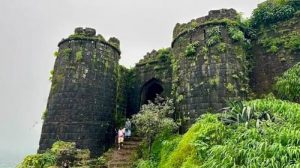
A 100-foot tall saffron flag will be erected by the Pune Municipal Corporation (PMC) at Sinhagad Fort in honour of Chhatrapati Shivaji Maharaj and the Maratha Empire.
- Sinhagad, earlier known as ‘Kondhana’, is a fortress located near Pune, Maharashtra.
- It was built in a strategic location and was surrounded by several other forts like Torna Fort, Purandar Fort, and Rajgad Fort.
- It was originally known as Kondhana and was named after the sage Kaundinya.
- It has changed hands multiple times, with rulers from different dynasties leaving their mark.
- Mohammed bin Tughalaq captured the fort from the Koli tribal chieftain, Nag Naik, in 1340 CE.
- In 1496 CE, Malik Ahmad, the founder of the Nizam Shahi dynasty, took control of the fort.
- Nearly 200 years later, the Maratha leader Shahaji Bhonsale captured the fort.
- In 1647 CE, Shivaji held the stronghold.
- In 1665 CE, as per the Treaty of Purandar, Shivaji handed over Sinhagad to the Mughals.
- The fort’s famous chapter unfolded in 1670 when Chhatrapati Shivaji Maharaj orchestrated a daring mission to reclaim the fort from the Mughals.
- The Battle of Sinhagad was led by the fearless Tanaji Malusare ( Shivaji’s favorite general), who, along with his brave warriors, scaled the steep cliffs under the cover of darkness.
- Despite putting up a fierce fight, Tanaji succumbed to his injuries.
- When Shivaji Maharaj heard of Tanaji’s sacrifice, he famously remarked, “Gad ala, pan Sinha gela” (The fort is won, but the lion is lost).
- In honor of his valiant warrior, Shivaji Maharaj honoured the fort with the name Sinhagad Fort, or Lion’s Fort.
- The fort remained under the control of the Marathas until 1818 CE, when it was surrendered to the British after the Third Anglo-Maratha War.
- The fort was later used as a retreat for many European residents of Pune.
- It is a marvel of Maratha architecture and engineering.
- It comprises a strong fortified wall which runs for almost 2 miles.
- The fort features two main entrances—the Pune Darwaza, facing Pune, and the Kalyan Darwaza, opening towards the Konkan region—both showcasing intricate stonework and strategic placement for enhanced security.
- It has an advanced water storage system, which includes ancient rainwater harvesting techniques and natural reservoirs that ensure a continuous water supply.
- The fort has several bastions, ramparts, walls, and gates that enclose its premises.
- The fort also houses a temple dedicated to Goddess Kali, a brewery, some military sheds, and the tombs of Rajaram Chhatrapati (Shivaji’s youngest son) and Tanaji Malusare.
Dopamine : New Study

A new study revealed that exhaustive training without adequate rest alters the regulation of dopamine in the hippocampus, a brain region closely linked to memory and the regulation of emotions.
- Dopamine is a hormone and a type of neurotransmitter, or chemical messenger, made in your brain.
- It is a nitrogen-containing organic compound.
- The nervous system uses it to send messages between nerve cells. These messages also travel between the brain and the rest of the body.
- It is often referred to as the “feel-good” chemical in the brain.
- High or low dopamine levels are associated with diseases including Parkinson’s disease, restless legs syndrome, and attention deficit hyperactivity disorder (ADHD).
- Dopamine is found in humans as well as animals, including both vertebrates and invertebrates.
Mekedatu Project: In News
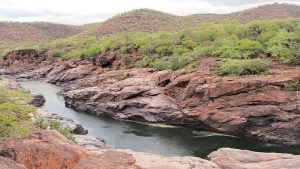
The Karnataka Chief Minister recently said that 2,500 acres of land have been identified for the Mekedatu project, of which only 500 acres of private land belonging to farmers needs to be acquired.
- Mekedatu Project is a multi-purpose (drinking water and power) project involving the construction of a balancing reservoir near Kanakapura in the Ramanagara district, Karnataka.
- The project is proposed at the confluence of the Cauvery River with its tributary Arkavathi.
- The project envisages using water annually for drinking-water supply to Bengaluru and surrounding areas and generating hydropower.
- The dispute over the project is rooted in the broader Cauvery water-sharing conflict between Karnataka and Tamil Nadu.
- Tamil Nadu, the lower riparian state, has been opposing the project, raising apprehensions that the state would be affected if the project takes shape.
- Tamil Nadu says, Mekedatu area represents the last free point in Karnataka from where Cauvery water flows unrestricted into Tamil Nadu, and the Mekedatu dam project is an attempt by Karnataka to block this free flow of water.
National Institute of Plant Genome Research (NIPGR):
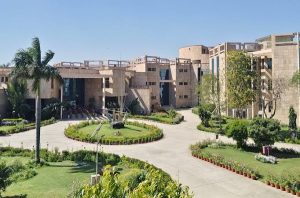
Researchers at the National Institute of Plant Genome Research (NIPGR) recently identified a previously uncharacterised protein named CNGC13 that helps a plant warn undamaged leaves when an insect attacks one of them.
- National Institute of Plant Genome Research (NIPGR) is an autonomous institution under the Biotechnology Research and Innovation Council (BRIC) of the Department of Biotechnology, Ministry of Science and Technology
- Location: New Delhi
- Mandate is to undertake, promote, and coordinate research; train workers; and serve as an information resource in identified aspects of plant genomics to build a frontline institution.
- Objectives:
- To conduct high-quality research in frontier areas of plant genomics and molecular biology, with the aim of having practical application in crop improvement;
- To utilize molecular biology and omics approaches along with tissue culture and genetic engineering technology to identify important genes/proteins/metabolites and manipulate these for generating plants with improved agronomic characters, biotic/abiotic stress tolerance, and enhanced nutritional value
- To take up any fundamental work related to gene regulation, systems biology, and mapping that would aid in achieving the above mandate
- Development of molecular markers for monitoring important traits
- Production and testing of transgenic and gene-edited plants
- Identification of genes that are vital for the survival of the pathogens, and targeting them for pathogen resistance
- Knowledge generation and innovation, including publications and patents
- Knowledge dissemination for human resource development at all levels (Ph.D., post-doctoral researchers, postgraduate trainees and young scientists) through advanced training workshops, symposia, seminars, and scientists exchange programmes
- To impart advance training module in plant genetic engineering and genome analysis
- To undertake collaborative programmes with international institutes those are engaged in plant genome research and develop close linkages.
Biotechnology Research and Innovation Council (BRIC):
- It is an Apex Autonomous Body established as a registered Society.
- Nodal Ministry: Ministry of Science and Technology.
- It was formed by subsuming 14 Autonomous Institutes of the Department of Biotechnology (DBT).
- BRIC aims to provide a centralized and unified governance mechanism for the administration of its research institutions through intra-mural core grants.
- It emphasizes multi-disciplinary research support from basic discovery to application in areas of strength within the DBT institutions.
- BRIC seeks to nurture the next generation of scientific leaders by enabling the pursuit of knowledge and innovation in globally competitive and nationally relevant ecosystems.
- Objectives:
- Promoting cutting-edge research in biotechnology aligned with national priorities.
- Fostering innovation and translation across institutional boundaries.
- Developing indigenous technologies and capabilities in line with the principles of Atmanirbhar Bharat.
Pench Tiger Reserve:
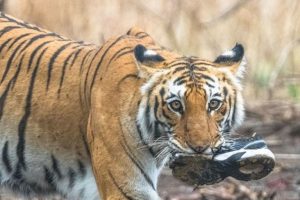
A cub born to a tigress from Umred-Karhandla Wildlife Sanctuary has moved into Pench Tiger Reserve (PTR) in Maharashtra’s Nagpur district.
- Pench Tiger Reserve is located in the southern reaches of the Satpura hills in Madhya Pradesh and shares the southern boundary with Maharashtra.
- In 1983, it was declared a National Park, and in 1992, a tiger reserve.
- It derives its name from its life line-the River Pench which flows from North to South.
- It comprises the Indira Priyadarshini Pench National Park, the Pench Mowgli Sanctuary.
- The forests in Pench tiger reserve are classified into three types:
- South Indian Tropical Moist Deciduous (slightly moist)
- Southern Tropical Dry Deciduous Teak Forests and
- Southern Dry Mixed Deciduous Forest
- The reserve boasts a diverse range of flora, including teak, saag, mahua, and various grasses and shrubs.
- The area is especially famous for large herds of Chital, Sambar, Nilgai, Gaur (Indian Bison), and wild boar.
BIMSTEC Maritime Security Exercise:

The inaugural BIMSTEC Maritime Security Exercise, being conducted in the Bay of Bengal.
- BIMSTEC Maritime Security Exercise is the inaugural maritime security exercise of BIMSTEC.
- It aims to strengthen maritime cooperation and enhance regional security among member states.
- The exercise brings together Bangladesh, Bhutan, India, Myanmar, Nepal, Sri Lanka and Thailand.
- The exercise seeks to translate the regional grouping’s vision into practical cooperation through enhanced operational coordination and stronger maritime security mechanisms.
- The exercise underscores BIMSTEC members’ commitment to maintaining a secure, open and inclusive maritime domain, reflecting the shared vision of “Shared Seas, Shared Security and Shared Prosperity” and promoting peace, stability and sustainable development across the region.
BIMSTEC:
- The Bay of Bengal Initiative for Multi-Sectoral Technical and Economic Cooperation (BIMSTEC) is a grouping of seven Member States lying in the littoral and adjacent areas of the Bay of Bengal.
- The organization came into existence in 1997 through the ‘Bangkok Declaration’.
- Members: Bangladesh, Bhutan, India, Nepal, Sri Lanka, Myanmar and Thailand.
- It was formed as BIST-EC (Bangladesh, India, Sri Lanka, Thailand Economic Cooperation) in 1997.
- It was renamed to BIMST-EC with the addition of Myanmar in 1998.
- It was fully transformed into BIMSTEC (Bay of Bengal Initiative for Multi-Sectoral Technical and Economic Cooperation) in 2004.
- Objectives is to strengthen technical and economic cooperation among its seven member nations situated around the Bay of Bengal.
- BIMSTEC organizes intergovernmental interactions through Summits (held once in 2 years), Ministerial Meetings (Convened annually), Senior Officials Meetings (held twice a year).
- Secretariat: Dhaka, Bangladesh.
BioSentinel Mission:

The BioSentinel probe flew past the Moon with yeast to measure deep-space radiation.
- BioSentinel Mission is a six-unit (6U) CubeSat launched in 2022.
- It was developed by the NASA Ames Research Center, California, USA.
- It is the first biological CubeSat developed to travel beyond Low Earth Orbit (LEO).
- It was selected as one of the secondary payloads – and the sole biological experiment – to have the rare opportunity to catch a ride to deep space on Artemis I.
- Objectives:
- To develop the capability to support biological organisms in deep interplanetary space
- To characterize the deep space radiation environment and its effects on biological organisms
- Components:
- It is composed of two sections, one containing the scientific payloads, and a spacecraft bus equipped with solar panel arrays, batteries, micropropulsion system, star tracker navigation system, transponder, antennas, and command and data handling systems.
- The two payloads are the microfluidic-based BioSensor instrument and a radiation detector.
- The BioSensor instrument carried the budding yeast S. cerevisiae to assay biological responses to accumulated doses of deep space radiation.
Dysphaea Assamensis : New Damselfly Species
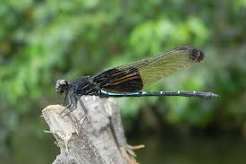
Researchers have formally described a new damselfly species, Dysphaea assamensis, from the Karbi Anglong District of Assam, India.
- Dysphaea Assamensis is a new species of damselfly discovered in Assam.
- It displays an extensive, intricate blue dorsal pattern across its abdominal segments, setting it apart from all other known congeners.
- Dysphaea assamensis brings the total number of recognised global Dysphaea species to ten.
- It inhabits undisturbed, shaded forest streams, the species highlights the exceptional biodiversity of the Indo-Burma biological frontier.
- Damselflies are a group of predatory, aerial insects that are in the order Odonata.
- Damselflies are found mainly near shallow, freshwater habitats and are graceful fliers with slender bodies and long, filmy, net-veined wings.
- They are generally smaller, more delicate, and fly weakly in comparison with dragonflies.
- Spreading damselflies are easy to identify as they hold their wings in a “V” shape over their abdomens.