
Today’s Current Affairs: 22nd April 2026 for UPSC IAS exams, State PSC exams, SSC CGL, State SSC, RRB, Railways, Banking Exam & IBPS, etc
Table of Contents
Prajna System:
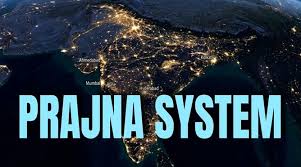
The Union Ministry of Home Affairs recently received an indigenously developed AI-enabled satellite imaging system, ‘Prajna’.
- It is an indigenously developed satellite imaging system to enhance the real-time decision support for the security agencies.
- The AI-enabled system was developed by the DRDO’s Centre for Artificial Intelligence and Robotics (CAIR).
- It is intended to strengthen the country’s internal security by monitoring sensitive regions and aiding counter-terrorism operations.
- The system integrates satellite imagery with advanced AI-driven analytics to provide actionable insights in real time.
- It is designed to significantly improve situational awareness and support faster, more accurate decision-making during critical operations.
- By leveraging artificial intelligence, it can process vast volumes of satellite data, identify patterns and flag anomalies that may otherwise go unnoticed through conventional methods.
Mookambika Wildlife Sanctuary:
Sewage from commercial activities related to religious tourism in Kollur has emerged as a threat to the Mookambika Wildlife Sanctuary in Udupi district, with the depleted Souparnika river carrying sewage and sludge to the core area in summer.
- It is located in the Udupi district of Karnataka.
- The sanctuary is named after the presiding deity of the Kollur Mookambika Temple, which is located within its boundaries.
- It forms a vital connecting link between Someshwara Wildlife Sanctuary located on the southern side and Sharavathi Wildlife Sanctuary located on the northern side.
- At the heart of the sanctuary lies the revered Kodachadri Peak, often referred to as a “botanical paradise.”
- The sanctuary boasts two significant rivers – River Chakra and River Souparnika.
- It is home to many beautiful waterfalls such as Koosalli waterfalls and Belkal Theertha waterfalls.
- The vegetation type is a mix of evergreen, semi-evergreen, and moist deciduous forests covering the steep slopes typical of the Western Ghats Mountains.
- Some of the eminent tree species are found in this region, including trees like Dipterocarpus Indicus, Calophyllum Tomentosum, and Hopea Parviflora.
- A rare species of the climber, Coscinium Fenestratum, is found here.
- Small patches of teak plantations are also there.
- It is known for the presence of rare animals like the slender loris and lion-tailed macaque, alongside larger wildlife such as tiger, leopard, sloth bear, sambar deer, chital, wild pig, barking deer, gaur, porcupine, and otter.
Druzhba Pipeline:
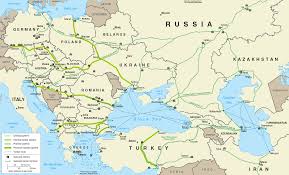
The Druzhba pipeline that carries Russian oil through Ukraine to Hungary and Slovakia has been repaired and can resume operations, the Ukrainian President has announced recently, ending a months-long standoff between Kyiv and Budapest.
- The Druzhba Pipeline, also known as the Friendship Pipeline, is one of the biggest crude oil pipeline networks in the world.
It was built in the 1960s to supply oil from the USSR to countries in Europe. - Today, it is the largest principal artery for the transportation of Russian (and Kazakh) oil across Europe.
- The official beginning of the Druzhba network is in Almetyevsk in the Russian Federation, where pipelines carrying crude oil from Siberia, the Urals, and the Caspian Sea meet.
- Druzhba runs to Mozyr in Belarus, where it splits into a northern and a southern branch.
- The northern branch continues via Belarus and Poland to Germany.
- The southern branch runs through Ukraine, splitting in Uzhgorod, into Druzhba 1, continuing to Slovakia (where it splits again and goes to the Czech Republic in one branch and Hungary in another), and Druzhba 2, continuing to Hungary.
Aspero:
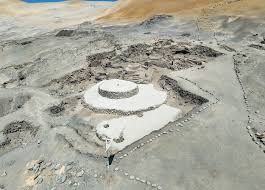
Archaeologists in Peru recently uncovered a structure at Áspero that appears to have been used to observe the sky, adding detail to what is known about early scientific practices in the Caral Civilisation.
- It is a late preceramic archaeological site associated with the Norte Chico civilization (also called Caral-Supe civilization), one of the oldest known civilizations in the Americas.
- It is located in Peru on the right bank of the Supe River.
- Once a major fishing centre for the city of Caral, Áspero was inhabited throughout the Late Archaic period from before 3000 BC to approximately 1800 BC.
- It was a major urban center with monumental architecture, including large platform mounds and sunken circular plazas, serving as a hub for trade, agriculture, and religious rituals.
Shekha Jheel Bird Sanctuary:
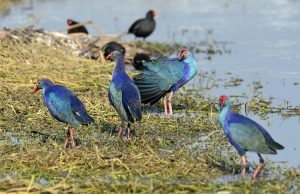
The Shekha Jheel Bird Sanctuary in Aligarh, Uttar Pradesh was designated as a Ramsar site, taking India’s total to 99.
- It is located in Uttar Pradesh.
- It is a typical monsoonal wetland of the Gangetic plains.
- It is a fresh water perennial water body that came into existence after the formation of the Upper Ganges Canal in 1852 which flows adjacent to the lake.
- It acts as a crucial stopover on the Central Asian Flyway.
- The submerged vegetation consists of Hydrilla verticillata, Ceratophyllum demersum, Vallisneria spiralis, Potamogeton crispus and Najas.
- Free-floating vegetation consists of Salvinia and Azolla, Eichhornia crassipes. Rooted floating vegetation includes Nymphoides cristata and Nymphoides indica.
- It is providing a vital habitat for migratory birds such as the Bar-headed Goose, Painted Stork and various ducks during the winter season.
- Ramsar Sites is a wetland recognized under the Ramsar Convention (1971) for its international importance in conserving biodiversity and sustaining ecological balance.
- These wetlands provide critical habitats for migratory birds, endangered species, and unique flora and fauna.
- They help in groundwater recharge, flood control, and climate regulation, while supporting local livelihoods like fishing and agriculture.
India currently has 99 Ramsar Sites spread across 28 states and union territories.
Stauranthera aureoglossa:
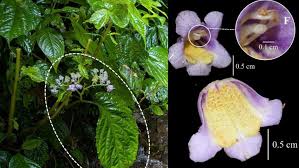
A team of botanists recently discovered a new plant species with a unique ‘golden tongue’ in the shaded streams of the Himalayas, named Stauranthera aureoglossa.
- It is a new plant species.
- It was discovered in the dense, mid-elevation evergreen forests of the Kamle and Upper Subansiri districts of Arunachal Pradesh.
- It is a perennial herb clinging to damp rocks and soil right besides flowing streams and rivulets.
- The plant stands out from its closest relatives with a distinct, bell-shaped, bluish-purple flower.
- Unlike similar species, its flower lacks a tubular projection called a spur at its base.
- Instead, it features a raised, bumpy, yellow patch inside the lower lip of its petals.
- This striking feature inspired its new scientific name, with “aureoglossa” translating to the golden-yellow, tongue-like appendage seen on the flower.
- It has diamond- or spear-shaped leaves.
- Because their fragile streamside habitats are being actively damaged by logging, landslides, and road-widening projects, the scientists have provisionally classified this rare, golden-tongued herb as an endangered species.
Jamun:
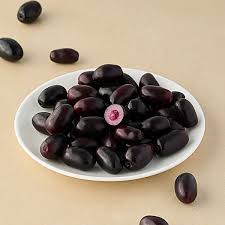
According to a new study, Jamun has been found to have originated much earlier than previously believed, with India playing a central role in its evolutionary history.
- It is an important indigenous minor fruit of commercial value.
- It is also known as black plum, Indian black cherry, Ram jamun etc. in different parts of India.
- The original home of jamun is India and also found in Thailand, Philippines, Madagascar and some other countries.
- In India, the maximum numbers of jamun trees are found scattered throughout the tropical and subtropical regions.
- It also occurs in the lower range of the Himalayas.
- Required Climatic Conditions for Jamun
- It can be grown on a wide range of soils – calcareous, saline sodic soils and marshy areas.
- Jamun can grow well under salinity and waterlogged conditions too.
- It prefers to grow under tropical and subtropical climate.
- It requires dry weather at the time off towering and fruit setting.
- In subtropical areas, early rain is considered to be beneficial for ripening of fruits and proper development of its size, colour and taste.
India Adds 99th Ramsar Site:
Honorable Minister of Environment Bhupender Yadav have announced the inclusion of Shekha Jheel Bird Sanctuary in Uttar Pradesh as the country’s 99th Ramsar site on April 22nd 2026. It is located in Aligarh and this recognition highlights the India’s growing commitment to protect the wetlands and biodiversity. After this addition Uttar Pradesh now has 12 Ramsar sites and also strengthen the position as a key state in wetland conservation.Shekha Jheel plays the important role to maintaining ecological balance. It also serves as the critical habitat for the migratory birds and also supports the diverse aquatic life.The sanctuary is part of the Central Asian Flyway which is a major migratory route used by the birds traveling between northern breeding grounds and southern wintering areas.
India’s GDP Growth Seen at 6.4% in 2026: UN Report
India’s economy is expected to grow at the 6.4% in 2026 and 6.6% in 2027 as per the latest by the United Nations report. This projections highlights the India’s continued position as the major growth engine in the Asia-Pacific region. Even as the global uncertainties continue persist India’s strong domestic demand, services sector expansion and the policy support will help to sustain the steady economic momentum. The report also highlights that India has played the key role to driving the regional growth in recent years.
Arthur Law Named Young Global Leader 2026 by World Economic Forum:
Arthur Law has been named the Young Global Leader (YGL) 2026 by the World Economic Forum. It was announced on April 21, 2026 this honor celebrates his contributions to the transforming urban living through innovative space solutions. As the cities are growing denser his work in redefining how the households and businesses manage space has positioned himself among the select group of global leaders shaping the future.
Moody’s Cuts India GDP Growth Forecast to 6% for FY27:
Global rating agency Moody’s has revised the India’s economic outlook and cuts the FY27 GDP growth forecast to 6% from 6.8%. This downgrade reflects the growing concerns over the West Asia region, rising energy prices and the weak domestic demand. As India remains heavily dependent on the imported energy the global disruptions creates impact inflation, consumption and the industrial activity.